Why the U.S. Adopts New EV Rules
 Facebook
 Twitter
 Linkedin
 Google +
The United States has been seeking to maintain its dominant position in the Indo-Pacific region and the world, and indulged in intensifying strategic competition against China.
On August 16, 2022, U.S. President Joe Biden signed the Inflation Reduction Act (IRA) into law, providing $369 billion in investment incentives for energy and climate-related programs. The IRA marks the most significant action the U.S. Congress has taken on clean energy and climate change in American history, and one of the most significant pieces of legislation to accelerate the electrification of transportation in the country. However, the provisions on tax credits for electric vehicle (EV) purchases have been slammed by the U.S. allies. How did the United States respond to the appeals of its allies? What are the motivations behind such provisions? And what is the underlying logic? All of these are important issues to which China should pay close attention.
1. Relevant EV credit provisions and reactions from US allies
The IRA will surely help promote the clean energy transition in the United States. However, in the view of its allies, including the European Union, Japan and South Korea, this legislation represents a highly controversial protectionist industrial policy, and its provisions on the tax credits for electric vehicle purchases, in particular, have been under fierce fire.
The IRA offers tax credits on EVs
The IRA stipulates that Americans who buy new EVs may be eligible for a tax credit as high as $7,500, so long as the sourcing requirements are satisfied for both the critical minerals and battery components. 1) Critical minerals ($3,750): Starting in 2023, to be eligible for this portion, at least 40% of the critical minerals by value in the vehicle’s batteries must be extracted or processed in the United States or in a country with which the United States has a free trade agreement, or recycled in North America. That percentage will be raised to 50% in 2024, 60% in 2025, 70% in 2026, and 80% for 2027 and beyond; 2) Battery components ($3,750): To be qualified for the additional $3,750 credit in 2023, at least 50% of the value of an EV’s battery components must be manufactured or assembled in North America. That proportion will increase to 60% in 2024 and 2025, 70% in 2026, 80% in 2027, 90% in 2028, and 100% for 2029 and beyond. Of the 49 available EV options in 2023, only 10 qualify for the full tax credit.
US allies oppose its EV tax credit rules
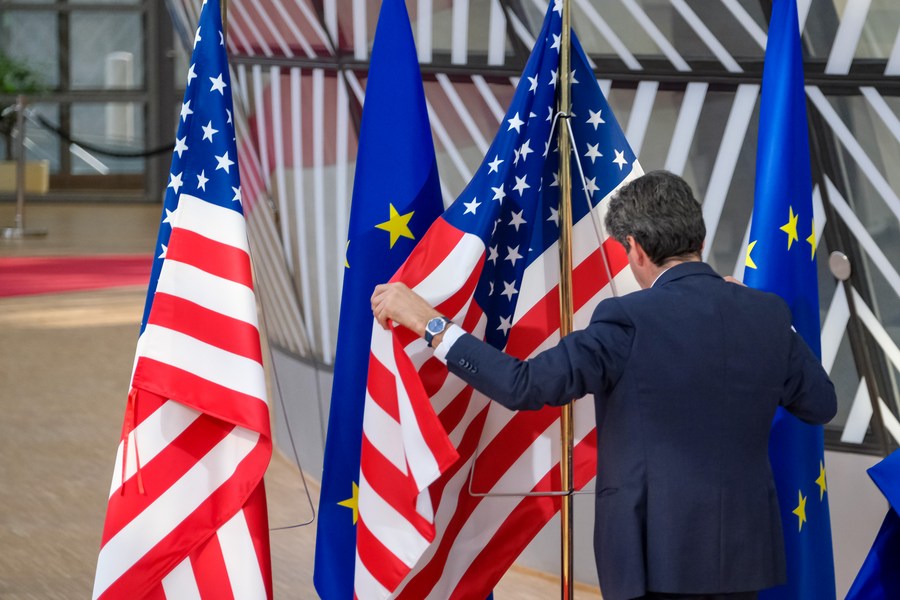
The automobile industry has an important place in the economic and trade relations between the United States and its allies. Following the IRA’s enactment, the U.S. allies said that the EV tax credit rules showed a discrimination against foreign products imported into the United States and violated World Trade Organization (WTO) regulations. In December 2022, European Commission President Ursula von der Leyen stated that the EU “must take action to rebalance the playing field where the IRA or other measures create distortions”. The EU believes the IRA will distort the level playing field for European firms as it doesn’t have a free trade agreement with the United States. European companies have great difficulty entering the U.S. market, while U.S. companies are not at a similar disadvantage in Europe. In the long run, U.S. companies will not only gain economies of scale by protecting their home market, but may use these advantages to increase their market share in Europe. In the end, the EV and EV battery manufacturing sectors become more attractive in the United States than in the EU, luring companies to shift their supply chains from the EU to the United States.
2. The Biden administration’s solution and its nature
In response to the concerns and appeals of U.S. allies, the Biden administration has actively taken remedial measures. In general, the IRA’s implementation calls for detailed guidelines formulated by relevant administrative agencies. The IRA doesn’t define the term “free trade agreement (FTA) countries”, making it possible for the Biden administration to flexibly interpret and enforce the law.
Critical minerals agreement classified as FTA
On March 28, 2023, the United States and Japan signed a critical minerals agreement, which entered into force immediately upon signature. The agreement defines “critical minerals” as cobalt, graphite, lithium, manganese, and nickel, all key inputs in EV production, and the two countries agreed, among other things, to: 1) Maintain their current practice of not imposing export duties on critical minerals exported to the other’s territory; 2) Confer on potential domestic measures to address non-market policies and practices of other countries affecting trade in critical minerals and on issues relating to global critical minerals supply chains; 3) Confer on best practices regarding review of investments within their territories in the critical minerals sector by foreign entities; 4) Cooperate to discourage the importation of goods containing critical minerals that involve forced labor.
According to the Notice of Proposed Rulemaking (NPRM) released by the U.S. Department of the Treasury on March 31, 2023 and the list of free trade agreements partner countries issued by the Office of the United States Trade Representative (USTR), the Biden administration classified the critical minerals agreement as a new category of free trade agreements. Consequently, countries that have a critical minerals agreement with the United States are eligible for EV tax credits under the IRA.
The critical minerals agreement between the United States and Japan is of great importance for the following reasons: First, the Biden administration hopes to give the U.S. allies the status of free trade agreement countries through the critical minerals agreement, thereby allowing them to enjoy the tax credit under the IRA; Second, the two countries have affirmed several new bilateral commitments and areas of cooperation in the agreement regarding the supply chains of critical minerals for EV batteries, which may have a major impact on the international economic and political situation in the future; Third, the United States is now seeking to reach critical minerals agreements with other economies such as the EU, the United Kingdom, and Indonesia. The U.S.-Japan critical minerals agreement may become a template for the United States to reach similar agreements with other economies.
‘Double discrimination’ in EV tax credit rules and solution
As per the IRA, the United States only allows domestic manufacturers or trusted trade partners to qualify for EV tax credits. This provision violates the WTO rules on local content requirements. It is a discriminatory green subsidy, and in essence, trade protectionism and green protectionism.
In addition, the solution the United States offered to its allies is also discriminatory. The U.S.-Japan critical minerals agreement includes addressing so-called “non-market policies and practices” of other countries, and carrying out reviews of investments within their territories in the critical minerals sector by foreign entities. Given China’s leading position in EV production, battery manufacturing, and the mining and refining of critical minerals, it is obvious that the United States and Japan intend to reduce their reliance on China in relevant industries.
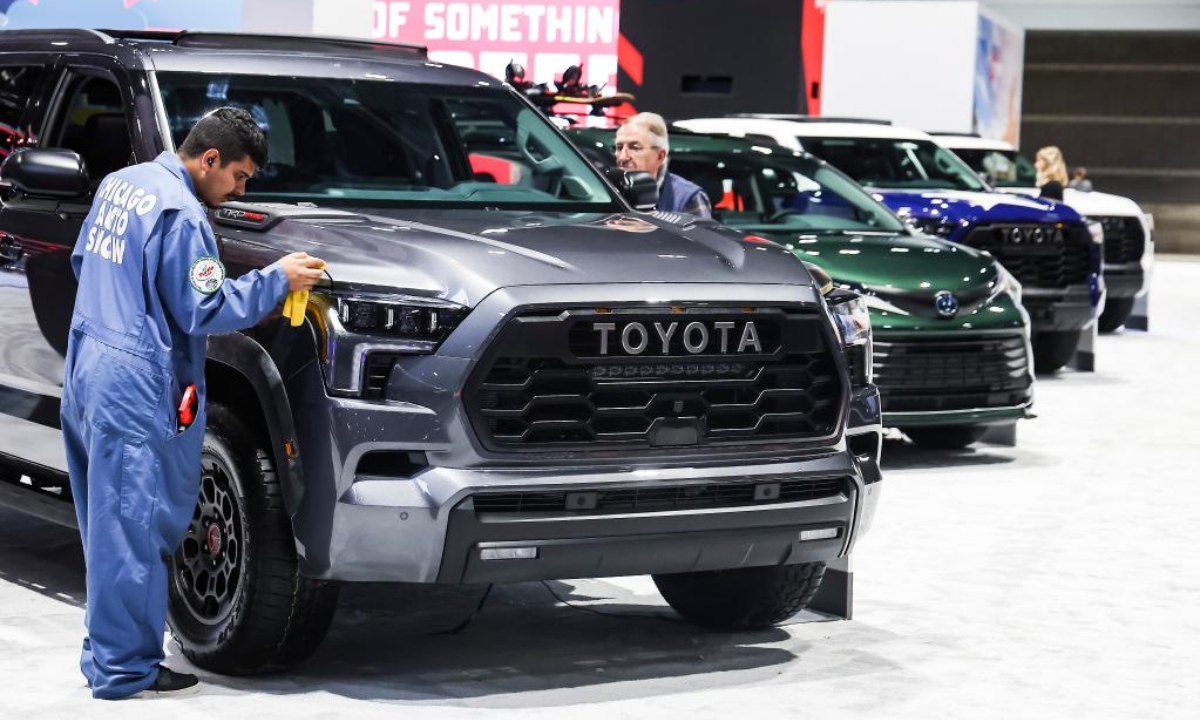
The trade-distorting legislation of the U.S. Congress broke WTO rules. However, instead of seeking to remove trade barriers, the Biden administration used trade frictions to step up the coercion of its allies, and further intensified geopolitical competition and confrontation against other countries. One might think that the IRA is not specifically targeted at China, but when the U.S.-Japan critical minerals agreement comes in sight, it is undoubted that such an agreement is directed at China.
3. The underlying logic of US ‘double discrimination’
Deepening state intervention based on national security
In the past two years, laws enacted by the U.S. Congress, including the CHIPS and Science Act, and the IRA, were mainly aimed at enabling the U.S. government to play a bigger role in boosting development of American industries through more coordinated approaches.
Over the past decade, pressure has increased for the United States to use state intervention to protect existing jobs and industries. Factors, including high unemployment among the workforce and slow wage growth in economic sectors, have made it more difficult for U.S. workers to adapt to changes in technology, demand and international competition. Against such a backdrop, resources would be misplaced in less efficient areas if there are no strong incentives to change the situation. Therefore, the United States believes that the government should offer incentives to step up the shift of resources to growth industries.
In the meanwhile, the United States believes that, as an economy with a relatively high degree of openness, the country is adversely affected by the industrial policies of other countries. For example, the United States wrongly accused China of adopting so-called “economic nationalism” in which it uses comprehensive industrial policies to extensively foster strategic and emerging industries, thereby creating an unlevel playing field for American companies. Therefore, the United States should formulate powerful industrial policies to fight back and reduce the impact.
In addition, national security, a concept that includes economic security in its broad sense, is often cited by the United States as a justification for state intervention in the market. The United States is worried that if certain domestic industries lack production capacity and have to rely on imports deemed critical to national security, these imported goods or services will be “weaponized” by foreign countries, so the government must support homegrown production. The COVID-19 pandemic further exposed the fragility of global supply chains, making the United States reinforce the government’s role in the economy.
Intensifying geopolitical competition and confrontation against China
The Biden administration has been seeking to deepen cooperation with the U.S. allies against China. The United States has taken China’s rise and climate risks as two interwoven challenges, believing that the next decade will be a critical period for its strategic competition against China and addressing climate security. Obsessed with such a mentality, the United States intends to maintain its technological advantage over China, and fully squeeze China’s space for development. As for addressing climate change, the key to achieving climate goals is to maximize the deployment of clean energy. The continuous development and convergence of U.S. policies in these two strategic directions has resulted in the rising importance of clean energy technologies in the overall U.S. strategy toward China, and the U.S. Congress’ introduction of relevant bills is a manifestation of this rising importance.

The United States believes that the competition for global dominance in clean energy technologies will affect the relative legitimacy of the political, social and economic systems of both countries. With such a mindset, the United States regards investment in clean energy technologies as a zero-sum game to improve its national competitiveness, and vies for a dominance in the global market.
The United States, fearing it may lose out to China in the clean energy race, has pursued trade and industrial policies that prevent foreign participation in its clean energy sector. The country mistakenly equates containment of other countries with support for its innovation, employment and economy. This is, in essence, a reflection of “technological security dilemma”, which measures technological factors in great power competition from the perspective of national security. Such a view holds that “the national security of a leading power will be eroded if it falls behind in technological innovation vis-á-vis a strategic rival, or otherwise loses competitiveness or market share in high-tech industries”.
Conclusion
The IRA is good for the U.S. clean energy transition, but harms other countries due to its discriminatory policies. The real purpose of the U.S. remedial solution is to replace China with other partners, restructure the supply chains, and ultimately make the United States more competitive than China in the EV sector.
The U.S.’ discriminatory approach, which caters to private investors at home, places too much emphasis on the short-term interests of technology investments. Such a move may initially help local manufacturers gain some advantages, but will slow down the country’s innovation, and eventually damage the competitiveness of its industry. At the beginning, the plan may help promote green transformation in the United States, but in the long run, it is not conducive to global technology sharing, and will ultimately undermine the clean energy transition across the world.
The United States has been seeking to maintain its dominant position in the Indo-Pacific region and the world, and indulged in intensifying strategic competition against China. However, the IRA’s contentious clauses and the U.S. administration’s solution show that the United States may have ignored the vast amount of resources its move will consume. In addition, when the United States and its allies and partners are divided on policies towards China, how to balance the costs, risks and benefits will be a huge challenge for the United States.
Zhao Xingshu is a research fellow at the Institute of American Studies of the Chinese Academy of Social Sciences (CASS).