Why the World Should Support China
 Facebook
 Twitter
 Linkedin
 Google +
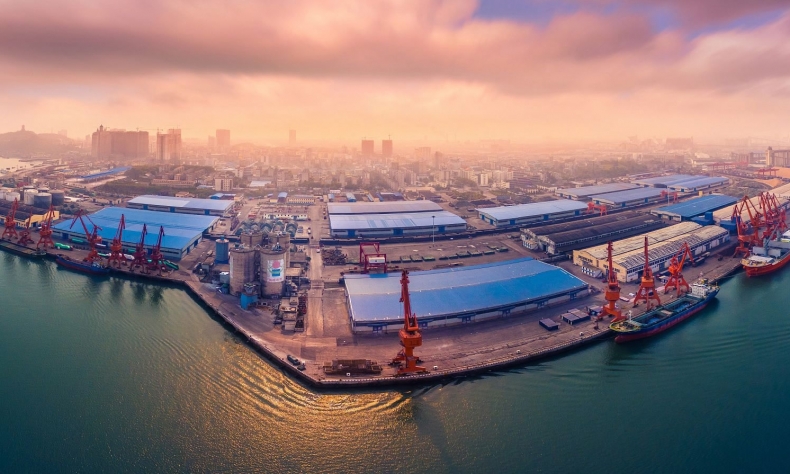
China is committed to building a multipolar world whereby global problems are resolved by multilateral institutions and cooperation among nations rather than a singular nation’s influence.
China has billionaires and is a top destination for foreign direct investment. It has thousands of branches of Starbucks and KFC, along with significant private ownership of capital. It suffers from different levels of inequality. These factors lead many to question whether it really is what it claims to be: a socialist country.
China’s leaders are very clear that socialism with Chinese characteristics is socialism, not any other “ism” and that “only socialism can save China.” Elements usually associated with capitalism have been purposefully used in order to increase productivity, attract investment, encourage technical development, and support peaceful coexistence with the capitalist world. This has all proven invaluable in improving the living standards of the Chinese people.
All this is unorthodox in the relatively short history of actually existing socialism, but Marxism offers no templates or formulas; there are no textbook solutions to the problem of how to build a new society in a large, underdeveloped country under constant threat from U.S. hegemony. Socialism with Chinese characteristics is a creative contribution to Marxism based on the concrete analysis of specific conditions.
A new path
Although private capital abounds, China’s basic economic agenda is set by five-year plans, put together on the basis of discussion and consultation throughout society. The state maintains tight control over the “commanding heights” of the economy: heavy industry, energy, finance, transport and communications.
Most importantly, capital is not allowed to dominate political power like in the West. With capital calling the shots, China would not have been able to carry out the largest-scale poverty alleviation in history; it would not have taken the lead in tackling climate change; it would not be able to successfully contain COVID-19, or to organize its scientific and technological infrastructure to develop some of the first vaccines and produce 5 billion doses in a year; it would not be systematically expanding its social welfare program.
In recent years, China has emerged as a leader in the global struggle against climate catastrophe. President Xi Jinping has announced that China will reach carbon neutrality before 2060, with its greenhouse gas emissions peaking before 2030. These commitments are in line with UN targets for developing countries, and as British environmental expert Mike Berners-Lee pointed out, China has unusually strong capacity for meeting its targets. “More than in most countries, if a policy idea is seen as a good thing, the Chinese can bring it about,” Berners-Lee wrote in his book There Is No Planet B.
Over the last decade, coal has gone from 80 percent to under 60 percent of China’s power mix—roughly the same as Australia, a country with a per-capita GDP five times higher than that of China.
China is becoming the first “renewable energy superpower,” responsible for 38 percent of global clean energy investment, creating millions of green energy jobs along the way. The Green New Deal that much of the Western left is calling for is already being implemented in China, on an almost unimaginable scale.
A multipolar future
In sharp contrast to the U.S. and its allies, China has not been to war in more than 40 years, never conducts regime change operations, does not get involved in destabilization of other countries, and does not unilaterally impose sanctions as a form of economic bullying. Nonetheless, over the past decade, China has been mischaracterized by Western observers as an “imperialist country.” The scant evidence provided for “Chinese imperialism” includes China’s massive export economy as well as the financial instruments utilized in the China-proposed global development project, the Belt and Road Initiative. A simple review of the facts, however, indicates that China is actually challenging imperialism on several fronts and contributing to a more peaceful and multipolar future.
China’s challenge to imperialism possesses both an economic and political component. Politically, China is committed to building a multipolar world whereby global problems are resolved by multilateral institutions and cooperation among nations rather than a singular nation’s influence.
China’s adherence to multilateralism takes several forms. It is a signatory of over 500 international treaties. Furthermore, China regularly stands up to the United States and the West’s promotion of unilateral coercive measures such as sanctions which have caused an enormous level of destruction for more than 30 countries around the world. On June 23, China voted at the UN General Assembly for the removal of U.S. sanctions on Cuba. That same day, China called for the removal of illegal U.S. sanctions on Syria.
China’s growing economic partnerships with nations around the world, particularly in the Global South, have been maligned in the West as “debt-trap diplomacy.” The facts tell a different story entirely. According to Deborah Brautigam, Director of the China Africa Initiative at Johns Hopkins University, China’s economic ties with developing countries in Africa serve a critical infrastructure need and represent only a small fraction of the developing world’s overall debt portfolio. A recent working paper published by Boston University’s Global Development Policy Center argued that China’s willingness to renegotiate debt and provide multiple avenues for financing serves as a possible alternative to the International Monetary Fund’s conditional lending practices.
What this means is that China is committed to sharing its successes with high-speed rail development, 5G technology and the like without demanding privatization, austerity, or any other kind of political or economic reform from its trading partners.
Internationalism has been a critical aspect of China’s ongoing pandemic response. China has donated a massive quantity of masks, ventilators and testing kits to dozens of countries around the world since the beginning of the pandemic. China is also the global leader in COVID-19 vaccine distribution, exporting hundreds of millions of doses to nations that otherwise would not have access. In stark contrast to the U.S. and Western narrative, it is quite clear that China has demonstrated both the capacity and the political will to lead the way in the global battle to defeat the pandemic.
China is a socialist country, where government policy is determined principally on the basis of the needs and desires of the working people. That is why China is able to take the lead globally when it comes to wiping out poverty, transitioning to renewable energy and tackling the pandemic. At a global level, China is leading the shift toward a multipolar world—a more democratic system of international relations in which each country has the right to determine its own development path, free from bullying and intervention.
Of course, the Communist Party of China, like any governing organization, makes mistakes and has to make compromises with a complex and difficult reality; it is by no means above criticism. However, its overall record is one of immense and continuing progress for the global working class and the cause of socialism.