Why Does the West Overlook China’s Role in WWII?
 Facebook
 Twitter
 Linkedin
 Google +
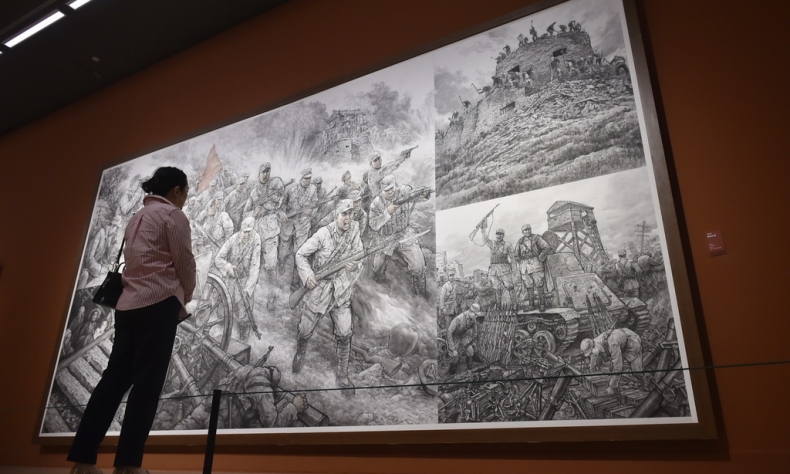
China was the key anchor of the ‘Europe First’ strategy. Without China’s efforts to tie down and weaken the bulk of the Japanese army, the Allied forces would have faced far greater challenges in their war efforts.
Why does the world remember Dunkirk but overlook China’s 14-year struggle against Japan? In this episode of “Diplomacy Talk,” Professor Hu Dekun, a World War II scholar at Wuhan University, shares his insights on China’s wartime experience. He explains how China, enduring staggering losses, stalled Japan’s advance and helped shape the outcome of the war. Yet this chapter of history remains forgotten in much of the world.
Professor Hu discusses the reasons behind China’s long-standing marginalization in mainstream historical accounts and examines the growing international trend to reassess and recognize China’s critical contributions to Allied victory.
Following is the transcript of the interview.
Diplomacy Talk: How would you characterize the unique nature of China’s wartime experience if you compare it with the front-line battles seen in the European and Pacific theaters?
Hu Dekun:?First, the European theater saw massive corps-level engagements, often involving hundreds of thousands of or even over a million troops. This had much to do with the continent’s geography: the broad plains in Europe made it possible to have enormous and mechanized formations and large-scale armored warfare.
However, China’s terrains made such warfare impossible. China is a mountainous country — only the North China Plain offers a larger open ground. The middle and lower reaches of the Yangtze River, with complex networks of waterways and lakes, posed insurmountable challenges for deployment of mechanized forces at scale.
Second, by WWII, Europe had undergone centuries of industrialization, which enabled its armies to have advanced weaponry and armored divisions. China simply did not have these capabilities.
Since China was outmatched by Japan in weaponry, it relied on human resilience and sacrifice. This made it necessary to have a protracted war of attrition, or a people’s war — strategies that drained Japanese militarists’ strength, contained their advances and prevented their further expansion. China’s wartime experience was defined by the people’s war, an invention by the Chinese people. It was mainly a guerrilla warfare — an approach shaped by the country’s unique circumstances.
Diplomacy Talk: The roles of nations like the United States and Britain in WWII have become widely known through classic films such as “Dunkirk,” “Pearl Harbor” and “Midway.” Yet, the international community still lacks an objective and due knowledge of China’s contributions in WWII. To some extent, China has become the “forgotten ally.” Why do you think this is the case? Is it because China has not produced blockbusters on this topic?
Hu Dekun:?Several factors have contributed to this. First, the WWII research worldwide reached its peak from the 1950s through the 1970s, but during this period, China focused on consolidating its new government. As a result, Chinese academic research in this regard lagged 20 to 30 years behind the West. By the time China began producing significant scholarly work on its role in WWII in the 1980s and afterward promoted its findings internationally, the dominant narratives about the war had already been firmly established.
Second, there is the lingering influence of “Eurocentrism” and “Western centrism.” Even today, many in the West hold onto these biases, approaching WWII history with a certain degree of arrogance and a Eurocentric perspective.
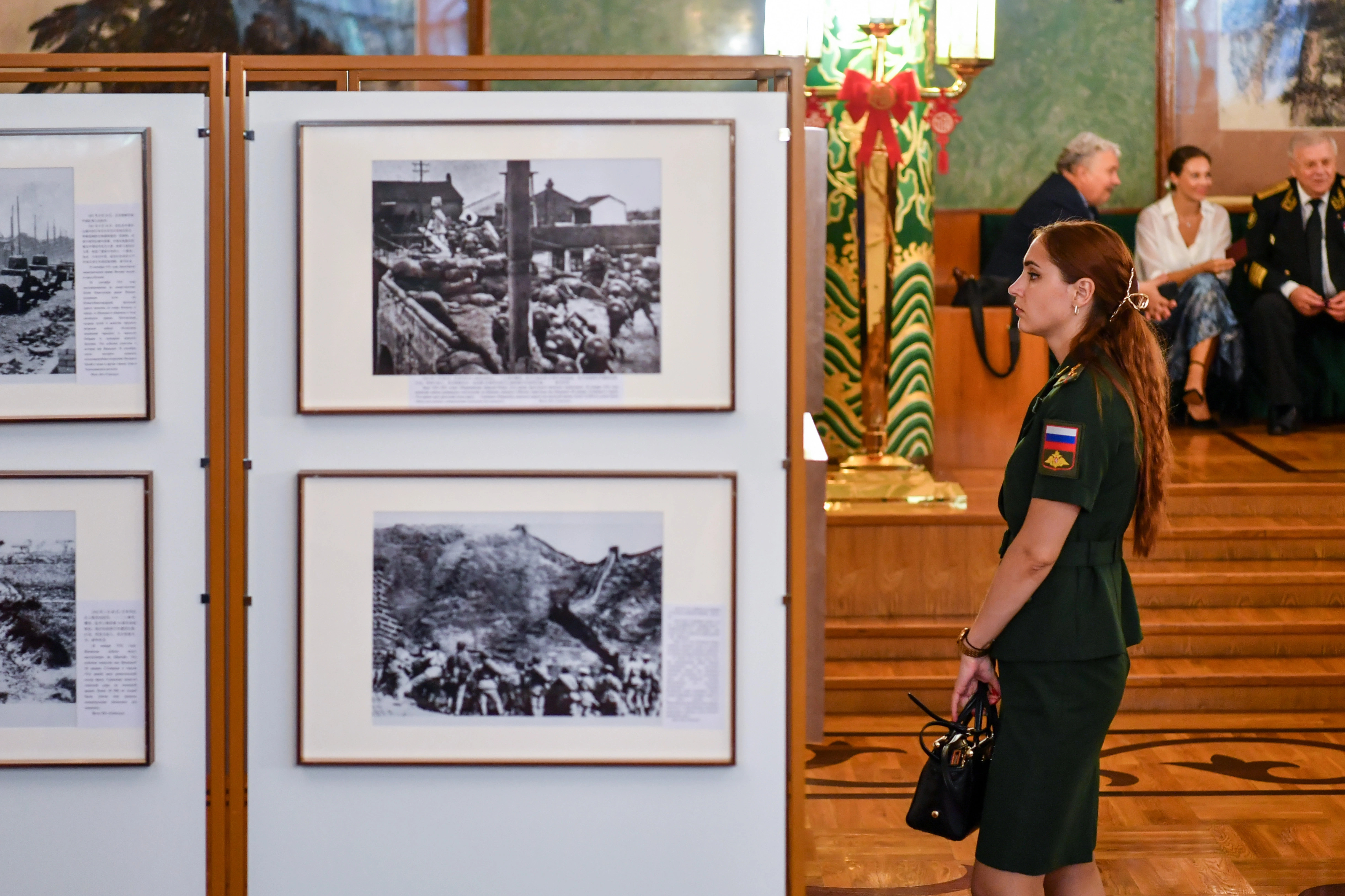
Third, the Cold War has entrenched biases against China for several generations. Westerners have systematically downplayed China’s wartime contributions, and their textbooks and seminal works remain heavily centered on their respective nations, relegating China’s efforts to mere footnotes. In their narratives, China’s wartime role has always been portrayed as peripheral, never central to the victory of WWII.
Only in recent years have a growing number of foreign scholars emerged from the shadow of the Cold War, re-examining WWII and China’s role in it with fresh objectivity. For example, Oxford University professor Rana Mitter’s book “Forgotten Ally: China’s World War II, 1937-1945” aims to recognize China’s important role and contribution in WWII. There are increasingly more Western scholars like Professor Mitter these days.
Diplomacy Talk: Japan announced its unconditional surrender just days after the United States dropped two atomic bombs on its cities. As a result, some argue that without these U.S. bombs, China could not have defeated Japan on its own. How do you assess this argument?
Hu Dekun:?To properly evaluate this, we must have the perspective of the entire 14-year war that went from Japan’s initial aggression to its eventual surrender. Throughout this prolonged war, it was the Chinese theater that truly crippled and pinned down the bulk of Japan’s military forces. In this context, we can see that the atomic bombs dropped by the United States and the Soviet Union’s offensive against the Japanese in Northeast China served primarily to hasten Japan’s surrender, rather than determine the war’s ultimate outcome.
Undoubtedly, the Pacific theater saw extraordinary American military achievements, with U.S. forces advancing all the way to Okinawa, right to Japan’s doorstep. Yet when assessing the war as?a whole, we must see that it was China that bore the heaviest sacrifices and consistently engaged the bulk of the Japanese army. This was fundamentally the root cause of Japan’s ultimate defeat.
Diplomacy Talk: How did the Chinese theater provide strategic support and coordination for other allies during the war?
Hu Dekun:?The allies adopted a “Europe First” strategy, focusing their efforts on defeating Nazi Germany before turning to other fronts. After all, Nazi Germany was the strongest fascist power.
Under this “Europe First” strategy, China made tremendous sacrifices. It must stand unbroken in its resistance war against Japanese aggression, because if the Chinese front had collapsed or if China had surrendered, the Allied operations in the European theater would not have proceeded smoothly.
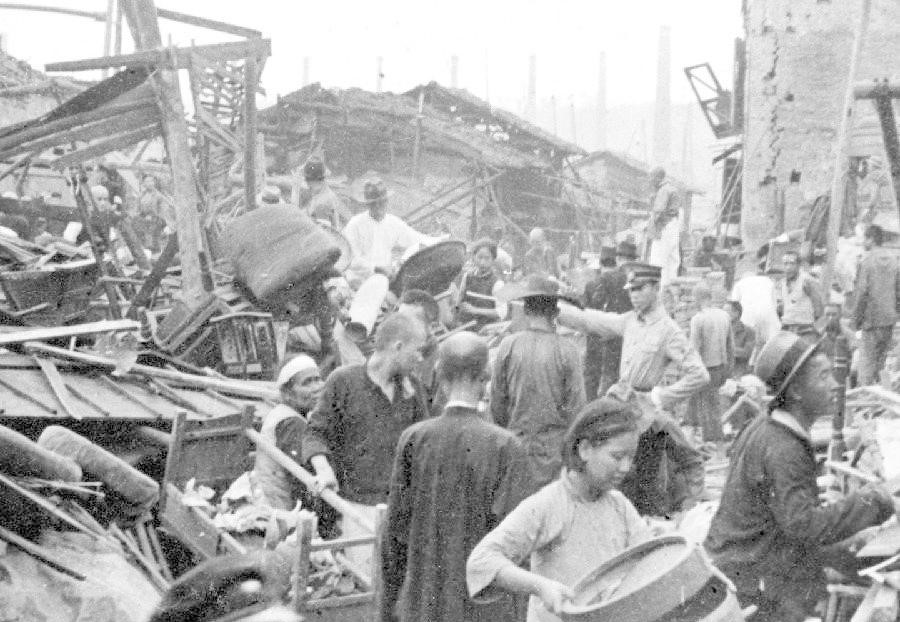
First, the Soviet Union would have faced the danger of a two-front war, with Japan attacking from the east and Germany from the west, squeezing it from both sides. Second, if China had been defeated, Japan might have advanced through the Pacific theater to Australia, pushed into India and the Indian Ocean, or even linked up with Germany in the Middle East. By bogging down Japan in the country, China played a decisive role in stopping it from attacking the Soviet Union and preventing its further expansion into Australia, the Indian Ocean and India.
China was the key anchor of the “Europe First” strategy. Without China’s efforts to tie down and weaken the bulk of the Japanese army, the Allied forces would have faced far greater challenges in their war efforts.
This was why former U.S. President Franklin D. Roosevelt, former British Prime Minister Winston Churchill and former Soviet leader Joseph Stalin all spoke highly of China’s resistance war against Japanese aggression and recognized its crucial contribution.
Diplomacy Talk: What role do you think China played in the global anti-fascist war? How would you assess the scale of China’s contribution?
Hu Dekun:?Among all the major battlefronts of WWII, the one in China started the earliest and endured the longest. As a weaker nation, China faced the greatest hardships, yet persevered through 14 years of war.
By comparison, the Western allies’ war experience lasted only four to five years, beginning with Germany’s invasion of Poland in 1939. That was much shorter than China’s. In the first eight grueling years of the war, China fought alone until Britain and France entered the war in 1939, ending China’s complete isolation. Yet it was not until 1941, when Germany attacked the Soviet Union and then Japan launched the Pacific War, that China truly emerged from strategic isolation.
Therefore, China essentially relied on its own strength to sustain this prolonged war. Its contribution cannot be measured solely by the number of enemy forces eliminated or the scale of individual battles. Such quantification would be fundamentally unreasonable. Yet China’s resistance alone set Japan on the path to defeat.
The international community has yet to properly acknowledge China’s pivotal role in WWII with fairness because it fought for the entire world rather than just for itself.
Diplomacy Talk: What aspects of China’s wartime role do you feel are ignored or underestimated?
Hu Dekun:?Given the large-scale battles fought in the Western theaters, Western historians often dismiss China’s campaigns as “minor engagements” and do not consider them particularly significant. However, it was precisely these so-called small-scale operations — especially guerrilla warfare — that continuously depleted the vitality of Japan and forced it to repeatedly divert more troops to China.
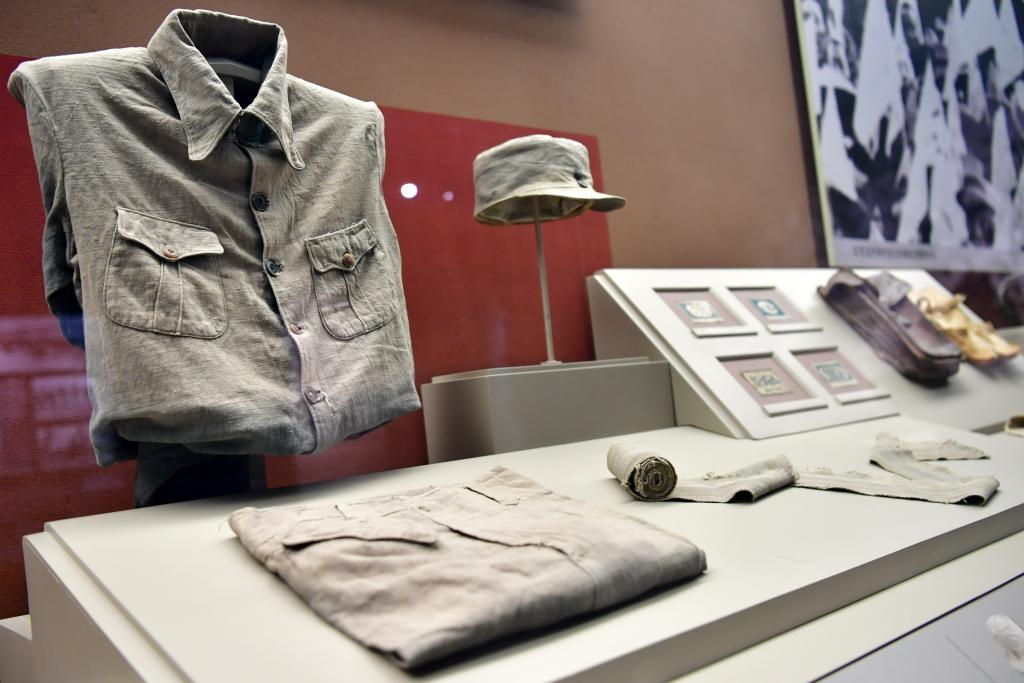
When the Pacific War broke out, the bulk of the Japanese army was still fighting in China. At that time, Japan had more than 30 divisions deployed in China, while only 10 divisions were assigned to the entire Pacific theater. These 10 divisions managed to sweep through Southeast Asia and defeat American, British and Dutch forces, but Japan’s 30-plus divisions in China ultimately failed to conquer the country. This stark contrast clearly demonstrates the immense significance of China’s resistance, which deserves objective historical analysis.
The extraordinary duration of China’s resistance was closely tied to its unique strategic advantages and the new tactics of the warfare. Mao Zedong’s work “On Protracted War” provided the theoretical foundation for China’s approach. China adopted a distinct doctrine: protracted people’s warfare, which elevated guerrilla tactics to a strategic level. Western accounts often fail to recognize these innovations and tend to downplay China’s sustained war effort.
Diplomacy Talk: Professor Hu, 80 years have passed since the end of WWII and our world is still far from peaceful. President Xi Jinping once said, “Peace, like air and sunshine, is hardly noticed when people are benefiting from it. But none of us can live without it.” How do you interpret this observation?
Hu Dekun:?President Xi’s remarks are a reminder to us that we must never forget history and must learn from its lessons and cherish our hard-won peace. Many in the younger generations, having grown up in peacetime, know little of the hardships of the past. Although I did not experience the war, my elders often recounted its horrors to me, describing how the Chinese people endured unimaginable hardships, where survival itself was a bitter struggle.
China must make steady progress in its national rejuvenation while promoting global progress through peaceful diplomacy. Unlike certain countries that bully others, China advocates for a global community of shared future, where all nations thrive together. This remains China’s ultimate vision.
Diplomacy Talk: Some people fear for the outbreak of World War III. In your view, does humanity have sufficient wisdom to avoid it?
Hu Dekun:?The likelihood of a new world war breaking out today is basically nonexistent. If extremist forces similar to fascists were to come to power in certain countries and try to drag their nations into war, the people of those countries would oppose it, and the international community would not allow it.
Socialist countries and the Global South or developing countries all stand firmly against a new world war.?Many developed nations also oppose a new world war, as their prosperity depends on peace.
Today, the global forces for peace hold overwhelming superiority — a stark contrast to the period before WWII. With the backbone consisting of China and many other countries, including developing ones, the world has now an unprecedented predominance of the forces for peace.