Whither China-U.S. Relations?
 Facebook
 Twitter
 Linkedin
 Google +

The hope of China-U.S. relations rests on the shoulders of young people. We should get ready for post-COVID engagement. And people-to-people exchange should take the lead in re-coupling the two societies together.
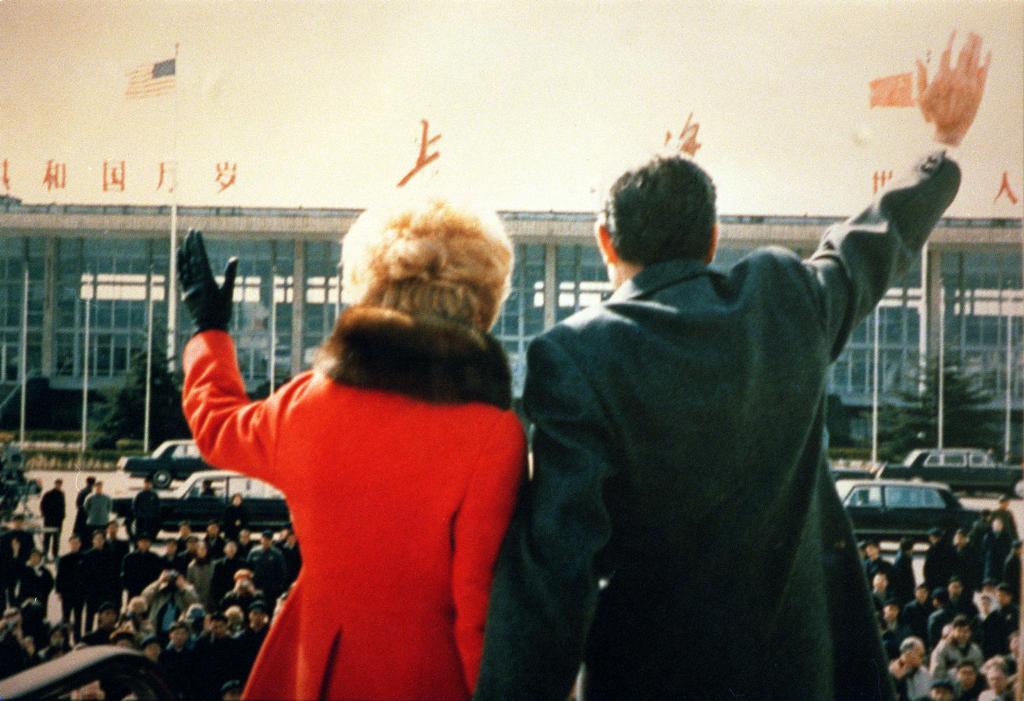
Fifty years ago when U.S. President Richard Nixon visited China, there was a greater gap between China and the U.S. than there is now. Yet the two countries still chose to break the ice with the issuance of the Shanghai Communiqué, which laid the foundation for the two countries to establish diplomatic ties and advance cooperation in a wide range of areas.
“Nixon’s historic visit opened a door for China to re-engage with the world, and Chinese students, business people, scholars, technicians and scientists had the opportunity to travel to the U.S. and Western Europe and to learn from them. These men and women then came back and helped transform China into a modern and prosperous country,” Xie Tao, Dean of the School of International Relations and Diplomacy at Beijing Foreign Studies University, said a Webinar on China-U.S. relations and global governance on November 22.
Over the past 50 years, no two major countries have had closer contact or more interconnected interests than China and the U.S., Yu Tao, Vice President of China International Communications Group (CICG), told the participants from China and the U.S.
Hosted by CICG Americas, the event focused on the most concerning issues in bilateral relations at the moment, especially new trends following Chinese President Xi Jinping’s meeting with his U.S. counterpart, Joe Biden, in Bali, Indonesia, on November 14.
“No one can deny the fact that the engagement between China and the U.S. has not only benefited China’s economy but provided lots of development opportunities for the U.S. And this is even more the case as the interests of two largest economies become more closely intertwined,” Xu Bu, President of the China Institute of International Studies, said.
A bump in bilateral ties
The situation worsened dramatically since the Donald Trump administration launched a trade war against China in 2018. Today, the bilateral relationship has arguably reached its lowest point since Nixon’s landmark visit 50 years ago.
David Blair, Vice President and senior economist at the Center for China and Globalization (CCG), stressed that it’s important for Chinese decision-makers and scholars to understand what drives decisions in Washington and also what drives the American people’s views of the world. He said understanding this can “help us make better predictions.”
“To quickly sum up U.S. history: The Clinton administration gave Wall Street everything it wanted; the Bush II administration gave the military-industrial-intelligence complex everything it wanted; the Obama administration gave the Silicon Valley monopolists everything they wanted,” Blair said at the webinar. “This is what got us where we are now, a well-entrenched Washington elite that depends on the military-industrial-intelligence complex for money and power.”
To sustain them, the U.S. needs a compatible foreign policy that asserts the American leadership is “indispensable” to world stability, according to Blair.
Wang Dong, a tenured professor at the School of International studies and Executive Director of the Institute for Global Cooperation and Understanding at Peking University (PKU), pointed out that the U.S. arms its policy with ideological rhetoric. “Washington has engaged in a process of dehumanization and demonization, framing China as a repressive power that stands in opposition to the so-called liberal-democratic vow. It has made no secret of its attempt to frame China as a rule-breaker in the existing international order,” he said at the webinar. “As the U.S. now portrays China as a threat, the two countries have increasingly decoupled from one another in terms of science and technology, supply chains and people-to-people exchanges.”
The bipartisan consensus on engaging China since in 1972 has been taking China as “the other,” the one that is to be “transformed and integrated” into the U.S.-led international order with the implicit expectations that China would gradually become like the United States, economically and even politically, according to Wang.
As this proved not to be the case, he said, a number of U.S. analysts have come to believe that the policy of strategic engagement with China has failed. China has neither followed the path prescribed by the U.S. nor submitted to the “rules-based” order the U.S. has attempted to impose.
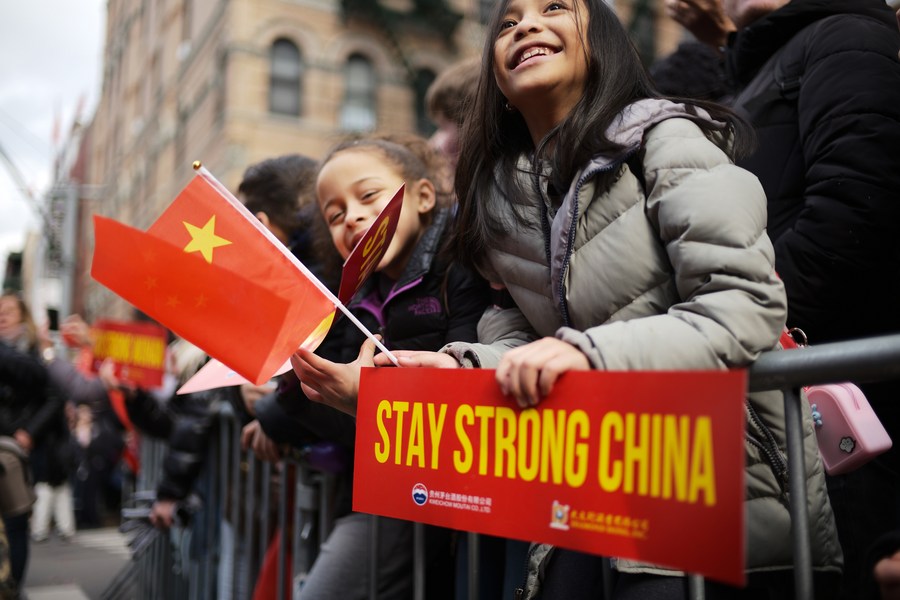
U.S. elites have now shifted from one extreme to another, viewing China as an authoritarian power determined to challenge and replace American hegemony, hence the vow to “compete with China and defend U.S. supremacy,” Wang added.
Josef Gregory Mahoney, a professor of politics and international relations at East China Normal University, believes it was because of the “vulnerability” of the U.S., the primary source propelling its aggression as a global hegemony. “Given the continued U.S. declines, given its political dysfunction, given both short- and long-term strategic goals, and the various aggressive containment tactics already directed against China with many more expected, given the question of whether the U.S. can be regarded as a rational actor and acting in good faith, the prospects for bilateral relations are quite poor,” he told the?webinar.
“Whether Washington will change its misperception and misjudgment of China as a strategic threat greatly matters to the future of the relationship,” Xu said.
China’s commitment
“A strained China-U.S. relationship leads to a deficit in global governance. As the international community struggles to address climate change, the COVID-19 pandemic, poverty and humanitarian crises, global leadership is the order of the day. Power, as we all know, entails both responsibility and leadership. The two great powers should work together to fulfill those responsibilities and exercise leadership,” Xie said.
China is firmly committed to undertaking its responsibility as a major country in global governance. It has been participating in global coordination efforts such as the Group of 20 (G20) Debt Service Suspension Initiative for Poorest Countries, providing assistance and debt relief to help emerging market countries get out of the predicament as soon as possible.
“It (China) has put off more debt repayments than any other G20 member, signed agreements or reached common understandings on debt relief with 19 African countries, and engaged in the case-by-case debt treatment of Chad and Ethiopia under the G20 Common Framework,” Zhou Pingjian, Chinese Ambassador to Kenya, wrote in an article published in Kenyan newspaper The Star in July.
China has rolled out, among its most notable undertakings, the Belt and Road Initiative, aiming to boost interconnectivity along and beyond the ancient Silk Road routes.
The recently completed first high-speed railway built with Chinese technology in Indonesia is seen as a landmark project to promote the synergy between the Belt and Road Initiative and the Global Maritime Fulcrum, an Indonesian strategy designed to fuel the country’s economic and political rise.
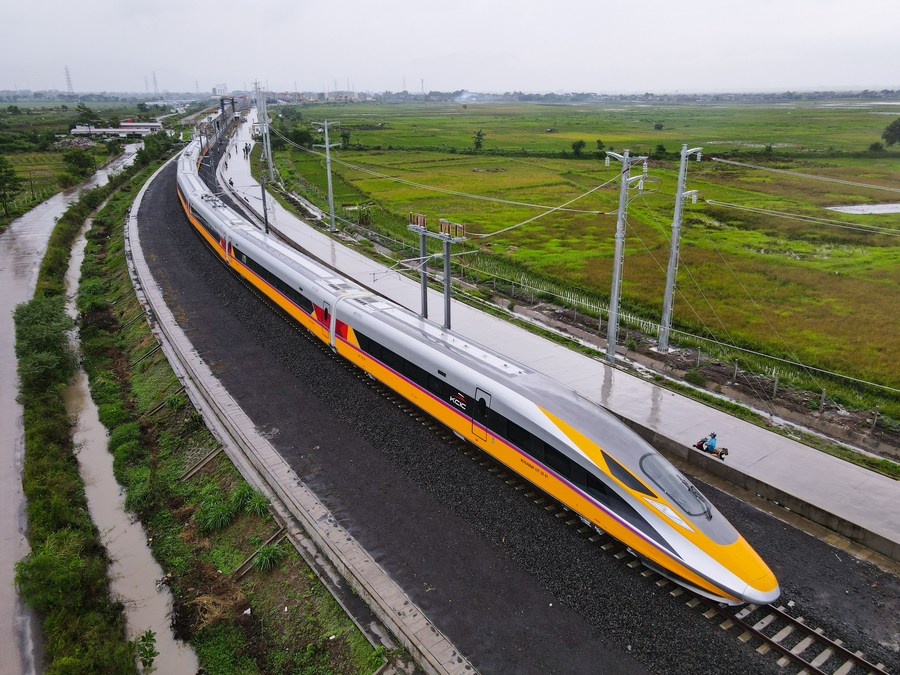
Cutting the three-plus-hour journey between Jakarta, Indonesia’s capital city, and Bandung, the capital of the province of West Java, to roughly 40 minutes, the new railroad has been praised by Indonesian President Joko Widodo as “a symbol of Indonesia’s rapid development” and “another milestone in the bilateral friendship.”
At the G20 Bali Summit in November, President Xi reiterated his call for nations to support the two China-proposed global initiatives at a time when the world is facing headwinds from setbacks in economic globalization and flare-ups of regional conflicts—one being the Global Development Initiative (GDI), aiming for more robust, greener and more balanced development across the world; and the other being the Global Security Initiative (GSI), providing solutions to security challenges facing humanity.
“China wants first and foremost to deliver better goods to the Chinese people; second, China seeks to defend its sovereignty and territorial integrity, and third, China hopes to become one of the global leading powers, but not a hegemony, in the years to come,” Wang said.
How to cooperate?
Before COVID-19 struck, there were more than 300 flights between China and the U.S. every week and over 5 million visits between them every year. China and the U.S. once had more than 100 mechanisms for dialogue and exchange, 50 pairs of sister provinces and states and 234 pairs of sister cities.
Despite the devastating blows of the pandemic and stiff U.S. tariffs on Chinese exports, bilateral trade last year topped $750 billion, up 28.7 percent year on year, while mutual investment reached $240 billion, with 66 percent of American businesses in China planning to increase their investments in the Chinese market.
“I do share some optimism because if we think back to [1972], who would have thought Richard Nixon would travel to China and suddenly you would have different American views, from politicians to regular people, of China? So even though things look bad, I still believe they can change,” Rick Dunham, Co-Director of the Global Business Journalism program at Tsinghua University, said at the webinar.
During their Bali meeting, Xi and Biden said people-to-people exchange is important and agreed to encourage the expansion of such exchange in all sectors.
“As one of the core pillars holding up China-U.S. relations, in-person exchanges have always played the part of smoothing out the rough edges,” Yu added.
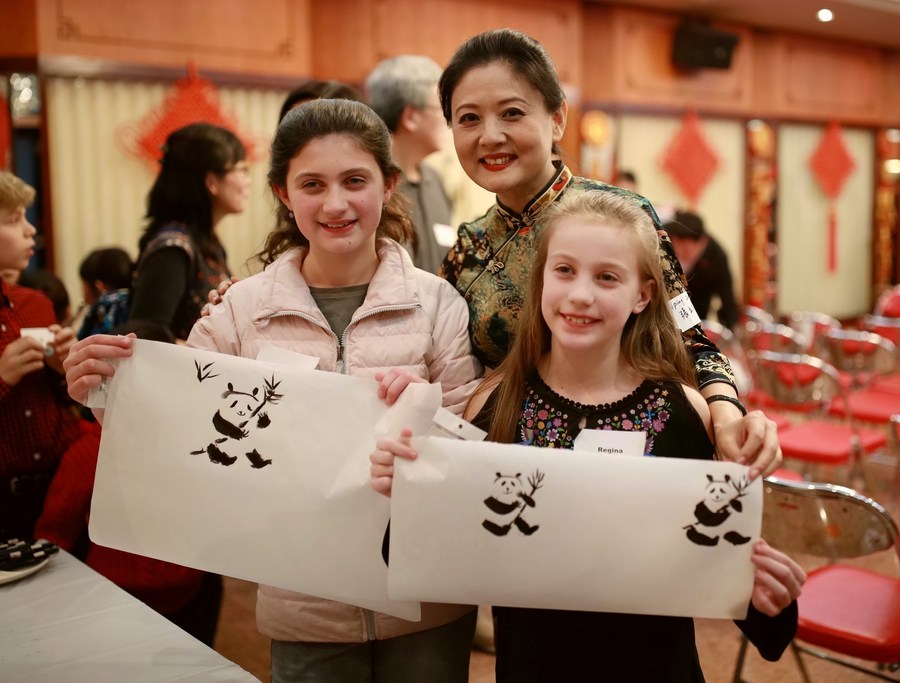
“The best way to change the hard-edge coverage we have been seeing on both sides is to expose reporters from both countries to the cultures, histories, daily life and social structure of the other. I really am a believer in person-to-person exchanges and anything that we can do to cross cultural barriers and try to explain why different cultures are different. And just because they’re different, that still doesn’t mean they are worse than the other,” Dunham said.
Mahoney shared a similar idea, saying “there is no harm in talking, above all when it comes to climate change and military-to-military communication, given the fact there is clearly harm or its potential from not talking.”
According to professor Wang, PKU is in collaboration with the George W. Bush Foundation. The two sides held a number of dialogues last year and this year focusing on economics, trade and security.
China-U.S. Young Scholars Forum, co-organized by the Global Times, the Carter Center in the U.S., and the Institute for Global Cooperation and Understanding at PKU took place online to commemorate the fifth anniversary of the forum on April 10, 2021. Former U.S. President Jimmy Carter sent a congratulatory letter, encouraging the exchanges between young people from both countries.
Wang stressed that when young people get together, there is no baggage of ideological prejudices. “They are able to engage in genuine, candid, inspiring and mutually respectful exchanges. President Xi has said many times that the hope of China-U.S. relations rests on the shoulders of young people. We should get ready for post-COVID engagement. And people-to-people exchange should take the lead in re-coupling the two societies together,” Wang said.
On the other hand, instead of focusing too much on the U.S. and being distracted by U.S. efforts to foster reactionary policymaking, China above all can engage positively with other countries by improving relations with India, Vietnam and even Australia, Mahoney suggested.
“China can continue to leverage its rise, its global economic position, its vast market, its good governance, its equitable and globally-supportive foreign policies, including the Belt and Road Initiative, GDI, GSI, and so on, to undercut American efforts to build anti-China alliances,” Mahoney said. “Undermining America’s containment strategy, repudiating America’s anti-China discourse, and making friends out of potential enemies is perhaps the best way to compel the U.S. to adjust how it engages with China.”