What Should Cities Do for Biodiversity Protection?
 Facebook
 Twitter
 Linkedin
 Google +
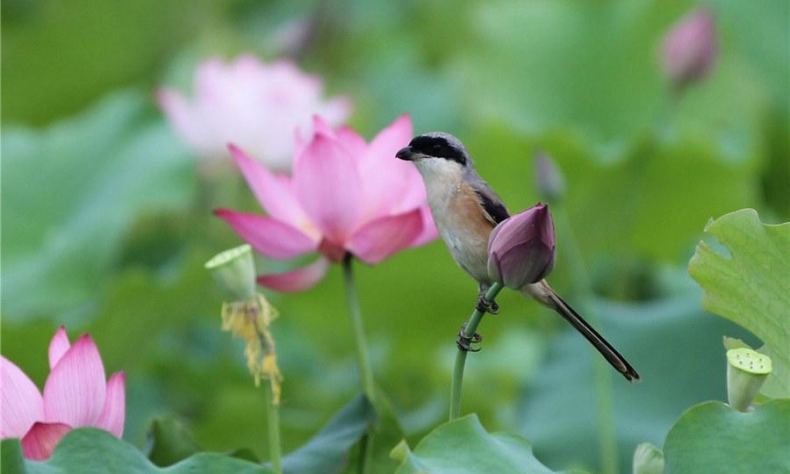
The more we understand the risks of biodiversity loss, the more we understand that by helping nature, we help ourselves.
International Day for Biological Diversity falls on May 22. For this year, it emphasizes “harmony with nature and sustainable development”. Globally, nature is in crisis. In the last 50 years, the populations of vertebrates have fallen by an average of 73?percent.?It is estimated that around 90?percent?of the large fish in the oceans have disappeared and the extinction rate of species is thought to be up to 1,000 times the natural rate.
Some people might say — what does it matter to me if a frog in Costa Rica or a fish in Sri Lanka goes extinct??The answer is that the loss of any species due to human activity damages the biology chain in the nature, weakens nature’s resilience and that brings risks to us, as humans.?It is easy to forget that humans are just one ape species (Homo sapiens) that evolved in, and is dependent on, nature.?Nature is our life support system.
The risks of biodiversity loss are poorly understood but as we slowly gain greater knowledge, we are beginning to realise that the risks of biodiversity loss are likely to be on a similar scale as, or even greater than, the risks of climate change.
Two of the most striking risks are to our economy and public health.?Recent reports by the World Economic Forum and Price Waterhouse Coopers assessed that 55?percent?of the global economy is highly or moderately dependent on nature or the services it provides.?So as we undermine nature, we undermine our future prosperity.?At the same time, there is growing evidence to suggest that the more we stress nature, the more we put people into contact with stressed ecosystems in a way that increases the risk of the transfer of zoonotic diseases.?It is likely no coincidence that during the last few decades of catastrophic biodiversity loss, we have seen outbreaks of several zoonotic diseases, including SARS, MERS, Ebola and of course, most recently, SARS-COV2, the virus responsible for COVID-19.
So, since nature is so valuable, why are we losing it so fast? The main reason is that the human population is increasing rapidly.?The?second reason is a lack of awareness of what we have around us.?Every day we lose lots of nature simply because people don’t know it’s there.?This is an issue all over the world but, to illustrate the point,?I will give you an example.?When I first came to Beijing and people found out I liked to go birdwatching, most people would look at me as if I were?crazy and say “Why are you in Beijing? There are no birds in Beijing!”?But the reality is that Beijing has recorded more than 500 species of bird, many more than my capital city of London, Washington DC, Paris, Moscow and, in fact, among G20 capitals, Beijing ranks second only to Brasilia.

The reason Beijing is so good for birds is due to its location, right in the heart of a major bird expressway called the East Asian-Australasian Flyway.?Every spring, billions of birds fly north to take advantage of the northern summer.?Long days and, more importantly, the explosion of insect life, mean that it is worth their investment of energy to travel north as they can have more offspring, more quickly than if they stayed further south.?But in winter, temperatures plummet in the far north and there are few insects, so the vast majority of these birds must fly south for the winter to find food and shelter.?This means that spring and autumn are like rush hour on the bird expressway.?And, just as you and I, if we go on a long journey on the expressway, the birds must rest, eat and drink.?So we can think of Beijing as a service station on the bird expressway.
Some people might say, if there are so many birds migrating in spring and autumn, why?I don’t?see the sky full of birds when I look up??The answer is that 80?percent?of migratory birds travel at night.?They do this for three reasons. First, it is safer.?There are fewer predators active at night.?Second, it is cooler.?Migration is an intense exercise,?and it is much more comfortable to run a marathon in cooler temperatures than in the midday sun.?And third, many birds navigate using the night sky.
To illustrate this point, from 2021 to 2024, scientists from Beijing?University teamed up with the Asian Infrastructure Investment Bank to gain insight into nocturnal bird migration over the city. A simple digital sound recorder was placed on the roof of the bank’s headquarters in central Beijing and programmed to record from sunset to sunrise through the migration season. The results were astonishing. More than 37,000 calls were recorded from over 100 species in the first autumn alone. Given the recorder’s limited range, it is estimated that millions of birds will be involved if migration happens at an equivalent rate across the city.?So, as we sleep in our beds at night, an invisible miracle happens over our heads.
Today, these migratory birds face growing threats. In the last few decades, the night sky has changed dramatically. Light pollution, especially around cities, is pervasive and harmful to migratory birds. Studies have shown that light pollution disorients migratory birds, leading to confusion and exhaustion. It can cause these birds to land in urban environments where they are exposed to many anthropogenic threats, including collisions with glass, domestic cats, and human disturbance. Migratory birds need to feed during daylight hours. In urban environments, reflections of natural habitats in glass can trick birds into thinking there are safe places to forage and shelter. Flying towards them at full speed can result in serious injury and death. It is estimated that, in North America alone, up to a billion birds are killed every year through collisions with glass.
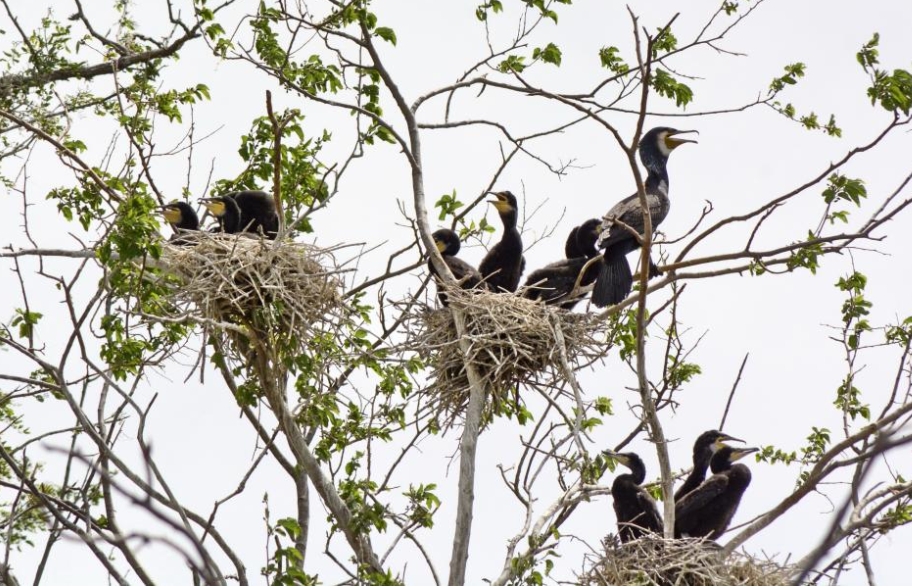
The good news is that there is much that cities can do to help facilitate the safe passage of migratory birds.
Reduce light pollution.?Mitigating light pollution diminishes the number of birds that are disoriented and drop into urban environments. Studies show that reducing light pollution is good for migratory birds and human physical and mental health and, of course, reduces energy?consumption use?and its associated greenhouse gas emissions.
Reduce the amount of reflective glass in buildings, especially on the lowest five floors, where around 90 percent of collisions occur.?Some cities, for example, New York, now have bird-friendly building regulations, requiring all new buildings and all major renovations to use bird-friendly glass, which reduces reflectivity. And there are many examples of companies—like Asia’s largest tech company, Tencent in Shenzhen—taking the initiative to retrofit existing buildings with special patterned film to break up the reflection and reduce the likelihood of bird collisions.
Provide a diversity of urban green spaces that act as stepping-stones for migratory birds to cross major urban areas.?The study in Beijing from the roof of the Asian Infrastructure Investment Bank showed that a diversity of species flying over the city at night requires diverse habitats. The top three species recorded by volume were the Olive-backed Pipit (Anthus hodgsoni), a bird of forests, the Black-crowned Night Heron (Nycticorax nycticorax), a bird of wetlands, and the Eurasian Skylark (Alauda arvensis), a bird of grassland. This means we should consider not only tree cover but also the area of grassland and wetland as an indication of the quality of the environment.
Cities may not be the first place people consider when considering how to support nature. However, integrating the needs of migratory birds into urban planning and management offers some of the “low-hanging fruit” to support biodiversity. And the more we understand the risks of biodiversity loss, the more we understand that by helping nature, we help ourselves.
The author is a Beijing-based wildlife conservationist.
The article reflects the author’s opinions, and not necessarily the views of China Focus.