Unlocking China’s Growth
 Facebook
 Twitter
 Linkedin
 Google +
From a global perspective, the policies introduced by China are meaningful not only for China’s benefit but also for global economic growth and the stability of the current global economic and financial landscape.
Amid the continuous rollout and implementation of a series of financial and fiscal policies, China has released its third-quarter economic results. Can it meet its economic growth target for the year as expected, and what direction should the economy take in the future? To explore these questions,?Beijing Review?reporter?Zhang Shasha?interviewed Bank of China’s chief researcher?Zong Liang. Edited excerpts of their conversation follow:
Beijing Review:?Following the U.S. Federal Reserve’s decision to cut interest rates, China rolled out a comprehensive package of financial and fiscal policies. Do you believe there is a connection between the two? In what ways do they influence one another?
Zong Liang:?Broadly speaking, China’s policy decisions are made based on the country’s own circumstances. At each stage, policies are formulated through a comprehensive assessment of the current economic and financial conditions that the nation is facing. This serves as a fundamental guiding principle.
However, it must be acknowledged that there is a certain degree of correlation between the two. The Fed’s interest rate cut provided China with a timely and favorable opportunity to introduce this stimulus package, which also contributes to improving the effectiveness of its implementation.
In a sense, the Fed’s rate cut suggests that the global economy is entering a broader cycle of interest rate reductions. Under this backdrop, significant impacts can emerge, such as shifts in market expectations. As these expectations change, global capital flows become more diversified, no longer predominantly moving toward the U.S., which had been driven by its previously higher interest rates. With this shift, capital flows will adjust, and exchange rates will also change accordingly. More capital will likely to move toward the Asia-Pacific region, providing a stronger foundation for the stability of the renminbi exchange rate. In this context, China’s policy flexibility has increased, creating an opportune moment to introduce a comprehensive package of financial and fiscal policies.
China’s implementation of the policy package could indeed have direct or indirect effects on the pace of U.S. interest rate cuts. As China’s market becomes more dynamic, many global investors, including those who previously focused on the U.S., may be drawn to invest in China. This shift affects the global exchange rate landscape, which may not fully align with the Fed’s goals or expectations behind its rate cuts. Ideally, the U.S. would like to see exchange rates remain stable and capital flows remain largely within its borders, even in a rate-cutting environment. However, these shifts may diverge from those aims. With China emerging as a key investment destination, this divergence could influence U.S. policy. For instance, there could be discussions about whether the rate cuts have been too aggressive, whether it’s time to pause further cuts, or whether to adjust the pace of rate reductions.
From a global perspective, the policies introduced by China present a great opportunity for international investors. These measures are meaningful not only for China’s benefit but also for global economic growth and the stability of the current global economic and financial landscape.

The current stimulus package has drawn attention both domestically and internationally. Some have compared it to China’s 4-trillion-yuan ($586-billion) plan introduced during the 2008 global financial crisis, with speculation that this package could also reach several trillion yuan. What is your take on this view?
It’s important to recognize that there are some similarities between the two approaches. Both are sizable in scale, utilize a variety of tools, and have the potential for profound impact. However, there are also several notable differences.
First, the context has changed. Back then, globalization was a key focus, and global economic relations were generally stable and cooperative. In that environment, China’s primary concern was whether the U.S.-led global financial crisis might disrupt its own economic growth. It was a short-term, unexpected event, with a relatively stable external environment.
Second, the objectives differ. In 2008, the focus was mainly on addressing cyclical issues. Today, we are dealing with both cyclical challenges and structural problems. In the short term, we aim to meet our economic growth target for 2024, but in the medium to long term, the focus is on achieving high-quality development and laying a solid foundation for the 2035 goals. We must ensure that short-term and long-term objectives are aligned.
Third, the methods used are different. In 2008, the approach was primarily a large-scale stimulus. This time, the country is implementing a combination of strong fiscal and monetary policies alongside comprehensive reforms. For instance, there are targeted measures for the real estate sector and capital markets, as well as structural reforms to address local government debt. To support the private economy, the Ministry of Justice and the National Development and Reform Commission on October 10 published a draft of the private sector promotion law to solicit public opinion.
The scale of the current policy measures is quite substantial, and the government’s commitment is clearly strong. While it hasn’t provided an exact figure for the total size, this approach is actually more meaningful than giving a specific number. It indicates that the policy measures will be tailored to address the issues facing China’s economic development as they arise.
For instance, the central bank has stated that the initial phase of the newly launched swap tool—Securities, Funds and Insurance Companies Swap Facility—will be 500 billion yuan, with the potential for expansion depending on the situation. If the first 500 billion yuan is used effectively, another 500 billion yuan could follow, and even a third round could be implemented. This kind of open-ended approach is unprecedented, leaving huge room for flexibility.
Additionally, the Ministry of Finance has highlighted that the Central Government still has considerable capacity for borrowing and increasing the fiscal deficit. This essentially means that going forward, there is policy space available to take further action as needed. The appropriate scale of the stimulus will be determined based on what is necessary to meet both short-term and long-term economic objectives.
In your view, is the goal of around 5-percent economic growth for this year attainable??
Given the current conditions, the target of around 5 percent for the year is achievable.
What gives me this confidence?

Firstly, the policies that have been introduced so far, including the stimulus package, demonstrate the government’s strong determination. These policies are specifically aimed at achieving this target, employing a wide range of comprehensive?measures.
Secondly, the data also provide a solid foundation for this confidence. Looking at the past few years, excluding the impact of the pandemic from 2020 to 2022, China’s economic growth has consistently been above 5 percent. In the first three quarters of this year, GDP grew by 4.8 percent year on year. Notably, in September, several key indicators showed improvement, and market expectations have risen, contributing to a growing number of positive factors driving economic recovery.
In terms of consumption, since the third quarter, the large-scale equipment renewal and trade-in of old consumer goods policies have gained momentum, leading to strong sales in home appliances and automobiles. In September, total retail sales of consumer goods increased by 3.2 percent year on year, 1.1 percentage points higher than in August, demonstrating the clear effects of policies aimed at boosting demand.
Investment growth also stabilized in September. Fixed asset investment grew by 3.4 percent year on year in the first three quarters, the same as in the January-August period.
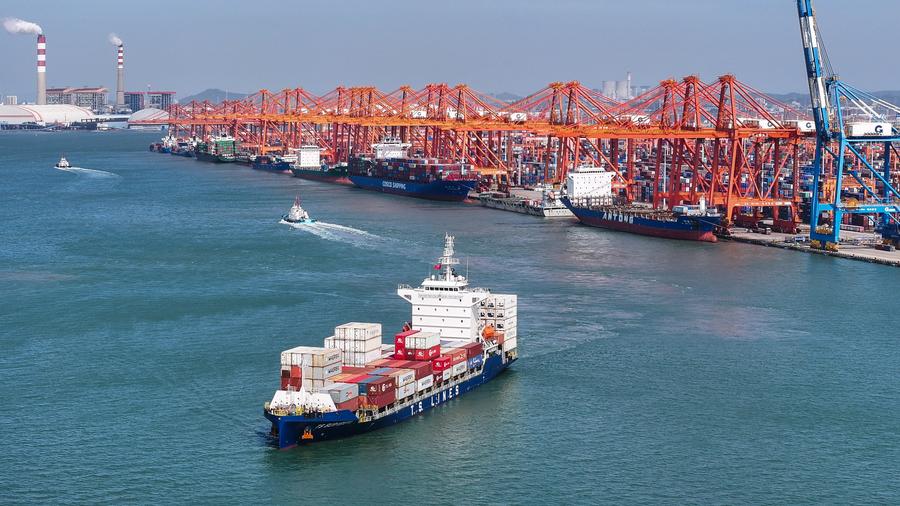
Exports have been performing well this year, with goods exports reaching 18.6 trillion yuan ($2.6 trillion) in the first three quarters, up 6.2 percent year on year. Following the introduction of recent policies, the stock market has also shown increased activity. In August, trading volumes in the Shanghai and Shenzhen stock exchanges fell by 15.3 percent, but in September, they surged by 32.7 percent.
While the effects of these policies on the real estate market are still emerging, there has already been a clear increase in new home viewings, visits and contracts signed since the end of September. Meanwhile, second-hand property transactions have continued to rise. If the real estate sector’s negative drag on growth is reduced in the fourth quarter, I believe it could significantly speed up overall?economic growth. Furthermore, with the full implementation of policies in the fourth quarter, consumption is likely to see another noticeable boost. So from a data perspective, achieving the growth target seems feasible.
What are the challenges facing China’s economy and how can they be overcome?
In the short term, ensuring steady economic growth and meeting the annual target presents a key challenge. This also involves addressing specific issues, such as stimulating consumption and managing critical risks.
In the long term, the challenge lies in maintaining a strong growth rate for China’s economy while also ensuring high-quality development. To achieve this, I believe two key measures are essential.
First, we must seize the favorable domestic?and international conditions to implement a comprehensive stimulus package of financial and fiscal policies. These policies will play a major role in adjusting the market, improving the business environment, and providing support for private enterprises.
Second, we must remain committed to deepening reform and opening up. High-quality development is the fundamental principle, and we must continue to focus on economic development. Through reforms, we can improve areas where the business environment has previously been less than ideal. At the same time, we must strengthen social services such as education, healthcare and elderly care. This will boost the morale of private enterprises and build consumer confidence.
Furthermore, by promoting high-level opening up, making market access easier, and enhancing the business environment for foreign investment, both private and foreign enterprises—the key players in the market—will have more opportunities for growth. It’s also important to better define the roles of government and the market. Wherever possible, tasks should be left to the market, as over-involvement by the government can lead to higher costs. Reducing these costs and maximizing market efficiency will unleash market vitality.
On a global scale, there is a growing consensus around?peaceful development and win-win cooperation, which represents a major opportunity for China’s future development. While some countries still pursue sanctions and conflict, the majority of nations support peaceful development and mutual cooperation. China is both a beneficiary and an active participant in this trend. The Regional Comprehensive Economic Partnership (RCEP) has shown strong results, more countries are joining the BRICS framework, and the Belt and Road Initiative is becoming increasingly influential. These initiatives present great opportunities for China moving forward.
Domestically, China’s consumer market holds enormous potential. The current policies have combined efforts to boost consumption with initiatives to improve people’s livelihoods, while also working to enhance the structure of consumption. With a population of 1.4 billion, and such a diverse range of consumption patterns among them, this forms a tremendous market?potential.
China is transitioning beyond the middle-income trap, and a major shift is taking place in this new era. A key focus is creating a consumption system that supports the people’s aspirations for a better life and contributes to the building of a modern, strong nation. This new consumption system aims to expand the middle class, thereby unlocking even more consumption potential. Importantly, as we tap into this consumption potential, we must ensure that businesses of all ownership structures, including foreign enterprises, can share in the benefits.
Lastly, we have considerable policy flexibility and opportunities. From a global standpoint, the U.S. interest rate cuts and shifts in global monetary and financial policies are creating changes in the economic landscape. In this unique context, our policy space is quite broad, giving us the ability to adjust in line with the needs of China’s economic development. This policy flexibility, in itself, presents a major opportunity.