Unity of Knowing and Doing
 Facebook
 Twitter
 Linkedin
 Google +
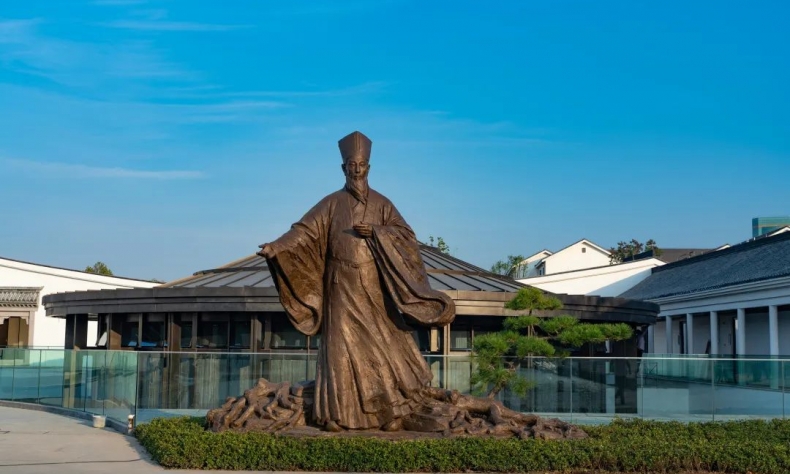
For Marxism, practice is the purpose of acquiring knowledge and knowledge impacts practice. This view accords with the traditional Chinese idea that ‘knowledge is the prelude to doing, and doing is the consummation of knowledge.’
Unity?of knowing and doing is a key concept in ancient Chinese philosophy. Discussions on knowing and doing can be traced back to the pre-Qin period (before 221 B.C.). The?Book of History?(Shangshu), a collection of orations made by rulers and important ministers from mythological times to the middle of the Western Zhou Dynasty (c. 1100 B.C.-c. 771 B.C.), and some other texts, says, “It is easy to gain knowledge, but it is hard to put it into action.” The relationship between knowing and doing continued to be a subject of common discussion among Chinese philosophers during the following eras. While different philosophers held varied views on their sequential order and importance, a philosopher from the Ming Dynasty named Wang Yangming (1742-1529) underscored their unity, advocating for matching one’s thoughts with their deeds. His thinking exerted a profound influence on Chinese philosophy and culture.
Like the two sides of a coin, knowing and doing are internal and external indicators of a person’s moral stature. In?The Analects, Confucius observed that wise men have an agile mindset, hence they have a natural liking for clear running water; benevolent people are genial and self-collected, and they understandably have a strong penchant for the views of mighty mountains. To cultivate their moral character, one needs to refine both their mind and behavior.
A New Account of Tales of the World?(Shi Shuo Xin Yu), a book written in the fifth century on the remarks and anecdotes of some historical figures, includes a story of two young friends named Guan Ning and Hua Xin who lived in the third century. One day the two young men came across a gold ingot while working in a vegetable field. Guan Ning did not show the slightest interest in the ingot. Hua Xin, on the other hand, picked it up without any thought, but soon realized that his actions betrayed his craving for money, which was despised by men of learning. He immediately feigned indifference to the gold and put it down. On another day while the two friends were reading, an aristocrat and his entourage drove by their house. Guan Ning was undisturbed while Hua Xin bolted out to watch the procession in admiration. Seeing that his friend was obsessed with fame, fortune, and power, Guan Ning decided to end his friendship with Hua Xin.
This story is an example of how thoughts are instinctively reflected in behavior. To be a person of noble character, one must seek both his inner world to improve, cleaning his mind of ignoble thoughts and mending the defects in his behavior. No matter how hard people may try to disguise themselves, they will show their true colors sooner or later.
The unity of knowledge and action emphasizes practicability. As Wang Yangming said, knowing without applying is like learning nothing, while doing without understanding is like walking in darkness. People can acquire true knowledge only after testing it in their practice, and they can act appropriately only when guided by good judgment and reasoning. Zhao Kuo, a general of the State of Zhao during the Warring States period (475 B.C.-221 B.C.), learned this lesson the hard way.
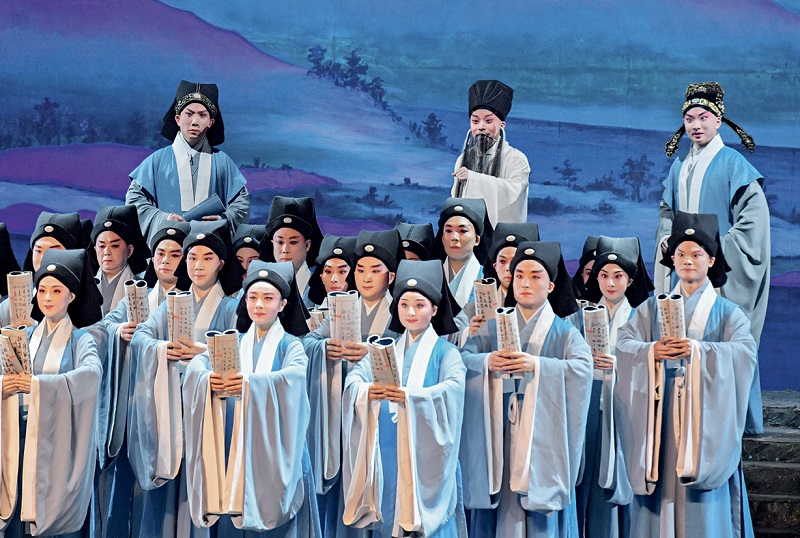
According to?Zuo Qiuming’s Chronicles?(Zuozhuan), Zhao Kuo had been a military buff since his childhood. He read extensively and was a great debater on the art of war. Despite not having any personal experience in real battles, he nevertheless believed that he was the best military strategist in the world. In the year 259 B.C., the State of Qin launched a war against the State of Zhao, but made little progress due to the fierce resistance led by Zhao’s veteran general Lian Po. To get Lian out of its way, the Qin army spread rumors that the person they were most afraid of was Zhao Kuo. The Duke of Zhao took the bait and replaced Lian Po with Zhao Kuo. Without any practical experience, Zhao Kuo mechanically followed the military strategies described in the military books he had read in the battles, which unsurprisingly ended in the complete destruction of Zhao’s 400,000 soldiers. He himself was also killed by arrows during the fighting.
In the case of Zhao Kuo, his military knowledge had never been tested on the battlefield, it was hence not true knowledge. Later as the commander of an army, he simply aped the theorists he had read about without adjusting his tactics according to the actual situation at the forefront. His commanding was hence nonsensical and futile.
By contrast, Wang Yangming, an outstanding Chinese figure in both civil and military services, set a good example of applying what one learns in their behavior. After putting down a number of insurrections, Wang was granted a title of nobility by the Ming emperor, becoming one of only three civil officials to receive that honor during the dynasty that ruled from 1368 to 1644.
Wang’s path to success was not all smooth sailing. During his earlier years in the imperial court, he ran afoul of the powerful eunuch Liu Jin, and was exiled to Longchang, a mountainous town in modern-day Guizhou Province, in 1506. The rigors of life in a culturally and economically backward region did not dishearten the young man. He taught locals the advanced culture of the Central Plains, including Confucianism, and was highly respected by them. Meanwhile, he dedicated himself to the study of philosophy, which laid the foundation for his school of thought. After the downfall of Liu Jin, Wang was reinstated to his old position, and soon showed military genius. In 1517, he led an army to quell rebellions in Jiangxi, Guangxi, and Guangdong. Two years later he ended another riot started by Prince Zhu Chenhao within a month.
Through the various vicissitudes of life that he experienced, Wang Yangming always harbored the Confucian ideals of pursuing self-improvement, having healthy family ties, running the country well, and pursuing world peace. Even when he was going through a difficult time, he did not flinch. Once he was put in a senior position, he served his country with his academic accomplishments and military feats. He was good at both learning and practicing what he learned.
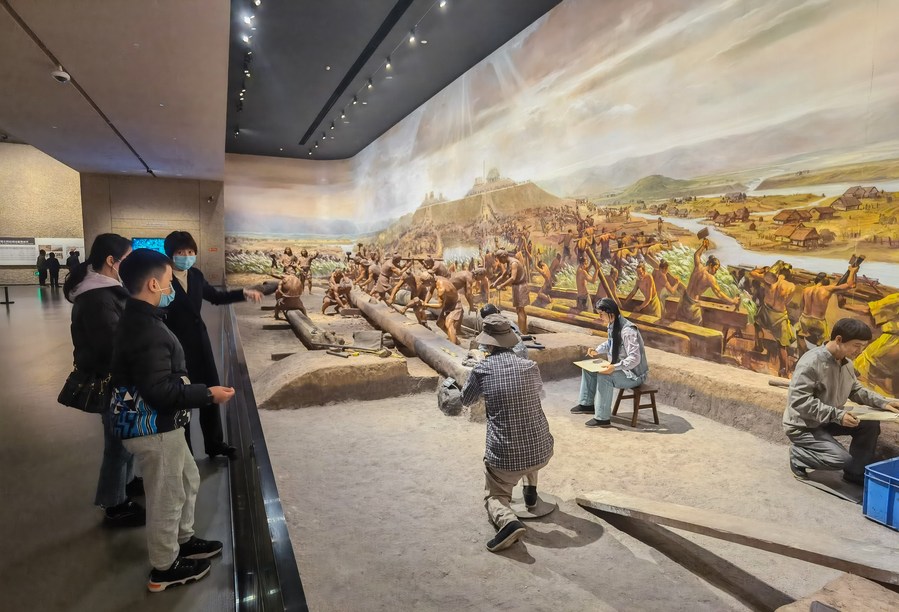
For Marxism, practice is the purpose of acquiring knowledge and knowledge impacts practice. This view accords with the traditional Chinese idea that “knowledge is the prelude to doing, and doing is the consummation of knowledge.” Both of these ideologies emphasize the guiding role of knowing and the central position of doing in their relationship.
Since the founding of the Communist Party of China (CPC) more than 100 years ago, it has faithfully applied what it has learned into practice. With the goal of pursuing happiness for the Chinese people and rejuvenation of the Chinese nation, Chinese communists integrate the basic tenets of Marxism with the specific realities and fine traditional culture of China. In so doing, they have made theoretical achievements of Marxism with Chinese characteristics. This has enabled the CPC to overcome all difficulties along the pathway, leading the nation to independence, greater strength, and eventually rejuvenation.
Carrying forward this fine tradition, President Xi Jinping has presented the Thought on Socialism with Chinese Characteristics for a New Era, which serves as the guideline for the governance of China during its new stage of development. In order to realize the Chinese dream of national rejuvenation, China can neither follow the capitalist path of foreign plunder and expansion, nor the unsustainable approach of polluting the environment and depleting resources. Instead we should advance reform and opening-up and work for peaceful development through cooperation with people of other countries.
As we explore theories of Chinese socialism and the Chinese path to modernization under new circumstances, we must always uphold the principle that practice is the sole criterion for testing truth, constantly garnering experience and gaining knowledge during the process of applying what we have learned. In doing so, we will further enrich Marxism, create a better life for our people, build a stronger country, open an alternative path of development for the reference of other developing countries, and present a new model for human advancement.
Cui Weifang is an assistant researcher with the Confucius Research Institute.