There Is No Room to Argue over China’s Seat at the United Nations
 Facebook
 Twitter
 Linkedin
 Google +
Over the past fifty years, China developed into a leading factor in international relations. China’s constructive approach in global governance and strong support for the UN plays a key role in promoting a shared future for the international community.
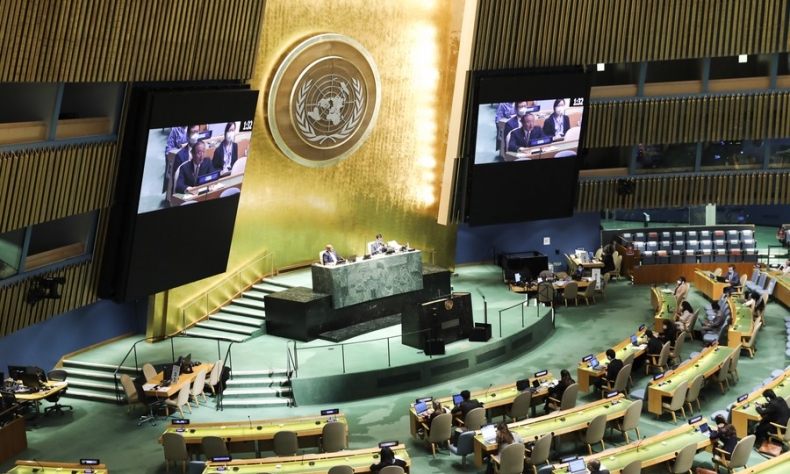
On October 25, 1971, the United Nations 26th General Assembly voted to restore the lawful rights of the People’s Republic of China (PRC) to its seat in the organization. The United States lost its two-decade-long Cold War battle at the UN against the PRC.
The two decades of opposition to the PRC led by the United States was overcome in the historic vote: 76 votes in favor of the PRC, 35 against, 17 abstaining. The representative of so-called “Republic of China” on Taiwan island was expelled forthwith and the PRC took its rightful place as China in the international organization.
Despite efforts by some in the US government and public during World War II and during the immediate postwar to develop relations with the forces of the new China, the anti-PRC lobby in the US blocked the efforts. The anti-PRC lobby itself was driven and heavily financed by the anti-PRC forces on Taiwan island. Back in that day, the lobby in Washington was called the “China Lobby” whereas today it is known as the Taiwan Lobby.
In Washington, the Cold War China Lobby created the “Committee of One Million Against the Admission of Red China to the United Nations.” The organization was funded by a wealthy businessman, T.V. Soong, who was the brother-in-law of Chiang Kai-shek. The China Lobby in Washington played the leading role against the PRC until the early 1970s when President Richard Nixon made the historic opening to China.
Despite the United States playing a major role in the founding of the United Nations, Washington has often betrayed the principles of the international organization. Since its founding, Washington has manipulated the organization for short term and short-sighted interests. The case of the PRC is one example.
Beginning in 1950, a number of states attempted to help the PRC gain its rightful place at the UN. In September 1950, the 5th UN General Assembly voted down resolutions to this end advanced by India and the Soviet Union. US intervention and manipulation succeeded in blocking the PRC.
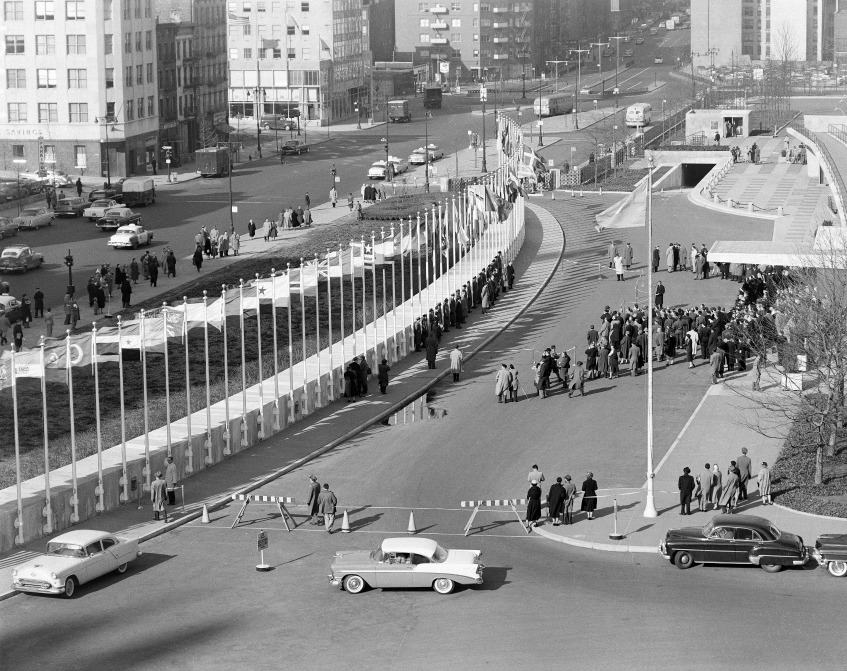
The UN then decided to establish a seven-country committee to study the issue of China’s representation at the UN. At the same time, it was decided that the ROC (or Taiwan authorities) would continue to represent China.
Washington’s next major move came a year later. In 1951, the 6th UN General Assembly voted down a resolution, proposed by the Soviet Union, to place the issue of the PRC representation on the agenda. Again, Washington successfully intervened and manipulated the vote. Also, the US was able to pass a resolution that postponed the review of China’s representation.
But over the following decade, the tide began to turn in favor of the PRC. More and more countries took the side of the PRC and rejected Washington’s diktat. Thus, at the 15th UN General Assembly in 1960, when the US tried to prevent consideration of China’s representation the voting revealed this shift in opinion. While 42 countries supported the US, 34 were against, and 22 abstained from the vote. The margin of support for Washington was thus down to only 8 votes and the trend was clear.
The US, however, maintained its opposition and used various means to continue to block the PRC. In 1961, the UN General Assembly was about to place the issue of China’s representation on the agenda. But Washington was able to maneuver a resolution that made the issue of China’s representation an “important question” that would require two-thirds majority vote in the General Assembly.
Times were changing in the 1960s, however, as decolonization gained strength and many new and independent states thus entered the international community and the UN system. The 500-year-old phase of Western imperialism and colonization was ending. So, this new international situation favored the recognition of the rights of the PRC at the UN.
During the 1960s, as newly independent countries came into being, the Non-Aligned Movement was formed strengthening their solidarity. Washington, of course, was in full Cold War mode and so kept the pressure up on the PRC at the UN with the “important question” resolutions to postpone consideration of China’s representation.
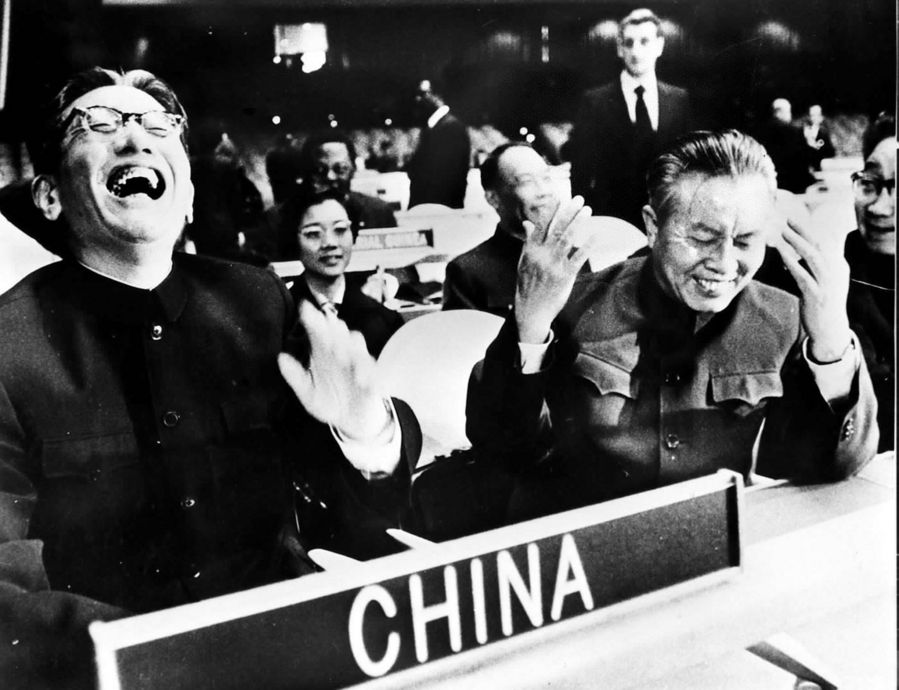
Washington’s negative Cold War policy reached a dead end in 1971. In July, at the 26th General Assembly, the US attempted a new ploy when it promoted the concept of “dual representation” of the ROC on Taiwan island and the PRC. This “two China” policy went nowhere.
Finally, on October 25, the UN General Assembly voted down the US-backed “important question” resolution to postpone. At this time, there were 59 votes against, 55 votes for, and 15 abstentions. Having voted down this resolution, the General Assembly could then proceed to consider the representation issue.
With the procedural path cleared, the UN General Assembly voted overwhelmingly to restore the lawful rights of the PRC in the UN by Resolution 2758. Twenty-three countries sponsored the resolution: 76 for, 35 against, 17 abstentions.
Given this shift in international opinion in favor of the PRC the handwriting was on the wall for US China policy. Adjustments to Washington’s China policy were clearly needed and the timing of President Nixon’s initiative to revise US China policy reflected the new situation.
On July 15, 1971, President Nixon announced that he would visit China the following year. This televised statement shocked the world at the time. But Nixon had a firm grasp of international politics and a realistic perspective. Despite his record as an anti-communist politician, he saw that the US could not ignore a country and civilization with a billion people.
Growing up in California and fighting in the Pacific during World War II, Nixon had a natural Pacific perspective and recognized the necessity to revise substantially US foreign policy. Nixon opted for pragmatism with a view to the future and hope for a cooperative relationship with China. President Jimmy Carter ably continued this historic effort.
Unfortunately, in recent years, Washington turned away from the vision of Presidents Nixon and Carter. The elite consensus for Cold War update beginning with the Obama administration, and continued by the Trump and Biden administrations, introduced unnecessary and sharp tensions into US-China relations.
At this 50th anniversary of the PRC gaining its rights in the UN, supported by the majority of the UN member states, Washington must reflect and drop its dead-end Cold War policy. Over the past fifty years, China developed into a leading factor in international relations. China’s constructive approach in global governance and strong support for the UN plays a key role in promoting a shared future for the international community.