The Yunnan Model
 Facebook
 Twitter
 Linkedin
 Google +
The ecological environment is the foundation of human survival and development, and it is the common wish of people from all over the world to maintain a good ecology.
Every day, Xu Xiaolong, a 30-something villager, follows a rigorous routine—taking cornmeal and mealworms with him to bird-watching stations in the vicinity of his home to feed birds.
Shiti Village, where Xu lives, is a bird haven. It nestles among forest-covered mountains in Yunnan Province in southwest China and is close to the Tongbiguan Nature Reserve, home to a number of rare animals and plants.
The village, which lies in Yingjiang County, Dehong Dai and Jingpo Autonomous Prefecture, has forest covering over 90 percent of its land and has more than 400 species of birds, according to the prefectural rural revitalization bureau. The CNG Field Guide to the Birds of China (2021) compiled by Chinese National Geography (CNG) magazine in collaboration with prominent scholars shows that there are 1,491 bird species in China.
Xu works as a guide, helping bird watchers, especially nature photographers, find rare birds.
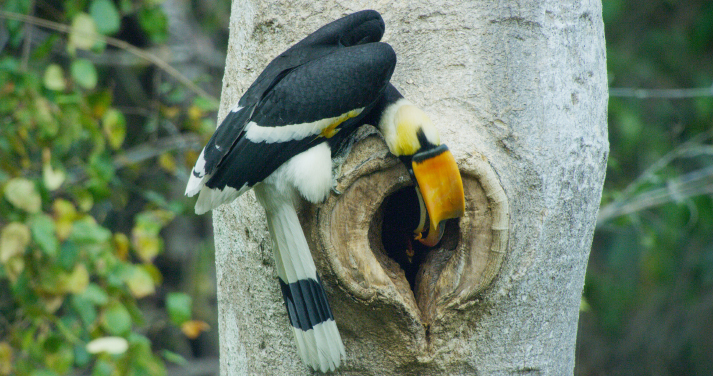
Among the numerous birds in the area, hornbills are the best known, giving the area the nickname of Hornbill Valley. Five hornbill species are known to live in China, and Dehong is the only place where all can be found. Since last year, they have all been put under top-level national protection.
Hornbills are famed not only for their beauty, but also for their monogamous nesting ritual. According to experts, for couples in most species of the hornbill family, after mating, the male will seal the female inside a tree cavity to protect her from predators, leaving only a small slit to feed her. She will lay one or two eggs, and incubate them for about 40 days. Usually only one chick will survive. The male will continue to deliver food until the young bird becomes feathered and leaves the nest.
This July, a video shot by a nature photographer featuring a great hornbill couple with their baby in Yingjiang went viral online. The footage is considered to have high value as the view caught is rare. The great hornbill is listed as vulnerable by the International Union for Conservation of Nature (IUCN). In China, it can be found in Yunnan, Tibet Autonomous Region and Guangxi Zhuang Autonomous Region.
Shiti provides an example of restoring rapport between humans and nature. Jiang Shan, Secretary of the Communist Party of China Dehong Prefectural Committee, the highest-ranking local official, highlighted its progress on August 2, while briefing media about the prefecture’s development in the past decade. It is a model under which “loggers become forest rangers and bird poachers become bird-watching guides,” he said.
Substantive change
Located in a remote mountainous area adjacent to Myanmar, Shiti used to be underdeveloped. Just about a decade ago, goods delivered to the village had to be carried by people and horses, and it had no access to tap water, electricity, or telecommunication services. Villagers once engaged in slash and burn cultivation, clearing forests to make room to grow lemongrass, which seriously damaged the environment.
This threatened the habitat of hornbills and other birds. Hornbills are large birds with a body length of about 1.2 meters and a wingspan of about 1.5 meters, and can live for up to 50 years. They consume large volumes of fruit, insects and small lizards, and need large and tall trees for nesting.
Villagers did not make much money from growing crops. As of 2016, among the 363 people in 81 households in the village, half of them were living under the poverty line, according to Dehong’s rural revitalization bureau.
A dramatic change has taken place since 2015, when the county government made targeted poverty alleviation plans for the village. The government subsidized villagers’ rebuilding and renovating of their houses; and with participation from local enterprises, had roads paved, and facilities built including a clinic, street lamps, infrastructure pipelines, communication networks, and waste disposal. Some villagers have been hired as forest rangers. Others are trained to grow nuts, lychees and coffee beans. Villagers have also been given compensation for giving up crop cultivation to rehabilitate forests.
In late 2015, Yingjiang decided to pilot bird-watching tourism in Shiti. Since then, Xu has become a bird-watching guide, and his family has launched a homestay. During particularly profitable years, the homestay business brought an annual income of about 40,000-50,000 yuan ($5,788-7,235), he said. This June, Xu appeared in a live broadcast on China Global Television Network, the national English-language television channel, featuring his hometown and sharing his stories.
Every year, bird watchers pay nearly 20,000 visits to the village, and now the village has 24 homestays, and more than 40 bird-watching stations, according to Pai Zhonghua, a village leader. Villagers’ per-capita annual net income has grown from less than 2,000 yuan ($289.4) in 2016 to more than 8,000 yuan ($1157.6) currently, he told Yunnan Legal Daily in August. The village has moved out of poverty.
Villagers, who used to hunt birds for food, have now become their guardians. “Some people once snuck into Shiti to poach birds, which villagers then reported to the police, who handled the matter according to law,” Pai said.
Shiti’s transformation has been selected as a typical case of public participation in building a more beautiful China by the Ministry of Ecology and Environment (MEE).
A land of diversity
“Harmonious coexistence between humanity and nature is changing from a vision to reality,” said Li Guoshu, spokesperson for the Department of Ecology and Environment of Yunnan on August 15 at a press conference on ecological progress in the province.
He said the province has set up 362 nature reserves, and put 30.9 percent of its land under top-tier ecological conservation.
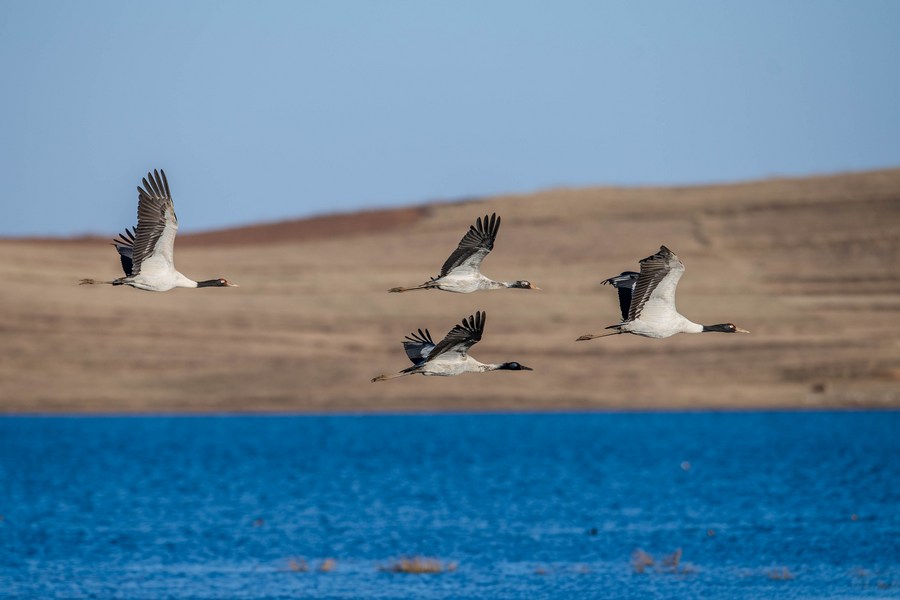
Yunnan has glacier-capped mountains as high as 6,700 meters and tropical valleys that are only dozens of meters above sea level. “With diverse climate and abundant natural resources, Yunnan is an important biodiversity treasure trove and an ecological security barrier in southwest China,” said Yunnan Vice Governor Wang Xiangang on August 28, at the opening ceremony of the 2022 Erhai Forum on Global Ecological Civilization Construction, held in Dali, a city in Yunnan. The event gathered hundreds of participants from around China and the rest of the world who discussed topics related to the environment and conservation.
He said Yunnan has put ecological progress as a top priority while promoting quality social and economic development.
“Our ecological environment has improved in an all-round way, with the skies bluer, waters clearer, mountains greener, and the environment prettier,” he said.
The province’s forest area, stock and coverage rate are all among the top in China, and the typical ecosystems and major wild animals and plants are effectively protected, he said.
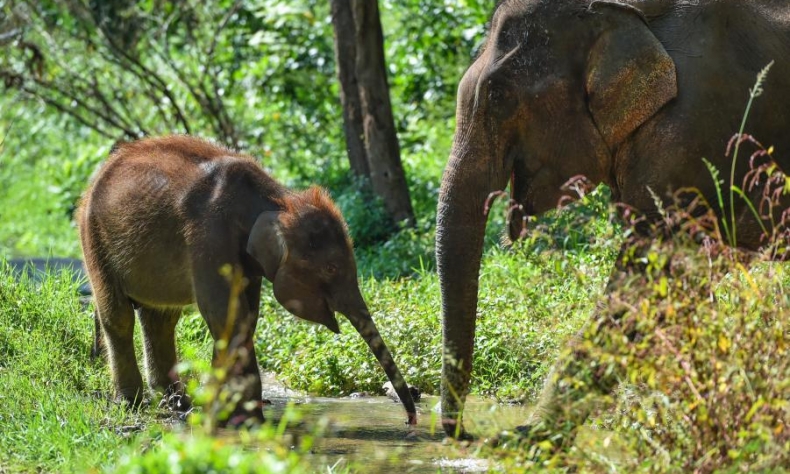
The population of endangered wild animals and plants such as Asian elephants, Yunnan snub-nosed monkeys and Pachylarnax sinica, a giant member of the magnolia family, has been increasing, he added.
Last year, 15 Asian elephants in Yunnan wandered out of their usual habitat, and trekked hundreds of kilometers northward, before returning to their native place. They received worldwide attention and assistance from locals during their journey, a telling example of harmony between humans and nature.
The population of Yunnan snub-nosed monkeys has rebounded from no more than 2,000 to over 3,800 over the past four decades, according to data revealed at an annual meeting on monkey protection in Yunnan, held in Dali on August 5.
Pachylarnax sinica, the giant tree species, has been on Earth for some 140 million years. Once, it was on the verge of extinction, with only 52 left in the wild. Now, tens of thousands have been bred artificially.
Artificial breeding of the green peafowl living in Yunnan, China’s only native peafowl, has also made progress. The IUCN listed the animal as endangered. According to state media outlet People’s Daily, in January 2021, six artificially bred green peafowls were successfully hatched. The wild population of the animal rose from fewer than 500 in 2017 to about 600 in 2021.
A cleaner place
In addition to biodiversity conservation, the overall environment of Yunnan has also improved. Wang said the number of days with excellent air quality in Yunnan’s cities has exceeded 98 percent of all days for six consecutive years; and in 2021, the proportion of surface water with excellent water quality rose to 89.6 percent.
Yunnan also stands out in green energy generation and consumption. In the past decade, 12 large hydropower stations have been put into operation, said Lu Wenxiang, head of the Energy Administration of Yunnan at a conference on Yunnan’s green energy development held on August 22. These include Baihetan and Xiluodu stations, which are among the top three hydropower stations in the nation, trailing only behind the Three Gorges project.
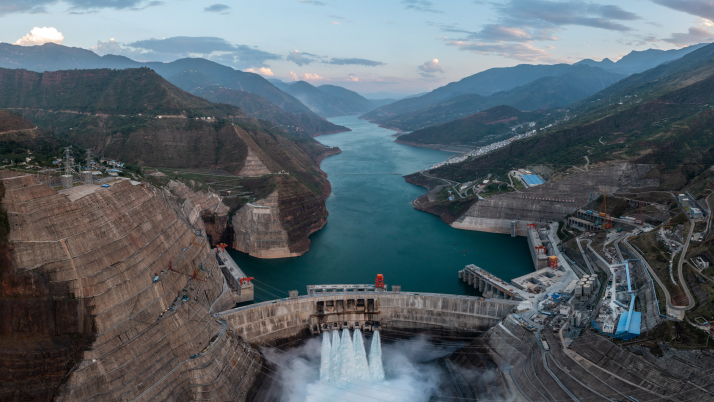
Lu said clean energy accounts for about 90 percent of the total electricity generated in the province, and the proportion of non-fossil energy in its primary energy consumption exceeds 42 percent, the highest in the nation.
In the past decade, Yunnan has transmitted half of the green electricity it has generated to provinces in the east, reducing carbon dioxide emissions by nearly 1 billion tons, he said.
Yunnan’s sound ecological environment has yielded benefits. It is one of the important factors attracting more and more tourists. Tourist visits paid to Yunnan surged from 201 million in 2012 to 807 million in 2019, growing at an average annual rate of 22 percent, while tourism revenue rose at an annual rate of 30.6 percent, said Zhao Guoliang, head of the Yunnan Provincial Department of Culture and Tourism.
In the first seven months of this year, Yunnan received 439 million tourist visits, with the number of visits and revenue respectively reaching 93.2 percent and 80 percent of the same period in 2019.
A sharing platform
Yunnan has also been promoting international exchanges on ecological protection. Last October, its capital Kunming hosted the first stage of the 15th Meeting of the Conference of the Parties to the Convention on Biological Diversity. In the lead-up to the conference, the First Erhai Forum was held in Dali that same month. The forum aims to promote international understanding of President Xi Jinping’s vision on eco-environmental progress, as well as introducing China’s efforts in biodiversity conservation and advancing global environmental governance.
This year, the Second Erhai Forum took place in Dali on August 28-29. It was cohosted by the China International Communications Group (CICG), the Yunnan Provincial Government and the China Public Relations Association. Representatives from governments, international organizations, as well as business and academic communities shared views on how to build a shared future for all life on Earth.
Frequent extreme weather events such as heat waves, wildfires and rainstorms have occurred across the globe this year, underlining the urgency for strengthening the construction of an ecological civilization, CICG President Du Zhanyuan said.
“The ecological environment is the foundation of human survival and development, and it is the common wish of people from all over the world to maintain a good ecology,” he said. He called for results-oriented action and deeper exchanges and cooperation.
Li Yonghong, Deputy Director General of the MEE’s Foreign Environmental Cooperation Center, elaborated on the center’s efforts to implement the Global Development Initiative put forward by President Xi in September 2021, which includes addressing climate change and promoting green development. He said his center has stepped up cooperation with Southeast Asian and African nations in regional environmental protection and climate governance.
Other participants also offered their insights and environmental case studies, such as host city Dali’s effort to improve the environment of Erhai Lake, and the efforts to clean up the Lijiang River in neighboring Guangxi.
The forum launched the Green Life City Alliance, an initiative encouraging everyone to play an active role in building a beautiful planet together.