The West Mustn’t Write China out of WWII Any Longer
 Facebook
 Twitter
 Linkedin
 Google +
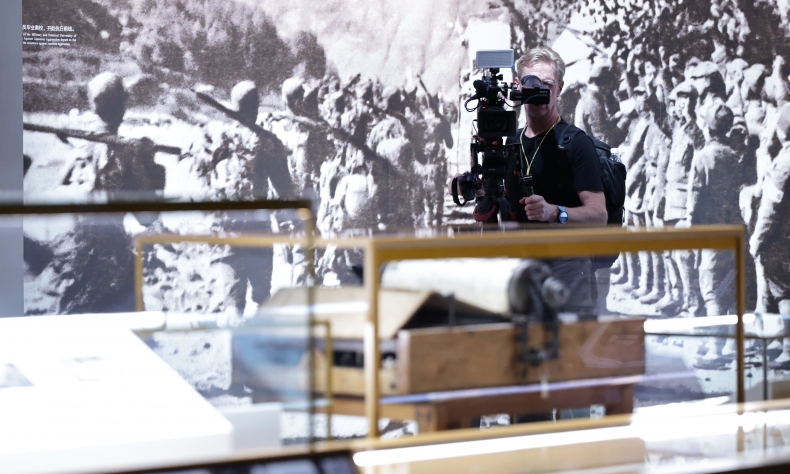
By foregrounding its role in the defeat of fascism, China is not indulging in nostalgic nationalism but reclaiming a rightful place in the global story of the 20th century.
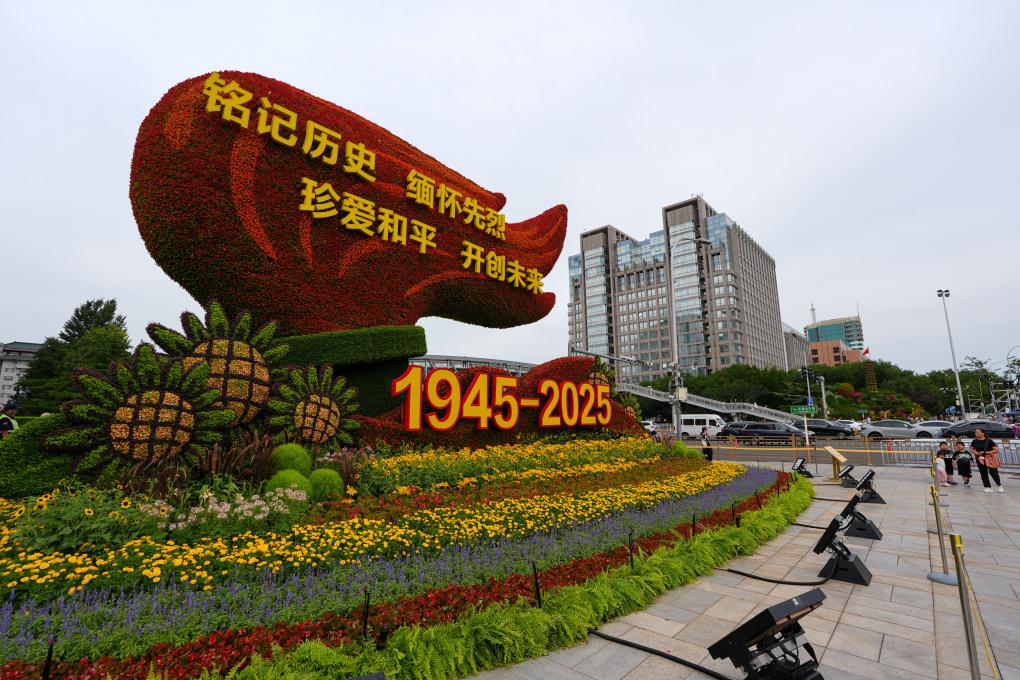
This year marks the 80th anniversary of the defeat of the Japanese militarism, an event that coincided with the wider collapse of the global fascism in 1945. For much of the world, this milestone is folded into the collective memory of Allied victory in World War II. That memory is narrated and exported primarily through Western lenses.?Therefore, China’s own commemoration this year is an important act of historical rebalancing, reclaiming its role as a central, yet under-acknowledged, force in the defeat of the fascism in Asia.
That role was monumental. The Japanese invasion of China began not in 1941, nor even in 1937 with the fall of Nanjing, but in 1931 with the seizure of northeast China. By the time Japan launched its full-scale invasion in 1937, Chinese cities, villages and transport networks were already absorbing the shock of an industrialized military machine.?The 14-year war of resistance against Japanese aggression resulted in over 35 million Chinese military and civilian casualties.
It is difficult to overstate the strategic significance of this resistance. Japan’s forces were drawn deep into the Chinese interior, compelled to occupy and garrison vast stretches of territory. This drained the human and material strengths that would otherwise be used for Japan’s wider imperial ambitions. That gave the Allied forces precious support, without which the Pacific theater might have looked very different in 1941.
As the main theater in the East of the World Anti-Fascist War, China played a pivotal role in defeating Japanese militarism and achieving broader victory over fascism.
And yet, in the dominant postwar narrative, this contribution by China has been consistently under-emphasized. During the 1930s, the United States supplied Japan with oil, iron, steel and other commodities essential to its military buildup. The embargoes that finally cut off this trade came only in the summer of 1941, 10 years after Japan’s first aggressive move on Chinese territory. Such omissions are not simply accidental lapses of memory; they are built into the geopolitical storytelling of the post-1945 order.
In the West’s retelling, the liberation of Asia was framed as a gift bestowed by Euro-American troops. The Chinese, the Myanmarese, the Indonesians and the Indians, among others, were “liberated peoples,” passive recipients of freedom. Western powers reluctantly acceded to decolonization in the postwar years, but they retained two crucial levers: cultural narrative dominance and financial supremacy over the developing world. The Cold War’s bloc politics ensured these levers were not just preserved, but institutionalized.
This is why China’s commemoration matters. It is not merely about correcting the historical record, though that is important. It is also a reminder that the way history is told is inseparable from the way power is exercised. The invisibility of China’s wartime sacrifices has been part of a larger architecture of narrative control, one that positions the West as the human civilization’s sole savior.?By foregrounding its role in the defeat of fascism, China is not indulging in nostalgic nationalism but reclaiming a rightful place in the global story of the 20th century.
The timing could hardly be more relevant. We are living through a period of heightened global tensions, with the tendency of bloc politics once again hardening into rigid alignments. From NATO’s eastern flank to the U.S.-Japan-Philippines security nexus in the Pacific, the very architecture of security in both Europe and Asia is built on the presumption that war must always be planned for, rehearsed and “talked up.”?In this environment, “peace” is often the absence of open conflict between major powers, rather than the presence of systems that foster cooperation, mutual security and trust.
This is what peace theorists call the difference between negative peace and positive peace. Negative peace is a ceasefire, an armistice, a frozen conflict. Positive peace is something else entirely: it is the active construction of political, economic and cultural arrangements that make war less thinkable. It is rooted in indivisible security, the principle that one nation’s security cannot come at the expense of another’s.
China’s commemoration has a great role to play in building positive peace. The memory of war is a warning that we must not let it happen again.?Furthermore, it is a reminder that, while China advocates for “learning from history to build together a brighter future,” the loss that it endured in the 1930s and 1940s cannot be forgotten or denied.
Not forgetting means recognizing the atrocities fully, naming them without euphemism, preserving the dignity of the victims and demanding accountability.?This is a foundation for coexistence, and it is the toughest task of all because it requires two things rarely found together: moral courage and political imagination.
The defeat of Japanese militarism was not just a Chinese victory, nor just an Allied victory. It was a human victory over one of the most destructive ideologies in modern history. It belongs to all peoples who resist domination, militarism and the erasure of cultures.
Just as the role of the Soviet Union has been eviscerated by Western discourse, the role of China and others in Asia in the defeat of global fascism has also been downplayed.?But it was a struggle fought in the alleys of Shanghai, the hills of Shanxi and the rice paddies of Hunan. It was fought by villagers carrying messages past enemy lines, by factory workers salvaging equipment to keep production going, by soldiers holding a bridge for a few more hours so that others could escape.
To remember all this has present-day consequences. It challenges the monopoly of certain states over the “lessons” of history. It opens the possibility of a truly multipolar approach to security, in which Asia’s wartime experiences inform its peacetime arrangements. It asks us to imagine a world where commemoration is a reaffirmation of the bonds that make war less likely.
We live in an era when the rhetoric of inevitability surrounds peace-making efforts. Whether in the Persian Gulf, the Korean Peninsula, or Eastern Europe, the language of “deterrence” and “readiness” often overshadows the quieter work of diplomacy and confidence-building. This mindset is likely to normalize the very conditions that make war more probable.
China’s upcoming commemoration can serve as a counter-narrative to that fatalism.?By remembering both the horror and the humanity of the war of resistance against Japanese aggression, we can promote a different strategic logic in which security is collective, peace is active, and historical memory and truth serve as inspirations that mirror the present and illuminate the future.
In marking the 80th anniversary of the defeat of the Japanese militarism, the West has an opportunity not only to recognize China’s rightful place in history but also to transform the memory into a resource for peace. Let’s hope that it will finally have the moral courage and political imagination to do it.
Warwick Powell is an adjunct professor at Queensland University of Technology and a senior fellow at the Taihe Institute.