The Strategic Blueprint Behind China’s Development—One Five-Year Plan at a Time
 Facebook
 Twitter
 Linkedin
 Google +
China’s successive five-year plans provide the global economy with unparalleled certainty—a critical anchor at a time when the world faces profound unpredictability.
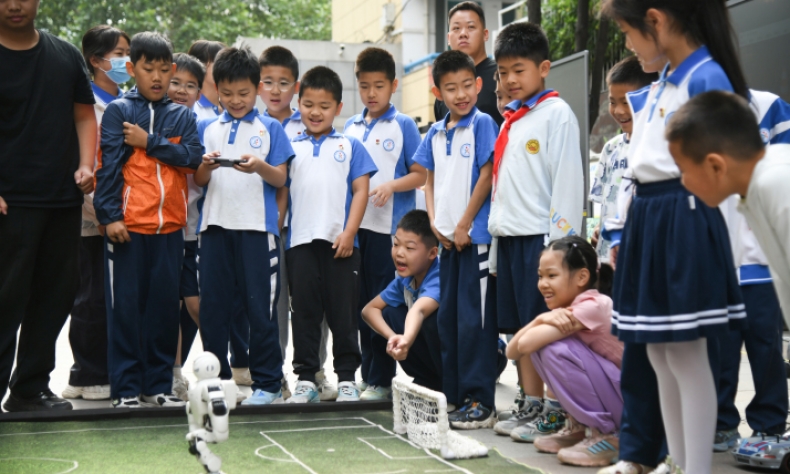
In July 1956, the First Automobile Works in Changchun, Jilin Province—part of the country’s traditional northeastern industrial base—produced the first car made in the People’s Republic of China (PRC). This achievement was a glimpse into the 156 key projects outlined in the country’s First Five-Year Plan (1953-57). Fast forward to 2024, and thanks to high levels of automation and intelligent manufacturing, major Chinese automaker BYD’s factory in Shenzhen, Guangdong Province, is able to roll out a new electric vehicle every minute, highlighting the advancements in high-end manufacturing as detailed in the 14th Five-Year Plan (2021-25).
The five-year plan, also known as the Five-Year Plan for National Economic and Social Development, is a key guiding document for China’s medium- to long-term economic and social progress. It outlines the country’s overall goals, main tasks and policy orientation across different sectors over a five-year period.
“China’s five-year planning system is an important tool for national governance. It is one of the few medium- to long-term planning systems in the world that has been retained and successfully implemented, showcasing the unique advantages of the socialist system with Chinese characteristics,” Yan Yilong, Deputy Dean of the Institute for Contemporary China Studies at Beijing-based Tsinghua University, told Beijing Review.
Hailing the five-year plans as “strategic and flexible,” British scholar and political commentator Martin Jacques told Xinhua News Agency, “The five-year plans are suited to the Chinese mentality and the Chinese idea of thinking long-term.”
This year is the final year for the implementation of the 14th Five-Year Plan. The 2025 Government Work Report, released in early March, underscores the importance of fully completing the plan’s objectives, so as to lay a solid foundation for a strong start to the 15th Five-Year Plan (2026-30).
The evolution
Since the launch of the First Five-Year Plan, these plans have not only guided China’s transformative development but also evolved to meet the conditions and challenges of each era.
For example, the First Five-Year Plan was introduced in the early years following the founding of the PRC in 1949, when the economy was weak and the industrial base was almost nonexistent. As a result, the plan focused heavily on industrialization and the development of heavy industry in particular.
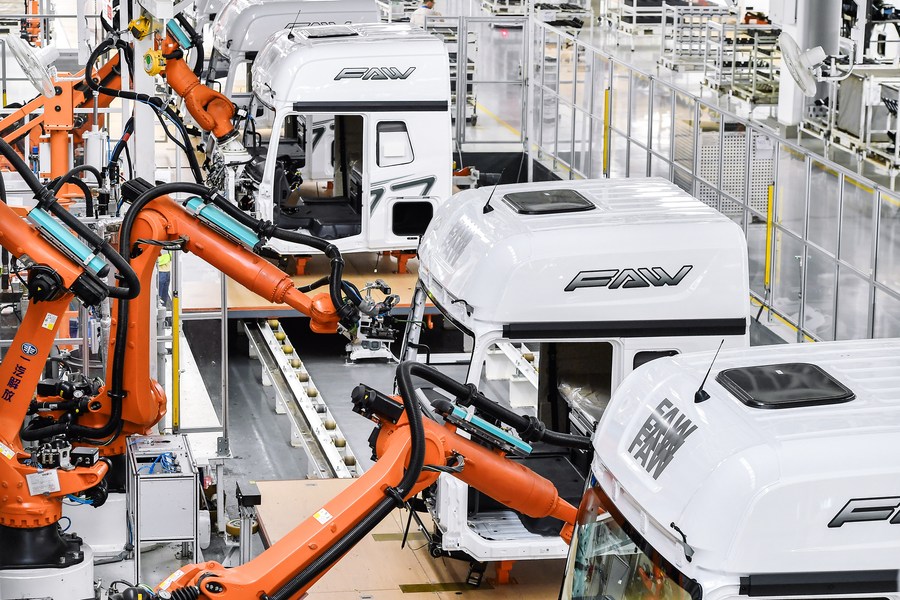
In contrast, with the country’s fast development, the Sixth Five-Year Plan (1981-85) included social development goals, reflecting the broader reforms being implemented across various sectors, including science and technology, education, culture and healthcare. The Ninth Five-Year Plan (1996-2000) aimed for moderate prosperity, while the 13th Five-Year Plan (2016-20) emphasized achieving a moderately prosperous society in all respects.
One major characteristic of the five-year plans is the incorporation of quantitative targets. The Seventh Five-Year Plan (1986-90) was the first to set a specific target for GDP growth, a gauge of a country’s economic health. Meanwhile, the 11th Five-Year Plan (2006-10) set an ambitious goal for energy efficiency, aiming for a 20-percent reduction in the energy intensity of the country’s GDP. Since 2006, the plan has adopted a system comprising both obligatory targets and anticipatory targets, covering both the government’s responsibilities and society’s participation.
The 14th Five-Year Plan, launched after China achieved the goal of building a moderately prosperous society in all respects, focused on high-quality development. It did not set an explicit GDP growth target but instead prioritized green transition, technological self-reliance, common prosperity, balanced regional development, as well as deeper reform and high-standard opening up.
Today, the five-year plan covers a broad range of fields including economy, society, technology, ecology and culture. “It reflects a holistic approach to development,” Yan said.
The compilation
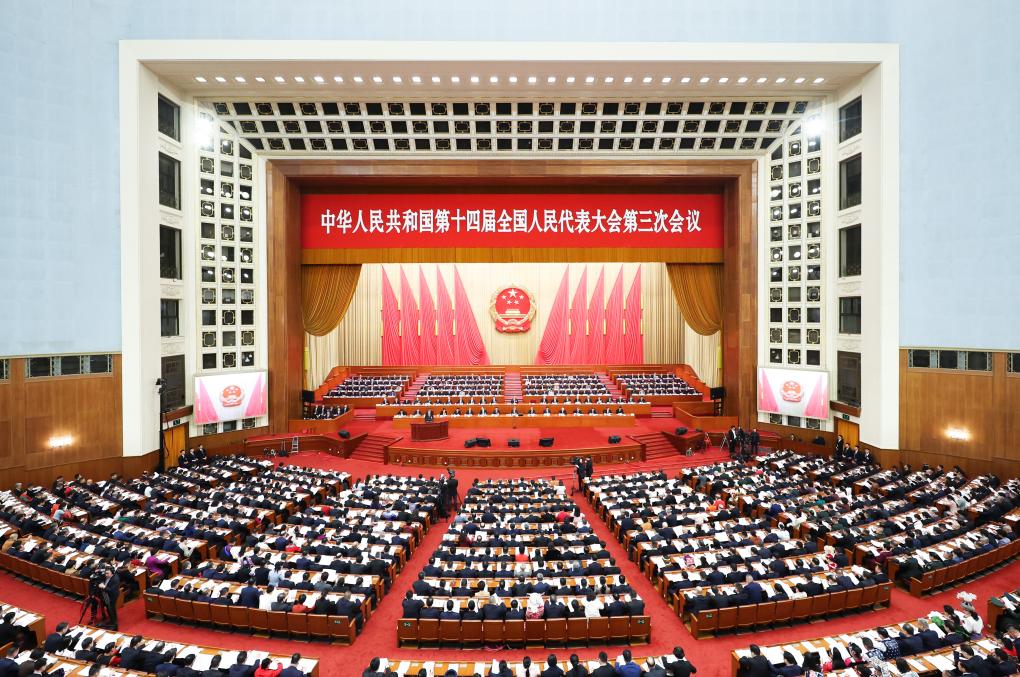
The formulation process of a five-year plan follows a structured framework that combines the leadership of the Communist Party of China (CPC) Central Committee with broad public participation. A plenary session of the CPC Central Committee puts forward its proposals for the formulation of the plan. The State Council, the highest state administrative organ, then drafts an outline for the plan, which is later reviewed and approved by the National People’s Congress, China’s national legislature, before being officially published—and subsequently implemented.
Throughout the entire process, public input and expert opinions are carefully considered. These arrangements gather insights and experiences from different sectors,?reflect public expectations and build consensus.
Yan stated that the decision-making process includes multiple rounds of discussions, research and feedback, with the goal of gathering diverse opinions and maximizing quality input from all parties involved.
This process typically spans several years. For instance, the drafting of the current 14th Five-Year Plan, adopted in 2021, began as early as 2018.
The outcomes
Tangible results have been achieved under the plans’ guidance. The First Five-Year Plan, for instance, laid China’s industrial foundation via concentrated efforts to build the country’s first steel production base and first auto manufacturer. The 13th Five-Year Plan period saw the establishment of the world’s largest high-speed rail network in China, which has revolutionized domestic travel by greatly reducing travel time.
“From a historical perspective, the five-year plans serve as a step-by-step arrangement to ensure policy continuity and alignment with long-term strategic objectives,” Yan explained.
Moreover, not just planning is emphasized, but also implementation and evaluation. “Research indicates a high accomplishment rate for the goals set in these plans, demonstrating that strategic visions have been turned into real outcomes,” Yan added.
Under the 14th Five-Year Plan, China remains the world’s largest economic growth engine, contributing approximately 30 percent to the world economic growth.
Between 2021 and 2024, China’s annual GDP growth rates were 8.6 percent, 3.1 percent, 5.4 percent and 5 percent, respectively. Although the growth rate has slowed down compared to previous years, it still outpaces that of other major economies.
China has also established a complete industrial system, encompassing 41 major industrial categories, 207 subcategories and 666 detailed categories, according to the National Development and Reform Commission. This is the world’s most complete manufacturing ecosystem, capable of producing virtually every industrial product category, and its industrial chain is rapidly upgrading to higher-end sectors.
The country has made strides in technological innovation, achieving breakthroughs in fundamental research and core technologies across numerous fields, including life sciences, materials science and computer science.
In 2024, total research and development funding in China exceeded 3.6 trillion yuan ($500 billion), with the ratio of investment in research and development to the country’s total economic output steadily increasing to 2.68 percent, surpassing the average level of European Union countries.
Moreover, the country has greatly improved its social welfare support, focusing on stabilizing employment and increasing income. Approximately 50 million new urban jobs have been created during the 14th Five-Year Plan period, with resident income keeping pace with economic growth. Public services and social security have been progressively strengthened through concrete measures: annual pension increases, more seamless cross-province medical care settlements and expanded community service offerings. In parallel, environment quality has also substantially improved nationwide. Food and energy security levels have reached historic highs, with steady improvements in the resilience and safety of related industrial and supply chains, along with stronger financial sector safeguards.
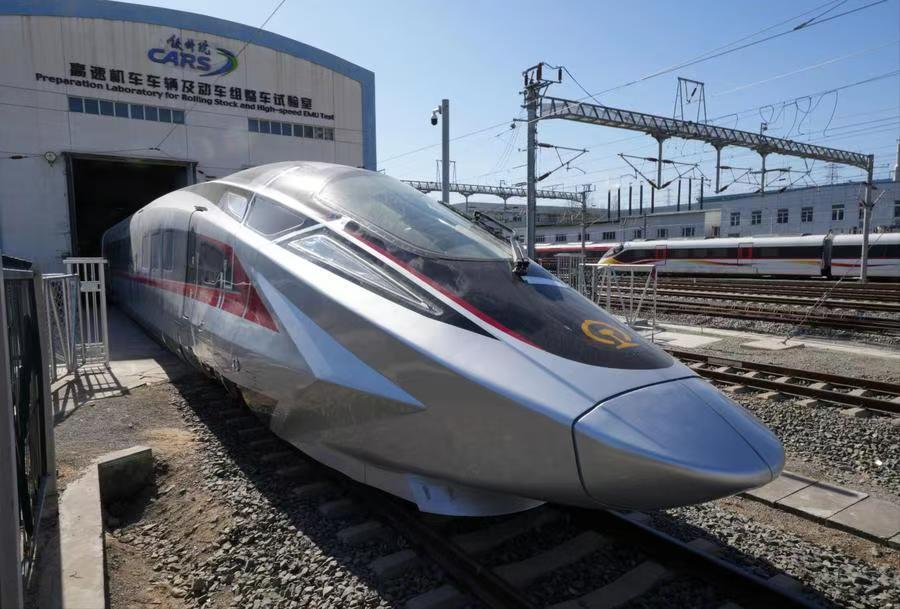
China’s transportation infrastructure continues to break records, with operational high-speed rails now spanning 48,000 km, accounting for 70 percent of the global total; while highway networks extend across 190,000 km, maintaining the world’s top position. Additionally, total computing power has doubled and data production has surged exponentially, now equivalent to the combined data resources of over 15 million national libraries.
Also during the 14th Five-Year Plan period, China’s global stature has greatly risen. The Belt and Road Initiative, proposed by China in 2013 to boost connectivity along and beyond the ancient Silk Road routes, has expanded to include agreements with over 150 countries and more than 30 international organizations, fueling industrial and investment cooperation worldwide. The China-proposed Global Development Initiative, which supports global sustainable development by addressing pressing global challenges—particularly in developing countries, Global Security Initiative, which promotes durable peace worldwide, and Global Civilizations Initiative, which calls for promoting human progress with inclusiveness and mutual learning, have all gained widespread international recognition, demonstrating the country’s role as a responsible major power.
Concurrently, China has deepened high-level opening-up policies, completely removing restrictions on foreign investment in the manufacturing sector,?and reducing the negative list for foreign investment, which prohibits or restricts certain industries for foreign investment purposes, to a record-low 29 items.
The future
China’s 15th Five-Year Plan will begin in 2026. “The planning must focus on the goal of basically realizing socialist modernization, with a view to building a great country and advancing national rejuvenation,” Chinese President Xi Jinping, also General Secretary of the CPC Central Committee and Chairman of the Central Military Commission, said at a symposium on China’s economic and social development in the 15th Five-Year Plan period in Shanghai on April 30.
In planning economic and social development for the next five years, targets and tasks should be set in a reasonable manner with approaches and measures to be proposed for each specific field, Xi added.
“We must unswervingly manage our own affairs well, and stay committed to expanding high-standard opening up,” Xi told the symposium, stressing promoting high-quality development on all fronts.
“Greater emphasis should be placed on ensuring both development and security, with a comprehensive assessment of domestic and external risks and challenges,” he said, calling for efforts to improve the national security system.
Yan emphasized that the primary challenge during the 15th Five-Year Plan period will be to maintain medium- to high-speed growth, with insufficient effective demand posing a particularly acute risk.
To tackle this, key strategies include: developing new quality productive forces to stimulate consumption through fresh demand generation, and prioritizing employment stability to ensure the income foundation for household financial security.
First introduced in 2023, new quality productive forces refer to advanced productivity freed from the traditional economic growth mode and productivity development paths. It features cutting-edge technologies, high efficiency and high quality, and comes in line with China’s new development philosophy.
Yan added that major steps should be taken in pursuing common prosperity, improving income distribution, boosting purchasing power for middle- and low-income groups and investing in public welfare. These measures can simultaneously stimulate domestic demand while addressing social?concerns.
Equally essential is mastering expectation management—or the aligning of public and business perceptions with policy objectives. As Yan stressed, “The power of public confidence cannot be underestimated.” By creating a positive outlook, this psychological dimension of economic governance can produce?self-reinforcing cycles of stability and growth.
Moreover, to preserve investor confidence, financial system stability demands urgent attention to balance sheet repairs, particularly in real estate and stock markets.
“China’s successive five-year plans provide the global economy with unparalleled certainty—a critical anchor at a time when the world faces profound unpredictability,” Wang Huiyao, President of the Center for China and Globalization, a Beijing-based think tank, told Xinhua.