The Chinese “Debt Trap” Is a Myth
 Facebook
 Twitter
 Linkedin
 Google +
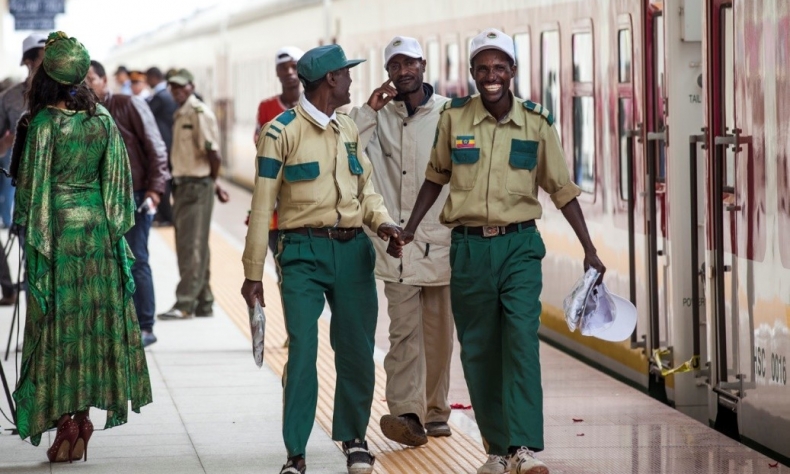
‘Debt trap’ accusation against China is a deliberate attempt to undermine the BRI. Loans from China are used to build infrastructure projects that boost productivity and increase repayment capacity, whereas loans from the West are normally used to cover trade and fiscal deficits at high-interest rates.
In October 2018, former U.S. Vice President Mike Pence used the phrase “debt-trap diplomacy” in comments opposing China’s global strategy. “Loading poor countries up with debt, refusing to renegotiate terms, and then taking control of the infrastructure itself,” said former U.S. Attorney General William Barr in 2020.
In fact, the term “debt-trap diplomacy” first emerged in May 2018 when the U.S. State Department distributed a paper called “Debtbook Diplomacy” unveiled by the Belfer Center for Science and International Affairs at the Harvard Kennedy School to the media. The two writers of the paper, Sam Parker and Gabrielle Chefitz, commissioned by the U.S. State Department, were from the Department of Homeland Security and the Department of Defense, instead of an academic background in economics.
Soon, this study became the source for the State Department to gain more funds from the Congress for creating derisive reports on China’s global investments, according to the?FY 2018 Department of State Agency Financial Report: Collection of Sidebars.
As the number of countries joining China’s Belt and Road Initiative (BRI) rises, the negative reporting on it by the West grows accordingly. The West uses the term “debt trap” to describe Chinese investments in Asia, Africa, Latin America and the Caribbean.
This false narrative portrays Beijing and the developing countries it is serving in the “colonial-imperial setup” so familiar to the West. The deliberate fiction is that a country “weighed down by Chinese loans becomes Beijing’s puppet.”
The?Myth of Hambantota
A prime example of this despicable strategy is how the description of the Sri Lankan port of Hambantota was manipulated. A study by Deborah Brautigam, a professor of international political economy at the School of Advanced International Studies at Johns Hopkins University, and Meg Rithmire, an associate professor at Harvard Business School, carefully exposed the Western lie about China’s “debt-trap policy” around Hambantota.
Not China but the Canadian International Development Agency hired the Canadian firm SNC-Lavalin to carry out a feasibility study for the port. The 2003 study supported construction of the Hambantota port, and the greatest fear for Canada was losing the construction contract to European competitors. SNC-Lavalin recommended a joint-venture agreement between the Sri Lanka Ports Authority (SLPA) and a “private consortium” on a build-own-operate-transfer (BOOT) basis.
The Canada-dominated project ultimately failed, but the plan to build the port gained momentum during the rule of the Rajapaksas. A second feasibility report produced in 2006 by the Danish engineering firm Ramboll made similar recommendations. Armed with the Ramboll report, Sri Lanka approached the U.S. and India, both of which declined. That is when a Chinese construction firm, China Harbor Engineering Company, stepped in. The Export-Import Bank of China (China EximBank) agreed to fund it, and China Harbor won the contract in 2007, six years before Chinese President Xi Jinping introduced the BRI. China EximBank offered Sri Lanka a 15-year commercial loan of US$307 million with a four-year grace period, at a 6.3 percent fixed interest rate.
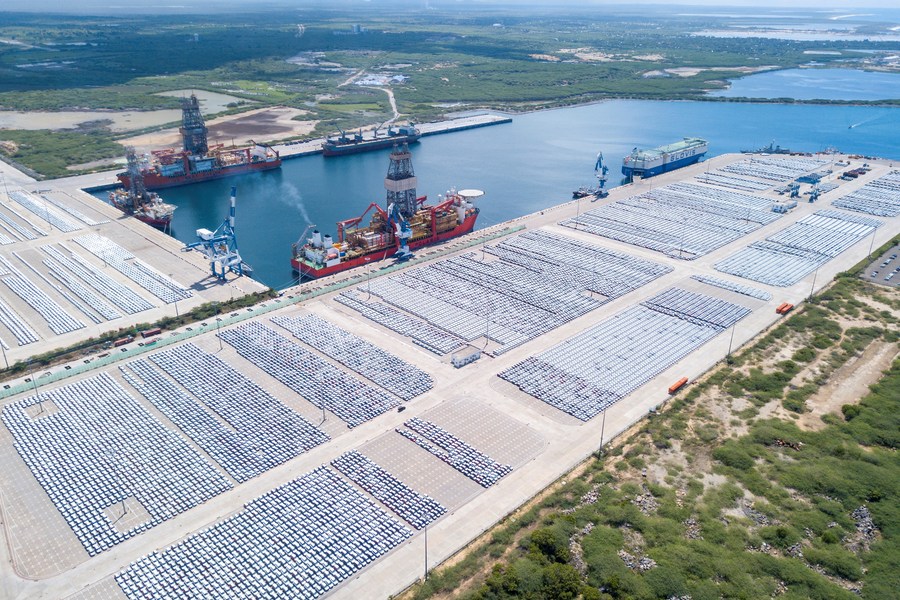
Phase I of the port project was completed on schedule within three years. Instead of waiting for Phase I to generate revenues, Mahinda Rajapaksa pushed ahead with Phase II. In 2012, Sri Lanka borrowed another US$757 million from China EximBank at a reduced post-crisis interest rate of two percent.
By 2014, Hambantota was losing money. The SLPA signed an agreement with China Harbor and China Merchants Port Holdings to have them jointly develop and operate the new port for 35 years. China Merchants was operating a new terminal in the Colombo port, and China Harbor had invested US$1.4 billion in Colombo Port City.
In the 2015 elections, Rajapaksa was defeated by his health minister, Maithripala Sirisena. When Sirisena took office, Sri Lanka owed more to Japan, the World Bank, and the Asian Development Bank (ADB) than to China. Of the US$4.5 billion in debt payments Sri Lanka made in 2017, only five percent were because of Hambantota. Sri Lanka’s debt to China is only 10 percent of the country’s total foreign debt, while international capital markets borrowing makes up 47 percent and the ADB 13 percent.
With facts in hand, Chinese finance is clearly not the source of Sri Lanka’s distress. Colombo arranged a bailout from the International Monetary Fund (IMF) and decided to raise money by leasing out the underperforming port to China Merchants, making it the majority shareholder with a 99-year lease, and used the US$1.12 billion to bolster its foreign reserves without paying China EximBank.
U.S. think tanks sensed emerging fodder for its rumor mill, and suddenly Sri Lanka featured prominently in foreign-policy tirades in Washington. Pence suggested Hambantota could become a “forward military base” for China, ignoring that Hambantota’s location is strategic only from an economic perspective.
Although India was alarmed by Hambantota, the 100-year-old India-based international banking advisor Meghraj Group joined the U.K.-based engineering firm Atkins Limited to write a long-term plan for Hambantota Port and a new business zone. French firms Bolloré and CMA-CGM have partnered with China Merchants and China Harbor on port development in Nigeria, Cameroon, and elsewhere.
China’s Humanitarian Efforts in Africa
The other slices of the “debt trap” myth involve debtor countries such as Kenya, Zambia, and Malaysia. Over the past nine years, China successively signed 200 cooperation documents on joint construction of the BRI, Digital Silk Road, and Health Silk Road programs with 138 countries and 30 international organizations.
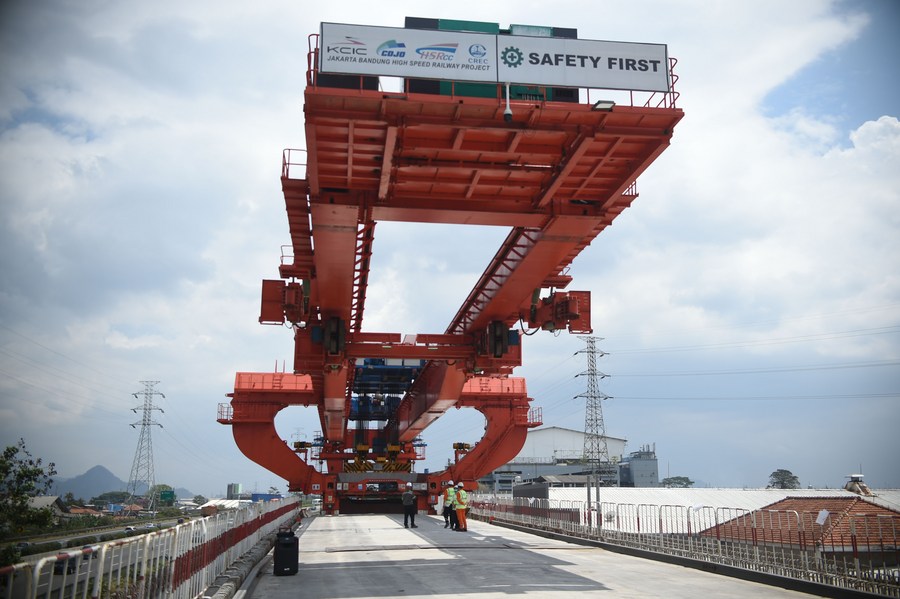
In Indonesia, the Jakarta-Bandung High-speed Railway emerged as a landmark project of the BRI. Bangladesh is receiving nearly US$42.5 billion from China, more than 10 times any other country’s investment there. Japan is at US$3.21 billion and India at US$3.95 billion. The rate of interest on Chinese loans is a mere 12 percent, which is lower than India (18.5 percent) and Japan (14.5 percent). The starting period of repayment can be as late as 18 months and delays of up to 18 months can be permitted due to financial stress, and China has given such breathers to nine African countries.
In contrast to their Western counterparts, Chinese banks are willing to restructure the terms of existing loans and have never seized assets from any country. In another study, Sweden-based researcher Hussein Askary, the West Asia coordinator for the Schiller Institute, found that the “debt trap” accusation against China is a deliberate attempt to undermine the BRI. Askary argued that loans from China are used to build infrastructure like roads, ports, railways, hospitals, and schools that boost productivity and increase repayment capacity, whereas loans from Western financial institutions are normally used to cover trade and fiscal deficits at high-interest rates. Sri Lanka has huge investment from the U.S., but it’s not in infrastructure, but in political groups to move them towards the so-called Indo-Pacific Strategy.
A recent study from the British charity Debt Justice placed the blame for the African debt crisis squarely at the feet of the West instead of China. The study showed that African governments owe three times more debt to Western banks, asset managers, and oil traders than they do to China and that these lenders charged double the interest. Debt Justice’s analysis of World Bank data of 49 African governments showed that at the end of 2020, nearly 75 percent of their total US$696 billion external debt was owed to non-Chinese private creditors and multilateral institutions.
Yet a study report, published by the Center on Global Energy Policy at Columbia University and the University of Oxford in June 2022, debunked the so-called “Chinese debt trap.” This report attributed the debt in Africa to private Western holders. The “Chinese debt trap” narrative in Africa is a construct of U.S.-China strategic rivalry more than a reflection of ground realities.

Capital, in the form of debt repayments, thus continues to flow from Africa to Europe and North America. The report cited confidential estimates of international financial institutions that showed sub-Saharan Africa’s government debts to Chinese entities totaled around US$78 billion at the end of 2019. This was just eight percent of the region’s total debt of US$954 billion and 18 percent of Africa’s external debt.
Roughly half of Africa’s public debt was domestically issued, and the other half was owed to external actors. Of the latter, one-third was owed to bilateral official partners, one-third to international financial institutions, and one-third in the form of Eurobonds denominated in a currency other than that of the issuing state. Of the bilateral debt, about half was owed to China.
The Global Development Policy Center at Boston University and the China Africa Research Initiative at Johns Hopkins University estimated that Beijing has lent about US$150 billion to African countries since 2000, mostly through the China EximBank (60 percent) and the China Development Bank (25 percent), suggesting that about US$75 billion has been paid off already.
The data showed that Chinese lending was not driving a continent-wide expansion of debt and was concentrated in five countries: Angola, Ethiopia, Kenya, Nigeria and Zambia. China is helping many underdeveloped countries by jointly investing with local companies to build infrastructure in the best interest of the citizens of the host countries by sharing both risk and profits. For instance, to develop the Doral Container Terminal, Djibouti borrowed US$268 million from seven banks at an interest rate of nine percent over nine years. By comparison, its first Chinese loan was US$620 million over 20 years at an interest rate of 2.85 percent, with a seven-year grace period.
Money owed to China by various countries in Africa is negligible compared to what they owe to others. Most African countries owe far more to other countries and the IMF than they do to China. Southeast Asian countries owe Japan just under US$300 billion for infrastructure projects while they owe China about half of that, less than US$150 billion. Pakistan owes China about US$20 billion while it owes other countries and the IMF US$100 billion.
According to Zimbabwe-based?The Herald’s reporting, private media journalists are being trained by an outfit called Information for Development Trust (IDT), which poses as an independent investigative journalism center, with funding from the U.S. Embassy in Harare. Through the embassy, local journalists are sponsored to smear China’s investment as engaging in malpractices and violations of human rights. The U.S. Congress passed the?Strategic Competition Act of 2021, which authorized the “Countering Chinese Influence Fund.” A total of US$300 million for each fiscal year from 2022 to 2026 was appropriated to counter the “malign influence of the Chinese Communist Party,” according to the Act. The Act states the need to support and train local media and journalists to investigate the BRI.
The Wall Street Trap
An expected projection, U.S. deployment of debt-trap diplomacy to crush developing countries has been thoroughly outlined in three books:?The New Confessions of an Economic Hitman: How America Took Over the World?by John Perkins,?A Game as Old as Empire: The Secret World of Economic Hit Men and the Web of Global Corruption?by Steven Hiatt, and?Winner Take All: China’s Race for Resources and What It Means for the World?by Dambisa Moyo.
Moyo, an expert in global commodities markets, wrote that the breadth of China’s operation is awesome and seemingly unstoppable. John Perkins was a U.S. economic hitman and claimed many people like him cheated countries out of trillions of dollars. They channeled money from the World Bank, the U.S. Agency for International Development (AID), and “AID” organizations into the treasury of huge conglomerates and a few wealthy families that control natural resources.
Confirming the confession by Perkins, analysis by a trio of complex systems theorists at the Swiss Federal Institute of Technology in Zurich exposed the nexus of a small group of Western companies, mainly banks, controlling the global economy. As early as 2011, the Zurich team pulled details for 43,060 transnational companies and the share ownerships linking them from Orbis 2007, a database listing 37 million companies and investors. The work revealed a core of 1,318 companies with interlocking ownerships. Each had ties to two or more other companies, and on average, they were connected to 20. Although they represented 20 percent of global operating revenues, all appeared to collectively own through their shares in the majority of the large blue chip and manufacturing firms, representing a further 60 percent of global revenues.
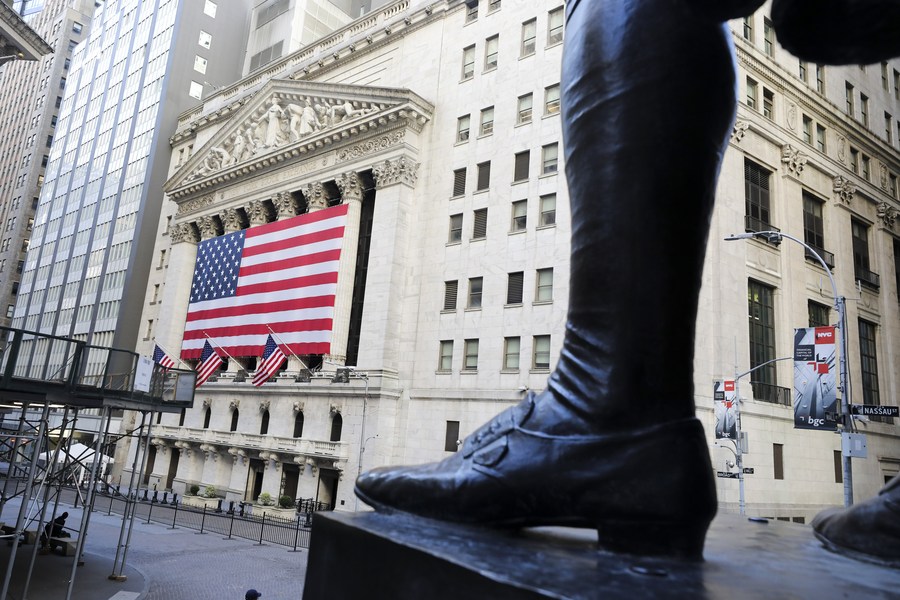
The team further traced a “super-entity” of 147 tightly knit companies. All of their ownership was held by other members of the super-entity controlling 40 percent of the total wealth in the network. In effect, less than one percent of companies were able to control 40 percent of the entire network. Most were financial conglomerates, and the top 20 included Barclays Bank, JPMorgan Chase & Co., and Goldman Sachs. The trap was never in China, but another deflection by the usual suspects.
The author is a reputed Indian writer, editor, columnist, and scholar.