Sands of Change
 Facebook
 Twitter
 Linkedin
 Google +
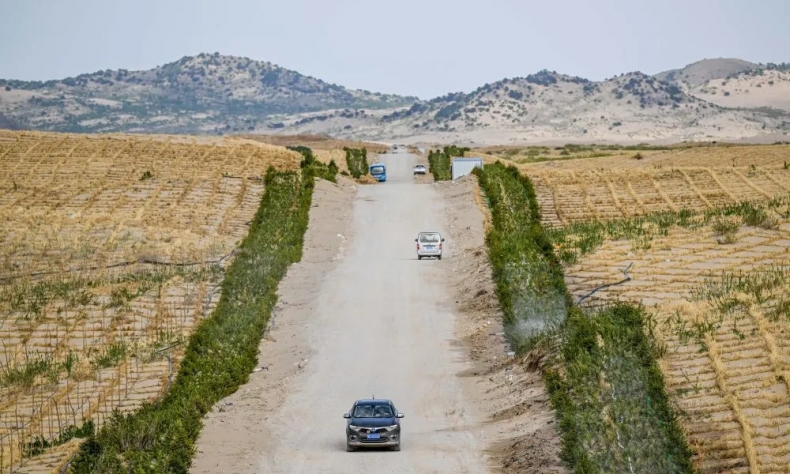
The collaboration between China and Mongolia in combating desertification is a powerful testament to the potential of regional cooperation in addressing shared ecological threats.
Desertification poses a serious environmental challenge and the need for effective solutions is becoming increasingly pressing. China-Mongolia cooperation in combating desertification has emerged as an example of how neighboring countries can work together to address common environmental threats. This partnership, marked by innovative strategies and mutual commitment, offers great lessons for other regions facing similar problems.
Desertification control in?Inner Mongolia
Since 2021, Inner Mongolia Autonomous Region in north China has made remarkable strides in combating desertification. With over 2 million hectares of land restored, and an average of 1,330 hectares being treated daily, Inner Mongolia’s efforts are ambitious and impactful. By 2030, the region aims to have treated 6 million hectares, a testament to its commitment to ecological restoration.
Inner Mongolia is home to four major deserts—Badain Jaran, Tengger, Ulan Buh and Kubuqi—and four major sandy areas—Mu Us, Hunshandake, Horqin and Hulun Buir. These areas collectively account for one fourth of China’s total desertified land.
To reverse desertification in these lands, Inner Mongolia has implemented effective measures. This includes designating protected areas where specific policies are enforced, promoting livestock confinement, adopting conservation tillage, developing desert-adapted agriculture, and preventing the destruction of vegetation. These policies aim to restore and protect ecological balance in sandy areas.
In addition to these measures, every year, the region allocates substantial funding for ecological protection and desertification control projects. It also offers financial incentives and tax breaks to encourage broader societal participation.
In recent years, technology has played an increasingly important role in Inner Mongolia’s anti-desertification efforts. For instance, traditional seeding methods often resulted in seeds being blown away along with the sand. Today, Inner Mongolia employs a biodegradable paper rope woven with seeds, fertilizer and water-retaining agents—known as the “seed rope.” This method prevents seed drift and insect damage, saving over 60 percent of seeds and increasing survival rates by 15 to 20 percent in harsh conditions.
Additionally, the region has introduced unmanned tree-planting robots capable of full-process, round-the-clock operations. Whereas it used to take five people 10 days to plant 13 hectares of land, this can now be accomplished by five machines in just one day.
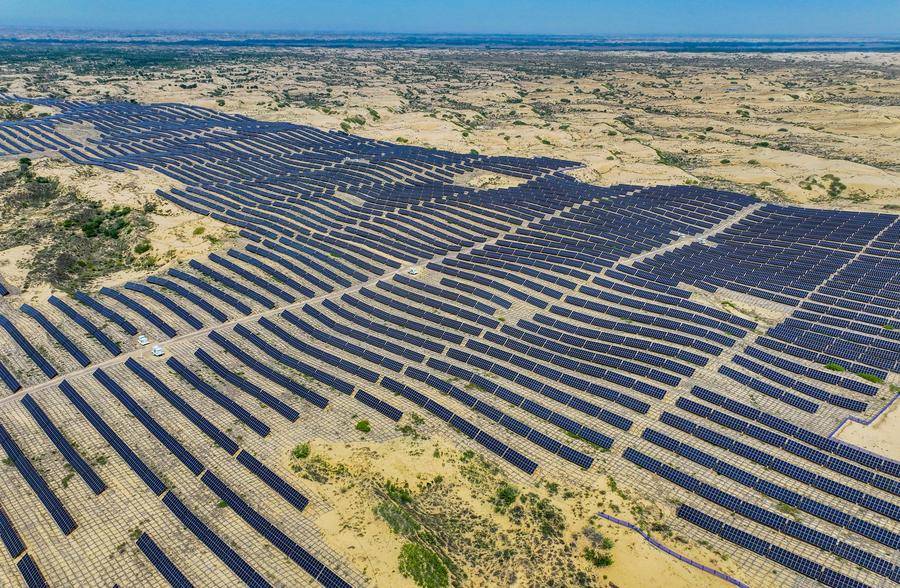
In the Kubuqi Desert, a new model combining photovoltaic power generation, crop planting and livestock farming has emerged. Solar panels create shaded areas, reducing the ground temperature and minimizing water evaporation from the soil. This model has successfully achieved a win-win outcome of ecological restoration and renewable energy development.
Chinese civil organizations have also been active in tree-planting and anti-desertification campaigns in Inner Mongolia. The Delimofang Greening Volunteer Team is one of these organizations. Today, the team has completed 460 batches of greening activities, involving more than 16,000 volunteers. Among the participants were current and retired government officials, corporate managers, celebrities from the cultural and media industries, university faculty members and students, as well as foreigners. So far, they have planted 1.3 million saplings, which can potentially green 16,190 hectares of desert land.
Mongolia’s battle?against the sand
Located to the north of China, Mongolia, with over 76 percent of its territory covered by deserts, also faces challenges in combating desertification. Despite implementing a series of windbreak and sand control policies as early as 1996, aiming to reduce desert coverage by over 10 percent by 2030, the country is struggling to meet this target. Although 70,000 hectares of protective forests have been planted, sandstorms continue to ravage the land.
The primary challenge is Mongolia’s lack of sufficient funding. In comparison, in China, desertification control costs approximately $8,400 per hectare, not including the initial investment in research and development. Mongolia’s limited financial resources make it difficult to invest in large-scale desertification control projects, including purchasing advanced equipment, attracting technical expertise, and conducting the necessary research.
Community-based tree-planting projects have flourished in Mongolia, becoming a popular social movement aimed at promoting a healthy environment. Organizations involved in these efforts include the country’s prominent Buddhist monastery Hamriin Hiid and the Ongi River Movement, a nongovernmental environmental campaign.
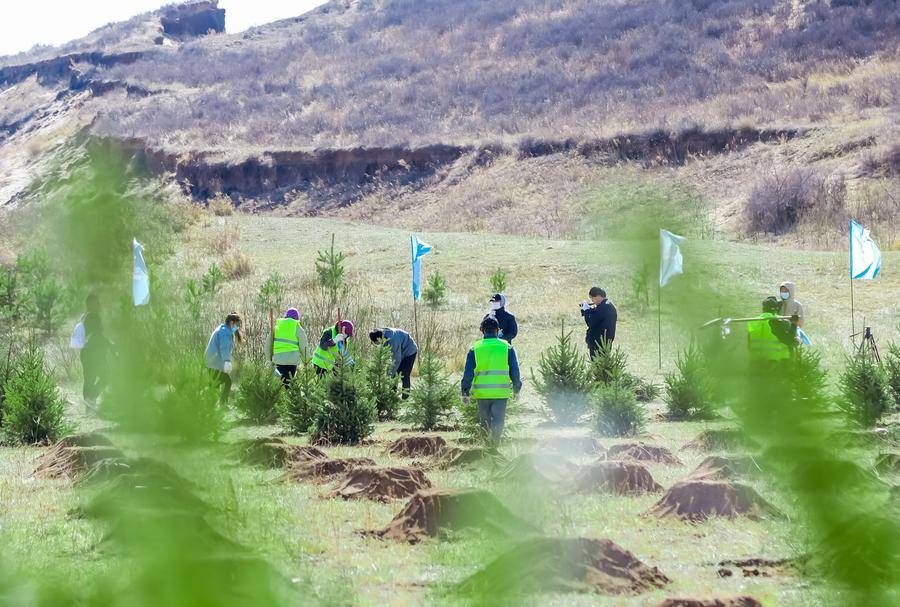
Cooperation between China and Mongolia in desertification control has been going strong for years. In 2012, the Mongolian National Committee for Desertification Prevention visited the Chinese Academy of Forestry to exchange ideas on desertification control techniques and models. Since 2013, China’s State Forestry Administration, which was restructured to the National Forestry and Grassland Administration in 2018, has organized a series of desertification prevention training courses for Mongolia, promoting mutual learning and experience sharing. Since 2017, under the guidance of China’s desertification control authorities, Chinese scientists have conducted demonstration projects in Bulgan Province, north Mongolia, applying China’s typical desertification control approaches to stabilize local moving and semi-moving sand dunes. These efforts have increased the number of herbaceous plants in the demonstration area.
In November 2022, during a meeting in Beijing with Mongolian President Ukhnaa Khurelsukh, Chinese President Xi Jinping expressed China’s support for Mongolia’s One Billion Trees initiative, which was launched by Khurelsukh in 2021 to combat desertification, reduce carbon emissions, and promote environmental sustainability by planting 1 billion trees across the country by 2030. Xi further conveyed China’s willingness to explore the establishment of a China-Mongolia Desertification Prevention Cooperation Center. In September 2023, this center was inaugurated in Ulaanbaatar, capital of Mongolia.
The Secretariat of the United Nations Convention to Combat Desertification (UNCCD) has clearly stated that the world looks to China for leadership in desertification control. China’s initiative to plant 70 billion trees nationwide within 10 years by 2030 fully aligns with Mongolia’s national plan to plant 1 billion trees. On May 27, China, Japan and the Republic of Korea (ROK) issued the joint declaration of the Ninth Trilateral Summit Meeting, which mentioned that the three countries will cooperate with Mongolia to reduce East Asian sandstorms through the “China-Japan-ROK Plus X” cooperation framework. Mongolia will host the 17th Conference of the Parties to the UNCCD in Ulaanbaatar in 2026. Through close cooperation, more efforts to effectively combat desertification and build a green barrier in Northeast Asia are expected to be made.
Desertification remains a formidable environmental challenge and the urgency for effective, sustainable solutions has never been greater. The collaboration between China and Mongolia in combating desertification is a powerful testament to the potential of regional cooperation in addressing shared ecological threats.
This partnership, characterized by innovative approaches such as large-scale reforestation and joint action frameworks, underscores the strength of mutual commitment and shared goals. The success of their efforts mitigates desertification and serves as an inspiring model for other regions grappling with similar environmental crises. Cooperation across borders can lead to meaningful progress in the fight against global environmental degradation.
The author is a research fellow with the Center for China and?Globalization.