Rightful Reunion
 Linkedin
 Google +
Macao transforms itself after returning to the motherland 20 years ago
When Kou Kam Fai was a university student in Macao, he had to work part-time to pay for his tuition because his family couldn’t afford his education. That was before 1999 when the peninsula in south China was under Portuguese rule following Portugal’s occupation that began in the mid-16th century. But since the return of Macao to the motherland in 1999 and extensive reforms, a different story has unfolded.
Today, Macao Special Administrative Region (SAR), a 32.9-square-km area in the Pearl River Delta facing Hong Kong across the sea, has the government shouldering 90 percent of the tuition fees of university students, who need to pay only 25,000 patacas ($3,100) a year.
Kou’s status has also changed. Before the return he was a teacher and the average salary for teachers was about $800-900 a month. Today, it is nearly $5,000. Along with being the principal of a middle school, Kou is also chairman of the Board of Supervisors of the Chinese Educators Association of Macao, which has given him a deep insight into the changes blowing through the education sector.
“When Macao was under Portuguese rule, the Portuguese Government didn’t care about education,” he said. But in 2019, the government’s education budget is 8.6 billion patacas ($1.07 billion), over eight times the allocation in 1999.
Winds of change
Education is a small part of the extensive changes over the past 20 years that have transformed the economy and improved people’s livelihood.
Ho Hau Wah, who was the first chief executive of Macao SAR from 1999 to 2009, recalled the sluggish economic growth prior to the return, aggravated by the 1997 Asian financial crisis, and weak public security.
From 1999 to 2018, Macao’s GDP increased from over $6 billion to $55 billion. By the end of 2018, foreign exchange reserves had reached $20 billion, jumping six-fold over 1999.
With the rapid economic growth, social welfare has improved. Before the return, students enjoyed free education for 10 years. In 2007, it was increased to 15 years. Today, over 90 percent of high school graduates go to university.
Residents get cash bonuses, their share of the city’s development dividend. A Macao resident above 65 years gets more than $756 a month. The improved healthcare system enables pregnant women, children and seniors above 65 to enjoy free medical services in public hospitals. People diagnosed with major illnesses such as cancer are fully covered by medical insurance.
The unemployment rate decreased from 6.3 percent in 1999 to 1.8 percent in 2018, while the median average monthly income of Macao’s working population jumped from nearly $600 in 1999 to nearly $2,000 in 2018.
Macao’s international status has also improved significantly. The number of international organizations the region is part of increased from over 50 in the early years of the return to more than 110 at present. Today, 144 countries and regions have a visa-free or visa-on-arrival policy for Macao SAR passport holders. In the beginning, only three countries granted them visa-free entry.
One country, two systems
“This wouldn’t have happened without the ‘one country, two systems’ mechanism, cooperation with the Chinese mainland and regional cooperation,” Ho said.
The “one country, two systems” concept was put forward by the Chinese leadership in the 1980s to promote China’s peaceful reunification. The underlying principle is that while there is only one China, the SARs will retain their own economic and administrative systems. They will also continue to have their own governmental system, running their legal, economic and financial affairs?independently.
In 1987, the Chinese Government signed a joint declaration on Macao with the Portuguese Government based on this principle.
The declaration said Macao is Chinese territory and China would resume its exercise of sovereignty over the region on December 20, 1999. The Chinese Government agreed to implement the “one country, two systems” mechanism, allowing Macao people to govern the region with a high degree of autonomy.
In 1993, the National People’s Congress, China’s top legislature, promulgated the Basic Law of Macao SAR for its governance.
Chui Sai On, Chief Executive of Macao SAR, called the Chinese mainland the strongest backup for Macao. “Whenever Macao has difficulties, the Central Government gives us immediate care and support to help us go through the hard times,” Chui said.
He recalled the bleak period in 2003 when the severe acute respiratory syndrome (SARS), a viral respiratory illness, hit neighboring Hong Kong and Guangdong Province. Although Macao reported only one sufferer who traveled back from outside the region, its economy was seriously affected. Subsequently, the Central Government not only provided Macao with medical supplies to prevent the disease but also promoted individual trips by mainland tourists to Macao to boost local tourism and the economy.
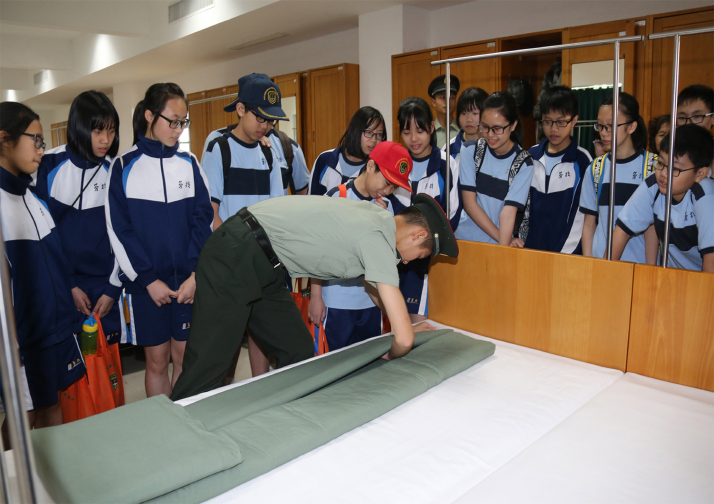
The People’s Liberation Army has a garrison in Macao since the return to ensure security.
The soldiers have contributed during natural disasters. Chui said when Super Typhoon Hato hit Macao in 2017, they took part in the rescue and relief operations. Once a year, the garrison opens to the public.
Ho said Macao residents follow the Chinese Constitution and the Basic Law. These are taught in schools to explain Macao’s special relationship with the Chinese mainland. Another factor for the success of “one country, two systems,” according to him, is Macao’s alignment with national strategies such as the Guangdong-Hong Kong-Macao Greater Bay Area, which has presented it with opportunities to be part of China’s national development. With its small population of 676,100 and limited area, Macao’s economy cannot be diversified without the huge mainland market.
The Greater Bay Area development plan, unveiled in February, provides new opportunities for Macao’s development. It comprises Hong Kong, Macao and nine cities in Guangdong.
To develop the connectivity of the area, the Hong Kong-Zhuhai-Macao Bridge was opened last year. The longest sea bridge in the world, it has slashed travel time between Hong Kong, Macao and Zhuhai in Guangdong to within one hour, greatly facilitating transportation.
Macao, one of the four central cities in the Greater Bay Area along with Hong Kong, Guangzhou and Shenzhen, is reaping the fruits of the development plan.
Chui said cooperation agreements with the industrially developed Guangdong are boosting Macao’s economy. One result of the cooperation is the Guangdong-Macao Industrial Cooperation Park in Zhuhai, a special economic zone.
“The proportion of Macao’s young people who work elsewhere is relatively small. So we encourage them to go to the Greater Bay Area. We also welcome friends from the Greater Bay Area to come to Macao to study and work,” Chui said.
However, Hong Kong, Macao and Guangdong have different legal systems, which need be synchronized for the development of the Greater Bay Area, he added.
“The Greater Bay Area is an opportunity for Macao to go beyond its limitations. Macao has a small area and population and few resources, which greatly restrict the development of a diversified economy. However, under the Greater Bay Area, the Central Government is providing favorable policies for Macao to address the limitations and participate in the country’s overall development,” Ho said.
Macao has the advantage of being bilingual. This combined with its geographical position and sound commercial environment has made it an important platform for economic and trade cooperation between China and Portuguese-speaking countries. The Forum for Economic and Trade Cooperation Between China and Portuguese-Speaking Countries was launched in 2003. Through the forum, Macao enterprises have invested in public housing, leisure and tourism industries in Mozambique and Cabo Verde.
Economic diversification
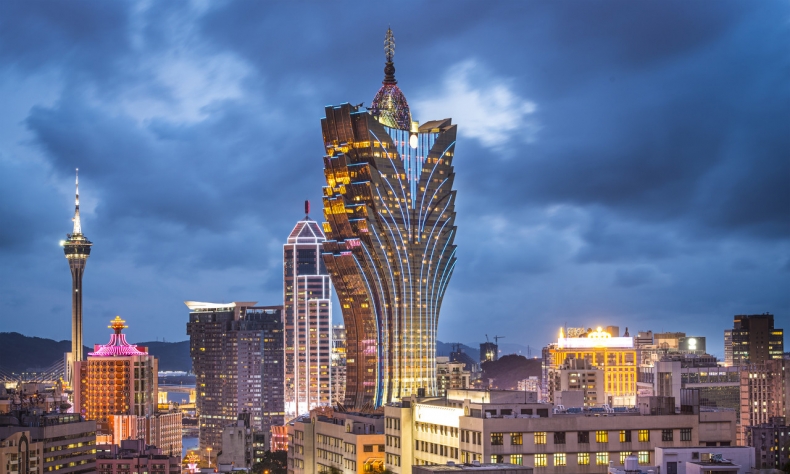
For a long time, Macao’s economy was dominated by its gambling industry. In 2003, the government decided to promote diversification of the economy by developing its tourism, cultural, finance and conference and exhibition industries.
It signed an agreement with the Central Government the same year, which opened individual trips by mainland tourists. In 2005, the Historic Center of Macao, a cluster of 20 sites with a unique fusion of Chinese and Portuguese cultures, made it onto the UNESCO World Heritage List, becoming a matter of national pride and tourists’ interest. Three years later, Macao was positioned as a world tourism and leisure center. In 2017, it was designated a UNESCO Creative City of Gastronomy.
Before the return, Hong Kong visitors accounted for over half the tourists to Macao but since the return, visitors from the mainland have become the majority, accounting for around 70 percent of all tourists in recent years.
Tourism and related industries have brought economic benefits and created jobs. Of the 380,000 people employed in Macao in 2017, over half were employed in tourism-related industries.
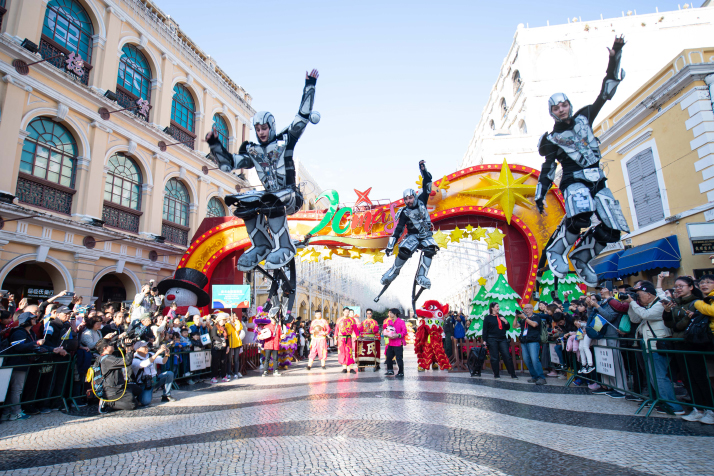
The cultural industry has also developed rapidly. From 2013, the Cultural Affairs Bureau began providing funding for culturally creative industries.
The Art Macao event this year turned the picturesque city into a living art gallery with joint exhibitions and performances from June to October. The Macao Museum of Art, foreign consulates and luxury hotels were the venues of the program that showcased drawings by over 40 Italian Renaissance masters on loan from the British Museum, masterpieces from the National Art Museum of China, and an exhibition of ceramic arts by contemporary artists from nearly a dozen countries and regions.
“In the future we will focus on folk art, design, film, literature and music to make the cultural industry an important part of the diversification of the local economy,” Chan Kai Chon, Vice President of the Cultural Affairs Bureau, said.
(Reporting from Macao)
Source: Beijing Review