Reconsidering the U.S. Narrative
 Facebook
 Twitter
 Linkedin
 Google +
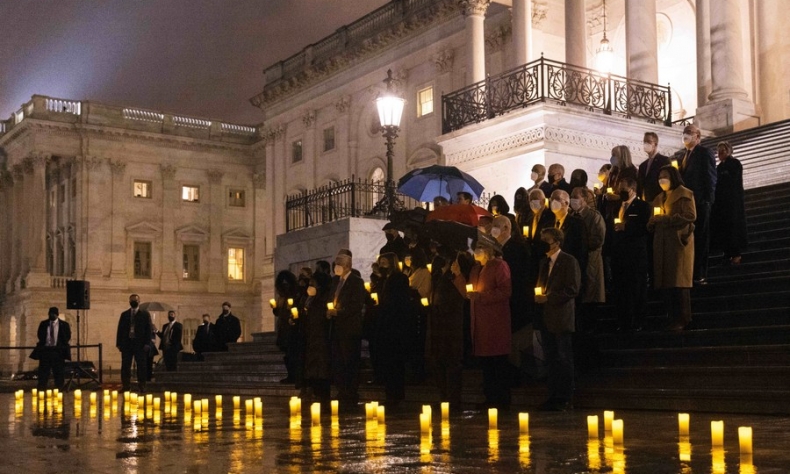
The U.S. narrative about China and human rights aims to demonize China—also a human rights concern—while distracting others from America’s painful record at home and abroad.
As U.S. critics malign China’s human rights record and in light of the recent official visit to China by UN High Commissioner for Human Rights Michelle Bachelet—who noted China’s incredible achievements and room for improvement—it’s important to bring a critical perspective to America’s claim that it champions human rights while China debases them.
In fact, the U.S. narrative is so convoluted and impossible to exhaust here, but let’s start at the beginning, so to speak: U.S. Secretary of the Interior Deb Haaland, the first Native American to head the department responsible for Native American affairs, requested and recently received a report detailing more than a century of abuses against Native American children—a record acknowledged to be incomplete due to a lack of sufficient funding and access given the lingering pandemic. Today, we can openly acknowledge the original sins of the birth of the nation—Native American genocide, African slavery, taking by force land and resources from Latinx, and extreme discrimination against Asian immigrants—but do we sufficiently connect the dots between those transgressions and current inequalities, including Native Americans having the highest poverty rate in the U.S. (25.4 percent), followed by African Americans (20.8 percent) and Hispanics (17.6 percent)? Do we rightly connect this deep history of racism to the 339-percent increase in hate crimes against Asians in the U.S. last year, or recent findings indicating that African-Americans remain the most targeted overall? Do we acknowledge that in the same order, each of these groups was also the worst hit by America’s incredible failures to control COVID-19, despite bragging about its advanced pharmaceuticals while blaming China, in racist terms, for the virus?
Truth be told
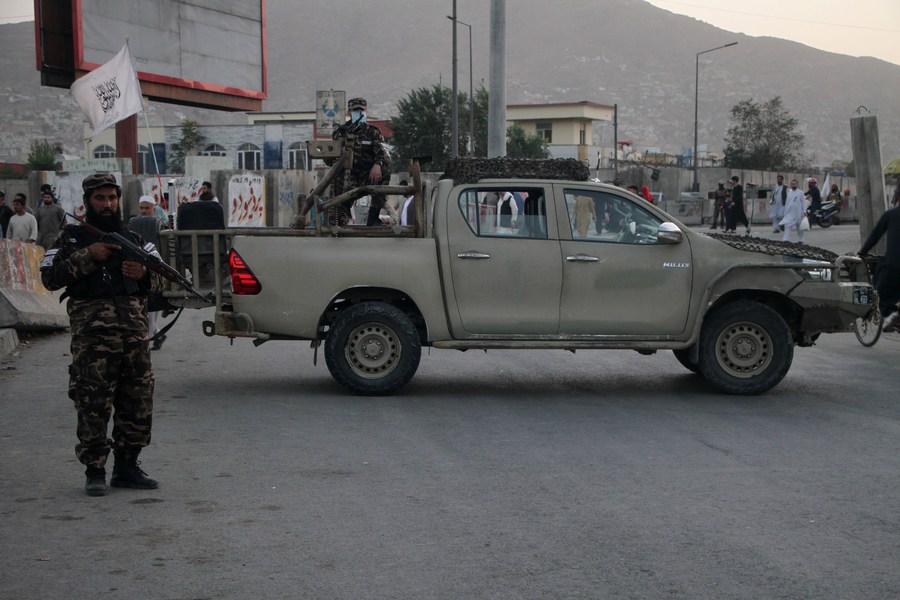
The U.S. repeats unfounded allegations of genocide in Xinjiang Uygur Autonomous Region, and yet Washington accelerated this narrative with its unilateral and catastrophic departure from Afghanistan, surrendering the country to Taliban control after two decades of war and occupation, an experience that was considered so corrupt and incompetent that the Taliban were able to return to power as the better alternative in the minds of many Afghans. And then, whatever the Taliban’s shortcomings, the U.S. froze Afghan assets and put them through a difficult winter, while other countries, including China, mobilized support. But let’s not forget: All of this coincides with U.S. destabilization in Central Asia, which contributed to Islamic separatism in Xinjiang, which the U.S. then encouraged as China moved to suppress it.
Furthermore, over that same two-decade period, the U.S. lied to the UN, invaded Iraq under false pretenses, and set in motion a chain of events that would lead to an estimated 170,000-655,000 deaths in Iraq alone. It would also set in motion the rise of ISIS and other extreme terror groups who victimized the region and beyond, which included a breakdown in regional public health and was partially blamed for the world’s previous coronavirus pandemic—Middle East respiratory syndrome. And with this broader history in mind, we should not forget that the U.S.-instigated global financial crisis in 2008 destabilized many developing countries and sparked the so-called Jasmine Revolutions and counterrevolutions, which saw the U.S. intervening in several, including Libya, to help assassinate the country’s leader and create the failed state that endures there today.
We never hear the word “genocide” associated with the American “war on terror,” but we do know about Guantanamo and secret prisons, extraordinary renditions, and torture. And before all this, we know the U.S. fostered the Taliban in the late 1970s as an armed Islamic revolution against Soviet support for the secular government then in power in Kabul. We also know the U.S. supported Saddam Hussein with weapons of mass destruction to wage war against Iran, wage genocide against Iraqi Shiites and suppress Iraqi Kurds as a favor to NATO member Turkey.
Speaking of NATO: the incessant expansion of this Cold War relic is one of the causes of the current conflict in Ukraine and the global cost-push inflation that has followed. Leading global financial institutions are warning of global hunger and recession, while the West, led by the U.S., has imposed unprecedented sanctions against Russia and poured billions of dollars and arms into a proxy war that’s prolonging regional suffering and global insecurity. Concurrently, the U.S. has created AUKUS, a U.S.-UK-Australia?trilateral security alliance proliferating nuclear submarines to Australia, and endeavored to expand this “NATO for Asia” to extend its hegemony and contain China.
Hard facts
Since the early 1980s, real wages in the U.S. have been declining on average, with periodic financial crises hammering the working and middle classes especially. Over the same period in China, more than 770 million of China’s rural population living below the poverty line rose out of poverty, and extreme poverty was eliminated nationwide. As the U.S. has mismanaged its economy and failed to sufficiently tax and regulate its own industries and as workers suffered, its leaders blamed China for American declines. This led to Trumpist opportunism, the dog whistle tactic of starting a trade war against China—which the Biden administration has continued despite it contributing to increased inflation—further imperiling American minorities and workers.
Why is it so many Americans can support police power to violate the human rights of minorities but can’t support police power, as the basis of public health, to shield minorities, senior citizens and others from the pandemic? With over 1 million Americans dead from the outbreak and resurgences still underway, Washington dismisses China’s dynamic zero-COVID-19 policy, which aims to stamp out every flare-up in the shortest possible time, as human rights violations despite clear evidence it has saved millions of lives—with less than 6,000 dead on the Chinese mainland from the disease. This policy also reduced the global burden of disease by significantly decreasing the opportunity for new mutations had the outbreak been left uncontrolled in China. It helped prevent economic collapse as China recovered quickly and provided essential goods, including vaccines, to the global economy.
We know that the U.S. has the highest per-capita incarceration rates among developed countries, and it’s the only Group of Seven member using capital punishment, despite numerous studies proving unfair convictions and racial biases in capital cases. In the meantime, all of America’s state and federal prisons exploit prison labor, with wages usually less than $1 per hour, a fact many critics describe as modern slavery.
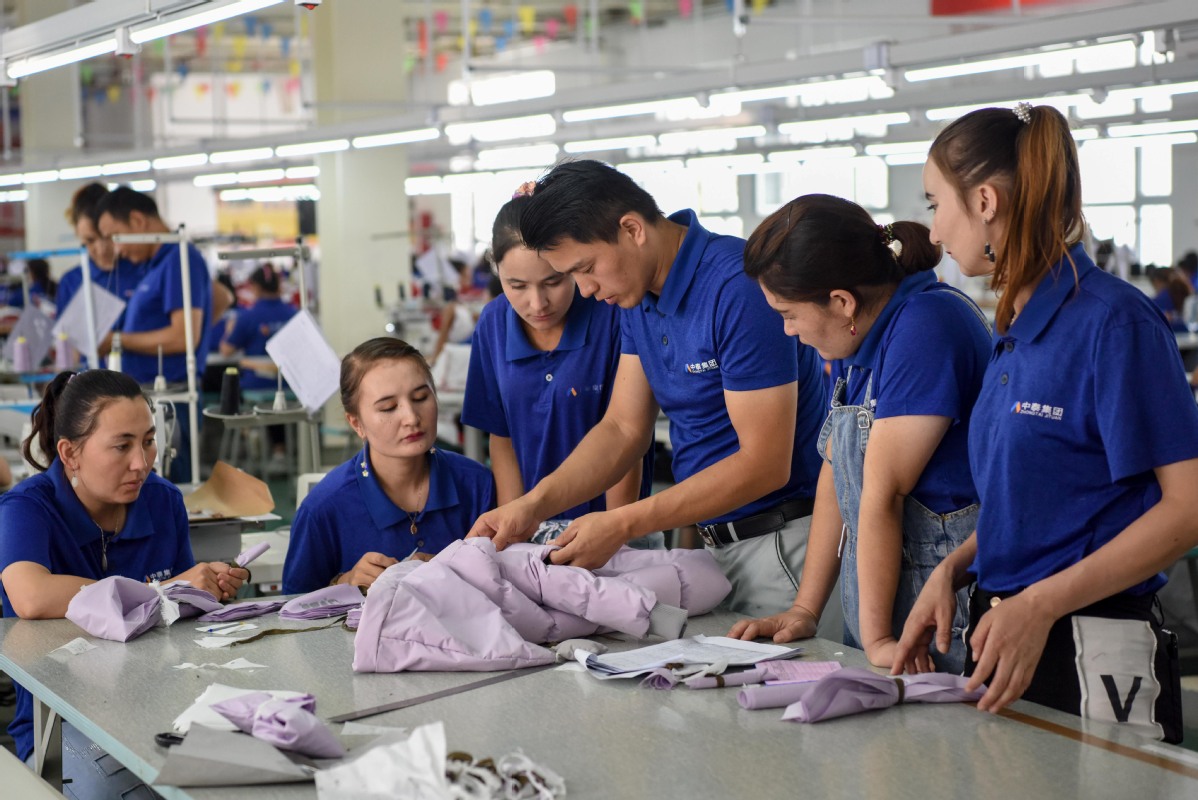
Although various international firms decided to abandon workers in Xinjiang due to spurious claims of forced labor, leading companies like Nike, Wal-Mart, Microsoft, Starbucks and others took advantage of prison labor in the U.S. throughout the 1990s and 2000s. Even more recently, an article in the Harvard International Review noted, “The COVID-19 pandemic has highlighted structural inequities in many ways, namely through its disproportionate impact on the physical and psychological health of communities of color. It has also expanded the use of prison labor, as nearly every state in the United States has announced that it is relying on incarcerated populations to manufacture protective equipment, wash potentially contaminated hospital laundry, disinfect cleaning supplies and dig graves. All the while, prisoners are denied access to hygiene products and basic medical care. In spite of the nation’s dependence on prisoners, it continues to view their lives as disposable.”
Despite this litany and many more unfortunate examples, it would be wrong to say that the U.S. has made no contributions to human rights, and it’s certainly the case that China still has room for improvement. On the one hand, criticism should be welcomed where it is due. On the other hand, we can also look for the positive contributions to human rights that each country has made, examples of which are found in the work of Gu Yanfeng (et al.), whose annual Global Justice Index Report in Chinese Political Science Review attempts to quantify objectively the benefits different countries and regions make to human wellbeing—and both countries have made major contributions in this regard. Indeed, if one supports human rights, then it seems intelligent to acknowledge these achievements, even to learn from and encourage them. That conversation is shortchanged, unfortunately. More troubling, however, is that the U.S. narrative about China and human rights aims to demonize China—also a human rights concern—while distracting others from America’s painful record at home and abroad.
The author is a professor of Politics and International Relations at East China Normal University and a senior research fellow with the Institute for the Development of Socialism with Chinese Characteristics at Southeast University.