People Are Always the Most Valuable Asset
 Facebook
 Twitter
 Linkedin
 Google +
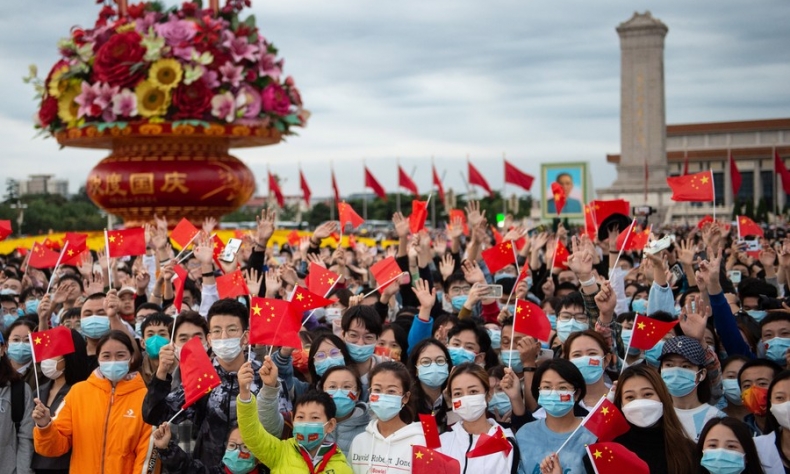
In a socialist country, one must improve people’s lives in concrete, material ways instead of merely making a show of democracy.
In a recently published speech, President Xi Jinping sheds light on China’s path for developing human rights. The remarks were first delivered at a group study session of the Political Bureau of the 19th Communist Party of China (CPC) Central Committee in late February.
Xi, also General Secretary of the CPC Central Committee, begins by stating that it’s a common pursuit of human societies to protect and value life and dignity, and to try to ensure that everyone enjoys human rights. He notes Chinese philosophers have emphasized similar points since ancient times. He quotes Confucius from the Book of Rites: “In ancient governance, the love of humanity was the greatest point.” He also quotes Mencius on benevolence, Xunzi on the “preciousness” of people, and Mozi on the value of “universal love.” He combines these with other well-known aphorisms that underscore the importance of people-oriented governance and insist that people are always the most valuable asset.
Xi also acknowledges the progressive contributions made by the bourgeois revolutions of Britain, the United States and France, even paraphrasing the U.S. Declaration of Independence (1776) that all people are created equal and have inalienable rights. Similarly, he notes, while Karl Marx and Friedrich Engels also affirmed the historical and progressive significance of bourgeois human rights theory, they also “thoroughly criticized the social, historical and class nature” of this theory and how these aspects severely limit its capacity for real human rights.
The Marxist solution to this problem is building socialism. One does this not by imposing abstract or utopian concepts on society like “universal human rights,” but by sticking to reality and building up and progressively transforming the economic base—and along with it, society—in ways that make real human rights possible. This way, one can avoid repeating bourgeois mistakes and instead respond effectively to real needs, conditions and circumstances, which in China’s case have also included breaking free from the hegemonic, exploitative and neo-colonial, if not imperialist, practices that have always been at the root of the bourgeois model.
He then summarizes six key principles guiding China’s human rights development: upholding the?leadership of the CPC; putting people first; sticking to China’s reality; equating basic human rights with the right to subsistence and development; advancing human rights by advancing the rule of law; and actively participating in global human rights development, including reforming and building a global governance system based on genuine multilateralism to ensure a better, shared future for humanity.
Differences
Xi then takes further aim at the Western concept of “universal human rights.” He cites increasingly debilitating problems found in some Western countries, including entrenched political polarization and income inequality, along with increasing populism, racism and xenophobia. He points out these problems are associated with increasing political and social disorder and notes particularly out-of-control epidemics that have killed millions. Here, his contrast between the Western and Chinese experiences couldn’t be clearer.
And yet he remarks, some of these same Western countries still forcibly promote their so-called “universal human rights” around the world, in tandem with their concept of democracy. They interfere in the internal affairs of other countries under the principle that “human rights are higher than sovereignty,” provoking war, long-term social unrest and refugee problems.
Conversely, like his predecessors, Xi insists that sovereignty is sacrosanct, and this by necessity includes not interfering in the internal affairs of others. These are the fundamental principles underpinning the CPC’s concept of human rights—combined with the principles of upholding Party leadership while putting people first—which the Party has long equated as a necessary condition for liberating China, securing sovereignty and rejuvenating the nation.
Indeed, despite the remarkable advances made since the founding of the People’s Republic of China in 1949, Chinese leaders remain mindful of the “century of humiliation”—the dark period beginning in 1840 that witnessed many of the grossest forms of human rights abuses committed against Chinese people by other countries. In short, if one cannot secure one’s sovereignty, protect oneself from aggression, if one cannot ensure good governance and help the nation develop and grow stronger in ways that benefit the overwhelming majority of the people, then one risks the sort of ruin China suffered before and that so many nations still experience today.
“Democracy is not an ornament; it’s not for decoration. Likewise human rights.” Arguably this is the most pointed line in the speech, one that extends a point he made specifically about democracy in 2014. Then, he emphasized that democracy should be “used to solve the?problems that the people want to solve.” In other words, in a socialist country, one must improve people’s lives in concrete, material ways instead of merely making a show of democracy.
His argument here couldn’t be clearer: China has not advanced pseudo-democracy or pseudo-human rights at home or abroad. Instead, it has done what was necessary to liberate China from oppression, promote common prosperity and reduce poverty, foster the rule of law, and thereby ensure that people increasingly enjoy a better form of democracy with “extensive, real and effective human rights.”
Work to be done
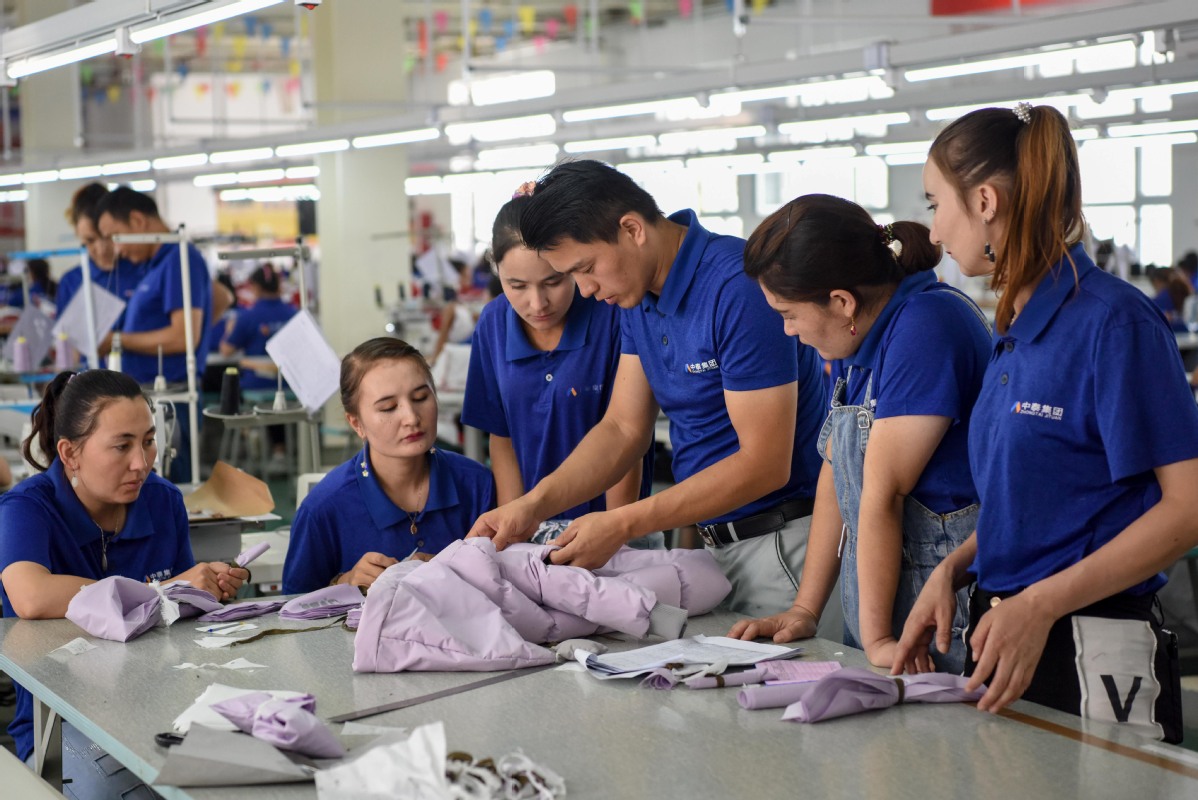
Xi provides a long list of accomplishments highlighting improvements to human rights in China. He notes the completion of building a xiaokang, or a moderately prosperous, society in all respects, and eliminating extreme poverty. He says China has continued to develop whole-process people’s democracy by advancing the rule of law with a focus on improving fairness and social justice. China has created more adequate and higher-quality employment, and built the world’s largest education, social security, and medical and public healthcare systems, vigorously improving living conditions. He notes successful campaigns against official corruption and organized crime. He notes the nation’s ongoing dynamic zero-COVID-19 policy, which aims to stamp out every flare-up as quickly as possible, as protecting people’s lives and health to the greatest possible extent is the top priority.
He then lists five areas where human rights need improvement. First, he equates “realizing the Chinese dream” and national rejuvenation as “essentially the process of realizing fairness and social justice and continuously promoting the development of human rights.” He then notes the importance of continuing economic development, further strengthening the rule of law, and improving environmental protection, income distribution, education, social security, medical care, housing, senior care, and so on, in ways that advance in a coordinated way China’s economic, political, cultural, social and ecological progress.
Second, he notes the need for better legal protections for human rights, including better legislation, law enforcement and administration of justice, ensuring that infringements, whether due to indifference or deliberate violations, are seriously investigated and punished.
Third, China needs to promote a better understanding of human rights throughout society. This includes better education and training for public officials, especially those working at primary levels. The promotion and protection of the rights and interests of women and children, senior citizens and people with disabilities should receive more emphasis. Along the way, through practice and development, he says, China needs to refine and improve its concept of human rights, and likewise improve how it tells the story of human rights in China.
Fourth, China needs to do more to promote global human rights governance, “carrying forward the common values of all humanity,” and must do so through win-win cooperation and development efforts internationally, as well as by working better with multilateral organizations like the UN.
Fifth, China must seize the strategic initiative and become more competitive in the international struggle over human rights. China should help consolidate an international consensus on human rights and oppose the use of double standards or interference in other countries’ internal affairs. Again, he says China must do a better job of sharing its human rights concepts and achievements internationally.
The author is professor of Politics and International Relations at East China Normal University and senior research fellow with the Institute for the Development of Socialism With Chinese Characteristics at Southeast University.