Economic and Trade Ties, a Microcosm of China-U.S. Relations over the Last 45 Years
 Facebook
 Twitter
 Linkedin
 Google +
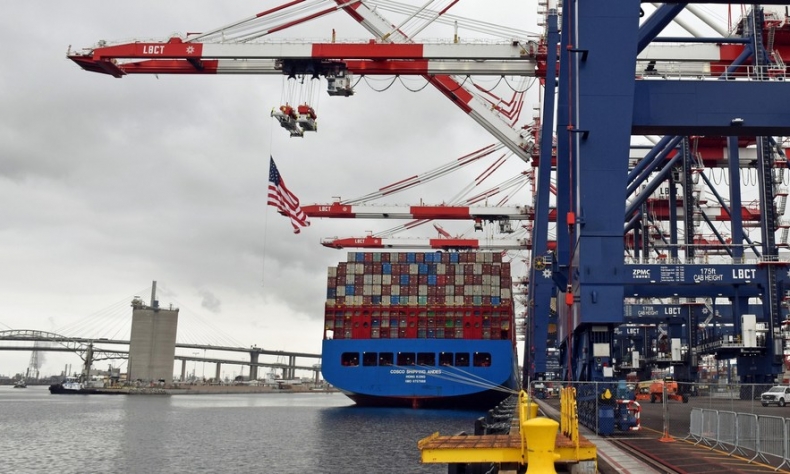
As long as both sides adopt a holistic approach and do not lose sight of the bigger picture, the future of China-U.S. economic and trade relations still looks promising.
Over the past decades, the economic and trade relationship between China and the United States, which connects both sides of the Pacific like “thread and needle,” has gone through a process of rising from nothing and then falling from its recent peak.
In 1972, after then U.S. President Richard Nixon’s visit to China, the two countries resumed trade relations after a 20-year-plus hiatus. Then, China’s historic reform and opening-up drive that began in 1978 brought it into the wider global market.
The country has since become an important part of the international trading system, especially after joining the World Trade Organization (WTO) in 2001.
However, 2018 saw serious trade tension between the two major economies, which many economic experts considered a prelude to U.S. attempts to decouple from China. However, future cooperation remains hopeful due to the deeply intertwined trade links between them.
A deeper dynamic
According to data provided by the International Monetary Fund (IMF), China-U.S.?trade in goods grew from $100 million in 1972 to $1.2 billion in 1978. And the two sides officially established diplomatic relations a year later in 1979. However, at that time, this merely accounted for less than 0.1 percent of total U.S. trade in goods with other countries.
After 45 years, the total value of the U.S. trade in goods with China amounted to around $690 billion in 2022, roughly 575 times the 1978 number.
But the turning point came in 2017, when the share of U.S. goods trade with China in its total foreign trade volume began to decline year by year. At that time, it was 16.3 percent. But by 2022, that number had fallen to 13 percent, returning to the level before the 2008 global financial crisis, which had a multi-year impact on the world economy.
Underlying these figures are broad changes in bilateral economic and trade exchanges over the 45 years, as well as the development of a deeper political dynamic.
The picture in China is a bit different from that in the U.S. because China’s foreign trade is more diversified or, in other words, more globalized—than that of the U.S.
According to China’s National Bureau of Statistics, total trade between China and the U.S. increased from $80 billion in 2001 to $750 billion in 2022. As China’s most important trading partner, the U.S. accounted for 14.9 percent of China’s total foreign trade in 2005. By 2022, that number stood at 12 percent.
What the two datasets had in common in their depiction of China-U.S. economic and trade relations at the end of 2022 was that their share of each other’s total foreign trade had fallen by 3 percentage points.
In other words, the good old days were over.

Deficit or surplus?
China ran a trade deficit, the amount by which the cost of a country’s imports exceeds the value of its exports, with the U.S. for more than one decade after 1978.
In the early 1990s, it managed to achieve a trade surplus, an economic measure of a positive balance of trade where a country’s exports exceed its imports, but was not considered a major challenge by the U.S., given that other countries had preceded China.
For example, in the second half of the last century, the U.S. had a huge trade deficit with Japan, which at one point accounted for 50 percent of its total trade deficit.
After China joined the WTO, the major U.S. trade deficit with East Asia gradually shifted from Japan to China.
In 2010, China surpassed Japan to become the world’s second largest economy. The country embarked on a journey of continuous technological progress and industrial upgrading, and Sino-American trade relations became more?“competitive.”
China’s major exports to the U.S. have shifted from textiles in the early years to hi-tech products today. For example, in the first 11 months of 2023, the largest exports to the U.S. were machinery and electronic products, accounting for 42.8 percent of China’s total exports to the country, whereas the proportion of textiles fell to 9.2 percent.
Of particular note here is that China’s share has remained stable in recent years, despite the COVID-19 pandemic breaking out in early 2020. This is different from Japan since the 1990s, which now accounts for about 10 percent of the total U.S. trade deficit.
This suggests at least two things. First, the Sino-American economic and trade relationship is resilient, and the U.S. needs Chinese manufactured goods, while the latter continues to be the “factory of the world.” Second, China is not only the world’s largest developing economy but also a global leader in certain industries.
As a result, China’s industrial and value chains are so widely dispersed that it is difficult for the U.S. to find an alternative in other countries and regions.
Balance or imbalance?
American companies represent multinationals in the world economy. They not only hold huge amounts of capital and technology but also run a set of rules that lead the world’s standards.
Therefore, since the beginning of its reform and opening up, China has considered the attraction of foreign investment an important means for its further integration into the world economy.
Surprisingly, after a small rebound in 2021, total U.S. foreign direct investment (FDI) in China fell to a 20-year low of $2.2 billion in 2022. FDI is an investment by a party in one country in a business or corporation in another country to establish a lasting interest.
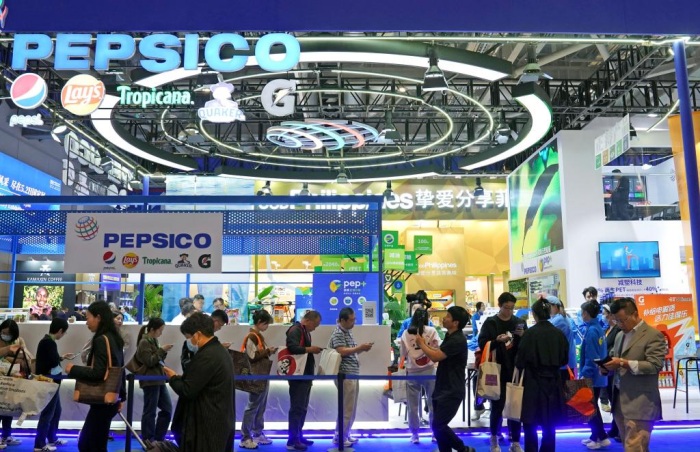
Currently, the U.S. ranks only ninth among sources of FDI to China, lower than several major Asian countries such as Singapore, the Republic of Korea and Japan, and lower than the Netherlands and Germany in Europe.
Chinese FDI in the U.S. has also attracted attention in recent years. At the beginning of the 21st century, the U.S. was the seventh largest destination for outbound investment by Chinese companies, ranking first among developed countries.
China’s FDI in the U.S. is higher than that of Singapore. Over the past decade, Chinese direct investment flows to the U.S. have averaged over $6 billion annually. By 2022, its stock of direct investment in the U.S. had increased to $79.2 billion, $1 billion less than the 2020 peak, but four times its FDI stock in the UK.
Comparing the figures, a conclusion can be drawn that China invests more in the U.S. than vice versa. This defies the expectations of traditional international investment theory.
With per-capita GDP, a gauge of an economy’s health and size, of less than one fifth that of the U.S., China is still a developing country.
In general, developed countries invest more in developing countries because the latter generally face a shortage of capital. The scarcer the capital, the higher the return on capital should be. The explanation for this may be that Chinese companies invest in the U.S. not only to seek return on capital, but also to learn from the country.
Traditionally, economic and trade relations have been considered the stabilizer of bilateral ties.
In November 2023, the presidents of China and the U.S. held a summit in San Francisco, California, and reached an important consensus on further developing bilateral economic and trade relations.
Chinese President Xi Jinping reiterated that the two should jointly promote mutually beneficial cooperation as one of the five pillars of bilateral relations. U.S. President Joe Biden also agreed that the two countries are economically interdependent, and the U.S. is happy to see China prosper. It does not seek to contain or suppress China’s development or decouple from China, he added.
In this regard, as long as both sides adopt a holistic approach and do not lose sight of the bigger picture, the future of China-U.S. economic and trade relations still looks promising.
The author is a researcher with the National Institute of International Strategy, the Chinese Academy of Social Sciences.