Cultural Symbols in Dense Forests
 Facebook
 Twitter
 Linkedin
 Google +
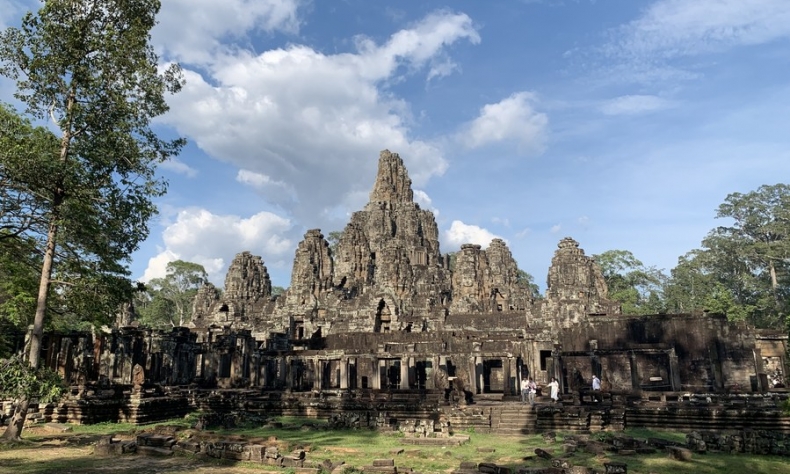
China has achieved much in protecting the Angkor site due to the advancement of its technology in cultural heritage protection. A mysterious ancient capital is glowing with new vitality.
In 1861, French biologist Henri Mouhot was searching for tropical animals in the dense forests of Siem Reap, Cambodia, when he inadvertently happened upon a mysterious and magnificent ancient architectural complex harboring the secrets of the long-lost Angkor civilization.
Angkor archaeological site, one of the “Four Wonders of the East” together with the Pyramids of Egypt, the Great Wall of China and the Borobudur of Indonesia, is regarded by Cambodian people as a cultural symbol of the national spirit. Since the country’s independence in 1953, the Cambodian national flag features a depiction of Angkor Wat.
In 1992, the Angkor archaeological site was placed on UNESCO’s List of World Heritage in Danger. More than 20 countries including China participated in the Angkor conservation project jointly launched by the Cambodian government and UNESCO. With support from the National Administration of Cultural Heritage and organization by the Chinese Academy of Cultural Heritage, in 2010, the Chinese Government Team for Safeguarding Angkor (CSA) successfully completed a 10-year conservation and restoration project on the Chau Say Tevoda Temple, and officially launched a project to protect and restore Ta Keo Temple, one of the most magnificent and typical mountain temples at the Angkor site.
Arduous task
The Angkor archaeological site contains the remains of temples, cities, water projects, roads, and bridges from the Khmer Empire (9th-14th century). In the early 15th century, Angkor was abandoned and gradually consumed by forests. Today, we can only imagine the heyday of the Khmer Empire a thousand years ago through the spectacular stone towers and exquisite bas-reliefs.
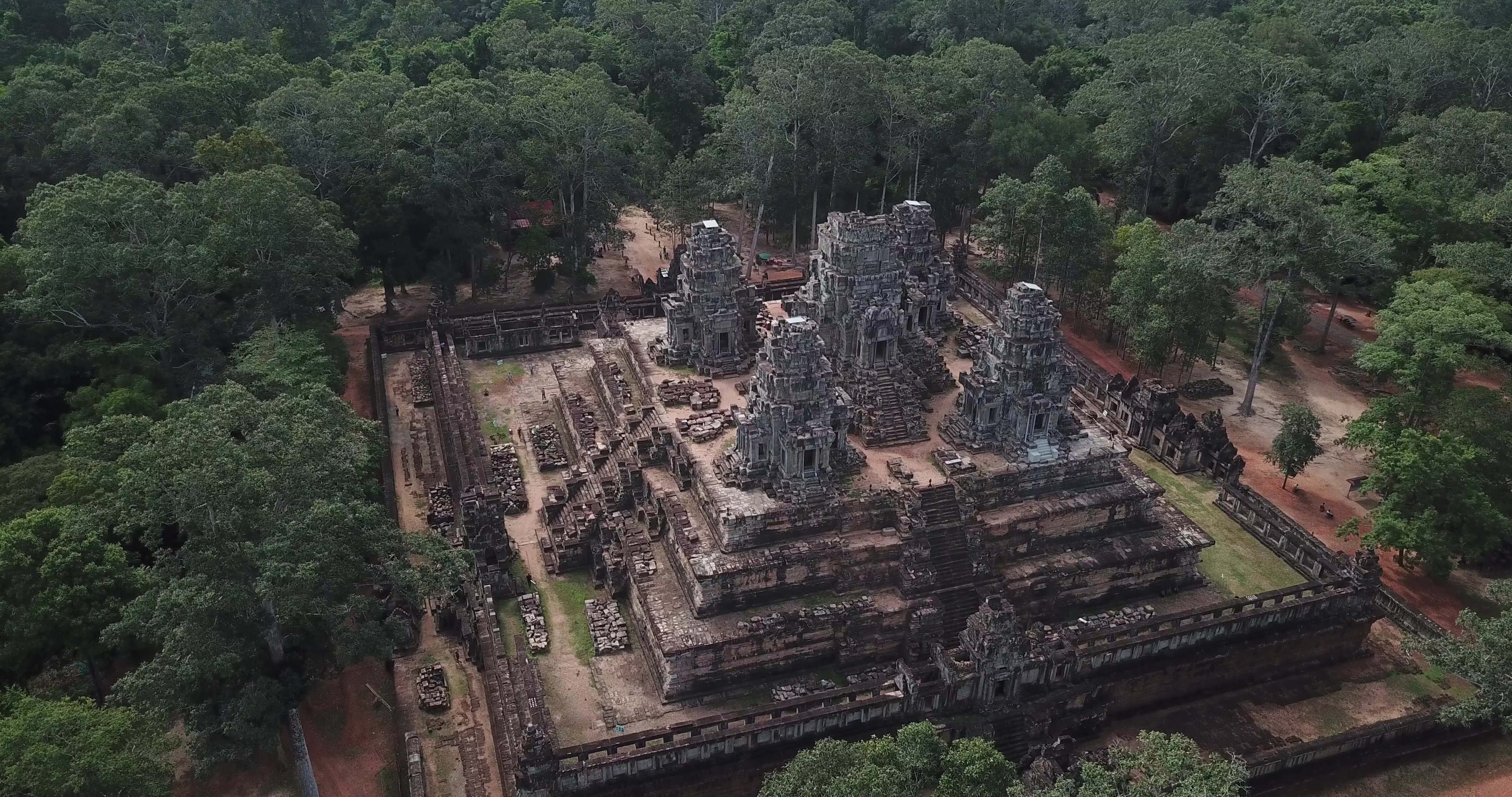
About a kilometer from the east gate of Angkor Thom is an impressive pyramid-shaped structure representing the Mountain Meru from Hindu mythology. It is Ta Keo Temple. Ta Keo was also known as Hemagiri, meaning “the mountain with golden summits.” Ta Keo was built in the transitional period of Khmer architecture, giving it a mixture of old and new architectural elements. With its special status as a connecting link, it plays an important role in the study of Khmer civilization.
When he first arrived at the Ta Keo site, Jin Zhaoyu, a cultural heritage protection engineer from the Chinese Academy of Cultural Heritage, was stunned by its magnificence. At the same time, he felt tremendous pressure. The dilapidated temple with crushed stones all over the place presented a massive challenge for the Chinese archaeologist, who had never before studied a mountain temple.
The first problem he faced was inability to use machinery. Ta Keo was the first of the Angkor buildings to be built of sandstone. The long-term heat, humidity, and pests had led to the loosening and collapse of many components. The terraces could not bear the weight of large machinery.
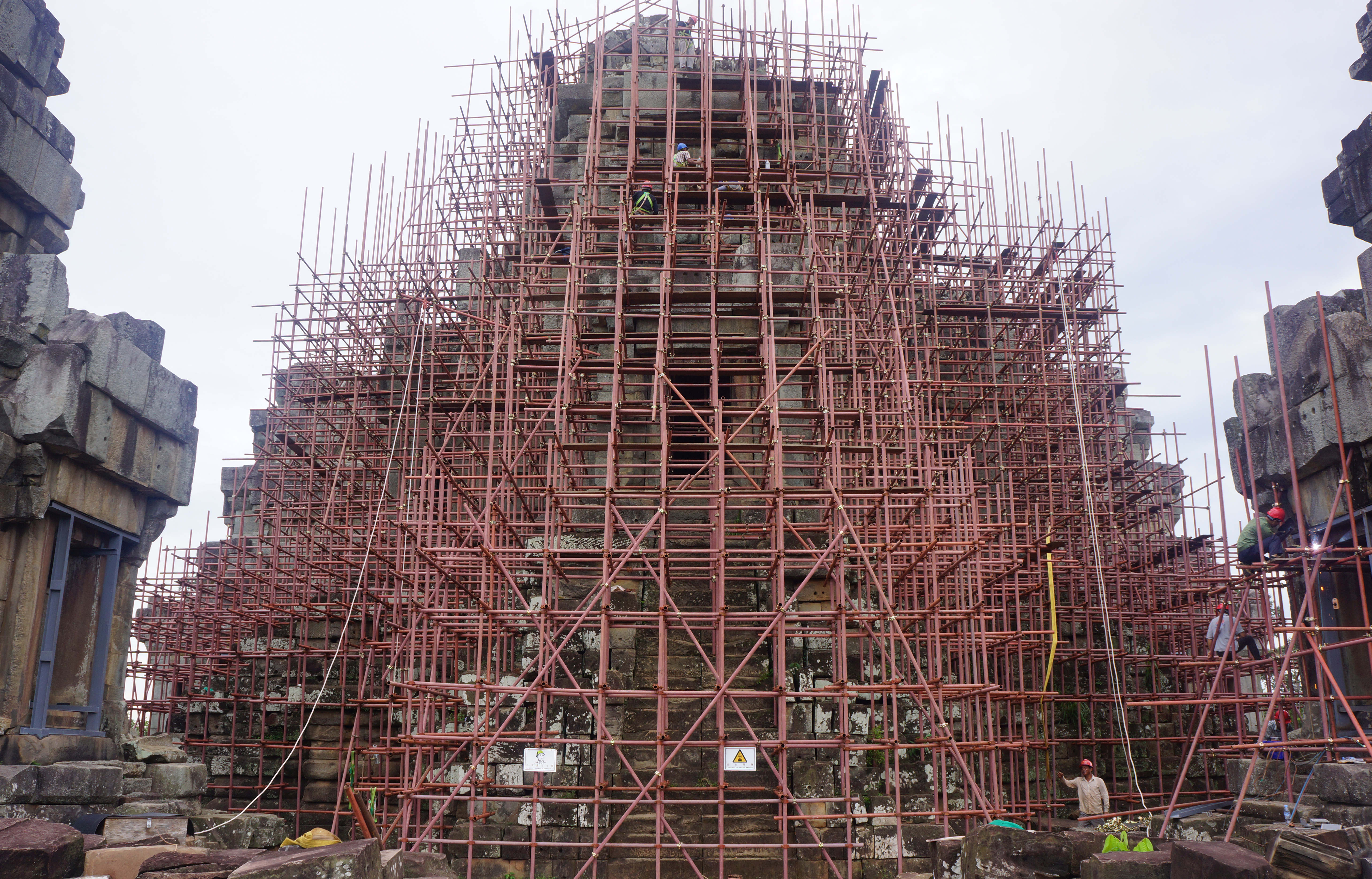
The whole mountain temple was built on three rectangular terraces, each raised above the next. At the center of the temple stands a quincunx of towers. From the ground outside the terraces to the highest point of the towers is 43.3 meters. The layers of stone steps to the Meru terraces measure nearly 90 degrees vertical. Archaeologists had to climb with their hands and feet to access the towers. The conservation work site was small and narrow, with a high risk of falls. Before they could do anything, the team had to build scaffolding on the periphery of the building with a tailored steel structure to provide maximum protection for the building itself.
Tourists first visiting the site often wonder why the building is simply stacks of stones lacking delicate decorations and carvings. This is the most unique value of Ta Keo among all the Angkor temples. It was first built in 975 as a state temple during the reign of Jayavarman V. However, construction was never finished.
When the temple was first built, the craftsmen stacked stones of different sizes and then cut and polished them into desired shapes. Therefore, the stone components were all irregular in shape. There was no mortar or other adhesive between the stones. The structure and weight of the stone components kept them together. Buddhas and other patterns had not yet been carved on the surface of the walls. The bas-reliefs on the surfaces of other Angkor structures present unique, rough, and simple primitive beauty while proving to be obstacles for restoration efforts.
Of the more than 10,000 stone components in Ta Keo, some are buried deep underground while others are broken and worn. The largest component weighs four tons, while the smallest is only five centimeters long. The archaeologists had to find broken stone components and locate their position before filling in gaps with restored stone components.
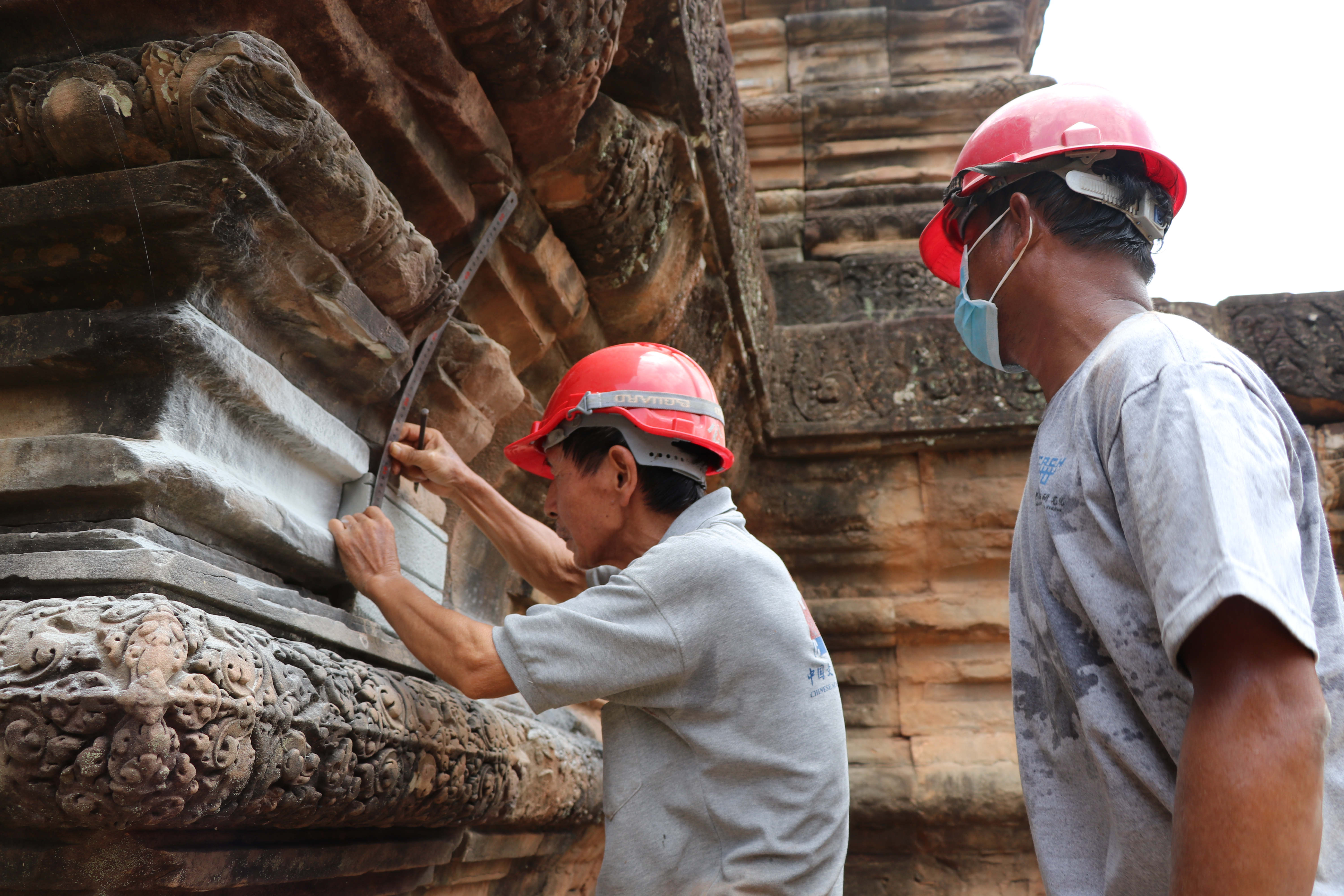
“Each stone component is unique and has its own position in the structure,” explained Jin. “Any miscalculation or mistake will result in wider gaps later on and the eventual failure of the restoration.” They had to measure and mark each stone component before locating each one’s position and putting it in the right place. Sometimes, to avoid repositioning problems, they would conduct assembly experiments on the ground first. “It’s like piecing together a jigsaw puzzle but far more complicated,” exclaimed Jin.
Tradition vs. innovation
Ta Keo Temple has a unique architectural style, but many bas-reliefs as part of the final phase of construction were never completed. To restore the missing beauty, the archaeologists had to find a balance between “tradition” and “innovation.”
Jin Zhaoyu said that in terms of architectural pattern and construction technology, Ta Keo has important academic value in understanding Angkor architecture and great significance for objective, scientific, and comprehensive study of the history of Angkor. Therefore, expectations were high for the CSA.
After so much time, many stone components were hard to find, and others had disintegrated into sand. Many had to be replaced with new matching components. To restore the original appearance as accurately as possible, the CSA looked for new components in the surrounding areas. After finding stone samples, they would conduct various extreme weather experiments near the temple, record the small changes in the samples, and choose the most suitable pieces for replacement.
Without affecting the overall restoration of the building, the archaeologists chose to preserve the existing fragments as much as possible, and less than 15 percent of repositioned stone components were new. “Our restoration is not supposed to finish the unfinished work,” said Yuan Mengqian, an engineer with the Chinese Academy of Cultural Heritage. “Our aim is to show the true history and preserve the soul of the building.”
Stone components at the gate of the temple resembling mountain flowers are made of several stones carved with exquisite patterns. Previous restoration efforts often involved drilling into stones to lay anchor rods to connect the components. But the extremely hot and humid climate of Siem Reap can accelerate anchor rod expansion and aging, causing damage to the building itself. To solve the problem, the CSA came up with the idea of setting a pull bar outside the stone components to provide reinforcement. Although it makes a certain impact on the aesthetics, minimum intervention on the building can be achieved. This innovative process was also recognized by the expert panel of the ICC Angkor. The CSA also applied rubber to the surface where the steel structure made contact with the stone to prevent damage to the relics. Reversible protective measures not only ensure the quality of heritage restoration work, but also leave room for the application of more advanced technologies in the future. “Cultural relics are alive,” said Jin. “It’s our responsibility to sustain and protect their lives.”
On November 10, 2022, Chinese Premier Li Keqiang visited an exhibition marking 30 years of cultural heritage exchange and cooperation between China and Cambodia and attended the handover ceremony of the Ta Keo Temple Restoration Project. The unremitting efforts of the CSA made it possible for the world to see the site again.
Cultural exchange platform
Cultural relics are often confined to national boundaries, but all cultures share common elements. In the eyes of “cultural relics doctors,” the cultural treasures have the ability to quietly tell the world stories from thousands of years ago.
Liu Hanxing, an associate researcher with the Chinese Academy of Cultural Heritage, said that whenever he gets involved with a new project, the first thing he does is study the historical, religious, and cultural context of the heritage as well as the traditional craftsmanship and local language and customs.
When they first arrived in Siem Reap, the CSA members could only communicate with their Cambodian counterparts in simple English. Later, more in-depth communication helped them establish deep friendship with the Cambodian colleagues and local residents. In their spare time, they would talk about Bruce Lee and other kung fu stars. They learned to communicate with authentic Cambodian expressions. They would also attend weddings and birthday parties at Cambodian homes.
Friendly exchange between China and Cambodia can be traced back to ancient times. During the Yuan Dynasty (1279-1368), Chinese envoy Zhou Daguan visited Cambodia and wrote The Customs of Cambodia, providing important information for future generations to study the history of Angkor. Today, the CSA has again acted as a bridge of communication between civilizations. Jin Zhaoyu considers learning to communicate with the local people part of the process of experiencing history and culture. “We are reconnecting interrupted lines of communication between civilizations,” he said.
China built a Ta Keo Temple Management and Exhibition Center at the Angkor Archaeological Park to show visitors the philosophy and achievements of the CSA and deepen the cultural exchange between China and Cambodia. It also set up the China- Cambodia Historic Sites Research Center to carry out long-term research and investigation of cultural heritage. The facility has become an important platform for international research on cultural heritage protection and international cooperation and training.
In the process of restoring the Ta Keo Temple, the Chinese archaeologists helped their Cambodian counterparts cultivate a strong cultural heritage protection team. Their efforts have improved the skills of the local craftsmen and created more job opportunities. They promoted the development of the local tourism industry as well as economic growth and overall environmental governance.
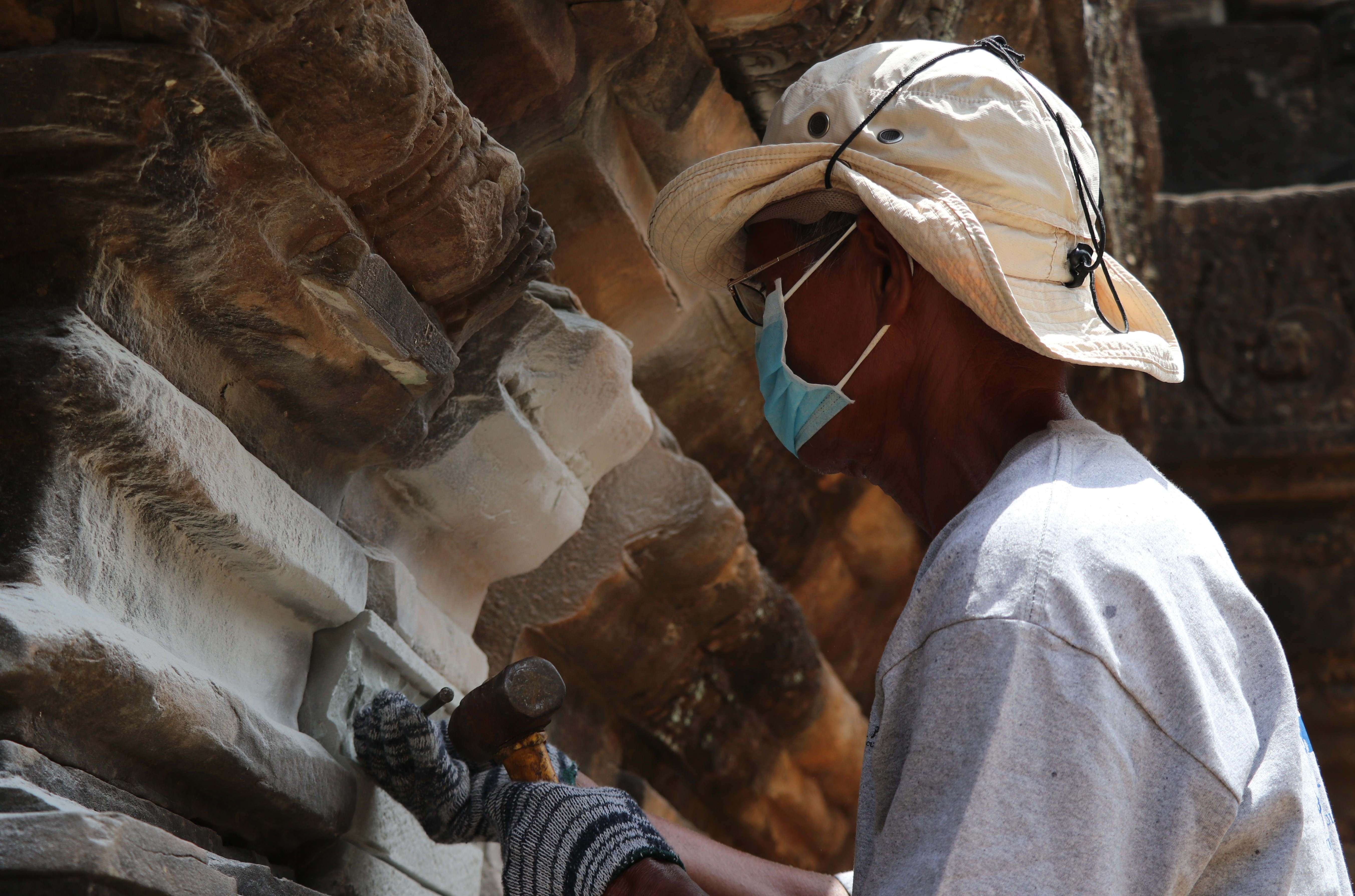
“We should not only restore the cultural relics but also foster sustainable development potential,” said Li Xiangdong, vice president of the Chinese Academy of Cultural Heritage. “Our intention is to take a sustainable development path that integrates research, protection, and restoration with exhibition and utilization. That is to say, we should consider not only protection of the cultural heritage but also how to leverage it to benefit the coordinated development of local communities, so that the local people can get real benefits from the project.” In 2019, the Cambodian government entrusted China with restoration of the Royal Palace at the center of Angkor Thom complex. The project involved not only restoring the ancient buildings at the site, but also building a laboratory and exhibition center. The aim was to help Cambodia achieve sustainable development in the protection of the Royal Palace site, tourism, and social development.
Li Xiangdong beamed about China’s international influence in the field of cultural heritage protection and research expanding from the role of participant in decades past to introduction of the “Chinese model” to protect the Angkor heritage site. The CSA has finally reached center stage.
China has achieved much in protecting the Angkor site due to the advancement of its technology in cultural heritage protection. Over the last 30 years, with the support of the National Administration of Cultural Heritage, Chinese archaeologists have carried out 11 cooperation projects on cultural heritage protection and restoration in six countries including Cambodia, Uzbekistan, Nepal, and Mongolia, which have helped people better understand Chinese civilization, enhanced communication and exchange between different cultures, and promoted exploration of past civilizations.
Chinese archaeologists are continuing their journey of cultural heritage restoration in Cambodia, overcoming new challenges with each step.