Crossroads Trends: Cooperation, Competition, Communication
 Facebook
 Twitter
 Linkedin
 Google +
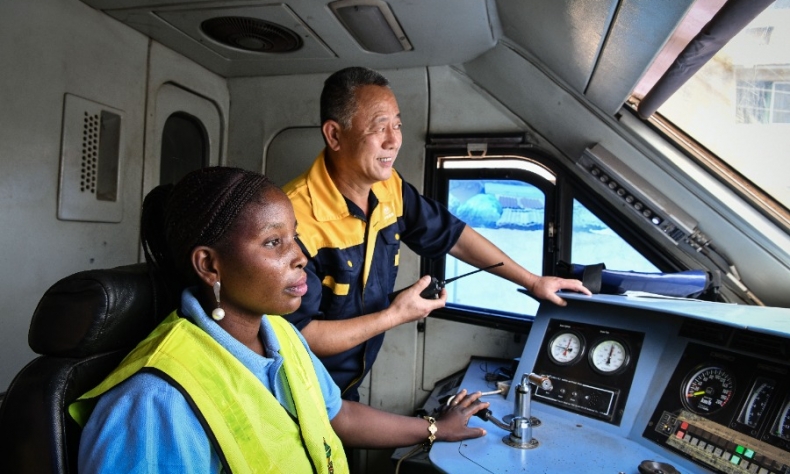
China’s inclusive and consultative approach reflects not a pursuit of dominance, but a model of leadership grounded in listening, partnership and consensus-building, embodying a responsible global stewardship that stands in contrast to the old paradigm of unilateralism.
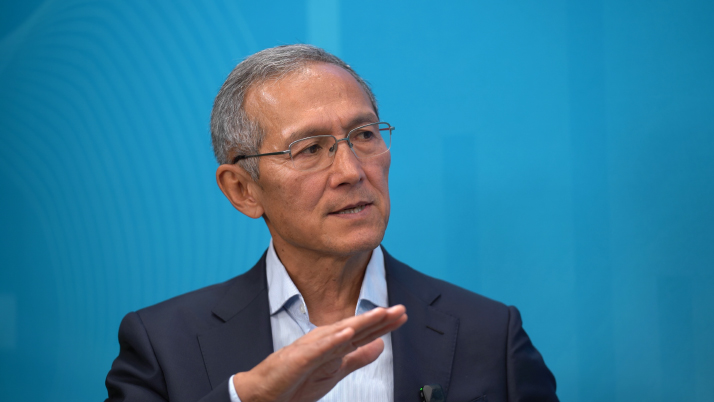
Djoomart Otorbaev, former Prime Minister of Kyrgyzstan and a senior foreign research?fellow at the Chongyang Institute for Financial Studies, Renmin University of China, recently visited China. In an exclusive interview with Beijing Review Associate Editor in Chief Liu?Yunyun, he discussed Central Asia’s growing connectivity, China’s role in the global economy and his concept of the “Three C’s” that define today’s world: cooperation, competition and communication. Edited excerpts from their conversation follow:
Beijing Review: You’ve proposed the concept of the “Three C’s.” Can you explain what that means and how it applies to China?
Djoomart Otorbaev:?I believe today’s global landscape is defined by three “C’s”: cooperation, competition and communication. Whether among individuals or nations, progress depends on how well we balance these three dimensions. We must learn to compete fairly, cooperate effectively and communicate constructively.
From my perspective, China excels in the first two. The real foundation of China’s success in economic development and social progress lies in its embrace of competition, a concept often misunderstood. Some attribute China’s achievements to government subsidies or rigid work discipline, but that overlooks the essence of the story. The driving force has been a culture of intense yet healthy competition, not only in business, but also in academia and decision-making.
China also stands out as a role model of cooperation. A prime example is the Belt and Road Initiative (BRI), proposed by President Xi Jinping in 2013.
(The BRI, consisting of the Silk Road Economic Belt and the 21st Century Maritime Silk Road, aims to boost connectivity along and beyond the ancient Silk Road routes—Ed.)
What began as an effort to strengthen Belt and Road cooperation has since evolved into a global framework, now joined by more than 150 countries and dozens of?international organizations. Such broad participation is unprecedented in history.
Where China still has considerable potential to grow is in communication, particularly in how it tells its story to the world. The use of English in international discourse is vital, and there remains great scope to more effectively convey China’s vision, policies and achievements globally. This is a point President Xi has also underscored in his writings.
Kyrgyzstan joined the BRI in 2014—during your term as prime minister. How do you evaluate its impact on your country and the region? How do you view the relationship between China and Kyrgyzstan today?
Joining the BRI was a beneficial choice for Kyrgyzstan. Since then, our bilateral and multilateral cooperation with China has deepened considerably, including through frameworks such as the Shanghai Cooperation Organization (SCO) and the China-Central Asia Summit, under which the leaders of five Central Asian countries meet regularly with the Chinese leader.
The results are visible everywhere. Numerous joint projects have been launched, far too many to list in one conversation. One of the most transformative developments is the China Railway Express, or the China-Europe freight train, which passes through Central Asia. I describe this initiative as the “Eurasian Rail Revolution.”
A little over a decade ago, Central Asia was still viewed as landlocked and disconnected from global trade. Today, thanks to this expanding railway network, our region has become a bridge between East and West, reviving the spirit of the ancient Silk Road. Goods that once took two or three months to reach Europe by sea can now be delivered in around 12 days by rail, faster, cheaper and far more environmentally friendly. Last year, rail transport even became less expensive than maritime shipping—something once thought impossible.
This transformation has turned Central Asia into a vital transit and logistics hub, creating jobs, reducing transportation costs and attracting new investment. It is no exaggeration to say that the BRI has helped restore Central Asia’s historic role as a crossroads of civilizations.
China and Kyrgyzstan are neighbors bound by geography and shared destiny, and our futures are deeply interconnected. The success of China is the success of Kyrgyzstan and the broader Central Asian region. In recent years, exchanges between our countries have expanded dramatically. Just two years ago, there was only one regular flight between Bishkek (Kyrgyzstan’s capital city) and Chinese cities; now there are four. The total number of flights between China and Central Asia has doubled, with planes filled with tourists, businesspeople and government representatives, all engaged in communication, cooperation and?competition.
This is the human dimension of the “Three C’s” in action: driving prosperity, connectivity and mutual understanding across our shared region.
Xinjiang Uygur Autonomous Region is now a major hub for the China Railway Express, facilitating freight connections between China, Europe and other parts of Asia. In your view, how has the BRI impacted Xinjiang and other parts of China’s inland regions?
This year is the 70th anniversary of the founding of Xinjiang Uygur Autonomous Region—and the region is thriving. Xinjiang stands as a vivid example of how the “railway revolution” can transform a region’s trajectory. Today, it has evolved into a dynamic economic hub, connecting China’s coastal provinces with Central Asia and?beyond.
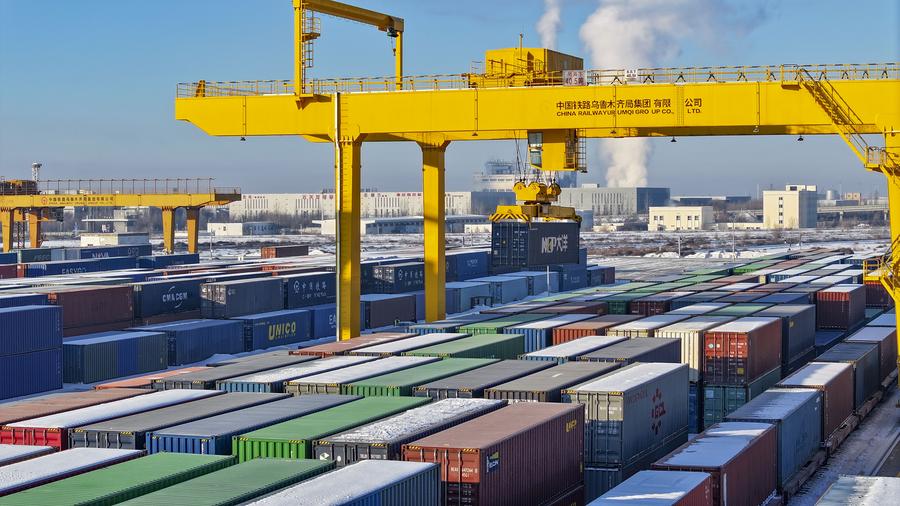
Goods now flow from [Chinese eastern coastal] ports such as Qingdao and Ningbo to Xi’an [in northwest China], and from there westward by train. Xi’an has once again reclaimed its historic role as a major trade center, much as it was centuries ago during the height of the Silk Road.
As a result, China’s inland provinces are developing at a fast pace, benefiting immensely from enhanced connectivity. This transformation has ushered in new prosperity for regions that were once on the periphery of China’s economic map.
President Xi proposed the Global Governance Initiative (GGI) at the Shanghai Cooperation Organization Plus Meeting in north China’s port city of Tianjin on September 1. What are your thoughts on this vision, especially in today’s turbulent world?
The world today faces profound challenges, wars, conflicts and a resurgence of de-globalization. We are witnessing new barriers being erected against free and fair trade and against the open exchange of ideas and information. When China embarked on its reform and opening-up journey in 1978, the global environment was far more open. The dominant powers of the time, the United States and Europe, did not fear competition from the Global South.
Today, however, as developing nations grow stronger, protectionism and fragmentation have made a comeback. De-globalization harms all, as it undermines competition, cooperation and communication, the very foundations of global progress.
In this context, the GGI is both timely and essential. It calls for a renewed commitment to sovereign equality, international rule of law, multilateralism, the people-centered approach and real results. It urges the international community to restore globalization to its proper course: fairer, more inclusive and guided by shared benefits.
Institutions such as the United Nations and the World Trade Organization must be revitalized, as their rules are too often ignored or selectively applied. The GGI provides a practical path forward, to rebuild globalization on the foundations of fair competition, genuine cooperation and open communication.
This vision has resonated widely. World leaders have endorsed the initiative, recognizing its importance for global peace and stability.
China’s inclusive and consultative approach reflects not a pursuit of dominance, but a model of leadership grounded in listening, partnership and consensus-building, embodying a responsible global stewardship that stands in contrast to the old paradigm of unilateralism.