Chinese-Style Modernization
 Facebook
 Twitter
 Linkedin
 Google +

Having been on the losing end of this history, and having worked so hard to overcome it, and meanwhile, watching the ongoing declines of the West, China is motivated both morally and by self and mutual interest to take a peaceful path whenever possible.
In contemporary political parlance, to speak of China’s modernization path is to refer to a specific, official conceptualization of both historical and ongoing efforts to develop China as a fully modernized nation, thereby culminating the major efforts associated with national rejuvenation and doing so within a century of the People’s Republic of China’s founding in 1949.
In 2021, it was declared that Chinese-style modernization is the path for creating a new era of human civilization, one that would not only be used to facilitate Chinese development, but could likewise offer insights and perhaps support for others who wanted to develop their own countries and, further, join China’s call for building a global community with a shared future.
China has long acknowledged that its efforts to modernize have much in common with those seen in other countries, but has also distinguished Chinese modernity as advancing in different ways given different needs, values and capacities.
During the recent 20th Communist Party of China National Congress, the official discourse was further supplemented by emphasizing five features. These are acknowledging China’s huge population, the push to realize common prosperity for all, the need to make material and cultural-ethical advancements, the necessity of promoting harmony between humanity and nature, and the continuing commitment to peaceful development.

The first of these is the simplest but also the most overwhelming. China has the largest population in the world. No developed country comes close in population size. Such a large population, representing almost 20 percent of the total human population, with a tremendous amount of diversity, presents unique challenges for development. In fact, some developed countries have populations much smaller than any one of China’s biggest cities. Others, like the U.S., have roughly the same geographical area but less than a quarter of China’s population, and in some respects benefit from having better water and arable land resources. For these reasons alone China cannot take the same path as the U.S. or others, and cannot use the same organizational or political methods to achieve similar development outcomes.
The second, promoting common prosperity for all, is consistent with the principle of putting people first. At its roots, this is a socialist value, and one of the core values of socialism with Chinese characteristics. It includes choosing development that promotes social fairness and justice and avoids polarization.
Although building common prosperity remains a work in progress, it has already scored significant achievements including improving the rule of law, ensuring clean and effective governance that serves the people, putting people over profits, eliminating extreme poverty and steadily increasing income levels. China has already established a population of more than 400 million middle-income earners—the largest in the world. No other large developing country has made similar progress, and even several of the leading developed countries have fallen comparatively short in some areas. Further, some like the U.S. are stuck in a polarization trap, unable to make significant progress due to entrenched systemic breakdowns that continue to erode essential functions associated with good government and social progress.
The third, making material and cultural-ethical advancements connects with developing socialist culture and doing so in ways that preserve, carry forward, and where necessary, recover and reinvigorate the cultural values and practices that are both progressive and transhistorical. In fact, the origination of Chinese socialism, of building a xiaokang or moderately prosperous society, one that can progressively resolve social challenges to realize datong, or great harmony, was first described in a passage attributed to Confucius in the ancient Chinese classic, the Book of Rites.
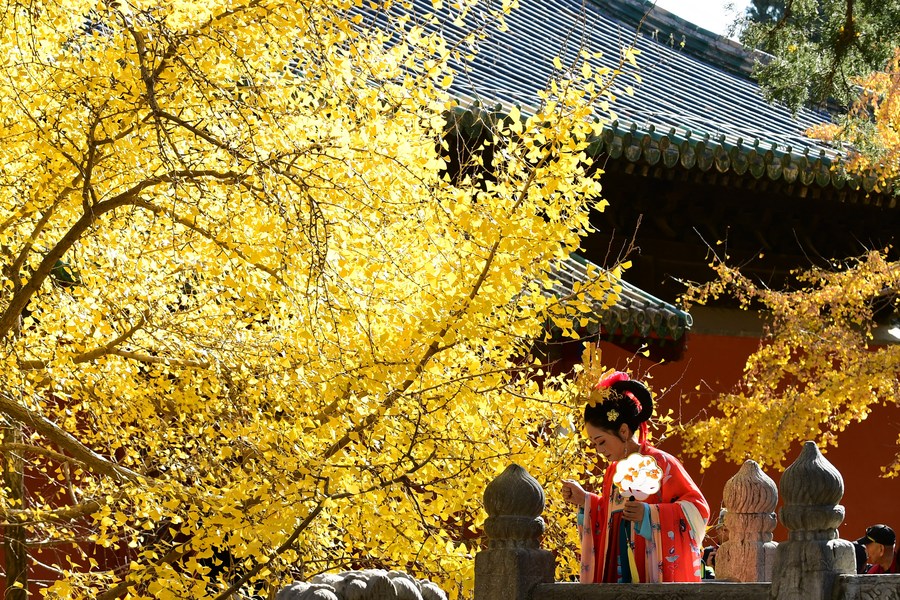
In other words, there are values and practices from the past, including the recent and ancient past, that persist today and contribute in vital ways to making China positively unique, and that positively require a “Chinese-style” modernization. This is not a na?ve form of Chinese exceptionalism that eschews positive but non-Chinese influences. Indeed, very little of Chinese modernity would exist had it not firstly been provoked, for better or worse, by foreign developments, including foreign hostility toward China, and so much of Chinese modernity today displays the incredible influences from the West, Russia, Japan and so on.
Furthermore, young Chinese people today remain susceptible to the soft power associated with global culture and capitalism, with profound generation gaps appearing since reform and opening up that have fundamentally transformed China’s economic base into a market economy that sometimes has slipped too far into unhealthy practices associated with commodity fetishism and egocentrism. In other words, there are many pressing needs associated with making cultural-ethical advancements a key feature of Chinese modernization.
The fourth is the necessity of promoting harmony between humanity and nature. This includes promoting environmental recovery, conservation and green development, and it connects with rethinking if not rectifying unhealthy and unsustainable desires for material possessions. In fact, this idea is also connected to ancient Chinese values, and thus relates substantially to the third feature above, insomuch as the first principle associated with Taoism is creating harmony between humanity and nature. Of course, this is not a one-sided harmony that privileges nature over development; rather, the fact that harmony is needed is to acknowledge a unity of opposites has long existed between humanity and nature, one that necessitates finding the right balance between contradicting values.

This is different of course from the Western path, which bludgeoned the global environment with its development, starting with the Industrial Revolution, which correlates historically with the rise of the Anthropocene—the period of geological time associated with changes caused by human activity. The fact is most of climate change has been caused historically by Western countries, the U.S. still has the highest per-capita emissions, and even many of the emissions in China and elsewhere in the world are due to manufacturing for Western markets. However, China now feels the bite of climate change directly, acknowledges the science of climate change, and unlike the U.S., remains consistent in its support for joint efforts to fight global warming and further, has become a global leader in green development to help itself and the world move forward more responsibly.
The fifth is China’s continuing commitment to peaceful development. Late Chinese leader Deng Xiaoping famously concluded that peace and development are the trend of the times, and while this trend has evolved in recent years, China has responded by reaffirming its desire to avoid conflict and wars, as well as its determination to resist hegemony and imperialism. China has insisted on seeking mutual recognition and respect, the principle on non-interference in the internal affairs of others, avoiding zero-sum approaches, pursuing win-win solutions, and building a system that moves away from superpower unilateralism and instead embraces genuine multilateralism.
This is different from the historical Western model that used colonialism, imperialism, slavery, dispossession, war and unfair treaties and trade practices to support initial accumulations of wealth and then to sustain positions of power and privilege through time. Having been on the losing end of this history, and having worked so hard to overcome it, and meanwhile, watching the ongoing declines of the West, China is motivated both morally and by self and mutual interest to take a peaceful path whenever possible.
The author is a professor of politics and international relations at East China Normal University and a senior research fellow with the Institute for the Development of Socialism with Chinese Characteristics at Southeast University.