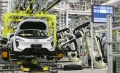
Chinese-Made Electric Vehicles Are Gaining Stronger Momentum
 Facebook
 Twitter
 Linkedin
 Google +
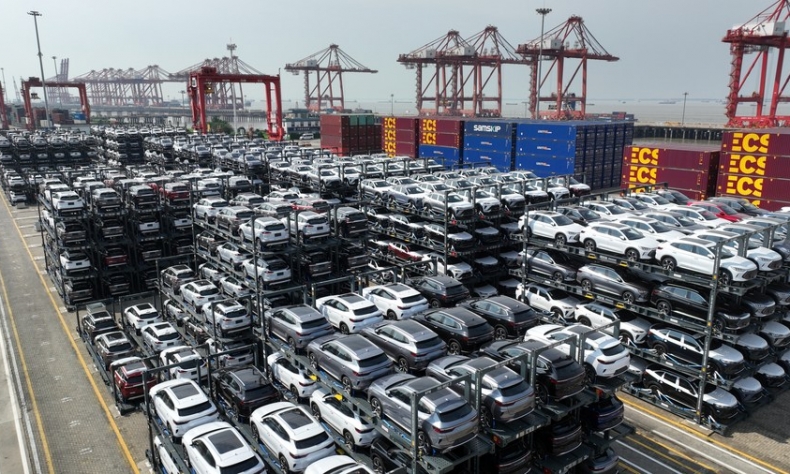
Supportive policies and expanding markets have driven the EV industry in China.
China’s BYD said on January 1 that its sales of pure electric vehicles (EVs) hit 526,409 in the fourth quarter of 2023. The number surpassed the worldwide sales of U.S. EV maker Tesla at 484,507, making BYD the world’s biggest EV maker.
BYD debuted its first electric cars at the Beijing International Auto Show in 2004. At the time, it was the only company showing electric cars there and the company’s founder Wang Chuanfu says many consumers had their doubts. Headquartered in Shenzhen in south China’s Guangdong Province, BYD was first established in 1995 as a battery manufacturer.
After decades of growth, BYD has now become a leading automaker in China, and is becoming more recognized globally, not only for its shares held by U.S. investment guru Warren Buffett, but also for the pace of its overseas expansion. Last year, it sold 3.02 million cars, including both pure electric and plug-in hybrid models, becoming the best-selling EV maker in China in 2023.
According to Cui Dongshu, Secretary General of the China Passenger Car Association, BYD’s surpassing of Tesla in Q4 sales last year is due largely to its expansion into the global market and its strong manufacturing chains. In 2023, BYD exported over 240,000 EVs, up 334.2 percent year on year.
China is the world’s largest producer and market of EVs. It had more than 18 million EVs in use on its roads as of September 2023, accounting for more than half of the world’s total, according to the State Council Information Office of China.
According to Cui, China’s EV sales have accounted for around 60 percent of the global EV market in recent years. Data from the China Association of Automobile Manufacturers (CAAM) showed that Chinese automakers produced 9.58 million EVs and sold 9.49 million EVs in 2023. Among the total sales, 1.2 million EVs were exported, a year-on-year increase of 77.6 percent.
Zhang Yongwei, Secretary General of China EV100, an industry think tank, said in early January that global EV sales are expected to exceed 20 million, with Chinese EVs continuing contributing around 60 percent. The number of Chinese-made EVs sold overseas will reach 1.8 million units as Chinese production in other countries grows, Zhang predicted.
“Supportive policies and expanding markets have driven the EV industry in China. As Chinese consumers further embrace EVs, improving sales is becoming a major driver of the industry,” Zhang Hong, a member of the China Automobile Dealers Association Expert Committee, told Beijing Review.
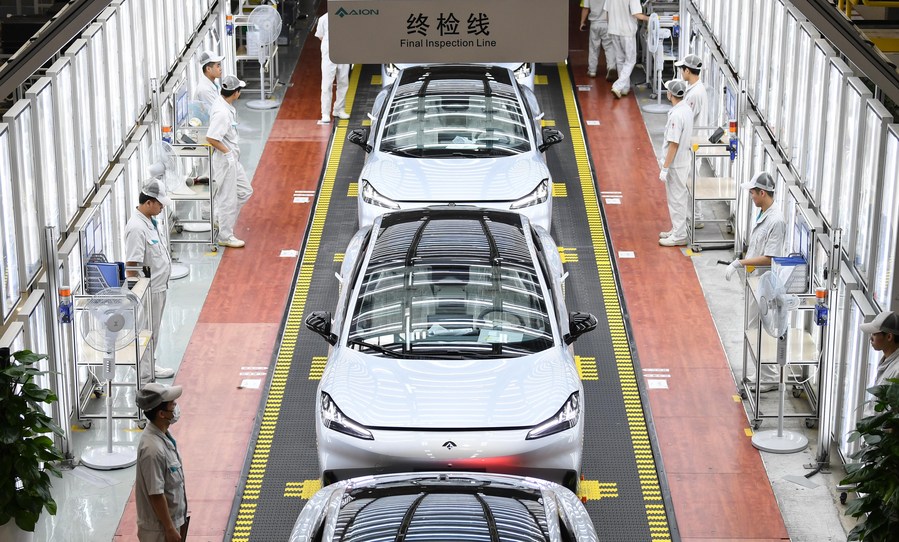
Emerging EVs
Over the last century, transport has risen to become a major global source of carbon emissions, and the Chinese Government is now promoting EVs as part of its drive for green, high-quality development. The government’s introduction of subsidies as an incentive for buyers in 2009 made EVs an increasingly attractive choice for Chinese consumers. While the authorities have since rolled back the subsidies and cut them completely at the end of 2022, EV sales are still booming as improving quality and affordability continue to attract consumers.
Backed by complete industrial and supply chains, China’s EV companies undertake most of the research and development (R&D), part manufacturing, and vehicle production within China. Increasing understanding of consumer demand is seeing domestic EV brands gain popularity in the domestic market. Chinese EV producers’?early adoption of Internet-based systems is also winning them growing popularity overseas, Zhang Hong said.
CAAM data showed that in November 2023, both the monthly output and sales of EVs in China exceeded 1 million for the first time, totaling 1.074 million and 1.026 million units, respectively. BYD and many other established automakers and newly emerged EV manufacturers in China made notable performances last year.
With sales second to BYD, Shanghai-based state-owned automaker SAIC Motor, the Chinese partner of both German automaker Volkswagen and U.S. carmaker General Motors, sold 1.12 million EVs in 2023, up 4.6 percent year on year. Geely, a leading privately owned Chinese auto group headquartered in Hangzhou, Zhejiang Province, sold more than 487,000 EVs last year, with a year-on-year growth of 48 percent.
EV startups including Li Auto, Nio and Xpeng continued to expand their businesses. Li Auto delivered 376,000 vehicles in 2023 to rank first among the new startups. Li Xiang, founder and CEO of Li Auto, posted on his Chinese social media account Weibo that the firm aims to sell 800,000 units in China this year, a figure close to the annual sales of international automakers like BMW and Mercedes in China, which is their largest market.
While competition is fierce, collaboration is becoming a trend in the EV sector. In July 2023, SAIC Motor announced it will jointly develop EVs with the German carmaker Audi. Also in that month, Volkswagen reached an agreement to buy stakes in Xpeng and jointly develop two EV models for the Chinese market. The deal allows Volkswagen to get access to Xpeng’s technologies, including the advanced driving assistance system.
In order to be both green and smart, Chinese EVs are ratcheting up efforts to explore autonomous driving technologies. In 2022, Xpeng got the license of testing its L4 autonomous vehicles in Guangzhou, Guangdong Province, with the highest level being L5 in international standards. Vehicles with L4 autonomous driving systems could perform most human operations in areas covered by Internet-based navigation systems of the cars.
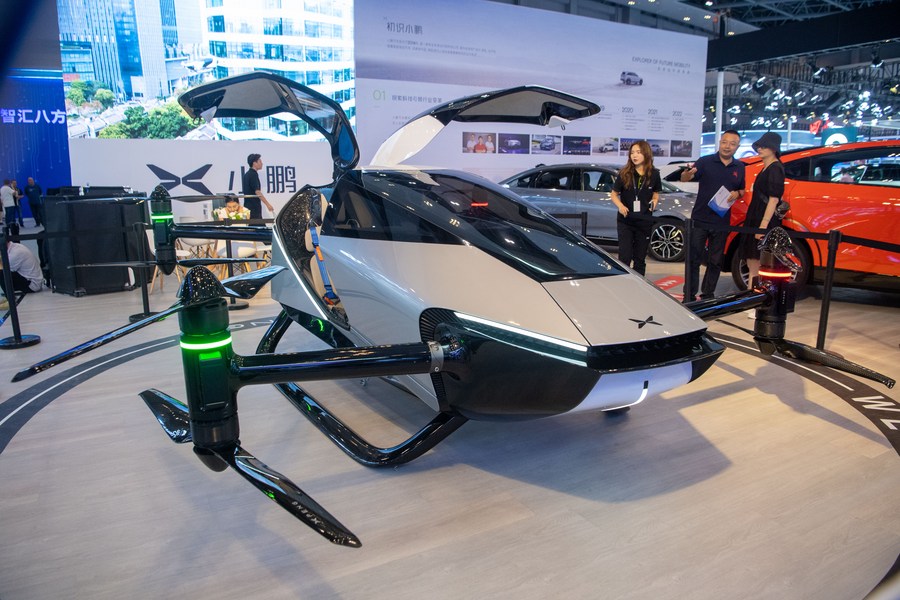
Xpeng also partnered with the Chinese tech company Alibaba to develop the country’s largest autonomous driving intelligence center in north China’s Inner Mongolia Autonomous Region in 2022. With artificial intelligence technology from Alibaba, the time it takes to train Xpeng’s autonomous driving models has been reduced from one week to one hour.
Xpeng has also been promoting its Navigation Guided Pilot (NGP) system since March last year. As of the end of December 2023, its NGP system covered 243 cities across China.
Charging up
Batteries are often regarded as the heart of EVs. Chinese lithium-ion battery makers have boomed along with EV makers in recent years. Alongside battery giants like Contemporary Amperex Technology Co. Ltd. (CATL) and BYD, CALB, Sunwoda and Eve Energy are also among the world’s top 10 EV battery makers.
CATL became a supplier to BMW soon after its founding in 2011. It has partnered with auto giants including Volkswagen, Mercedes-Benz, and France-based PSA since then.
According to BYD, it is now focusing on developing lithium iron phosphate (LFP) batteries, and now all of BYD’s pure EVs are equipped with its Blade Batteries developed through the LFP technology. While ternary lithium batteries have high energy intensity for long travel mileage, LFP batteries are safer and more durable. The Blade Batteries, which are developed to integrate the features of both, have enhanced the energy intensity for long mileage, ensured safety through slow heat release and improved durability.
As only a few firms have the ability to build a whole EV through independent R&D and production, EV part manufacturers are growing to meet demands from the industrial chains.
Shao Wanjiang, an employee of auto parts supplier Hangzhou Contemporary Drive Technology Co. Ltd., told Beijing Review that the company has introduced self-developed engine systems for EVs, helping improve safety in bad weather and reduce size and weight. “The manufacturing of a vehicle’s frame, engine and wheels used to call for hundreds of parts. Our company’s system has integrated engines and brakes, which makes it easier to build an EV,” Shao said.
The growth of EVs is driving the growth of associated infrastructure, including charging poles and battery swap systems, across the country. In December 2023, the Chinese authorities released policies to strengthen the integration of EVs into the country’s power grid.
Battery recycling is also on the agenda for many EV companies and battery makers. According to CATL, one of its subsidiaries that develops recycling technologies has helped achieve a 91-percent recycling rate of lithium-ion materials from its batteries.

Crossover players
Although the EV market is highly competitive in China, there are newcomers eager to explore opportunities. Chinese tech company Xiaomi unveiled its much-anticipated first EV, the SU7, on December 28, 2023. Lei Jun, founder and CEO of Xiaomi, expressed his ambition to make the company one of world’s top automakers over the next decade.
Xiaomi has invested more than 10 billion yuan ($1.41 billion) in auto R&D, including engines and batteries. The SU7 has been put into production and is estimated to enter the market in 2024, it said.
According to Lei, Xiaomi’s cars will be equipped with autonomous driving systems, which will be connected to its smartphones, tablets and other electronic devices.
Another tech giant Huawei is tapping into the EV market through partnership with established Chinese automakers. In December last year, it released Luxeed S7, co-developed with Chinese automaker Chery. It also plans to partner with BAIC Group and JAC Automobile, the company said.
In late December, Huawei unveiled its own EV, the AITO Wenjie M9, which is a top-tier SUV built in partnership with Chongqing-based automaker SERES. However, Huawei does not plan to engage in EV manufacturing as deeply as Xiaomi aims to, but seeks to make full use of its edge in intelligent technologies. According to Huawei, the Wenjie M9 is designed for a nationwide intelligent driving experience.
Overcoming headwinds
According to Zhang Hong, a lack of product diversity and price wars remain major challenges for Chinese EV makers to generate profits amid mounting competition. Liu Xiaoke, President of Yiche.com, a Chinese automobile information service provider, said that 71 percent of EV brands chose to cut prices in 2023. Many automakers have been forced to join the price war, which they believe will last throughout this year.
EV makers without the ability to upgrade their technologies will face mounting risks in price wars. Those capable of technological innovation may not rake in profits at present, but will make profits when their output and market shares improve. Only innovation-driven carmakers have the resilience to withstand market challenges, said Zhang Yongwei. Many Chinese EV firms will feel at crossroads this year as reshuffling in the sector accelerates. Intelligent upgrading and diverse design are key to consolidating their presence, he added.
From the global perspective, China and the U.S. will be the major competitors in the production of intelligent EVs, according to Zhang Yongwei. Zhong Hong also pointed out that Chinese EV companies need to improve their R&D to avoid over reliance on chip imports.