China-Proposed Resolution Will Help Narrow AI Gap
 Facebook
 Twitter
 Linkedin
 Google +
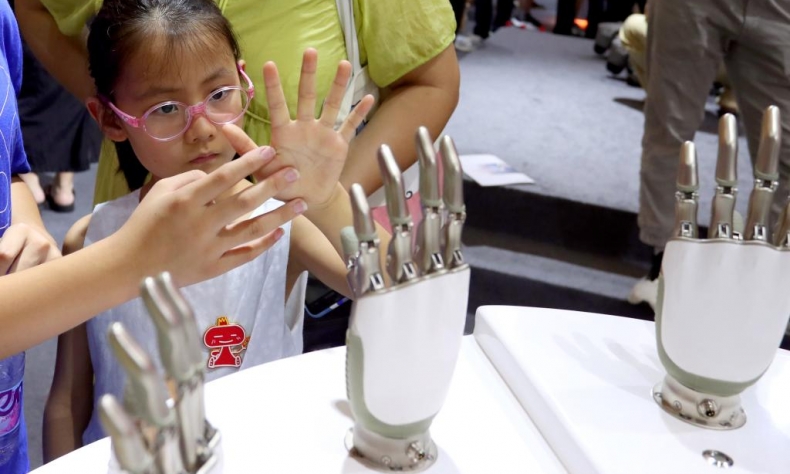
Digitalization itself ‘holds the foundation and potential to shape a more inclusive, resilient and sustainable world for generations to come.’
The 78th U.N. General Assembly recently adopted a resolution proposed by China calling for enhanced global artificial intelligence (AI) cooperation. More than 140 countries backed the resolution, underlining widespread global support and international traction for critical AI governance. “China looks forward to taking the adoption of this resolution as an opportunity to work with member states toward active follow-up and implementation of the resolution by prioritizing development and following a people-centered approach based on equality, mutual benefit, integrity and innovation,” said Fu Cong, China’s permanent representative to the United Nations.
With so many developing nations lacking equitable AI technology access, China’s initiative is a major step toward narrowing the global digital divide. Affordability and acquisition of cutting-edge technologies is critical to advancing AI’s civilian applications, improving socioeconomic development, generating new employment and streamlining industries. As such, there are profound merits to a resolution that calls for global AI cooperation to bridge capacity gaps and promote people-centric development. China’s determination to develop over 50 standards for its AI sector by 2026 is a remarkable leadership example in this regard.
Using the resolution as a benchmark for swift advancement of AI technologies worldwide, countries also stand to achieve meaningful progress on new AI industrial applications, enterprise development and equal access to technology. This is a marked departure from the current dangers of technological decoupling and unwarranted export restrictions, which risk turning technological progress into a zero-sum race for dominance.
An international consensus on AI governance is pivotal to offset these risks. Look no further than the resolution’s adherence to the U.N. Charter, the 2030 Agenda for Sustainable Development, the Addis Ababa Action Agenda, and vital outcomes of the World Summit on the Information Society, indicating a whole system approach to effective AI governance norms. Potential areas of engagement could also include generative AI which spans text, image and content generation across a range of emerging industries and commercial commodities. How these technologies shape the future of industries, and uncertainty over their social implications, make it imperative to bridge the intelligence gap through joint efforts.
Among other strengths, the resolution seeks to advance an AI-enabled Sustainable Development Agenda. According to the U.N., international progress remains exceedingly slow, and only 17% of the SDG targets are on track to be achieved. By backing equitable, timely and sustainable AI development, the resolution supports dialogue as a way to narrow progress disparities. For instance, AI can play a critical role in maximizing countries’ energy utilization, broadening educational opportunities, and scaling the growth of new industry sectors. Thus, a ground-up consensus on responsible AI governance can ensure equitable access of such technologies for populations in need.

Given that the digital divide continues to exist, the international community cannot afford to turn a blind eye to AI governance and its associated risks. The World Bank has made it abundantly clear that digitalization itself “holds the foundation and potential to shape a more inclusive, resilient and sustainable world for generations to come.” Thus, strengthening these foundations requires inclusive and participatory dialogue among the consumers and future leaders of AI innovation. The China-led resolution marks a welcome consensus on AI governance for over 140 countries, indicating a landmark achievement in the development and stability of a fast-changing, highly interconnected world.
To promote international cooperation on AI capacity building, China has also led from the front. Rounds of member-state consultations and bilateral deliberations ensured that nations’ competing expectations were factored into the resolution, making it an exercise in deft diplomacy. This is important because the resolution reflects a truly inclusive process on AI governance needs, and manifests cooperative engagement every step of the way.
As the U.N.’s first resolution focused on global cooperation for AI capacity building, it is also paving the way for “an open, fair and nondiscriminatory business environment” for future AI. A prime example is China’s own Global AI Governance Initiative. Through the initiative, Beijing communicated principled opposition to global AI supply chain barriers, disruptions and technological monopolies. All these factors challenge the spirit of effective and inclusive AI governance, warranting a collective response from world powers. It is here that core principles of the Global AI Governance Initiative are captured within the resolution, demonstrating its compatibility with developing countries’ expectations on AI use, regulation and access.
Over the years, China has made great strides in AI development that signal its readiness to promote global action. According to the World Intellectual Property Organization, Chinese inventors are responsible for the largest number of patents linked to generative AI over the past 10 years. China is home to more than 4,500 AI enterprises, and has powered smart interventions across autonomous vehicles, health care, industry, research and education. These breakthroughs are driven by a people-centric approach to AI-enabled development, a vision that resonates with more than 140 countries on the world stage.
Rapid transformations in AI technologies also require a firm reckoning of potential technology risks and challenges. After all, some 2.5 billion people worldwide still do not have internet access, and scores of developing countries are yet to reap the socioeconomic benefits of AI. To effectively address these challenges, a global consensus on AI governance is critical. Countries across all development stages can now work together to develop AI governance frameworks, support human applications of AI technologies, and develop partnership networks across governments, international organizations and other major stakeholders.
The absence of an international consensus would have risked widening the digital divide, challenging AI knowledge-sharing and the availability of technologies to the developing world. In light of these factors, increased AI cooperation can prevent technological benefits from being confined to silos, making emerging technologies safer, reliable and applicable for all. “It is the shared expectation of the U.N. membership to enhance international cooperation on AI capacity building, develop and utilize AI on an equal footing, and share the fruits of AI knowledge,” Fu Cong said.
The China-proposed resolution on AI cooperation is a significant step forward on many levels. It provides an opening to bring down barriers to AI technology access, helps accelerate sustainable development progress, and promotes consensus among nations to jointly narrow the digital divide.
The author is a foreign affairs commentator, author and recipient of the Fulbright Award.