China-Latin America Relationship: A Model for Win-Win?Cooperation
 Facebook
 Twitter
 Linkedin
 Google +
China-Latin America cooperation not only provides a?model?for equal?cooperation among?Global South nations but also plays a crucial role in advancing the international order toward greater fairness and justice.
In recent years, the relationship between China and Latin American countries has?been strengthening rapidly, with deepening cooperation in economic, political, and cultural fields.
A recent article by Barbara Stallings, a professor from Watson Institute for International Studies of Brown University,?argue that the main mechanism of China’s investment in Latin America is?to control the trade and financial markets?there. She calls China a “hegemonic power” and believes that China puts its needs above the needs of Latin American countries. She calls this relationship “dependency with Chinese characteristics”. Similarly, scholars like Francisca Da Gama?(Senior Lecturer at University of Greenwich)?and Kim?(Senior Lecturer in International Business at the Greenwich Business School) believe that the purpose of China’s investment in Latin America is ambiguous and colonial. The asymmetry of China-Latin America relations will exacerbate Latin America’s subordinate position in the global system.
These interpretations, common in Western academic and policy circles, tend to characterize Latin America as remaining in a “peripheral” position within a global political-economic hierarchy.
However, such binary analytical frameworks fail to explain?the evolving essence of China–Latin America relations. Amid the ongoing advancement of global multipolarity, this relationship increasingly reflects a new form of South-South cooperation grounded in economic reciprocity, political mutual trust, and civilization exchange and mutual learning.
Overcoming the misguidance?of dependency theory
Dependency Theory emerged in Latin America in the 1960s as a critical framework for understanding global inequality and underdevelopment. It seeks to explain why developing countries, particularly in Latin America, remain in a structurally disadvantaged position within the global capitalist system. Key proponents of the theory include Argentine economist Raúl Prebisch, German-American sociologist and economic historian André Gunder Frank, and former Brazilian president Fernando Henrique Cardoso. They argue that the world economy operates through a core-periphery structure, where the core countries (such as the United States and Western Europe) are industrialized powers controlling capital, technology, and global markets, while the peripheral countries (primarily in Latin America, Africa, and parts of Asia) are dependent on exporting raw materials, characterized by undiversified economies and vulnerability to exploitation.
Upon its introduction, Dependency Theory sparked extensive debate within the academic circle. On one hand, it laid the foundation for World-Systems Analysis, most notably Immanuel Wallerstein’s World-Systems Theory, which expanded and systematized dependency thought. It also provoked critical discussions on whether international economic aid exacerbates dependency rather than alleviates it. On the other hand, the theory has faced significant criticism. For instance, Indian economist Amartya Sen contends that dependency theory fails to account for the successful development trajectories of some “l(fā)atecomer” countries, such as South Korea and Singapore, which achieved rapid industrialization through effective state intervention.
As previously mentioned, with China’s rise and its deepening engagement with Latin America, some scholars have begun to portray China as a new “core” actor, accusing it of resource extraction and market manipulation in the region. However, such assertions are largely unfounded and lack empirical support.
On one hand, it is inaccurate to classify China as a traditional “core”?country in the sense defined by classical dependency theory. Unlike conventional core countries whose development historically relied on colonial expansion and resource extraction, China has pursued a distinct path of peaceful development rooted in independent innovation, openness, and win-win cooperation. In its external engagements, China actively promotes South-South cooperation, supports multilateralism, and respects the development choices of other countries. Therefore, rather than fitting into the exploitative model implied by traditional core-periphery dynamics, China positions itself as an equal?partner of Latin American countries,?seeking mutual benefit and shared development.
On the other hand, Latin American countries are not merely passive participants in their economic engagement with China. Rather than being shaped unilaterally, China–Latin America cooperation is built on the principles of equality, mutual respect, and shared interests. In recent years, countries such as Brazil, Argentina, and Chile have not only expanded their exports to China, but also deepened cooperation in high technology, infrastructure development, and green energy. China serves as a vital export destination for Latin American goods, while Latin America’s natural resources, agricultural products, and technological strengths complement China’s development needs. The relationship between China and Latin America is characterized not by exploitation or dependency, but by mutual benefit, win-win outcomes, and joint development.

China-Latin America economic and trade cooperation: coordination?and complementariness,?not dependency
China and Latin America are advancing together in coordinated development. According to the United Nations Economic Commission for Latin America and the Caribbean (ECLAC), trade in goods between China and Latin America reached a record $489 billion in 2023, marking a 1.1 percent year-on-year increase. According China Customs data, China-Latin American trade in goods hit $518.47 billion, 6.0 percent up over 2023.?China remains Latin America’s second-largest trading partner and the largest trading partner of Brazil, Chile, and Peru. This robust trade growth reflects the high complementarity between the two economies and underscores the mutual benefit and win-win nature of China-Latin America relations.
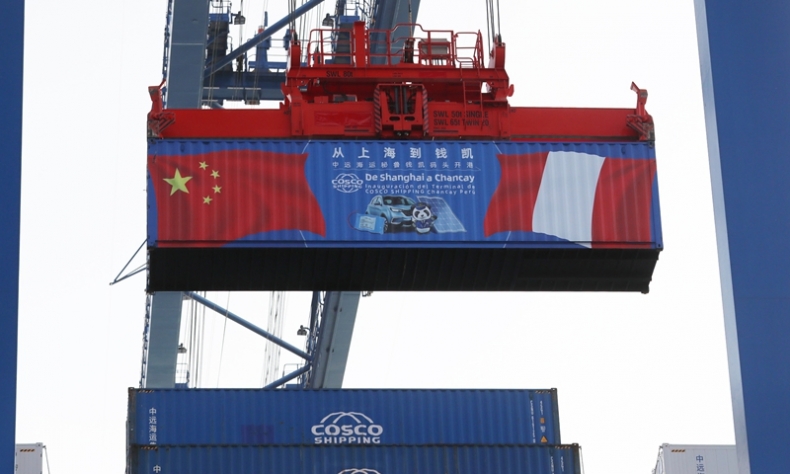
Latin America is a natural extension of the 21st Century Maritime Silk Road, and China is actively supporting the region’s modernization through concrete actions. Under the Belt and Road Initiative (BRI), China-Latin America cooperation spans multiple areas, including transportation, electricity, telecommunications, energy, and urban development, significantly improving local infrastructure. One notable example is Peru’s Chancay Port Project, a landmark BRI project in Latin America, which was officially inaugurated on November 14, 2024, once completed, it will serve as a key regional hub and a gateway to the Pacific.
According to the?report?“Monitor of Chinese Infrastructure in Latin America and the Caribbean 2024”?from Latin American and Caribbean academic network on China (RED-LAC CHINA),?as of 2023, China had undertaken 268 infrastructure projects in the region, with a total investment of $112.8 billion, generating over 777,000 jobs. These projects encompass the construction of thousands of kilometers of roads, railways, and light rail; more than 100 schools, hospitals, and sports venues; nearly 100 bridges and tunnels; dozens of airports and ports; and over 30 power stations and energy facilities. This robust infrastructure cooperation reflects the mutual benefit and win-win nature of China-Latin America relations.
China-Latin America political and diplomatic relations: equality and?mutual trust, not dependency
At the political and diplomatic level, interactions between China and Latin America have deepened significantly. Both sides have strengthened high-level exchanges, multilateral cooperation, and coordination in international affairs, jointly advocating for a more fair and just global governance system.
In recent years, China-Latin America political relations have developed steadily, marked by close communication between heads of state and senior government officials, and the continuous improvement of bilateral and multilateral cooperation mechanisms. In 2014, during the China-Latin American and Caribbean (LAC) Countries Leaders’ Meeting, President Xi Jinping proposed the “Five-sphere” plan and the “1+3+6” cooperation framework, marking a new stage in China-Latin America comprehensive cooperation.
The “Five-sphere” plan refers to promoting cooperation in five key areas: political mutual trust, economic and trade cooperation, cultural exchanges, international collaboration, and sustainable development. The “1+3+6” cooperation framework consists of “1” plan—the China-LAC Cooperation Plan; “3” engines—trade, investment, and financial cooperation; and “6” priority areas—energy and resources, infrastructure construction, agriculture, manufacturing, scientific and technological innovation, and information technologies.
In May 2025, President Xi Jinping attended the Fourth Ministerial Meeting of the China-CELAC Forum in Beijing, where he announced the initiation of five programs aimed at promoting shared growth and revitalization with Latin American and Caribbean nations. These initiatives encompass solidarity, development, civilization, peace, and people-to-people connectivity, reflecting the forward-looking and strategic depth of China–LAC collaboration.
In the same month, Brazilian President Luiz Inácio Lula da Silva visited Beijing, signing approximately 20 cooperation agreements worth approximately $4.8 billion, highlighting Brazil’s growing ties with China. President Lula emphasized the importance of regional unity and expressed a desire to maintain balanced relations with global powers.
China and Latin American countries also have strengthened their collaboration in global governance and regional affairs, upholding multilateral diplomacy and advocating for international fairness and justice. Both sides have maintained a high consensus within the United Nations framework on issues such as development assistance, climate change, and global security. China’s proposals for the Global Development Initiative (GDI) and Global Security Initiative (GSI) have received strong support from Latin American countries.
In September 2024, at the United Nations General Assembly, Brazilian President Luiz Inácio Lula da Silva?announced that Brazil and China had proposed a “six-points common understandings” to initiate a peace dialogue between Russia and Ukraine, showcasing their joint efforts in promoting global security.?These developments reflect the deepening partnership between China and Latin America in promoting multilateralism, supporting sustainable development, and safeguarding international peace and stability.
China-Latin America cultural exchanges: mutual learning,?not dependency
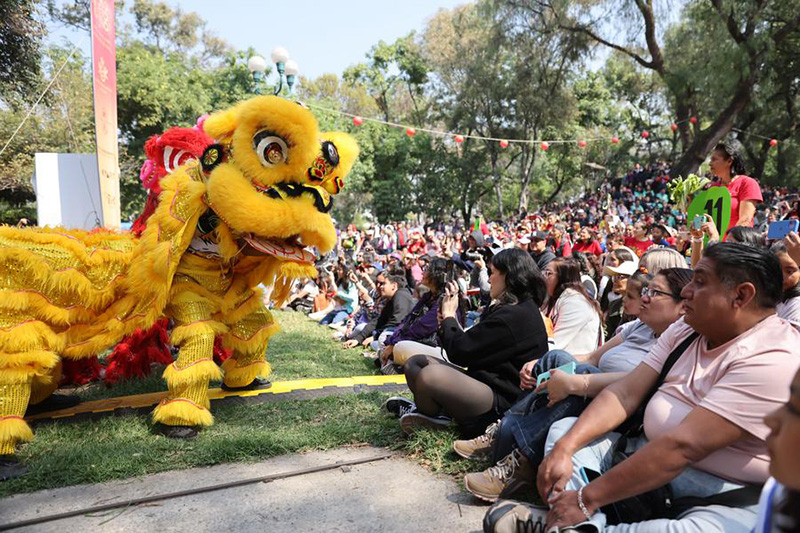
Cultural exchange serves as a vital link in China-Latin America relations, not only enhancing mutual understanding between their peoples but also laying a solid social foundation for bilateral cooperation. China-Latin America cultural interactions are not a one-way transmission or dependency but rather equal exchanges and mutual learning. In recent years, with the improvement of high-level cultural cooperation mechanisms and the deepening of people-to-people exchanges, cultural interactions between China and Latin America have flourished, and civilization mutual learning has deepened.
Both China and Latin America are cradles of human civilization, each fostering distinct and profound culture. China’s 5,000-year civilization is characterized by?agricultural civilization,?Confucianism, the Four Great Inventions, and the Silk Road spirit, while the Mayan, Aztec, and Inca civilizations of Latin America are renowned for their precise calendars, pyramid architecture, and maize domestication technology. This similar profound cultural heritage forms the foundation for equal dialogue between the two sides. In November 2024, the China-Latin America Civilization?Dialogue Conference was inaugurated in Peru, strengthening mutual understanding of history and values among Chinese and Latin American peoples. The event also demonstrated that inter-civilization?exchanges can be based on equality, respect, and inclusivity.
China-Latin America cultural exchanges are not a one-way transmission but a multi-dimensional and comprehensive process of interaction and integration. As of January 2025, China has established 57 Confucius Institutes and Classrooms across 26 Latin American countries, fueling a growing interest in Chinese language and culture. Meanwhile, museum collaborations between China and Latin America continue to expand. The Shenzhen Nanshan Museum successfully hosted a special exhibition on Inca civilization, while the Inca Museum in Cusco, Peru, showcased gold artifacts and bronze sculptures from the ancient Shu Kingdom, fostering a civilizational dialogue across the Pacific.
At the core of China-Latin America cultural exchanges is people-to-people connectivity. From sharing traditional craftsmanship to collaborating on modern technologies, from China’s long-term dispatch of medical teams to Latin America to Chinese agricultural experts promoting livelihood projects, all contribute to sustainable development in the region. Over time, Chinese and Latin American peoples have forged emotional bonds that transcend geographical distances, providing lasting momentum for the China-Latin America community with a shared future.
The practice of China-Latin America relationship?has fully demonstrated that developing countries can break free from the constraints of the “core-periphery” structure and explore a new model of partnership based on?independence, equality, mutual benefit, and sustainable development.?This relationship is not built on sovereignty concessions or resource exploitation but rather on industrial chain collaboration, and civilizational exchange, fostering common prosperity.
As President Xi Jinping said at the opening ceremony of the Fourth Ministerial Conference of the China-Latin America Forum in May: “No matter how the world changes, China will always stand by LAC countries as a good friend and a good partner, march forward together with them on the paths toward modernization, and work together with them to write a new chapter in building a China-LAC community with a shared future.”
Amid the accelerating profound global changes?unseen in a century, China-Latin America cooperation not only provides a?model for?equal cooperation among?Global South nations but also plays a crucial role in advancing the international order toward greater fairness and justice.
The author is assistant researcher at Center for Latin American?Studies, Shanghai University.
The article reflects the author’s opinions, and not necessarily the views of China Focus.