China’s Economy Starts 2025 on Solid Footing
 Facebook
 Twitter
 Linkedin
 Google +
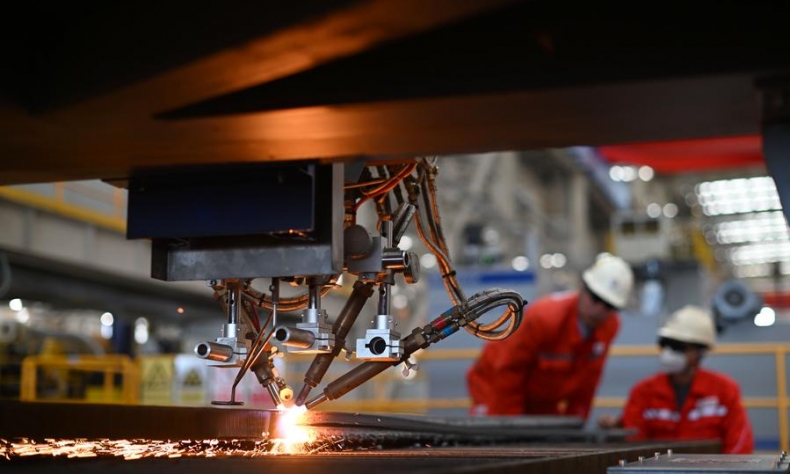
While we acknowledge the solid results achieved so far, we must remain clear-eyed about the growing challenges ahead.
As global economic expectations soften under the weight of growing protectionism, China’s early-year economic indicators have drawn wide attention. On April 16,?the National Bureau of Statistics (NBS) released China’s first-quarter (Q1) economic report. The country’s gross domestic product (GDP) reached 31.88 trillion yuan ($4.4 trillion), a 5.4-percent year-on-year increase and a 1.2-percent rise compared to the previous quarter.
China’s economy got off to a solid start in Q1, with high-quality development gaining traction and showing encouraging signs, underscoring the country’s strong resilience and potential, NBS’s Deputy Commissioner Sheng Laiyun said at a press conference on April 16. He emphasized the country’s ongoing efforts to integrate technological innovation with industrial transformation, pointing out that a steady stream of new scientific achievements is being rapidly applied across sectors, steadily strengthening new engines of growth.
“While we acknowledge the solid results achieved so far, we must remain clear-eyed about the growing challenges ahead,” Sheng said. He added that the external environment is becoming more complex with a sharp rise in global trade protectionism and mounting strain on the world economic order, while structural adjustments at home remain a heavy task.
He said sustaining economic momentum will require even greater effort. Over the past decade, China has withstood major tests—from the Asian and global financial crises to U.S.-China trade tensions and the shock of the COVID-19 pandemic. In overcoming these challenges, the country has built up a wealth of experience in macroeconomic policy.
In the wake of policy actions introduced last September, when the Central Government laid out a comprehensive package of incremental stimulus measures, China has ramped up both new and ongoing economic support. These policies began showing results in Q1, helping to lay a solid foundation for stable growth. “We have every reason to stay confident in the future of China’s economy,” Sheng said.
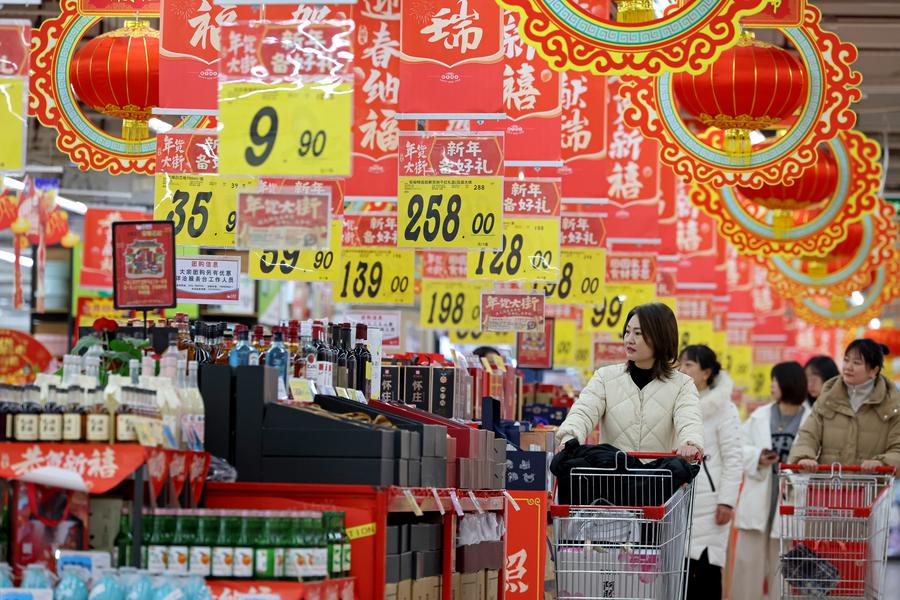
Robust domestic demand
In Q1, China’s total retail sales of consumer goods—a key measure of consumption—rose by 4.6 percent year on year, a 1.1-percentage-point increase from the full-year growth rate of 3.5 percent in 2024.
“This is an important signal that the consumer market is stabilizing and regaining momentum,” Wang Wei, former Director of the Institute of Market Economy of the Development Research Center of the State Council, said at the Guoshi Forum, hosted by China News Service on April 16. “Alongside steady growth, the underlying foundation supporting consumption is also strengthening.”
Household income is improving. In Q1, per-capita disposable income of urban and rural residents rose by 5.5 percent year on year. Compared to previous quarters of last year, income has shown a clear upward trend and, in most cases, it’s growing faster than GDP. This suggests a more favorable employment landscape and stronger income gains, Wang said.
Meanwhile, the overall environment for consumption is gradually improving. One clear sign is the stabilization of consumer prices. In March, the Consumer Price Index (CPI), a tool to measure inflation and deflation fell by 0.1 percent year on year—narrowing the decline by 0.6 percentage points compared to January and February. Excluding volatile food and energy prices, the core CPI rose 0.3 percent year on year, indicating a shift toward more stable pricing trends. “This reflects ongoing improvements in supply-demand dynamics, with better alignment between what consumers want and what the market provides—a crucial condition for sustained, stable growth in the consumption sector,” Wang explained.
Consumption is not just rebounding in volume but also upgrading in structure. The shift toward higher-quality goods and stronger demand for services remains evident. Service-related retail sales grew by 5 percent year on year in Q1—faster than the overall retail sales growth—highlighting a continued move toward service-oriented consumption and a more refined consumer market.
New forms of consumption are gaining momentum, led by strong growth in digital and green sectors. In Q1, digital consumption remained robust—online retail sales of physical goods rose by 5.7 percent year on year, outpacing the overall retail sales growth rate by 1.1 percentage points. E-commerce accounted for a sizable 24 percent of total retail sales, maintaining its role as a major driver of consumption growth. Green consumption also stood out. A standout example is the surge in new-energy vehicle purchases. As of March 28, sales of these vehicles had reached over 2.05 million units, up 34 percent year on year.
Policy measures are beginning to show real impact. The Central Government has made boosting consumption a top priority in 2025 and is introducing a series of initiatives to support that goal. One of the key initiatives, a nationwide trade-in program for consumer goods, has been steadily advancing. Subsidies funded by ultra-long-term special bonds were distributed to local governments as early as late 2024 and the start of 2025.

According to the Ministry of Commerce, as of April 10, more than 2 million applications had been submitted for car trade-in subsidies. The appliance sector has also expanded its scope from eight categories last year to 12 this year. In Q1 alone, 38 million units of home appliances were sold, alongside over 9 million smartphones. These numbers underscore the growing impact of the trade-in program, which is playing a key role in stimulating consumption and revitalizing the broader consumer market, Wang said.
“Boosting consumption and stimulating domestic demand across the board have become the top priorities for economic development in 2025,” Wang said. She said after more than four decades of reform and opening up, the structure of domestic demand is undergoing great changes as final consumption now accounts for a larger share of total demand and has overtaken investment as the biggest contributor to GDP growth.
“Stimulating domestic demand across the board means not only boosting consumption, but also increasing investment,” she said. In the past, investment often acted as a fast-moving variable to drive economic growth. Looking ahead, a significant portion of investment will need to be guided by consumption—aligned with new patterns of development and evolving consumer needs.
China’s fixed assets investment reached 10.32 trillion yuan ($1.4 trillion) in Q1, up 4.2 percent year on year, an acceleration of 1 percentage point compared to the full-year growth in 2024. Excluding real estate investment, fixed assets investment grew by a stronger 8.3 percent.
Fiscal policy has become more proactive this year, with reduced debt pressure on local governments. As a result, infrastructure investment has accelerated further, shifting from being primarily driven by the Central Government to a more coordinated effort between central and local authorities, Luo Zhiheng, chief economist at Yuekai Securities, said at the forum.
“Our analysis of private equity investment data shows that in Q1, investment in sectors such as high-end manufacturing, smart equipment and mobile Internet surged by 305 percent year on year,” Yang Daoling, division head of the Big Data Development Department of the State Information Center, said at the forum.
“This sharp increase indicates that more capital is flowing rapidly into innovation-driven industries, providing stronger financial support for the development of new quality productive forces,” he said. New quality productive forces refer to the shift toward innovation-driven growth, technological advancement and high-quality development in different sectors of the economy.
Resilient foreign trade
According to the General Administration of Customs of China, the country’s total goods trade in Q1 reached 10.3 trillion yuan ($1.4 trillion), a year-on-year increase of 1.3 percent.
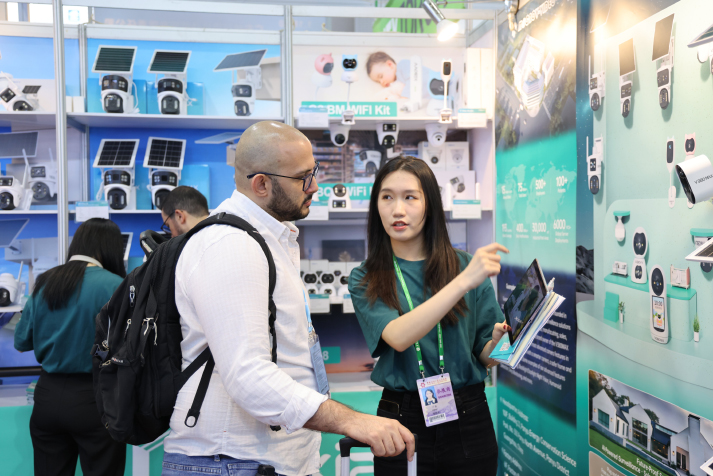
Notably, despite rising trade protectionism and growing geopolitical risks, China’s exports have shown strong resilience. In Q1, export value exceeded 6 trillion yuan ($821 billion), marking a 6.9-percent year-on-year increase. Exports to more than 170 countries and regions registered growth, highlighting the breadth and strength of China’s global trade network.
While overall trade remains stable with continued progress, the structure of China’s foreign trade is steadily improving. China’s trade with the European Union (EU) totaled 1.3 trillion yuan ($118 billion) in Q1, up 1.4 percent year on year, equivalent to more than 10 million yuan ($1.4 million) in trade every minute. Trade with key EU partners such as Germany and Spain, as well as with the United Kingdom, saw particularly strong growth. Trade with Belt and Road Initiative participating countries reached 5.26 trillion yuan ($719 billion), up 2.2 percent year on year, setting a new record high for the same period. Trade with ASEAN countries grew by 7.1 percent to 1.71 trillion yuan ($234 billion), accounting for 16.6 percent of China’s total foreign trade. Meanwhile, trade with the five Central Asian nations rose by 6.9 percent.
The vitality of private enterprises has become increasingly evident. China’s private firms saw their imports and exports grow by 5.8 percent year on year in Q1, with their share of total trade rising to 56.8 percent. These companies achieved trade growth with nearly 180 countries and regions worldwide. Private enterprises also hit a record high in the trade of hi-tech products during the same period, with the total value nearing 1 trillion yuan ($137 billion). They continue to hold their position as the largest contributor to China’s foreign trade.
From a product perspective, China’s foreign trade is becoming increasingly?innovation-driven. In Q1, imports and exports of equipment manufacturing products rose by 7.6 percent year on year, accounting for nearly half of the country’s total trade.
Meanwhile, exports of domestically developed brands continued to expand. Their share of total exports rose further to 22.8 percent in Q1, reflecting the rising global competitiveness of Chinese-made products.
As an indicator of foreign trade activity, foot traffic in bonded zones, which include key areas for export-oriented processing, rose by 18.8 percent year on year in Q1. This increase, consistent with the growth seen in January and February, reflects steady momentum despite rising external challenges. It also highlights the underlying resilience and potential of China’s foreign trade sector, Yang said.
Coping with uncertainties
Global economic forecasts are being scaled back as uncertainty deepens across markets. On April 17, the Organization for Economic Co-operation and Development revised its global growth projections to 3.1 percent for 2025 and 3 percent for 2026, down 0.2 and 0.3 percentage points from previous estimates.
The International Monetary Fund (IMF) has also hinted at a slight downgrade in its upcoming World Economic Outlook, pointing to trade tensions as a potential drag on U.S. growth. According to the IMF, despite the sharp rise in global protectionist measures, reshaping trade patterns and posing challenges to globalization, global trade is expected to continue growing. And the pace of growth in services trade is projected to outstrip that of goods trade.

China’s exports are undoubtedly facing a complex and challenging external environment, but the sky won’t fall, Lu Daliang, spokesperson for the General Administration of Customs of China, said at a press briefing on April 14.
He said in recent years, China has diversified its markets and deepened cooperation on industrial and supply chains with partners around the world. This approach has not only supported the development of other economies but also strengthened China’s own resilience.
China’s vast domestic market remains a critical backbone of stability. “We will stay focused on doing our own work well and leverage the certainty of China’s development to navigate the uncertainties of the global environment,” he said.
In recent years, while working to stabilize foreign trade, China has also accelerated efforts to guide export-oriented enterprises and products toward domestic and diversified international markets, Wang told Beijing Review. She said Chinese export products generally meet higher quality standards and are well aligned with global market requirements. Redirecting these products toward the domestic market brings multiple benefits: It boosts the supply of high-quality goods at home and encourages improvements in domestic product standards.
Major progress has been made over recent years to support the shift from foreign to domestic markets. These initiatives have improved the adaptability of export products to local demand. For foreign trade enterprises, shifting export products to the domestic market requires a deep understanding of evolving domestic consumption trends and the ongoing upgrade in consumption structure, Wang said.
“Fiscal policy can play a key role in cushioning the impact on foreign trade,” Luo said. One approach is to leverage government procurement to support industries, enterprises and regions hit hardest by external shocks, by setting aside dedicated purchasing quotas.
At the same time, efforts should be made to help exporters pivot—either by tapping into the domestic market or expanding into new international markets beyond the U.S. This includes providing timely export tax rebates and simplifying administrative procedures, he said.
Fiscal policy must also serve as a safety net. For provinces with a high reliance on exports to the U.S., targeted support could be provided through transfer payments or moderately relaxing borrowing limits, giving local governments more fiscal room to support export-oriented businesses, he suggested.