China, Poverty and the Global Economic System
 Facebook
 Twitter
 Linkedin
 Google +
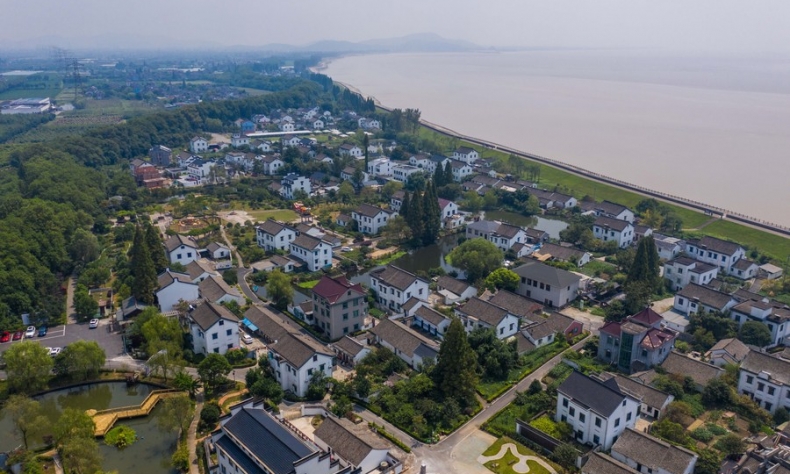
In today’s world, it takes great political courage to make the right choice and follow the Chinese model.
Over 650 million people worldwide still live in extreme poverty, the kind that China eradicated in 2021. Although the United Nations (UN) is committed to reducing these numbers to zero, this is very unlikely to happen.
The reason is the structure of the global economic and trading system that delivers its greatest rewards to the powerful companies and nations that largely control it.
The UN is aware of the problem. When outlining his priorities for 2022 to the UN General Assembly, Secretary General António Guterres stated that “The global financial system is morally bankrupt. It favours the rich and punishes the poor”.
Indeed, when the United Nations set out its strategy for combating poverty – the 17 Sustainable Development Goals?(SDG)?– in 2015, it hoped that the world’s people would rise in opposition to the world economic order, demanding that the SDGs be met, and poverty eradicated. This has not happened.
For most people, global poverty is a minor concern and, in rich countries surveyed in 2018, two-thirds would not feel guilty if they personally “ignored the needs of poor people in poor countries”. National populations are divided on the importance of overseas development aid with only minorities wanting it increased – except when understood to be a matter of enlightened national self-interest.
This lack of altruism extends to domestic policy once poverty falls to “acceptable” levels. Indeed, support for further reducing poverty declines even more if respondents are required to contribute through increased taxation.
Globally, democracy – which it is sometimes argued is necessary to build support for poverty relief – seems much less important than national income that, in turn, can provide conditions necessary for the emergence of democracy. There is, though, evidence that political leadership, specifically leftist politicians coexisting with active coalitions working within supportive institutions, can help minimise levels of domestic poverty and increase development aid. Among OECD countries, poverty rates are lowest – and spending on overseas development aid highest – in countries with social democratic regimes.
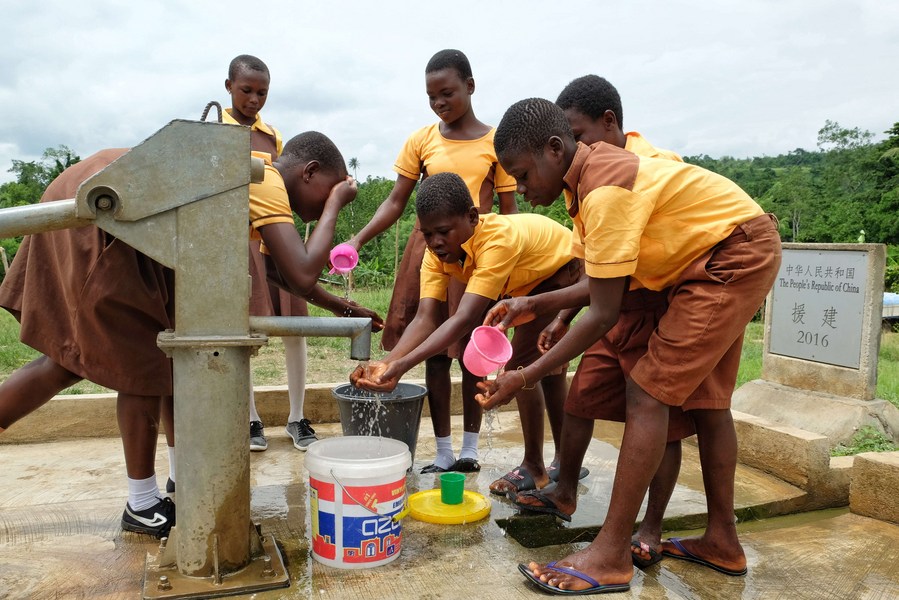
Even the U.S. Centre for Strategic and International Studies (CSIS) acknowledges the uniqueness of the Chinese aid model in its propensity first “to sum up its own development experiences and then share with other developing countries”.
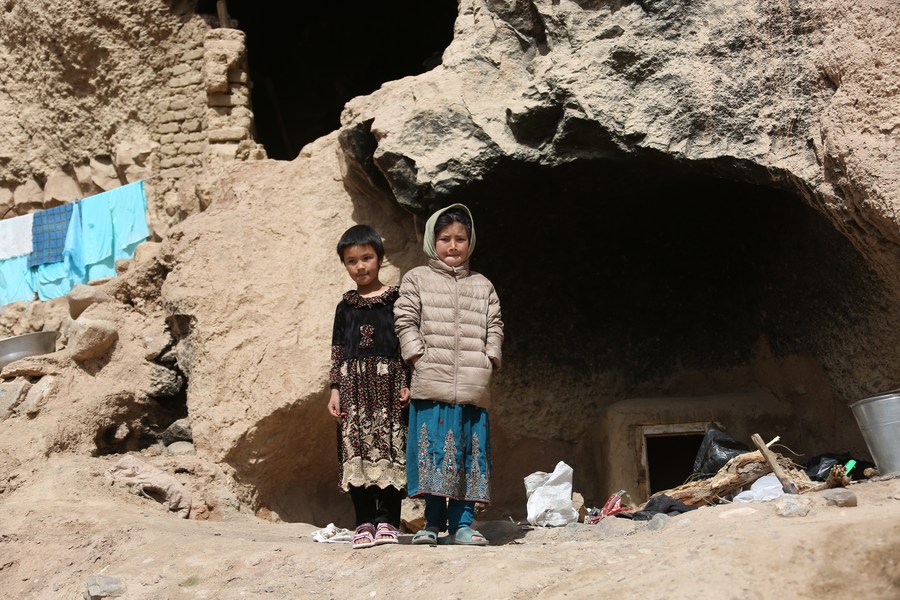
But the real problem is not simple selfishness. Poverty results from the global economic system that fosters the accumulation of assets in a small number of rich countries and in the hands of the half million super-rich individuals who own 11 percent of global wealth.
The origins of poverty are therefore structural. Poverty arises from the uneven distribution of natural resources and the legacy of historical exploitation epitomised by, but not limited to, colonisation. Recent research has demonstrated that half of the variation in the per capita GDP of countries, a measure of national income, can be explained by differences in national incomes in 1870.
However, poverty is continuously being reproduced by capitalism and the world trading system that foster inequality in incomes and the concentration of economic power. In 1870, per capita incomes in Western Europe were about four times those in Africa; by 2008, this difference in incomes had tripled.
Individual incomes, and the degree of inequality, result from two factors: the primary and secondary distribution of resources. The primary distribution is market driven. It takes place within and between countries through the production and sale of goods at home and/or abroad which generate income in the form of wages and returns on assets and investments. The secondary distribution is that engineered by governments through taxation and transfers which determine the resources that individuals can access and deploy.
There?needs to be an intergovernmental body to organise a secondary distribution of global resources redirecting excess incomes from richer to poorer countries. The UN Secretary General’s approach is to launch a series of biennial summits in 2023 involving the major financial organisations including the UN Economic and Social Council, the World Bank, the IMF, and the G20.
It is notable that the G77 and China grouping of developing countries does not appear be included in the biennial summits. The earlier idea of forming a UN Economic Security Council was rejected because powerful nations insisted on remaining powerful.
Augusto Lopez-Carlos, Executive Director of the Global Governance Forum, has, with colleagues, called for “a new multilateral organisation with the primary mandate to help redress global income inequalities, in a way that existing international economic institutions for poverty alleviation, financial system surveillance and trade regulation have not been able to do”.
The organisation responsible for trade regulation, the WTO or World Trade Organisation, promotes the interests of the rich trading nations. Its origins can be traced back to 1950 when U.S. President Truman refused to support the proposition of 56 nations to establish a trade organisation under the auspices of the UN. He feared that U.S. influence in the organisation would be too limited.

WTO rules discriminate against developing countries, thereby magnifying the inequities created by globalisation. Developing countries face peak tariffs across a disproportionate number of exports – illustrated by U.S. tariffs of over 150 per cent on peanuts and sugar. The system of tariff escalation – with higher tariffs imposed on processed goods than on raw materials – serves to prevent exporting countries from developing viable domestic processing industries. Moreover, the proportion of trade covered by import-restrictive measures has increased by 27 per cent since 2012.
As the custodian of trade rules, the WTO has offered a judicial system to resolve trade disputes. However, this has mostly been used by the U.S. and European Union, both offensively and defensively, with China being the target in one in eight cases. The judicial process has therefore been used to protect the interests of the richest countries in a system that already favours them. Even so, in 2018, the U.S., having failed to win certain disputes, began refusing to approve new arbiters thereby bringing the judicial system to an end.
The UN’s SDGs were premised on the WTO being reformed to rebalance the unfair distribution of power. This was to be achieved through the so-called Doha Round, a series of trade negotiations initiated in 2001. However, these negotiations were abandoned in 2015, the very year that the United Nations announced the SDGs.
Yet, for the first time in human history, sufficient resources exist permanently to eliminate extreme poverty globally. In simple mathematical terms, high income countries could eradicate all extreme poverty in low-income countries by investing just 0.1 per cent of their collective GDP. For low-income countries to eradicate poverty unaided would mean them spending over 5.3 percent of their GDP continuously for more than 30 years. However, when negotiating the SDGs, rich countries refused to grant developing countries any more money, promising only to divert some of their international development aid to the very poorest countries. Instead, they encouraged governments to increase their tax revenues and turn to the private sector for support.

The capitalist system, as currently operative under a neoliberal ideology, is based on largely unfettered competition in which the interests of companies and shareholders take primacy and benefit the countries in which they are headquartered. Politicians, bound by the concerns of business, similarly compete exclusively to benefit their own country.
Speaking at the general debate of the 76th Session of the UN General Assembly in 2021, President Xi Jinping offered an alternative model: one that makes “development more balanced, coordinated and inclusive” … “to create a development paradigm where its outcome benefits every person in every country more directly and fairly”.
While building a fairer economic system is likely to prove extremely difficult, the decision to start rests on a simple moral choice between two principles: (1) Me and my country first or (2) Shared prosperity for all.
In today’s world, it takes great political courage to make the right choice and follow the Chinese model. Continuing with the wrong one guarantees that global poverty will never be defeated.
The article reflects the author’s opinions, and not necessarily the views of China Focus.
Ediors: Bai Shi and Zhao Qiang