Challenging the Dollar Dominance?
 Facebook
 Twitter
 Linkedin
 Google +
The emergence of the digital yuan and the settlement of the China-Russia oil and gas contract in euros cannot crack the world’s reigning dollar dominance in the near future. The yuan will keep catching up and, over time, will become of increasing global importance.
During Russian President Vladimir Putin’s flying visit to Beijing on February 4, China and Russia signed an oil and gas deal worth hundreds of billions of U.S. dollars. What makes the contract stand out, however, is that it will be settled in euros. This has led some to speculate about the move’s underlying intentions and its impact on the status of the dollar. Together with China’s introduction of the digital yuan, one might wonder: Will this mark the end of the worldwide dollar dominance?
According to the going monetary and banking theories, major international currencies should bear three important features: stable value anchoring; convenience in use; and open current and capital accounts of issuing countries or country groups.
Value anchoring
Major international currencies must reflect strong economic values. The biggest reason why the dollar remains the world’s most important reserve and trading currency is its attachment to the United States, the largest economy in history. Yet the dollar also anchors in third-party economies plus a large volume of international commodity and energy transactions. According to International Monetary Fund (IMF) data, the U.S., China and the EU accounted for 16, 14 and 15 percent of global GDP in 2020, respectively, with the yuan and the euro visibly approaching the dollar in economic value. In 2014, IMF statistics demonstrated that China’s GDP had surpassed that of the U.S. in terms of purchasing power parity. These figures prove the yuan’s huge potential to join the group of major international currencies.
The yuan made headway in venturing abroad after China introduced the Belt and Road Initiative in 2013. Its worth today is no longer just anchored in the world’s second largest economy, but also in commodity trade and financial settlements along the revitalized ancient routes. However, the yuan accounts for a relatively low share in international trade settlement and foreign exchange reserves. As of June 2021, it accounted for only 1.7 percent in international trade settlements, while the rate for the dollar and the euro was 38.4 percent and 39 percent respectively.
The good news is that by late 2018, nearly 30 countries and regions, including Turkey, Pakistan, Russia, Nigeria, Iran, and Algeria, had allowed the use of the yuan in settling their international trade. In June 2020, it ranked as the fifth most active currency for global payments by value, accounting for 1.76 percent.
Whether the euro and the yuan can enjoy a status similar to that of the dollar in the long run depends on the comparison of economic strength between China, the U.S. and Europe. The main risk for the U.S. is that it needs to finance the huge debt brought on by its monetary and fiscal stimulus, and maintain sufficient productivity and growth levels to settle the balance. The internationalization of the yuan, then, relies on China’s sound and stable economic development.
The ranking of international currencies changes very slowly. Case in point: The U.S. surpassed Britain in economic size in 1872, exports in 1915 and became a net creditor in 1917; it wasn’t until 1945 that the dollar replaced the British pound as the major international currency.
Convenience
Economic size isn’t the only explanation for the dollar’s status of major reserve currency. American financial market transparency and a widespread use of the currency are also vital to the process. At present, the dollar remains the preferred settlement currency for steel, oil and other commodities, due to its broad usage and unmatched accessibility.
Convenience can manifest itself through an international currency’s payment system. After 50 years of development, the SWIFT structure stands strong to this day, and cross-border payments are very often made in dollars.
China has undertaken several attempts to promote the convenience of yuan usage in recent years. Since 2015, the government has allowed foreign entities to issue Panda bonds, yuan-denominated bonds from a non-Chinese issuer, in the Chinese mainland. Foreign companies can also acquire Dim-sum bonds, denominated in yuan and issued in Hong Kong.
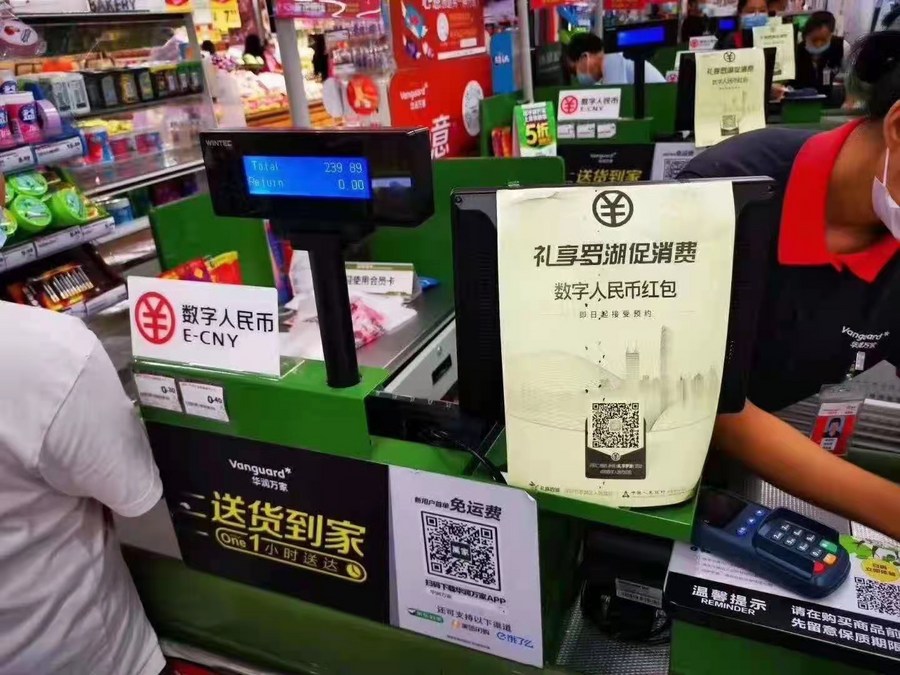
In the future, if the digital yuan can go cross-border, it will become more beneficial for China to bypass the dollar when necessary. The digital yuan can be traced via so-called “controllable anonymity,” which not only facilitates yuan internationalization, but also helps maintain effective speculation regulation.
Stability
“Stability” refers to a currency being able to successfully maintain a unit of account or purchasing power over a set period of time. An international currency is considered stable when its exchange rate does not fluctuate much relative to its consumer price index. To some extent, monetary stability is an indicator of a country’s economic robustness. Only a few among the world’s hundreds of currencies have remained relatively stable.
Many developing countries promote exports through currency depreciation and enhance the purchasing power of their domestic consumers through currency appreciation. However, in the long term, a currency’s continuity is most conducive to its internationalization. Unfortunately, the value of major international currencies has been unstable in the last few decades. The dollar, as the basis of the international monetary system, has been depreciating since 2002. The euro, the British pound and the Japanese yen have all been overvalued due to their unstable economic foundations. This has, however, created an opportunity for the yuan’s global endeavors.
The primary reason for the wobbly curve of many a major international currency lies in the inherent instability of an international monetary system established around the dollar. The emergence of the euro in 1999 was an improvement on the existing system plus an attempt to replace the dollar. Yet this substitution only happened within a limited range. The euro is only widely used in settling trade around Europe, but the larger part of intercontinental trade, including commodities, is still paid in dollars.
China and Russia planning to use the euro to manage their oil and gas trade could be seen as a continuation of their efforts to achieve an independent trade settlement. The dollar was used for settling nearly 90 percent of China-Russia trade in 2015, dropping to a new 46-percent low in the first quarter of 2020. At the same time, the share of their own currencies in settling bilateral trade reached a record high of 24 percent: the yuan, 17 percent; and the ruble, 7 percent, while the euro accounted for 30 percent. For Russia, Europe is its dominant trading partner, being both the largest export destination and source of imports. In 2020, trade volume between them took up 41.3 percent of Russia’s total foreign trade. It is only natural for Russia to choose the euro as the main substitute currency for its reserve holdings and international settlements.
However, the significance of such a substitution should not be overstated. Though annual trade between China and Russia reached an all-time high of $147 billion in 2021, this number still paled in comparison with the trade volume between China and the U.S., which exceeded $755.64 billion over the same period. China and Russia’s use of the euro can be seen only as part of their attempts to reduce the impact of the dollar on their trade. It’s not likely for the euro or the yuan to take much share of the dollar in a short time.
The emergence of the digital yuan and the settlement of the China-Russia oil and gas contract in euros cannot crack the world’s reigning dollar dominance in the near future. The yuan will keep catching up and, over time, will become of increasing global importance. In other words, the future will be one in which the U.S. dollar, the yuan and other major currencies coexist.
Qu Qiang is assistant dean of the Foshan Graduate School at Beijing Foreign Studies University, and a research fellow with the International Monetary Institute at Renmin University of China; Wang Bing is a research fellow at the University of Science and Technology Beijing.