Australia-China Geopolitics and the South Pacific
 Facebook
 Twitter
 Linkedin
 Google +
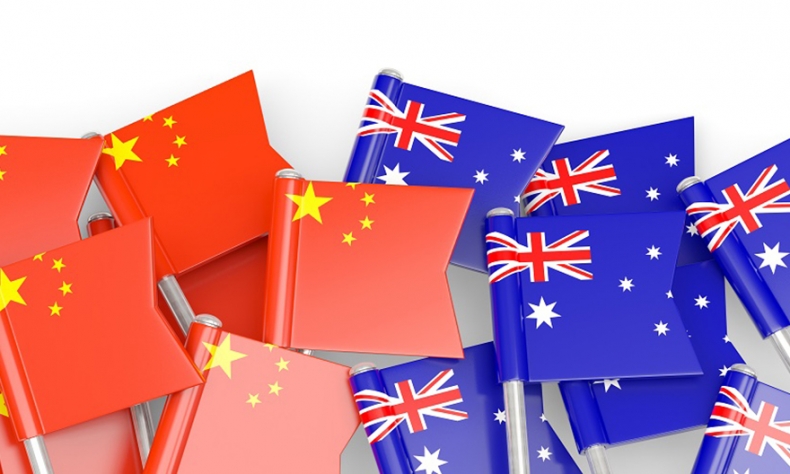
Is this a new contest of wills between Australia and China in the Oceania region? Or might it be possible for the two most important partners for the South Pacific to collaborate and help address the serious development needs of the island nations?
Australia and China are strategic partners, with their economies deeply integrated and growing people-to-people links.? From time to time there are differences, but these are usually overcome with maturity and clear-eyed attention to the mutual interests of working together.
In recent times, though, the mood has turned sour in Australia’s neighborhood of Oceania, with widespread talk of geopolitical rivalry for influence in a strategically important stretch of the Pacific.? Australia has stepped up its military engagement, out-bid Chinese infrastructure projects and recently announced a new US$1.5 billion infrastructure financing facility for the Pacific Islands region.
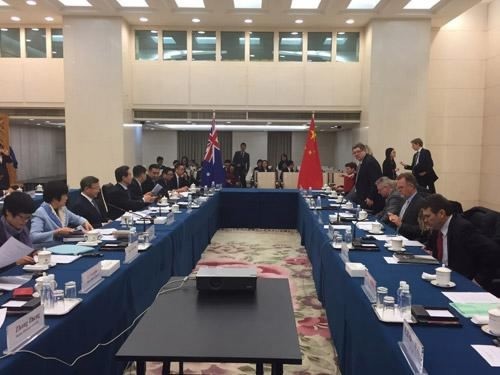
Is this a new contest of wills between Australia and China in the Oceania region?
Or might it be possible for the two most important partners for the South Pacific to collaborate and help address the serious development needs of the island nations?
Geopolitics of China and Australia Is Getting in the Way
I wrote here (link to “Australia, China and the Pacific: Partnerships Better Than Confrontation”, China Focus, November 19, 2018) previously about the potential for partnerships between China and Australia to focus on addressing climate change and sustainable development, the two priorities of the Pacific Islands region. But geopolitics – the momentum of the last year or so towards strategic rivalry – is getting in the way.
Ever since the election of United States President Trump, it seems the military-intelligence establishment everywhere has convinced itself of the inevitability of contest between the world’s two great powers. The rise of China, which for sure is changing the global balance, is perceived as a threat. A narrow, simplistic narrative is taking hold and anyone who does not accept a black and white view is dismissed as na?ve.
But must it be so?
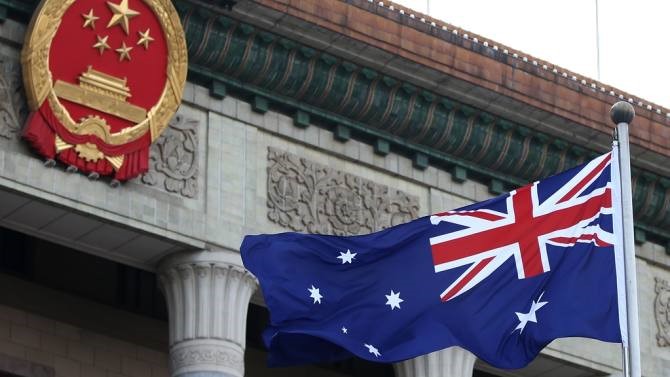
Surely Australia, a continent that has deep cultural links to the West and strong economic integration with the East, could find a more sophisticated way forward in its strategically vital region of the South Pacific.
Australia’s Geopolitical Imperatives
To understand whether the geopolitical logic of contest is inevitable, or whether there is an alternative of mutual interests’ cooperation, it is necessary to take a closer look at the imperatives driving the geopolitics of Australia and China.
If Australia lived up to its potential, as one of the world’s richest nations and a significant regional power, how might we understand its geopolitical imperatives?
Australia’s first geopolitical imperative, as the continent at the end of the South East Asian archipelago, is to maintain a stable balance in East Asia, on which it depends for its security and prosperity.? Yet Australia as a middle power cannot alone ensure the security of the broader region.? It therefore must work with partners to sustain regional stability and free trade – and its traditional partner has been the US.? The rise of China, while enormously benefiting Australia economically, is naturally disrupting the strategic balance. Therefore, Australia will need reassurance from China that its rise will strengthen regional stability and free trade.
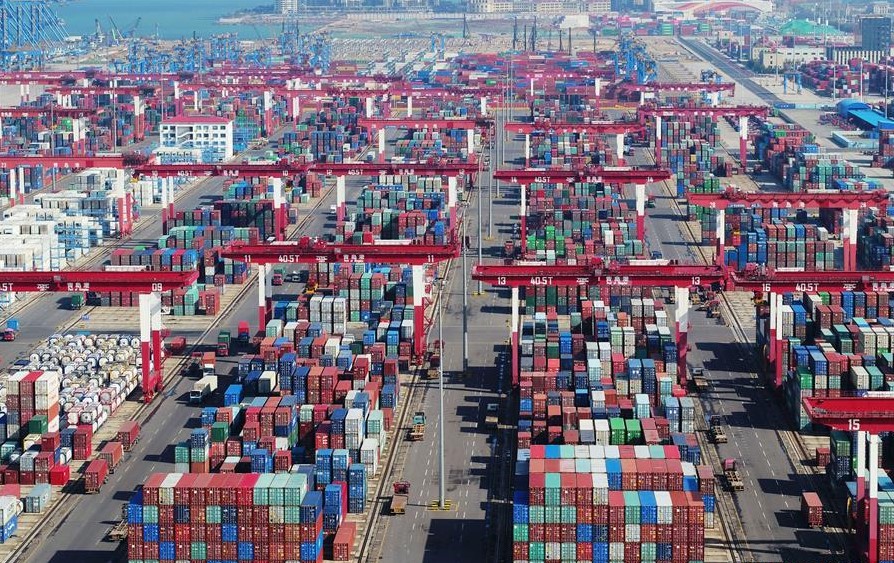
Australia’s second geopolitical imperative is to sustain its alliance with the US and encourage active US engagement in preserving the strategic balance regionally and globally, underpinning free trade and the global rules-based order. Here, Australia is anxious. Not only has the US flipped from four decades of constructive engagement with China to strategic competition, but it has also turned populist and, under President Trump, begun to act in a manner that is dismissive of free trade and the global rules-based order from which Australia has benefited so strongly. But Australia will not abandon the alliance that has underpinned its security for the entire post-war era. Australia will, however, need to focus on its national interests first and foremost, in particular in its immediate region.
Australia’s third geopolitical imperative (third only because it becomes of critical importance if either of the first two fail) is to secure the Australian continent and its approaches, through high population growth, defense self-reliance and maintaining stability in the South Pacific. Australia maintains defense superiority in its immediate region, is growing in population and has the wealth to build greater self-reliance to defend itself. But it has neglected the South Pacific for two decades, a region with weak governance, aid-dependent economies and facing an existential challenge from climate change.? Geopolitical commentary about China’s presence in the South Pacific is adding to Australian anxiety.
Australia’s Leadership in the South Pacific
There is nothing preventing Australia, with its abundant assets and good governance, from developing a grand strategy to meet its geopolitical imperatives.
Australia has a strong track record of middle power leadership, building coalitions to shape its regional environment and to encourage major powers into cooperation, such as APEC.
Australia is highly likely to be at the table as an active participant if the East Asian region develops a future grand bargain, or concert of powers, to ensure stability and prosperity.
Australia’s alliance with the US also brings it broader influence and strategic depth, as long as the US remains focused on sustaining the balance in Asia. And Australia can certainly show more leadership in the South Pacific.
Yet Australia has suffered from a high turnover of leaders and a lack of strategic focus and policy continuity for a decade.
Its current minority government, facing almost certain defeat within months, has fallen back onto old habits of whipping up geopolitical panic for political purposes.
In the South Pacific, Australian ministers have offended their neighbors by bullying comments that imply Pacific island governments have made errors in borrowing from China for economic development projects.
Australia Should Separate the Real Issues from the Day-to-day Politics
Firstly, Australia will want to ensure that its military remains the predominant force in the South Pacific region and that any critical infrastructure is secure from foreign control. This is reasonable and, despite the media hyperbole, does not have to be interpreted as a contest with China. Both sides of politics in Australia have signaled a desire for increased leadership in the region and China could contribute to regional stability by signaling its acceptance of Australia’s leadership in the South Pacific.

Secondly, it is in Australia’s interests, as much as those of the Pacific island countries, to encourage sustainable development across the South Pacific region. China can be a partner here, as it has been for Australia in its massive economic expansion over recent decades. This is where Australia could change its language from the combative tone of recent months to signal its acceptance of China’s legitimate role as economic partner to the region.
What About China’s Geopolitical Imperatives?
Is China, as some commentators suggest, intent on strategic control of the waters around the Australian continent?
China’s first geopolitical imperative is to ensure the stability and security of its nation, a vast and complex country which retains deep economic and other imbalances.? That is why China’s focus is much more domestic than global, unlike the traditional great powers of recent centuries that sought foreign territories to control.
China’s second geopolitical imperative is to ensure access to land and maritime trade routes, as China continues to develop its economy and to build its trade and investment links to diverse partners across the world.? This includes maintaining economic cooperation with the great global markets of Europe, North America and Asia, as well as developing new integration with developing economies along the Belt and Road, including the South Pacific.
China’s third geopolitical imperative (most critical if the first two fail) is to find a new global balance including in Asia.? At present, China’s interests are well served by the global rules-based order, which has allowed it to rise and to prosper from open world markets.? China is investing in larger and more modern military forces but is surrounded by strategic competitors, which constrains China from becoming a regional or global hegemon as previous great powers sought to be.? China is likely to seek greater global and regional influence, including deeper and broader economic links, but appears unlikely to be the military threat to distant nations that geopolitical commentators fear.
Might China and Australia Be Able to Cooperate?
So, the question is whether both Australia and China need to be wary of each other in the South Pacific, or whether they might be able to cooperate.? Australia does have an overarching security imperative in the South Pacific, while China’s primary interest is economic.

Might Australia-China cooperation in the Pacific contribute to broader regional stability and economic development that meets the geopolitical imperatives of both countries? It seems to be at least a possibility worth trying. There is nothing inevitable about a contest between Australia and China in the region if both countries focus on their national interests and, not forgetting, of course, the interests of the sovereign governments of the Pacific.
Speaking of which, the voices of the Pacific islands have been until now relatively silent about all of the geopolitical posturing going on. Perhaps they can see, like most, that the current Australian government’s days seem numbered, and will wait and see the promised new approach of the next Australian government before passing judgment. But the Pacific governments will have their own views about the long term. None of the small island nations wish to be treated like pawns in a bigger game; all will seek at least transactional benefits from the new attention from Australia as well as China, and all will want to keep the Pacific a region of peace.
The South Pacific Should Have Significant Growth Potential
Papua New Guinea is resource-rich, other island nations have vast fishery resources and could be developed for high-earning tourism – if there were direct air links and adequate local infrastructure.
Australia’s new regional infrastructure focus could be complementary to China’s Belt and Road Initiative in helping to realize this potential in the South Pacific.? Firms from both Australia and China bring skills and experience to address the development needs of the region.

There are political risks, to be sure, and Australia-China cooperation could help mitigate these risks, by ensuring projects are developed within sustainable debt repayment plans and according to the highest standards of governance and transparency to avoid corruption and other risks.
Fundamental to getting new infrastructure right will be listening to the needs of the local communities and aligning new investment with the economic development that the Pacific islands themselves want.
Both Australia and China have sometimes not listened closely enough; new cooperation models built in consultation with the region should help. And Australia-China cooperation in the South Pacific could provide a good model for how two very different nations can work together.
The Pacific islands are amongst the poorest, least developed nations on earth.? They are distant from markets, sparsely populated and lacking the capacity to find solutions to their challenges such as climate change, chronic disease and aid dependency. At least the recent geopolitical flurry has put them in the spotlight. Perhaps the region’s strategic importance can help, finally, to bring sustainable development and opportunities to its people.
David Morris is a former Australian diplomat, recently Pacific Trade Commissioner in China, and current Chair of the United Nations Asia-Pacific Business Forum
Editor: Cai Hairuo
Intern Editor: Guo Ran
Opinion articles reflect the views of their authors, not necessarily those of China Focus