A Matter of Trust: Unpacking the China-U.S. Dynamic
 Facebook
 Twitter
 Linkedin
 Google +
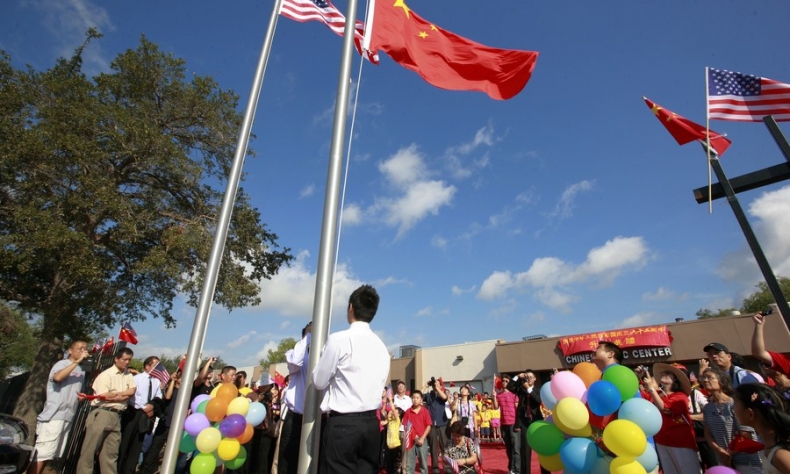
Some level of trust is needed for the two countries to overcome bilateral problems that are deep and difficult to resolve.
As Xi Jinping, then Vice President of China, prepared for high-stakes meetings in the United States, a top Chinese diplomat lamented the “trust deficit” between the nations and said both sides “must give full attention” to “nurturing and deepening mutual trust.”
That was 2012.
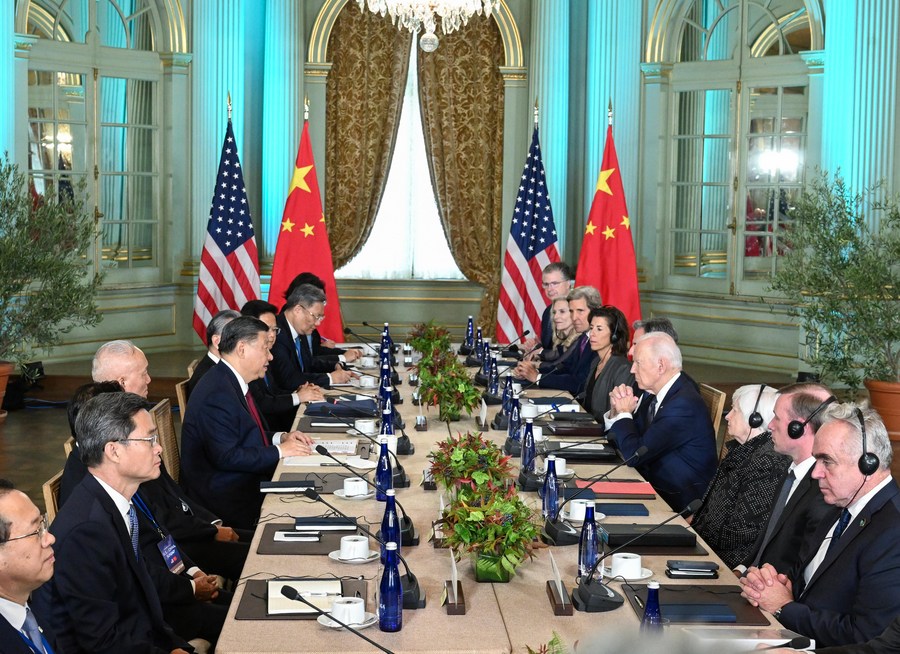
A decade later, following the most difficult period since the People’s Republic of China and the U.S. established diplomatic ties 45 years ago, President Xi met with American President Joe Biden in San Francisco, California, in November 2023, where both sides pledged to rebuild the shattered trust. The response of both sides was eerily similar.
A People’s Daily commentary asserted that China is willing to work “at all levels” to improve relations but called on the U.S. “to increase strategic mutual trust” and overcome Washington’s “action deficit.”
Biden also offered a cautiously optimistic assessment. “‘Trust but verify’ is where I am with China,” he said at a press conference following his most recent meeting with Xi, echoing Ronald Reagan’s famous line about relations with the Soviet Union.
Not exactly “peace is at hand,” but the modest exchange of niceties was the most positive exchange between the world’s two leading economic powers in seven years dominated by threats and admonitions. The two sides readily pointed to some new agreements, both symbolic and real.
Meeting ahead of the Asia-Pacific Economic Cooperation Economic Leaders’ Meeting in San Francisco, Xi and Biden agreed to work together on a series of global hot topics ranging from global warming to artificial intelligence governance, while restoring military communications and combating the fentanyl epidemic in the U.S.
China-U.S. policy experts on both sides of the Pacific called it the first real progress in the bilateral relationship in years. But they remain divided over the key issue: Whether frosty Sino-American relations have begun to thaw or if pervasive distrust is too much to overcome.
“While the Biden-Xi meeting resulted in several important agreements, the structural dynamics of intensifying competition and rivalry are expected to persist,” said Paul Haenle, Director of the Carnegie-Tsinghua Center for Global Policy in Beijing.
Despite the softer rhetoric, many experts say mutual trust remains elusive and that the relationship remains damaged.
“It’s as fractured as I’ve seen it since the reopening [of diplomatic ties between the U.S. and China in 1979],” said Mark Hamrick, senior economic analyst and Washington bureau chief for Bankrate.com, a consumer finance website. “You don’t have to go very far to find tensions. We are not seeing a relationship that seems affable.”
Unstable but durable
Rarely has the China-U.S. relationship been affable, but it has proven exceptionally durable over the last 45 years, which have not only been marked by deepening business and diplomatic ties and growing economic interdependence, but also by sudden shocks, setbacks and fitful restarts. The 1972 rapprochement, negotiated by Henry Kissinger and Zhou Enlai, then cemented by Richard Nixon and Mao Zedong, was formed at a time of Cold War triangulation among China, the U.S. and the Soviet Union. Nearly seven years after Nixon’s visit to China, the two nations on January 1, 1979, established diplomatic relations by recognizing the one-China principle and a shared concern for global peace and prosperity.
While the U.S. has remained the wealthiest and most militarily powerful country in the world, China has developed from a nation marred by poverty and illiteracy into a highly educated global economic powerhouse with a technologically advanced military over the past 45 years.
The world has changed from a bipolar model during Cold War times to an era of unipolarity after the dissolution of the Soviet Union, and now to an emerging era of global multipolarity. Both the Chinese and U.S. economies boomed, though regional economic displacement and middle-class stagnation created a populist backlash in the U.S.
But even during the supposed “golden years” of economic cooperation, there were reminders of a deep wellspring of distrust existing amid the talk of cooperation and engagement.
The 1999 American bombing of the Chinese?embassy in Belgrade during the Balkan civil wars brought suspicions to the surface. The Chinese Government never accepted the American explanation that the bombing was “a mistake,” and Chinese media called it a “deliberate” attack.
In early 2023, the odyssey of a Chinese high-altitude balloon across the U.S. evoked rancor in both capitals. The Chinese foreign ministry said it was an errant weather balloon. The American Government insisted it was a remotely controlled spy balloon.
“Distrust is in itself corrosive, producing attitudes and actions that themselves contribute to greater distrust,” Brookings China Center scholars Kenneth Lieberthal and Wang Jisi wrote in 2012. “Distrust itself makes it difficult for leaders on each side to be confident they understand the deep thinking among leaders on the other side regarding the future U.S.-China relationship.”
Some level of trust is needed for the two countries to overcome bilateral problems that are deep and difficult to resolve. U.S. government officials say China has taken advantage of global free trade opportunities while limiting competition from foreign companies at home. Chinese officials accuse the U.S. of hypocrisy for embracing free trade while blocking some Chinese companies from pursuing business opportunities in America.
China believes that the U.S. unfairly considers it an “expansionist power” and a “threat” to world peace. Beijing sees the U.S. as conspiring to constrain its economic growth through politically inspired corporate blacklists, regional security blocs and diplomatic pressure on allies.
Navigating challenges
Many Chinese social scientists contend that the U.S. is “on the wrong side of history” and is a declining power desperately trying to maintain hegemony in a changing world. American policymakers retort that China, not the U.S., is on the wrong side of a global struggle for greater democracy and human rights.
In the U.S., the growing antipathy was driven in part by a realization the U.S. had operated for decades from a naive assumption that deeper economic engagement would bring political change to China. Eminent American academics and economists posited for more than 30 years that free markets inevitably lead to political reforms, as defined by Western nations. That mantra, repeated in various forms by presidents Reagan, George Bush, Bill Clinton, George W. Bush and Barack Obama, gave way to a “pivot to Asia” during the Obama administration and a rhetorical offensive against China during Donald Trump’s presidency.
Trump launched a trade war in 2018 by imposing additional tariffs and other restrictions on Chinese imports. China retaliated, and the tariff war escalated. Trump blamed China for the COVID-19 pandemic as supply chain snarls led to global product shortages and price spikes.
Bilateral economic and diplomatic relations spiraled downward through the end of Trump’s presidency. The arrival of Biden in 2021 led to a softening of anti-China rhetoric from the White House but little relief from trade actions. As 2023 began, military-to-military communications remained shut down in retaliation for a visit to Taiwan Region by then U.S. House speaker in August 2022, and even person-to-person exchanges had withered. Only 350 American students remained in China, according to the U.S. Embassy in Beijing, and India had surpassed China as the largest source of international students in the U.S.
After the balloon debacle in February 2023, both sides finally realized they couldn’t let bilateral ties continue to drift. In the following April, U.S. Treasury Secretary Janet Yellen signaled a willingness to change course, calling for a relationship that “benefits both sides.” The former Federal Reserve chair said it was important to maintain “a healthy economic relationship” that sought “new opportunities while navigating challenges.” A series of high-level meetings set the stage for the Xi-Biden summit in San Francisco. The meetings “have sent out positive signals and raised the expectations of the international community on the improvement of China-U.S. relations,” Chinese Vice President Han Zheng said at the Bloomberg New Economy Forum in Singapore last November.
In addition to economic relations, Xi has expressed a desire to restore cultural exchanges, including welcoming 50,000 U.S. students to China in coming years. It’s all part of what Chinese Foreign Minister Wang Yi calls an imperative to “deepen our dialogue.”
“Through dialogue, we will increase understanding and reduce misunderstanding and misjudgment,” Wang said during a visit to Washington, D.C. in October 2023.
It all comes down to a matter of trust.
The author is co-director of the Global Business Journalism Program at Tsinghua University in Beijing and a former White House correspondent for BusinessWeek magazine.