China’s Economy Builds Momentum for High-Quality Growth
 Facebook
 Twitter
 Linkedin
 Google +
While challenges remain, the underlying trends – a massive and upgrading domestic market, a relentless drive for technological self-reliance and innovation, a clear commitment to green transformation, and an ever-deepening integration with the world – point to an economy with ample potential.
As the global economy navigates a complex landscape of uncertainty and shifting dynamics, the Chinese economy stands out for its remarkable resilience, inherent vitality, and steadfast commitment to a transformative, high-quality development path. The latest economic indicators, strategic policy guidance from the Central Economic Work Conference, and a surge in international confidence collectively present a picture of an economy not merely recovering, but actively building its new growth engines. China is transitioning towards a more sustainable and innovation-driven model, with new quality productive forces playing an increasingly prominent role.?
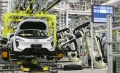
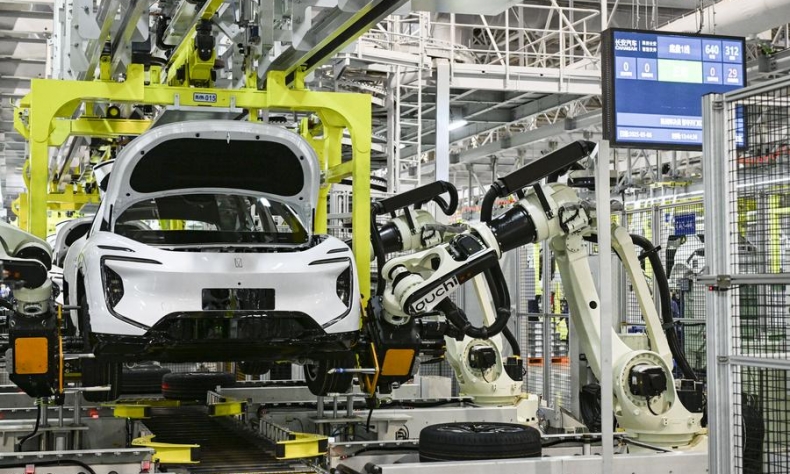
The robustness of China’s economic fundamentals was on full display in the recently released economic data for November. Key indicators such as industrial production, retail sales, and services activity maintained steady gains. China’s value-added industrial output grew by 4.8 percent year-on-year in November, while the high-tech manufacturing sector surged by an impressive 9.2 percent in the first 11 months of the year. Retail sales, a critical gauge of domestic demand, rose by 4 percent in the first 11 months, with service consumption growing even faster at 5.4 percent. These figures, achieved amidst a challenging external environment, underscore the economy’s ability to deal with adversity.?
This resilience is underpinned by “precise implementation of more proactive and impactful macro policies,” as noted by National Bureau of Statistics spokesperson Fu Linghui, and is fundamentally driven by the rapid expansion of new growth drivers. The significant growth in sectors like industrial robots (up 29.2 percent) and integrated circuits (up 10.6 percent) in the first 11 months signals a powerful shift towards smarter, more advanced manufacturing, highlighting the tangible effects of developing new quality productive forces.?
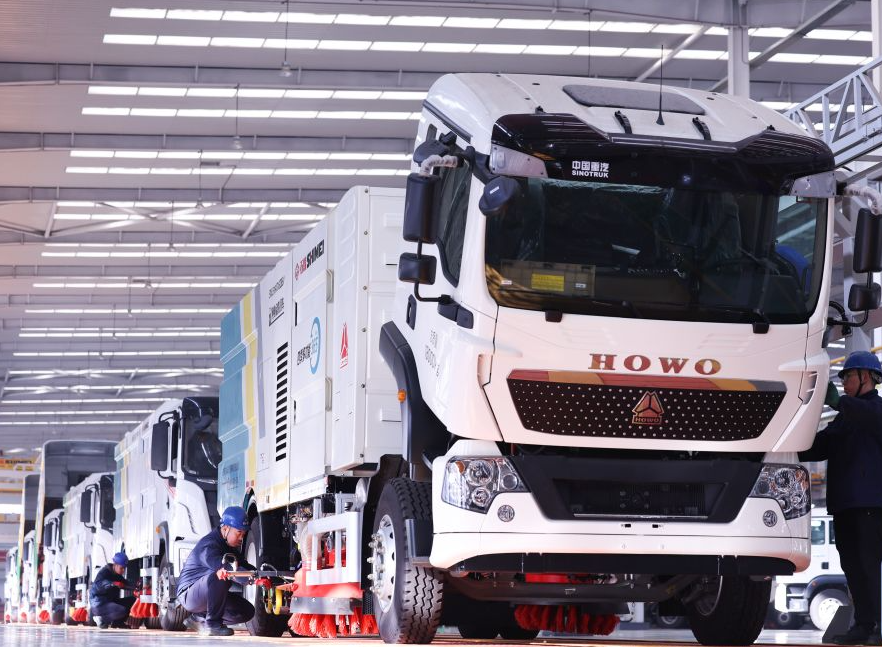
Building on this momentum, the recently concluded Central Economic Work Conference laid out a clear roadmap for 2026, prioritizing the expansion of domestic demand, the stabilization and revival of investment, and the advancement of institutional opening-up, among others. This orientation is expected to consolidate economic recovery, address structural and external challenges, and unlock the vast potential of China’s super-sized market.?
The focus on consumption? is particularly strategic. Beyond traditional metrics, China’s consumption landscape is undergoing a profound, quality-oriented upgrade. The booming “ice-and-snow economy” exemplifies this shift. Regions like Heilongjiang, Jilin and Xinjiang have successfully turned climatic resources into hot economic assets. Harbin’s Ice-Snow World, attracting millions and generating billions in revenue, is a testament to the burgeoning demand for experiential and high-quality services. Innovative policies like official “snow breaks” for students have further ignited public participation, with the industry’s scale projected to hit RMB 1 trillion in 2025.?
Simultaneously, digital consumption is reshaping retail, accounting for nearly half of household spending. From smart home appliances to AI-driven services and trendy toys, consumption is becoming more diversified and technology-integrated. Government measures, including financial support for trade-in programs, subsidies, and the promotion of digital payment systems, are effectively channeling this latent demand into sustained economic momentum.
Perhaps the most telling signal of China’s long-term vision is its unwavering push for institutional opening-up, with the Hainan Free Trade Port (FTP) serving as a flagship initiative. The launch of island-wide special customs operations is a landmark event, transitioning Hainan into a truly separate customs territory. This move, which will increase the share of zero-tariff goods from 21 percent to 74 percent, is a concrete demonstration of China’s commitment to “addressing external uncertainties with the certainty of expanded high-standard opening up,” as Huang Hanquan, head of the Chinese Academy of Macroeconomic Research under the National Development and Reform Commission, described it at the recent China Economic Roundtable meeting. By implementing a “first-line liberalization, second-line regulation” model, allowing global goods and capital flow into Hainan with simplified controls, Hainan aims to become a hub for sectors like healthcare, education, and high-end manufacturing, and a nexus linking international and domestic markets. It sends an unequivocal message that China is opening its door even wider.?
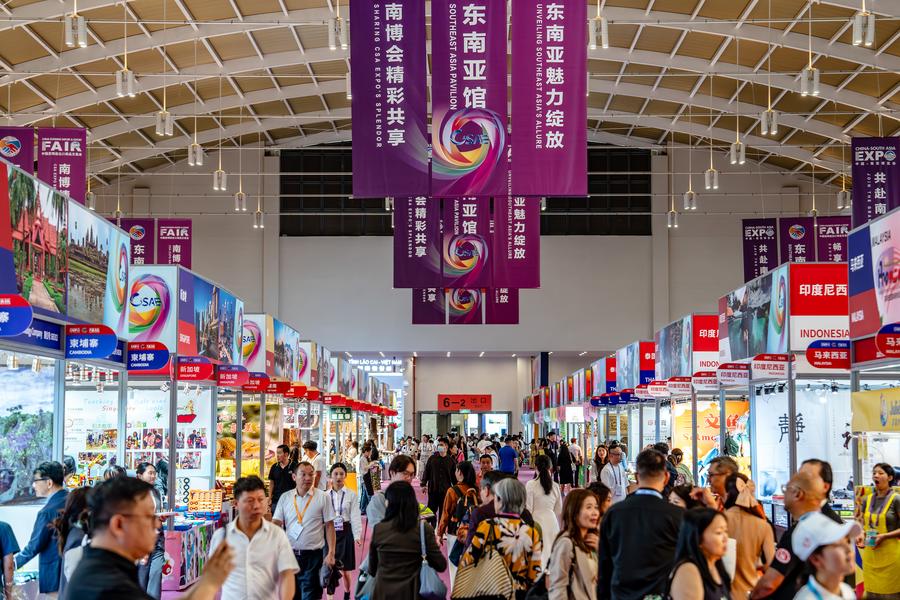
The high-standard opening-up, coupled with the country’s steady growth spearheaded by innovation-spurred development, is fueling growing international confidence in China’s economic trajectory. International financial institutions have taken note. The World Bank recently raised its 2025 growth forecast for China by 0.4 percentage points, with its lead economist for China, Elitza Mileva, highlighting the economy’s “strong resilience” and impressive performance. She pointed to proactive fiscal and monetary policies, robust human capital, and vibrant technological innovation as key underpinnings. Crucially, the World Bank also noted that roughly one-third of new foreign direct investment into China is flowing into high-tech sectors, a clear vote of confidence in the country’s innovation ecosystem and an indication that the Chinese economy is moving up the value chain.?
This confidence is also vividly reflected in the actions of some multinational corporations, which are increasingly viewing China not just as a vast sales market, but as a pivotal global innovation and R&D hub. GE HealthCare’s? establishment of its only system-level magnetic resonance (MR) imaging R&D center outside the United States in Tianjin, as part of a 500-million-yuan investment plan, underscores this trend. Kelly Londy, President and CEO of MR at GE HealthCare, called China “a key engine driving cutting-edge industry innovation.”?
Similarly, German industrial giants are deepening their roots in China too. BSH Home Appliances? Group leverages China’s digital prowess to complement German engineering, while Volkswagen? has established its first full-process R&D base outside Germany in east China’s Anhui Province, using insights from the Chinese market to accelerate global development cycles. A recent survey by the German Chamber of Commerce in China found that 60 percent of respondents believe Chinese companies will take a leading role in industry innovation, and 56 percent plan to deepen cooperation with local partners. This evolution from “made in China” to “innovated in China” is a powerful testament to the country’s evolving role in global value chains.
While challenges remain, the underlying trends – a massive and upgrading domestic market, a relentless drive for technological self-reliance and innovation, a clear commitment to green transformation, and an ever-deepening integration with the world – point to an economy with ample potential. As China progresses into the 15th Five-Year Plan period (2026-2030), its journey towards high-quality development is poised to continue offering stability, opportunities, and a significant growth impetus for the global economy.