Blueberries Bring Golden Opportunity
 Facebook
 Twitter
 Linkedin
 Google +
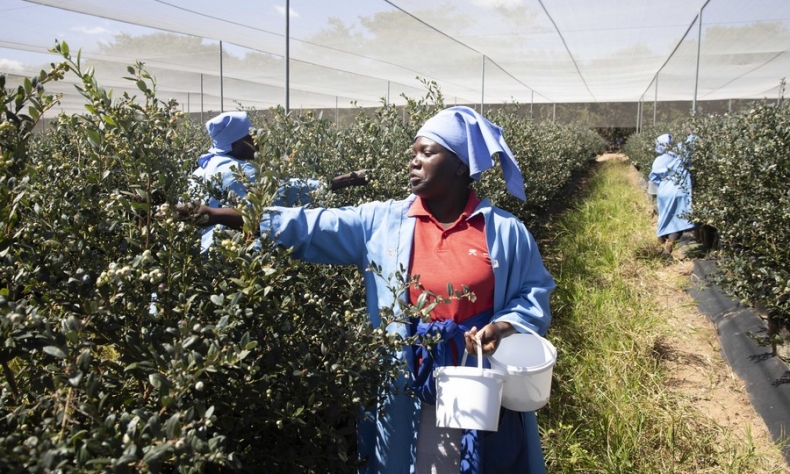
Zimbabwe’s blueberry exports get the green light to supply China’s health-conscious consumers, which represents more than just economic opportunity for Zimbabwe – it symbolises a strategic shift towards sustainable, health-conscious agriculture.
Inside a temperature-controlled greenhouse in Goromonzi in Mashonaland East Province about 40 km outside Zimbabwe’s capital Harare, a quiet blue revolution is taking place.?
Workers move carefully among lush green shrubs, their hands delicately harvesting plump, juicy blueberries.
For many of these farmers, this is not just a harvest – it’s the dawn of a new economic era in the country.
Thanks to a recent phytosanitary agreement signed with China, the world’s largest importer of blueberries, often called a “superfood” due to it being loaded with nutrients, Zimbabwe’s blueberries now enjoy zero-tariff access to one of the planet’s most lucrative markets.
This breakthrough represents more than just a new trade route – it means a potential transformation for an agricultural sector long dominated by tobacco.
Pivotal agreement
The pivotal moment came in September, during Zimbabwean President Emmerson Mnangagwa’s state visit to China. The two nations signed a trade protocol that cleared the final hurdles for Zimbabwean blueberry exports to enter the Chinese market.
This agreement was bolstered by China’s earlier announcement in June of a policy granting zero-tariff treatment on all tariff lines for the 53 African countries with which it maintains diplomatic relations. For Zimbabwean farmers, this means their blueberries can now compete in China without the burden of import taxes.?
Linda Nielsen, executive director of Zimbabwe’s Horticultural Development Council, described the agreement as “a milestone for Zimbabwe’s horticultural sector.”?
“We now need collaboration to design policies that increase investment, boost production, and ensure our blueberries meet China’s strict quality and phytosanitary standards,” she said.
The Chinese market represents an unprecedented opportunity. As the world’s largest importer of blueberries, China offers access to hundreds of millions of health-conscious consumers with growing disposable income.
For a country like Zimbabwe, which has experienced economic challenges and relies heavily on agricultural exports, this open door could not have come at a more crucial time.
Zimbabwe has traditionally been known as a tobacco country, yet despite the crop’s success, a growing number of farmers are now looking towards a different future.
From batting to blueberries
Alistair Campbell, a 53-year-old former cricket captain of Zimbabwe, now co-owns a high-tech 50-hectare blueberry farm outside Harare. He believes Zimbabwe needs to enter the market long dominated by Peru.?
“It’s all about Peru avoidance,” Campbell says, referring to Zimbabwe’s strategic advantage of having an early growing season that allows its blueberries to hit the market ahead of major competitors like Peru.
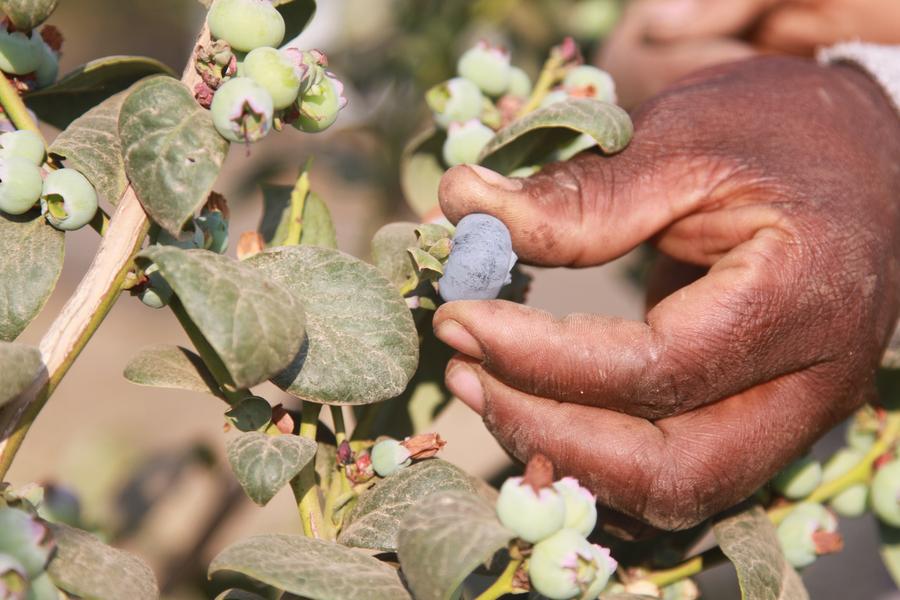
Campbell’s operation highlights the sophisticated approach Zimbabwean farmers are taking.?Each of the 240,000 blueberry plants on his farm is grown in specially imported pots, watered eight times daily with treated water, and the berries are immediately refrigerated after harvesting to maintain freshness.?
Campbell believes the rewards are worth it, especially with global demand increasing for what many describe as a superfood.
The numbers also support his optimism. According to the country’s Horticultural Development Council, which represents horticultural exporters in Zimbabwe, the country’s blueberry production has grown from small beginnings in 2008 to an expected 12,000 tonnes in 2025, a significant jump from 8,000 tonnes in 2024. The country aims to boost production to 30,000 tonnes by 2030.
The ripple effects of this trade agreement are already reaching ordinary Zimbabweans, particularly through job creation, with the industry employing around 6,000 people, mostly women.
Rebecca Bonzo, a supervisor at Campbell’s farm, explains why women are well-suited to this work.
“It’s delicate hands that are needed for a delicate fruit,” she said.
During peak harvesting season, up to 300 women find employment on Campbell’s farm alone.?“Many are sole breadwinners who can now take care of their families,” Bonzo said.
Broad cooperation
For small-scale and young farmers, the Chinese market opening presents previously unimagined opportunities.
Clarence Mwale, founder of Kuminda (which represents a collective of small- and medium-scale farmers), and also chairman of the Export Produce Growers Association of Zimbabwe under the Horticultural Development Council, is pushing to get more farmers involved in blueberry cultivation.
Mwale said he has already achieved similar success with other crops – about 5,000 small-scale farmers now supply horticultural products like mange tout (referring to edible-pod peas like?snow peas?and?sugar snap peas) to European markets.?He hopes to get 100 young farmers to diversify into blueberries.
Joseph Kakoto, president of the Zimbabwe Young Farmers Association for Sustainable Development, also expressed strong optimism about the growth prospects the Chinese export market brings.
He believed the opportunity will attract new investment in plantations, packhouses, and cold chain infrastructure, creating jobs along the value chain.
“Zimbabwe gains access to a lucrative market, while China secures reliable food imports,”?said Kakoto. “I am very confident about the Chinese market because it is huge and steadily growing with a rising middle class that demands healthy premium foods like blueberries. Zimbabwe’s climate and soil are highly suitable for premium berries, giving us a competitive edge.”?
While blueberries represent an exciting new frontier, they are part of a broader pattern of growing agricultural cooperation between Zimbabwe and China.
In 2022, the two countries signed an agreement enabling the export of fresh citrus to China, with the first shipment arriving in 2023.?This breakthrough has paved the way for other fruits, showing that Zimbabwe can meet China’s strict phytosanitary requirements.
During President Mnangagwa’s September visit to China that produced the blueberry agreement, Zimbabwe also secured a trade protocol for avocado exports.
Rodwell Choto, an avocado farmer from Bindura, is among those preparing for increased demand. “Exports to China will give us foreign currency, our economy will grow, and our livelihoods will improve,” Choto said.?
The Horticultural Development Council said Zimbabwe is projected to produce a record 6,000 tonnes of avocados in 2025, with plans to expand growing area from 1,500 hectares to 4,000 hectares by 2030.
Big ambitions
China’s engagement with Zimbabwe’s agricultural sector extends far beyond market access.?Through various forms of cooperation, China is helping to build a foundation for sustainable growth.
In July, Zhou Ding, Chinese ambassador to Zimbabwe attended the launch of two China-FAO South-South Cooperation projects: Capacity Development on Sustainable Soil Management in the Global South and National Water Roadmap Towards 2030 Sustainable Development Goals in Zimbabwe.
Zhou noted that these projects would “significantly advance the transformation and modernisation of Zimbabwe’s agricultural sector and strengthen food security.”?
China has also supported training programmes for Zimbabwean agricultural officials and professionals.?Jotamu Dondofema, director of agricultural education in Zimbabwe’s Ministry of Lands, Agriculture, Fisheries, Water, and Rural Development, is among those who attended seminars in China. “These programmes have already yielded significant benefits,” Dondofema said.
The benefits are echoed by Obert Jiri, permanent secretary for Ministry of Lands, Agriculture, Fisheries, Water and Rural Development. He highlighted a rise in the production of high-value crops such as blueberries, driven by export demand and growing investor confidence in the sector. “Horticulture remains one of the most promising sectors,” said Jiri.
This would receive a boost as the Infrastructure Development Bank of Zimbabwe reportedly considers raising $50 million to support the horticulture sector, with a focus on smallholder farmers and enterprises. Target crops include citrus, blueberries, macadamia nuts, apples, coffee, avocados, and bananas, with plans to expand blueberry cultivation from 600 hectares to 1,500 hectares.
As Zimbabwe positions itself to become Africa’s blueberry capital, the partnership with China represents more than just economic opportunity – it symbolises a strategic shift towards sustainable, health-conscious agriculture.?
For the women carefully picking berries, for young farmers entering the sector, and for a nation looking towards economic transformation, the blueberry’s journey from Zimbabwe to Chinese tables represents hope – a hope that the future lies in food.