The U.S. Shipbuilding Push and Its Potential Global Price Tag
 Facebook
 Twitter
 Linkedin
 Google +
At this critical moment, what we need is not more port fees and countermeasures, but more rationality—and restraint.
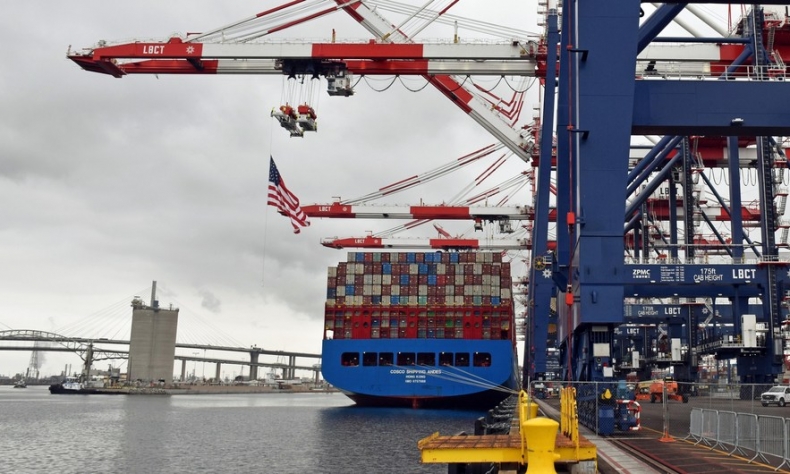
On October 10, China’s Ministry of Transport issued an announcement declaring that starting October 14, it will impose special port service fees on U.S. vessels. With this countermeasure, the U.S.-China rivalry in shipbuilding and maritime logistics has entered a new and more direct phase of competition.
The cause is clear: On April 17, the U.S. Trade Representative’s Office issued Section 301 investigation measures targeting China’s maritime, logistics and shipbuilding industries, announcing that starting October 14, additional port service fees will be levied on vessels owned or operated by Chinese enterprises, Chinese-flagged vessels and Chinese-built vessels. China’s countermeasure can be described as “a taste of their own medicine.”
America’s campaign against Chinese shipbuilding extends far beyond this. From the Section 301 investigation on “China’s Targeting the Maritime, Logistics and Shipbuilding Sectors for Dominance,” launched in April 2024, to Congressional legislation and hefty port fees proposed in early 2025, to the Donald Trump administration establishing a dedicated White House shipbuilding office in March, Washington’s determination is evident. Meanwhile, America has been building alternative alliances—most notably the Republic of Korea (ROK)’s July proposal for the $150-billion “Make American Shipbuilding Great Again” (MASGA) plan.
Washington is clearly determined to rewrite the rules of global shipbuilding. The question is: Can this approach, driven by political logic rather than economic principles, actually achieve America’s strategic objectives? Or will it merely shift costs to the world while ultimately backfiring?
A history of industrial decline
To understand America’s current anxiety, we must first revisit history. In the 1980s, the U.S. Government made what proved to be an extremely shortsighted decision: Gradually eliminating shipbuilding subsidies and treating the sector as a “non-strategic industry.” The direct consequence was America’s shipbuilding industry losing its cost advantage, unable to compete with rivals like Japan and the ROK.
But subsidy elimination was merely the surface cause—the deeper problem lay in American shipbuilding’s strategic drift. In terms of technology, U.S. companies stuck with energy-intensive steam turbine technology during the 1970s-80s, while Japan and the ROK had already shifted to more efficient diesel-engine technology. This technological gap translated directly into a cost disadvantage. Facing the wave of globalization, Japan and the ROK rapidly captured market share through technological innovation and economies of scale, while America failed to adjust its strategy in time.
Ironically, the U.S. tried to protect its domestic shipbuilding through protectionist measures like the Jones Act, the law that ensures America’s domestic sea routes are served exclusively by American-made, American-crewed and American-owned ships, but these policies actually drove up costs further and weakened competitiveness. The result was catastrophic—American shipbuilding shrank from 3 percent of global market share in the 1980s to just 0.13 percent today.
While China now commands over 70 percent of the global shipbuilding market, America’s primary response has been to cry “foul” rather than to fix its own industrial playbook. This blame-first mindset is the very reason it’s falling behind.
An expensive “re-industrialization” manoeuver
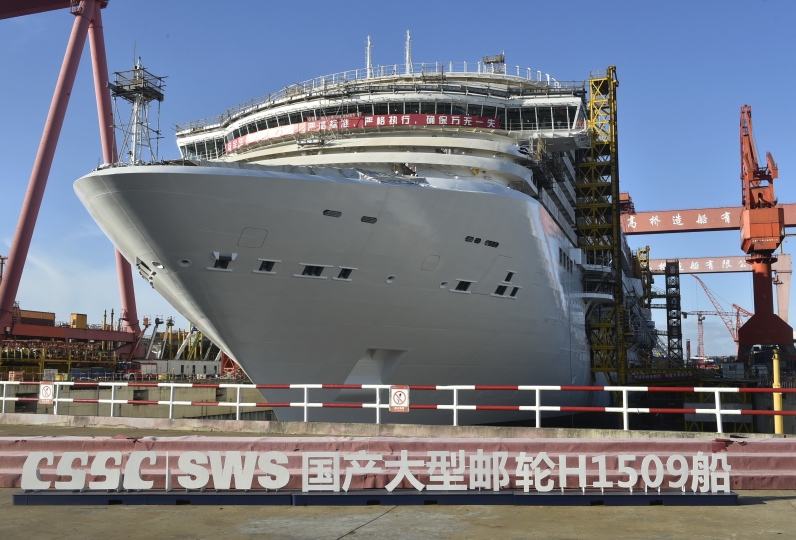
America’s new shipbuilding alliances with the ROK and Japan are ambitious, but the numbers can’t hide the structural reality. Soaring U.S. labor costs and a shortage of young technical talent, with under-30s making up less than 30 percent of the workforce, mean that even with massive investment, rebuilding a competitive industry would take over a decade.
To objectively assess the potential impact of U.S. policies, we need to understand how the current global shipbuilding landscape took shape. This wasn’t accidental, but the result of decades of sustained industrial evolution.
The industry’s transformation in Asia followed a clear trajectory. Starting in the 1980s with technology transfer and learning, the region gradually developed independent design capabilities through the 1990s, before establishing a strong foothold in global markets after 2000. This progression reflected both strategic government support for the sector and the competitive pressures that forced companies to continuously improve efficiency and quality.
Today’s shipbuilding landscape is characterized by comprehensive construction capabilities spanning the full spectrum from bulk carriers and container ships to liquefied natural gas (LNG) carriers and luxury cruise ships. The emergence of complete industrial ecosystems—featuring integrated supply chains, skilled technical workforces and sophisticated project management systems—represents decades of accumulated expertise that cannot be easily replicated or transferred in the short term.
More importantly, the evolution of Asian shipbuilding has fundamentally reshaped global trade economics. Cost-effective vessel production has reduced shipping costs worldwide, enabling more developing countries to participate meaningfully in international trade. From Africa to Latin America, from Southeast Asia to the Middle East, ports and shipping companies across diverse regions now have access to affordable vessels that connect them to world markets. The record-high new shipbuilding orders in 2024 reflect both market confidence in established production centers and the continued global demand for reliable, economical maritime transport services.
This industrial reality—built on efficiency, scale and decades of continuous improvement—forms the backdrop against which any reshaping efforts must be evaluated.
Another problem with U.S. policy is that it may hinder technological innovation. The shipbuilding industry is undergoing a green revolution—ammonia fuel, hydrogen fuel, hybrid power and other new technologies are emerging rapidly. Such innovation requires global technical cooperation and knowledge sharing.
China’s investment and progress in green shipbuilding technology is evident to all. In the first quarter of this year, Chinese companies secured a substantial portion of global alternative fuel vessel orders. Does excluding such technological capability truly serve the common global interest in addressing climate change?
Countermeasures: proportionate and restrained
Faced with America’s unilateral measures, China’s countermeasure can be said to be a forced response. China’s Ministry of Transport announcement explicitly states that the U.S. measures “seriously violate relevant principles of international trade and the Sino-U.S. maritime agreement, causing severe damage to maritime trade between China and the U.S.”
Notably, China’s countermeasure demonstrates both proportionality and restraint:
“Proportionality”?is reflected in the fact that China’s fee structure corresponds to U.S. measures, targeting vessels owned, operated, or built in the U.S. This is a typical “tit-for-tat” countermeasure.
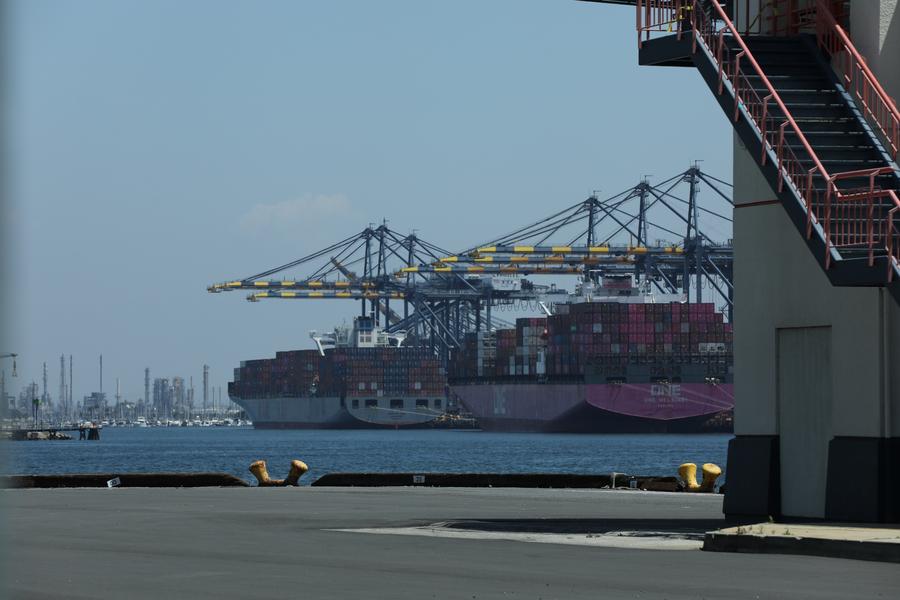
“Restraint”?is manifested in several aspects: First, fees are implemented in gradual phases, from 400 yuan (approximately $56) per net ton in October, progressively increasing to 1,120 yuan (approximately $157) in April 2028, providing a window for market and enterprise adjustment. Second, only one fee is charged per voyage for multiple Chinese ports, and no more than five voyages per year, avoiding any excessive burden.
This countermeasure approach sends a clear message: China does not wish to escalate confrontation, but will not remain indifferent to unilateralism. The question is, in this “eye for an eye” confrontation, who are the real losers?
Lessons and realities
History teaches us that attempts to use political means to oppose economic laws for extended periods rarely succeed. The 1980s American crackdown on Japan’s semiconductor industry didn’t prevent Asia from becoming the global electronics manufacturing center, nor did technical restrictions on Europe’s aerospace corporation Airbus prevent it from becoming a formidable competitor to American multinational Boeing.
In today’s era of deep globalization, industrial chains are highly integrated and technological innovation requires international cooperation. Artificially creating division and confrontation ultimately damages humanity’s common interests.
The current Sino-American confrontation in shipbuilding and shipping has begun producing chain reactions. Rising freight costs, increased supply chain uncertainty, obstructed green technology cooperation—these consequences affect not only China and the U.S., but ripple throughout the global economy.
America certainly has the right to formulate policies serving its own interests, but when these policies begin distorting global markets, raising consumer costs and hindering technological progress, the international community has reason to question their reasonableness. While China’s countermeasure is justified, escalating confrontation benefits no one.
At this critical moment, what we need is not more port fees and countermeasures, but more rationality—and restraint.
The author is an associate professor at Shanghai Jiao Tong?University’s China Strategy Institute of Ocean Engineering.