Beyond Tariffs: Unpacking China’s Economic Resilience
 Facebook
 Twitter
 Linkedin
 Google +
The U.S.-China trade relationship is not a zero-sum game but a complex web of interdependence.
The latest economic data released by China’s National Bureau of Statistics for April 2025 underscores the nation’s robust economic recovery and structural transformation. Industrial production surged by 6.1 percent year on year, propelled by breakthroughs in advanced manufacturing, from high-tech industries to cutting-edge equipment sectors. Simultaneously, the?service sector, a linchpin?of China’s modernization drive, expanded by 6.0 percent, fueled by robust growth in IT, finance, and digital innovation. These figures highlight a strategic pivot: China is no longer merely the world’s factory but a global powerhouse of technological and structural reinvention.
As the world’s second-largest economy navigates through complex global headwinds, its evolving consumer market and recalibrated trade relationships reveal a nation strategically positioning itself for the next phase of growth.
Domestic consumption, a critical growth engine, has demonstrated resilience. Retail sales reached RMB 3.7 trillion in April, up 5.1 percent year on year, with upgraded consumption categories – such as smart home appliances (an increase of 38.8 percent) and electric vehicles (up 38.9 percent) – leading the charge.
Meanwhile, tourism rebounded, with the May Day holiday seeing 314 million domestic trips generate RMB 180 billion in revenue, a testament to pent-up demand and service-sector vitality. Beneath these headline numbers lies a fundamental transformation: service consumption now represents approximately 43 percent of household outlay.
The growth of the service sector is manifested in diverse forms. Digital platforms report record-breaking bookings for niche experiences – from immersive theater performances to AI-guided heritage tours. Even traditional manufacturing sectors are pivoting, with home appliance giants like Midea and Haier reporting sizable revenue now coming from smart home services.

This transformation rides on twin engines: policy innovation and demand evolution. The national home appliance renewal program boosted retail sales by 4.6 percent during the first quarter, while 28 provincial regions issued digital consumption vouchers targeting service sectors.?However, structural challenges still remain. The urban-rural consumption gap remains large, and the proportion of consumption in China’s GDP lags by nearly 20 percentage points when measured against the average of Organization for Economic Cooperation and Development members. This promises great growth potential.
Innovative sectors like new energy and high-tech industries exemplify China’s industrial upgrading. Tesla’s Shanghai Gigafactory, a linchpin of its global EV strategy, achieved 95 percent localization in parts sourcing, while BYD expanded overseas production to Mexico and Hungary. Meanwhile, breakthroughs in quantum computing and AI-driven manufacturing – evidenced by Baidu’s ERNIE 4.0 model and Siasun’s humanoid robots, also testify the impressive progress of China in high-tech industries.
Gone are the days when China relied solely on low-cost manufacturing. Today, the country is betting big on “new quality productive forces” – a buzzword often associated with cutting-edge sectors like AI, electric vehicles (EVs), and quantum computing. Companies like BYD and DeepSeek symbolize this shift. These firms aren’t just innovating; they’re redefining industries.?
This tech push is backed by unprecedented R&D spending. In 2024, China’s research investments hit RMB 3.6 trillion, with 73 percent of patents now owned by corporations. The payoff? A surge in high-value exports: semiconductors, industrial robots, and 5G equipment now dominate China’s trade ledger, reducing its dependence on traditional sectors like textiles.
When the U.S. restricted exports of advanced chips, China didn’t crumble – it adapted. Domestic firms like Huawei and SMIC accelerated efforts to build a “semiconductor self-sufficiency ecosystem.”?
The recent high-level economic and trade talks between China and the United States in Geneva in May 2025 marked a pivotal shift from confrontation to dialogue, underscoring the necessity of cooperation amid escalating global uncertainties. The agreement to remove 91-percent additional tariffs and suspend a 24-percent “reciprocal tariff” reflects a pragmatic acknowledgment that neither nation can afford prolonged economic decoupling. This development, however, is merely a starting point. The deeper truth lies in the structural realities of global supply chains, China’s unparalleled industrial resilience, and the futility of the U.S. quest to revive domestic manufacturing through protectionism.
These steps, though temporary, highlight the mutual recognition that tariff wars harm both economies. For instance, U.S. tariffs on Chinese goods, which peaked at 125 percent, disrupted supply chains, causing product shortages and inflationary pressure in sectors ranging from consumer electronics to agriculture. Similarly, China’s retaliatory measures impacted American exporters, particularly in agriculture and advanced manufacturing.
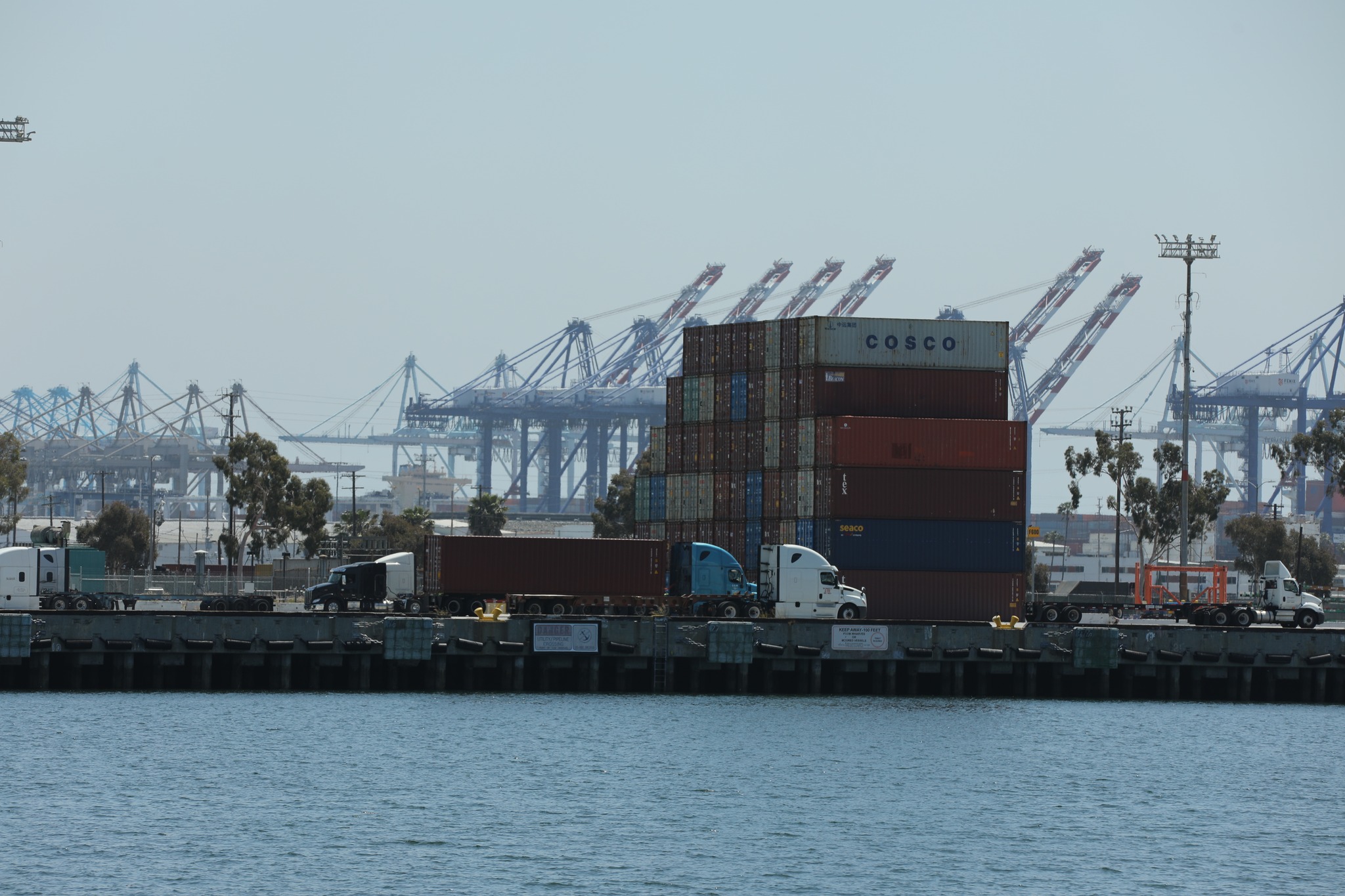
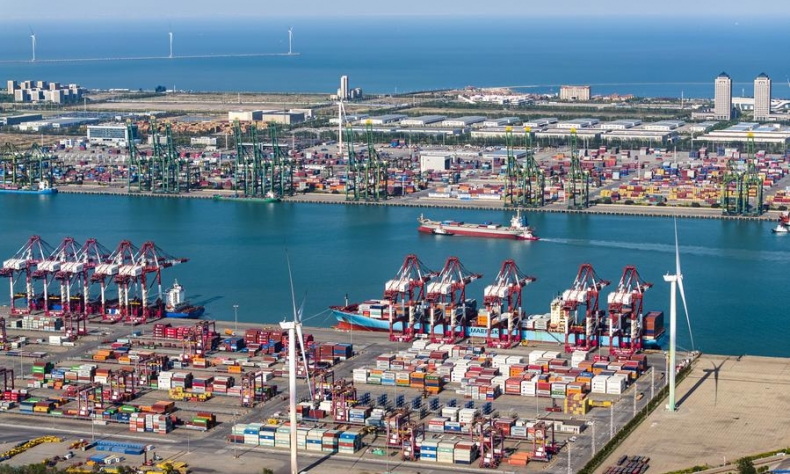
As the two sides implement the recently released joint statement, the China-U.S. shipping market has surged into a phase of unprecedented activity, marked by a container shortage as Chinese exporters face a deluge of orders from American buyers. Shenzhen’s Yantian Port is presently operating at full capacity, with bookings for U.S.-bound cargo space reaching record highs. This boom underscores the enduring and robust demand fueling bilateral trade, starkly contrasting the recent slump at the?Port of Los Angeles, where half-empty berths stood as a quiet reminder of trade disruptions.?
The recent tariff volatility also underscores the critical importance of policy stability for global supply chains, reinforcing the axiom that cooperation remains mutually beneficial for China and the U.S., while confrontation risks losses for both sides.
Decades of economic integration have deeply intertwined the two economies, with their trade structures complementing one another to create an inseparable and mutually vital supply-demand relationship. Today, the U.S. stands as China’s top export market and second-largest import source, while China ranks the third-largest export destination and second-largest import source for the U.S. These achievements, sustained even amid recent trade turbulence, highlight the remarkable resilience of economic ties between the two nations.
The U.S.-China trade relationship is not a zero-sum game but a complex web of interdependence. While the Geneva agreement provides temporary relief, the structural realities – China’s industrial resilience, America’s manufacturing constraints, and the globalized nature of supply chains – demand a paradigm shift. As Nobel laureate James Heckman?noted, closing down trade is the opposite of what is needed for a dynamic society. The path forward lies not in tariff wars but in harnessing cooperation to address shared challenges, from climate change to technological innovation. In this endeavor, China’s economic vitality and the U.S. capacity for reinvention can together forge a more stable and prosperous global order.