Solving the Economic Conundrum
 Facebook
 Twitter
 Linkedin
 Google +
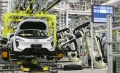
The government aims not to merely react to market conditions, but to actively intervene and lead in areas where market forces alone may not serve the country’s long-term strategic interests.
The debate over market forces versus government regulation is a question in economic?management that all countries face. Beijing Review recently spoke to Li Hongjun, an?associate professor at the Institute of Economics at Beijing-based Tsinghua University, and?Margit Molnar, head of the China-Morocco-Bulgaria Desk at the Economics Department of the?Organization for Economic Cooperation and Development (OECD) in Paris, France, to share their?observations of the relationship between government and market. Edited excerpts of their conversation follow:
Beijing Review: When China says, “We will see that the market plays the decisive role in resource allocation,” what does that mean?
Li Hongjun:?When China says this, it is referring to a hybrid system where market forces (the “invisible hand”) have a key influence on the economy, but the government (the “visible hand”) retains an active role in guiding and shaping those forces. The sentence reflects China’s evolving approach to its socialist market economy, which blends market-driven mechanisms with state control.
In this approach, China aims to let market forces largely determine prices, supply, demand and the allocation of resources within the economy, which means that businesses and individuals can operate based on profit motives and competition, as is the case in capitalist economies. In this sense, the “invisible hand” is allowed to function in areas like production, distribution and consumption.
However, while these market forces play a decisive role, the government still actively intervenes in key sectors, regulates the market and sets strategic priorities in industrial policies, technological development, and infrastructure.
The “invisible hand” is not acting entirely on its own, but coexists with the “visible hand.” The market influences resource allocation, but the government ensures that these forces align with broader economic and social objectives.
What role should the government play exactly?
The government should play a more efficient and targeted part in guiding economic development, ensuring social stability and addressing market failures. The government neither steps back completely nor replaces or overburdens market mechanisms.
In China’s socialist market economy, the government sees a role for itself in five main areas: macroeconomic management, the regulation of key sectors, correcting market failures, social stability and development, and innovation and industrial policies.
In its role as a macroeconomic manager, the government is responsible for formulating overall economic strategies, such as fiscal and monetary policies, and managing economic growth, inflation and employment. It guides the economy toward long-term development goals, often through five-year plans.

In regulating key sectors, it generally allows market forces to operate freely in most areas but intervenes more actively in sectors considered essential for national security, public interest or strategic development such as energy, infrastructure and technology. It plays a role in safeguarding these industries from excessive market volatility or foreign influence.
The government also aims to correct market failures by stepping in where the market might fail, such as in environmental protection, public services like healthcare and education, and addressing income inequality and regional development disparities.
The government also views itself as responsible for ensuring social stability and development through economic policies that prevent widespread inequality, unemployment or unrest. This involves setting up social safety nets, managing public resources and guaranteeing access to basic services.
Finally, the government actively shapes the country’s economic trajectory by setting industrial policies, promoting innovation, research and development, and modernizing industries.
President Xi Jinping has called for an equal emphasis on both government and market to better leverage their roles. How can this be achieved?
I think the government aims not to merely react to market conditions, but to actively intervene and lead in areas where market forces alone may not serve the country’s long-term strategic interests. President Xi has used the term youwei zhengfu, which means “a well-functioning government.”
As part of guiding development, the government sets strategic goals and national priorities that might not emerge naturally through market competition alone. It plays a long-term role in directing resources toward key industries, for example, artificial intelligence, green technology and high-speed rail. It also aims to ensure this development is sustainable.
Instead of letting the market self-regulate entirely, the government aims to create balance proactively. A well-functioning government intervenes when necessary to prevent speculative bubbles, monopolies or environmental degradation, and it ensures that market activities align with national interests.
Part of this approach also includes offering incentives like subsidies, tax breaks and direct investments to promote innovation and industrial development in sectors deemed essential for future growth, even if those sectors aren’t immediately profitable in the free market.
Better leveraging the roles of both government and market suggests finding a balance between the two. The market is effective when it efficiently allocates resources and drives innovation through competition. The government can be considered well-functioning or proactive when it steps in to ensure that this market-driven growth aligns with national goals and social equity.

What is your take on the market-government relationship?
Margit Molnar:?This is not an easy question because all governments face this question: You need to strike the right balance between market and government. The government is not supposed to leave the market alone. The government is supposed to provide all the regulatory frameworks so that the market can function properly. This includes, for instance, product market regulation, labor market regulation, and financial market regulation. So all markets need to be regulated, but they should not be overregulated.
Where the market functions, where the market has the capacity that it can function, then it’s better to leave things alone. But, according to economic principles, when a market fails, then the government intervenes. The government also steps in in supporting innovation as this is one of the areas that, without government support, would see underinvestment.
This is a typical area where every government intervenes. But the question is about how to support and what types of innovation to support. It’s a matter of to pick or not to pick. If the government decides where innovation money goes without [first] looking at the merits of the potential innovation, that can lead to waste. So that should be the market’s decision. It’s better not to decide beforehand where the research money should be allocated but instead look at the research proposal itself and the potential innovation that the project might generate, and then decide the allocation based on each individual project’s merits.
Is it true that Western countries are valuing the role of the government more than before?
Recently, other countries, including OECD member countries, have placed an increased emphasis on the government’s role, especially in supporting industries. [The OECD is a 38-member international organization based in France. The majority of its members are high-income economies—Ed.] This is [typically] related to manufacturing. For instance, the [COVID-19] pandemic played an important role and security concerns are one of the major drivers. Many governments don’t want to be in the same situation that they faced during the pandemic where they were unable to acquire the necessary vaccines or other necessary materials.
So they want to make sure that they have their own product manufacturing or a secure source—just in case. This has led to an increased emphasis on industry policies.
But, in general, I would say the allocation of resources is more based on market forces and the regulation of markets is much more liberalized.
Some Western countries deny China market economy status. Do you think China is a market economy?
I am an economist. I’m not a political person. So I can only answer this from an economic point of view. China is moving toward a more and more market-based economy, but we cannot say that it’s completely market-based. But at least the allocation of resources is increasingly based on market forces and that’s what matters, only this process needs to be accelerated.