Blue Carbon, Big Potential
 Facebook
 Twitter
 Linkedin
 Google +
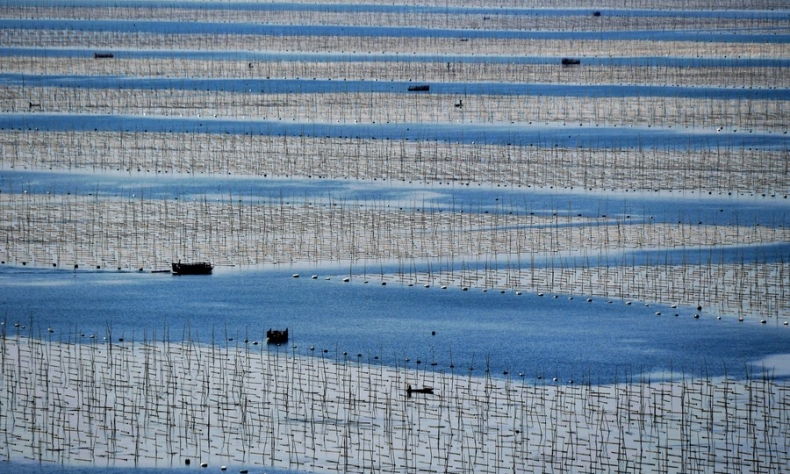
Besides becoming a key player in emission mitigation, China is now drafting domestic standards to boost carbon trading at home and meet its zero carbon goal.
About?55 percent of the carbon absorbed by the global natural ecosystems each year is attributable to marine organisms, who collectively form what is known as the marine carbon sink.
“When we talk about the ocean carbon sink, we are talking about carbon exchange happening in the water body. Blue carbon is a term in a narrower sense. It mainly refers to the carbon captured and stored by coastal wetland ecosystems formed by mangroves, salt marshes, and seagrass beds,” explained Chen Luzhen, a professor at the College of the Environment and Ecology at Xiamen University. Chen has been working in this field for many years.
“China is one of the few countries in the world that has mangroves, salt marshes, and seagrass bed ecosystems,” added Chen, who is also deputy secretary-general of the Mangrove Ecology Committee of the Ecological Society of China. Blue carbon resources are not only beneficial to the ecological environment, but also pose great business potential.
From degradation to restoration
Coastal wetlands cover almost the entire coastline of China. According to the second national wetland resources survey conducted from 2009 to 2013, China has over 53 million hectares of wetlands, accounting for four percent of the world’s wetland area, ranking first in Asia and fourth in the world.
“Coastal wetland ecosystems provide an effective way to reduce greenhouse gas emissions as they can store huge amounts of carbon for a long period of time with high efficiency,” Chen said. An assessment report released by UN Environment Programme and other international organizations in 2009, titled Blue Carbon: The Role of Healthy Oceans in Binding Carbon, found that mangroves can sequester carbon five to seven times more efficiently than terrestrial systems. Besides capturing carbon dioxide from the air through leaf photosynthesis, mangroves also absorb organic carbon from seawater through their roots.
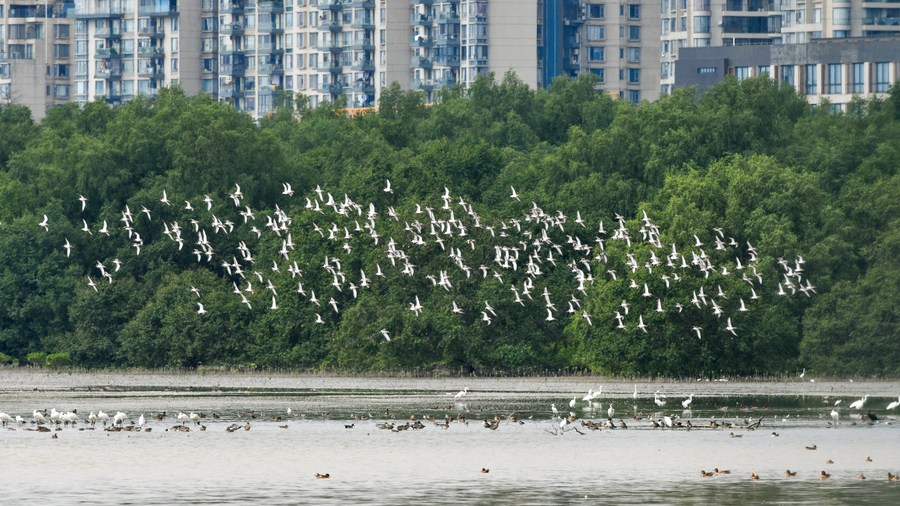
According to Chen, in addition to helping achieve the goals of carbon peaking and carbon neutrality, the blue carbon ecosystem is also a hot topic for biodiversity conservation. Mangroves, salt marshes, and seagrass beds provide a perfect habitat for birds, fish, shrimp, crabs, and shellfish.
In the past, coastal wetlands were severely degraded due to human activities. After decades of protection and restoration, this has been curbed.
According to the Special Action Plan for Mangrove Protection and Restoration (2020-25), China will build and restore 18,800 hectares of mangroves by 2025. In 2022 a special campaign was launched to contain the proliferation of the invasive plant salt marsh cordgrass (spartina alterniflora) to ensure the ecological safety of coastal wetlands. By the end of October 2023, 30,000 hectares across the country were cleared of the grass.
Since 2016, substantial progress has been made in coastal restoration, with over 1,600 kilometers of coastline and over 50,000 hectares of coastal wetlands restored. Today, China is one of the few countries where mangrove wetlands are growing, thanks to vigorous protection and restoration. “These are future blue carbon resources with great potential,” Chen said.
Homegrown methodology
In 2021, the stage was set for China’s first blue carbon trading project. A mangrove afforestation project was approved in Zhanjiang, Guangdong Province in south China, to plant over 380 hectares of mangrove with the objective of reducing 160,000 tons of carbon emissions by 2055. When the project was certified to have absorbed 5,880 tons of carbon dioxide, the credit was bought by the Beijing Entrepreneurs Environmental Protection Foundation, clinching China’s first carbon trading.
The Zhanjiang Mangrove National Nature Reserve, the largest reserve of its kind in China, today covers an area of over 9,960 hectares.
The coastal wetland system stands out among marine carbon sinks and is the first to be traded, thanks to relatively mature measurement schemes. Since the dual carbon goals were proposed in 2020, many local markets are exploring blue carbon trading, which urgently needs methodology. According to Chen, the international Clean Development Mechanism and Verified Carbon Standard were mainly used in China, but they lacked local parameters, and some calculation methods were more suitable for tropical regions.
To develop a wetland carbon sink methodology, Chen’s team, who have more than 20 years of research experience, started from the provincial carbon sink market. “We referred to international methodologies and used extensive data from more than 20 field monitoring sites along the coast to formulate carbon sink measurement parameters,” she said. Their methodology uses more stable parameters that can reduce the cost of project development, thereby encouraging more buyers to enter the market.
Currently, mangrove carbon sequestration projects are included in the China Certified Emission Reduction (CCER) scheme, which allows companies in specific fields to trade their carbon reduction credits. Salt marsh and seagrass bed projects too are players in the local carbon sequestration market.
In Chen’s view, it will take time to have all coastal wetland ecosystems included in the CCER scheme, but it is technically achievable. “Blue carbon sinks are traded at a higher unit price because the value of blue carbon ecosystem goes far beyond money. Making full use of the market mechanism for sustainable protection of wetland ecosystems is a win-win for all parties.”
School-enterprise alliance
For their salt marsh and seagrass bed methodological study, the team received strong funding from technology giant Tencent. “A growing number of enterprises are paying attention to carbon reduction and assuming their social responsibility,” Chen pointed out.
The Jiangsu Yancheng Wetland and Rare Birds National Nature Reserve in east China has well-preserved coastal mudflats and wetlands. It is also an important stop for many rare and endangered birds while migrating from north to south. About 600 red-crowned cranes spend the winter there every year.
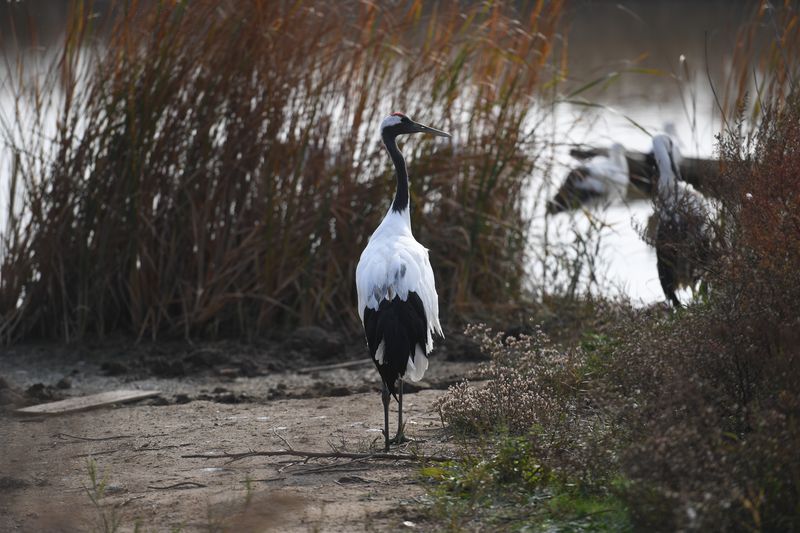
In 2023, Tencent held a signing ceremony for a blue carbon ecosystem carbon sink trading deal with the reserve, which was China’s first salt marsh blue carbon trading project. According to calculations as per Chen’s methodology, the first batch of carbon dioxide emission reductions by the reserve will be 1,926 tons. Tencent purchased this credit to offset its carbon emissions generated in its daily business operation and promote carbon neutrality in its operations and supply chain.
Tencent also bought all carbon credits generated by the 28-hectare seagrass bed restoration project in the Hepu Dugong National Nature Reserve in Guangxi Zhuang Autonomous Region in south China. This methodology too was compiled by Chen’s team. “With this, Xiamen University has taken the lead in formulating methodology of carbon credit calculation for three key blue carbon ecosystems,” she said proudly.
The researcher’s ambit has expanded both geographically and sector-wise. Although she has years of experience in scientific research, Chen had little contact with the economic world. But the research on carbon sink trading methodology expanded her horizon, leading to technology being marketized and scientific achievements becoming social resources, serving national goals, and improving ecological, economic and social benefits.
The Industrial Bank (IB) has long-term cooperation with Xiamen University in the fields of digital economy, green economic development, and marine carbon sink. The IB and Xiamen Airlines jointly launched “carbon neutral” air tickets, which encourage consumers to learn about and voluntarily participate in carbon reduction actions. The first batch of 50,000 “carbon neutral” air tickets were sold out within a month.
Xiamen University provides scientific support and acts as a matchmaker. This is not limited to carbon reduction, but also extends to biodiversity conservation and community development to promote high-quality blue carbon concept in China. “As ecologists, we aspire to healthy and sustainable development of ecosystems,” Chen remarked.
Since environmental issues are global, Chen and her team has long-term cooperation with mangrove research institutions in many Belt and Road countries. They jointly carry out research on technical support and comparison of data.
During President Xi Jinping’s visit to Malaysia in 2013, an agreement was signed to establish a campus of Xiamen University in Malaysia under the Belt and Road Initiative. Chen teaches at the Malaysia campus where she also collaborates with local scholars.
Bangladesh is home to the world’s largest mangrove forest — the Sundarbans. Chen visited it in 2018, and Xiamen University signed a cooperation agreement with Khulna University in Bangladesh the following year. “In addition to research cooperation, we also train international students with funding from the China Scholarship Council,” Chen said.
In 2019, Sourav Bagchi Ratul, a Khulna University student, was sponsored to pursue his PhD degree under Chen. During his research, the young Bangladeshi man published an article on the significance of mangrove afforestation in high-salinity areas of Bangladesh. “This year, we have continued the cooperation,” Chen added. Her laboratory also has students from Indonesia and Myanmar.