Sustaining the Nation
 Facebook
 Twitter
 Linkedin
 Google +
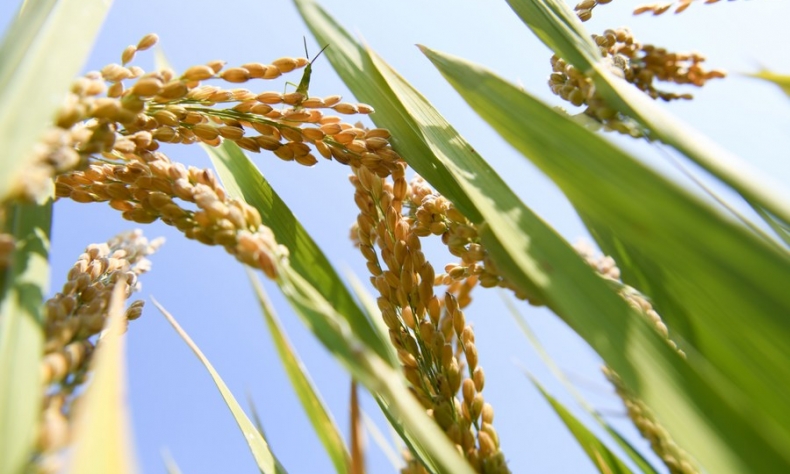
By sharing knowledge, providing aid and supporting international institutions, China plays a big role in promoting global food security and agricultural development.
The Chinese ethos has long held that “food is of primary importance to the people,” reflecting the nation’s enduring focus on food security as a central strategic element. China’s first food security law, which came into force on June 1, modernizes this principle.
The country is enhancing its food production capacity and risk resilience through technological innovation and systematic improvements. At the same time, it’s strengthening grain reserve management and national food security measures. These actions ensure China’s food supply while contributing to global food security, demonstrating a sense of international responsibility.
‘Greater’ approaches
On March 6, 2022, Chinese President Xi Jinping introduced the “Greater Food” approach at a joint meeting of national political advisors from the agriculture, welfare and social security sectors attending the Fifth Session of the 13th National Committee of the Chinese People’s Political Consultative Conference, the country’s top political advisory body. In addition to grain, an effective supply of various foods including meat, vegetables, fruits and aquatic products should also be guaranteed, Xi said.
The “Greater Food” approach broadens traditional food security definitions, emphasizing balanced nutrition and healthy lifestyles. It establishes a comprehensive, sustainable food supply system focusing on efficiency, safety and environmental protection throughout the production-consumption chain.
Modern technologies, including smart farming, biotechnology and information technology, boost precision and sustainability in agricultural production. These technological applications facilitate intelligent control systems for crop pests and diseases. Cold chain logistics ensures freshness during processing while smart storage systems maintain safety. Traceability systems provide consumers with clear information about their food sources’ quality. Technological innovation has become a key driver in the implementation of the “Greater Food” approach.
The “Greater Agriculture” concept complements the “Greater Food” approach, emphasizing comprehensive agricultural development. China’s high-standard farmland construction has yielded impressive results, with approximately 66.7 million hectares developed as of late 2022. This achievement has contributed considerably to total grain output, which has remained stable at over 650 million tons for seven consecutive years, with a per-capita grain possession of 483 kg a year, exceeding the international food security standard of 400 kg per capita a year. “High-standard farmland” refers to “fertile, pollution-free and high-yielding land, linked by irrigation, drainage ditches and field roads,” its official definition states.
Progress has been made in utilizing saline-alkali land. China has an estimated 100 million hectares of land characterized by high salinity and alkalinity, which proves challenging for conducting traditional agriculture.
By May 2023, China had developed over 40 practical technologies across eight major systems, including soil desalination and organic salt treatment through soil biology. These advancements have promoted the cultivation of more than 50 types of salt-tolerant crops, gradually reducing the total area and proportion of severely affected lands.
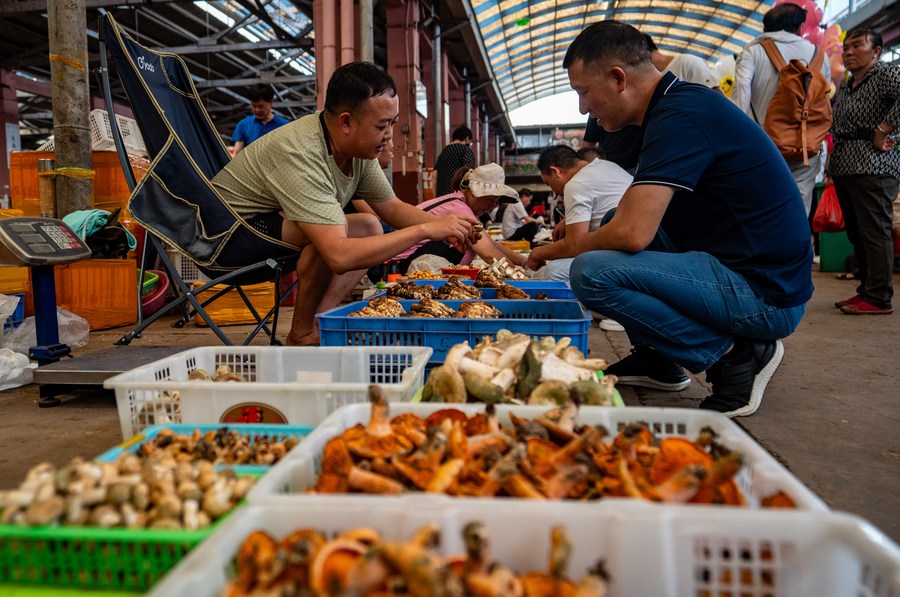
Microbial technology has emerged as a new frontier in agriculture. The edible fungi industry exemplifies this progress, with production increasing more than 700-fold since the 1980s. Consequently, its output value has soared, making it the fifth largest crop-growing industry in China.
Implementing the “Greater Agriculture” concept requires leveraging all national resources. Forests, grasslands and water bodies, which have yet to be fully utilized, hold potential for expanding food production.
This holistic approach to agriculture aligns with China’s strategy to maximize food security and agricultural sustainability, tapping into diverse ecosystems to enhance overall agricultural output and resilience.
Bolstering food security
China’s multifaceted approach to food security combines technological innovation, policy support, international cooperation and robust food reserves. This comprehensive strategy is transforming Chinese agriculture and bolstering national food security.
Modern agricultural technologies now revolutionize farming practices, ensuring sustainable and stable grain production. Precision farming techniques, such as smart irrigation systems and bio-breeding, have significantly increased crop yields while enhancing resilience against climate change.
For instance, with the help of agricultural devices powered by the Internet of Things, such as soil moisture sensors or crop monitoring systems, precision agriculture technologies can display real-time data such as air humidity, light exposure and soil moisture content, as well as manage agricultural machinery and plots. In Youyi County, Heilongjiang Province in northeast China, an experimental base features an advanced smart agriculture system. Covering more than 3,333 hectares of farmland, this platform demonstrates the potential to increase crop yields by more than 5 percent. In Xinjiang Uygur Autonomous Region in northwest China, drip irrigation has increased the average wheat yield by 15 percent while saving 40 percent more water compared to traditional methods.
The Chinese Government’s supportive policies, including subsidies to crop-growing farmers, minimum purchase prices and agricultural insurance schemes, provide a solid foundation for food security by ensuring farmer income stability and encouraging grain cultivation. For example, in 2020, the Central Government established a subsidy standard for rice cultivation at approximately 1,500 yuan ($217.5) per hectare.
International cooperation plays a crucial role in China’s food security strategy. By participating in global grain trade agreements and projects, the country diversifies its domestic supply chain and contributes to global market stability. Since joining the UN Food and Agriculture Organization (FAO)’s South-South Cooperation Program in 2008, China has donated $70 million to support over 70 projects in 30 countries. One example is the Sino-Brazilian project, which helped increase soybean and corn yields in Brazil while promoting local technological?development.
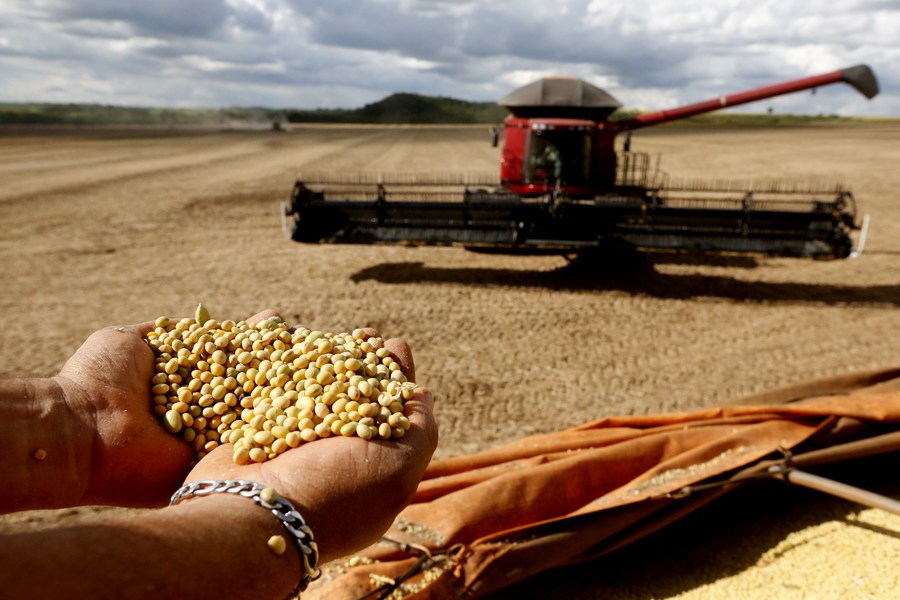
China’s grain reserve system, one of the world’s largest, serves as a buffer against market fluctuations and natural disasters. With hundreds of billions of kilograms in rice and wheat reserves, this system provides rapid response capabilities during emergencies, as demonstrated during COVID-19, when it ensured stable supplies and prevented panic buying and price fluctuations.
Global contributions
China’s commitment to global food security extends beyond its borders through international cooperation and assistance. The country shares its advanced agricultural expertise with countries in need, enhancing their food production capabilities and self-sufficiency.
This support takes various forms, such as the establishment of agricultural technology demonstration centers, dispatch of agricultural experts and provision of technical training. By 2020, China had set up over 30 agricultural technology demonstration centers in Africa alone. These initiatives have yielded solid results, as exemplified in Tanzania, where local rice yields increased by nearly 50 percent following the implementation of high-yield cultivation techniques taught at a Chinese-aided agriculture technology center.
China’s aid extends to emergency food assistance in response to natural disasters or conflicts. In 2018, the country provided 100 million yuan ($14.5 million) worth of emergency food aid to African countries facing severe droughts and famines. The scope of this assistance is global, with over 50 countries across Asia, Africa and Latin America receiving emergency food aid from China in 2020. Furthermore, in 2021, China donated $3 million to the UN World Food Programme to support its global emergency food relief projects.
On the multilateral front, China actively participates in global food security governance. It contributes to developing international food security standards, helps stabilize the global food supply chain and promotes the evolution of global food security governance systems. China’s financial contributions to international organizations underscore its commitment. For instance, in 2019, it donated $5 million to the FAO to support global food security and nutrition projects.
These efforts demonstrate China’s holistic approach to food security, combining domestic policies with international cooperation to address this critical global challenges. By sharing knowledge, providing aid and supporting international institutions, China plays a big role in promoting global food security and agricultural development.
Xiao Junyong is executive director of the Center for Science,?Technology and Human Rights at the Beijing Institute of Technology; Cao Chuyue is a research associate at the center.