Industrialization Promotes Global Common Development
 Facebook
 Twitter
 Linkedin
 Google +
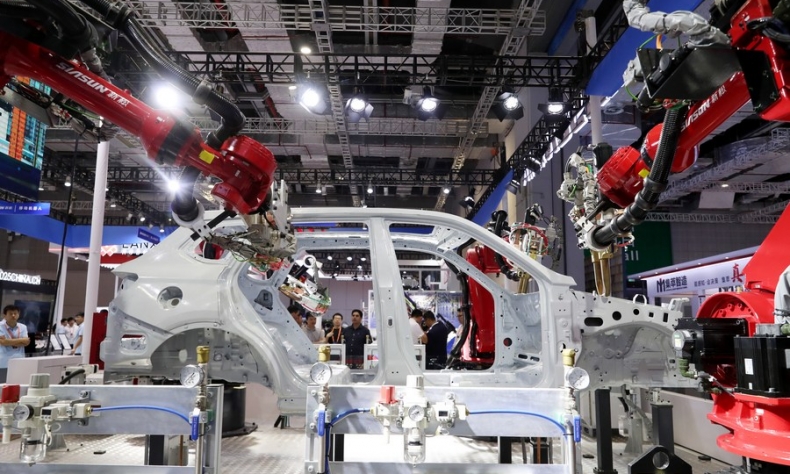
Promoting industrialization in developing countries requires not only the efforts of developing countries themselves, but also the solidarity and cooperation of the international community as a whole.
The major shifts and regrouping the world today is experiencing bring uncertainty and instability to global development. Delivery of the UN 2030 Agenda for Sustainable Development, meanwhile, remains slow. In response to such global challenges, China has put forward the Global Development Initiative, which lists industrialization as a key area for international cooperation.
World history shows that industrialization has been an effective driver of economic growth through its creation of job opportunities, promotion of technological innovation, and raising of national income. The UN 2030 Agenda accords industrialization systemic importance, because it wields positive impact, through both direct and indirect means, on the progress of at least 10 sustainable development goals.
However, industrialization in the developing world has been inadequate and imbalanced over the past three decades. As the Global Development Report 2023 points out, when measuring industrialization levels in 2021 by GDP per capita, among 110 developing countries, 31 were at the pre-industrialization level and 25 at that of early industrialization. Advancing industrialization in developing countries is crucial to reducing the global development deficit and promoting global common development.
However, various factors hinder industrialization in developing countries.
Shortage of critical resources. Many developing countries lack reliable and affordable infrastructure, such as roads, communications, sanitation, and electricity. Most of them hence face difficulty in attracting foreign capital or offering adequate credit facilities to local enterprises. Although their labor resources are abundant, due to limited education and training the skills of many workers fall short of those required for industrial development.
Underdeveloped business environment. According to World Bank Doing Business 2020 data, among 190 economies, the average ranking of Asia’s developing countries was 95th, that for Latin America’s was 114th, and that for those in Africa was 137th, while the average ranking for developed countries was 39th. In a less-than-satisfactory business environment, establishing firms, paying taxes, enforcing contracts, and trading across borders tend to be costly and time-consuming, which has negative impact on industrialization.
Insufficient support from the international community. Owing to weak industrial foundations and limited domestic markets, developing countries need external support to commence industrialization and integrate with the global industrial system. So far, the scope and enforcement of global governance has failed to provide developing countries with sufficient support. The World Trade Organization is one example. Although it provides developing countries with special and differential treatments, including tariffs, subsidies, market access, and technology transfers, developing countries still struggle to achieve industrialization, due to shrinking policy space and insufficient capabilities.
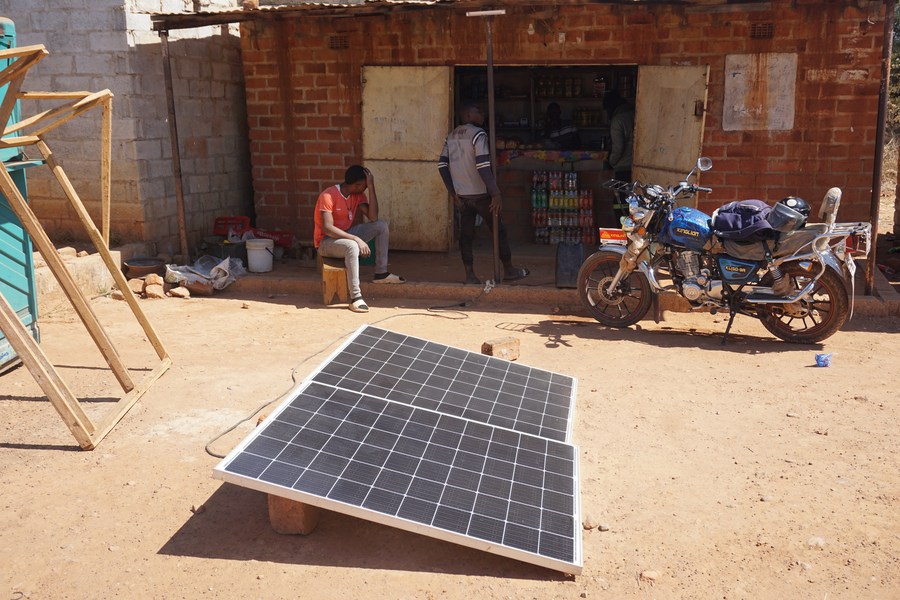
Pressing challenges brought by new upheavals. The COVID-19 pandemic and geopolitical tensions have changed the traditional global industrial layout, thus imposing ever fiercer and more complicated competition on developing countries. The energy crisis and climate change have speeded up green transformation, which has, in turn, placed more environmental restrictions on industrialization. The digital divide, moreover, has weakened the traditional comparative advantages of cheap land and labor, which makes developing countries’ industrialization even more difficult.
Promoting industrialization in developing countries, therefore, requires not only the efforts of developing countries themselves, but also the solidarity and cooperation of the international community as a whole.
First, the promotion of industrialization in developing countries should be based on local contexts. Developing countries should attach far greater importance to industrialization for their economic development, and formulate industrial strategies compatible with national conditions. Based on resource endowments and the laws of the market, they should objectively assess, carefully select, and focus on developing comparatively competitive industries. They may then concentrate their limited resources on building special economic zones and industrial parks, improving infrastructure facilities, and facilitating the ease of doing business, thus to nurture a business-friendly environment.
Second, a more reasonable paradigm of international industrial division should be shaped. Opportunities that the UN 2030 Agenda, the Belt and Road Initiative, and the Global Development Initiative present can be fully leveraged to help developing countries improve local manufacturing capacity, regional market integration, and international industrial linkages. Developing countries and developed countries should cooperate on the security, digitization, and green transformation of global industrial chains and supply chains, thus to ensure development of the global industrial system in an efficient, resilient, and eco-friendly way.
Third, financial, technological, and trade support to developing countries should be strengthened. The role of such multilateral institutions as the UN, the G20, the World Bank, the Asian Infrastructure Investment Bank, and the New Development Bank should be brought into full play in efforts to provide the developing world with financial support for infrastructure and industrial development. Global climate governance should be advanced gradually, taking into consideration the industrialization needs of developing countries, and offering technological support for green transformation. WTO reforms and negotiations should be promoted toward greater justice, and safeguard the policy space for developing countries.
Fourth, knowledge exchanges and mutual learning on multiple levels should be enhanced. International development agencies, think tanks, enterprises, and universities should be encouraged to play their role in advancing knowledge cooperation on industrial development. Through various forms of activities, government officials and industrial practitioners can also spread development concepts and best practices, thus helping the knowledge sharing process. Entrepreneurship and vocational training in developing countries should be promoted to help their enterprises and workforces adapt to new technologies and industrial transformation.
Chen Xiao is an associate research fellow at the Center for International Knowledge on Development. Xu Zhaoyuan is a research fellow and deputy director general at the Research Department of Industrial Economics, the Development Research Center of the State Council.