China’s New Law on Foreign Relations
 Facebook
 Twitter
 Linkedin
 Google +
The main purpose here was to create a comprehensive and unified legal framework for better managing new challenges, filling in holes where necessary and communicating this clearly to everyone.
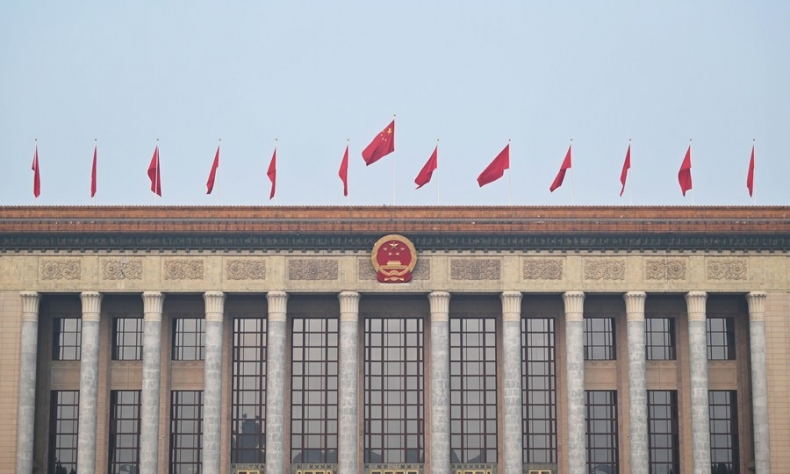
The Standing Committee of the 14th National People’s Congress, China’s top legislature, on June 28 passed a new foreign relations law outlining the country’s aims and policies in foreign affairs and protecting its right to impose “counter and restrictive measures” against acts that “harm its sovereignty, national security and development interests,” an official with the Legislative Affairs Commission of the NPC Standing Committee told Xinhua News Agency when answering key questions about the law on June 30.
The new law became effective on July 1.
Why the law is necessary
We live in a new era of increasing geopolitical tensions that have continuously undermined an already weak “soft law” phenomenon that has become increasingly common in international relations in recent years. “Soft law” emerged as it became more and more difficult for states to agree upon and then independently ratify legally-binding treaties, particularly in areas unrelated to finance and trade, but who could reach some general but non-binding agreement on principles, declarations and codes of conduct that were still useful for managing problems like climate change or rights-of-passage in contested waters.
Unfortunately, the same pressures that made it difficult to enact binding treaties also contributed to steadily expanding and exploiting various grey zones generally associated with malign competition. Tit-for-tat, some countries resorted to haphazard rule-making to advance or react to aggressive agendas. Consequently, quite a bit of international law as well as the laws governing how states independently engage in foreign relations now teeter on a precipice, assailed by unilateralism and hegemonic behaviorism, threatening the sovereignty and security of many nations.

From the Chinese perspective, this new unilateralism and hegemonism is exemplified by what it views as a “bullying,” United States-led, long-arm jurisdiction. As China has risen as a major power, the U.S. has increasingly attempted to undermine Chinese security and sovereignty, especially during the Trump and Biden administrations, instigating a trade war, imposing sanctions on officials from mainland China and Hong Kong Special Administrative Region, enacting the CHIPS and Science Act in 2022 and strong-arming allies into shared compliance, and by some accounts encouraging separatism and unrest in Hong Kong, Tibet and Xinjiang autonomous regions and Taiwan Province, including selling advanced weapons to and stationing American military personnel in the latter.
Equally alarming are the unprecedented, U.S.-led economic sanctions imposed on Russia given the conflict in Ukraine. Many countries view this as an American weaponization of the global financial system and have moved to build countermeasures. Nevertheless, the U.S. has already blacklisted more than 1,300 Chinese entities, alleging Russian military ties, human rights violations and other issues. In many well-known cases, including Chinese?multinational?technology?corporation Huawei as well as TikTok, the parent company of which is Beijing-based Bytedance, these attacks appear driven by anti-China fearmongering in tandem with the strategic objectives of hamstringing Chinese technological development and economic competitiveness.
What the law includes
China’s new Law on Foreign Relations was created in part to help counter these growing challenges.
While described by some as China’s first such law, in fact most of its provisions were already on the books in one form or another. The main purpose here was to create a comprehensive and unified legal framework for better managing new challenges, filling in holes where necessary and communicating this clearly to everyone.
Altogether the law contains six chapters and 45 articles. While all of these are important, I will only address chapters I, II and IV here. Chapter I spells out the general scope and principles of China’s foreign policymaking, including responsibilities for leadership–“the centralized and overall leadership of the Communist Party of China?(CPC),” which is generally interpreted as being?the Standing Committee of the?Political Bureau?of the CPC Central Committee–?and execution?—?several noted but primarily the State Council and key organs like the Ministry of Foreign Affairs.
In Article 1, key principles include contributing to broader efforts that aim to “protect and promote the interests of the Chinese people;?build China into a great modernized socialist country;?realize the great rejuvenation of the Chinese nation;?promote world peace and development; and?build a community with a shared future for mankind.”?Article 4 asserts that China “keeps to a path of peaceful development and adheres to the fundamental policy of opening to the outside world and a strategy of opening-up for mutual benefit,” and that it?“observes the purposes and principles of the Charter of the United Nations, and endeavors to safeguard world peace and security, promote global common development, and build a new type of international relations.” It states that China is “committed to settling international disputes by peaceful means and opposes the use of force or threat of force in international relations, hegemonism and power politics.”
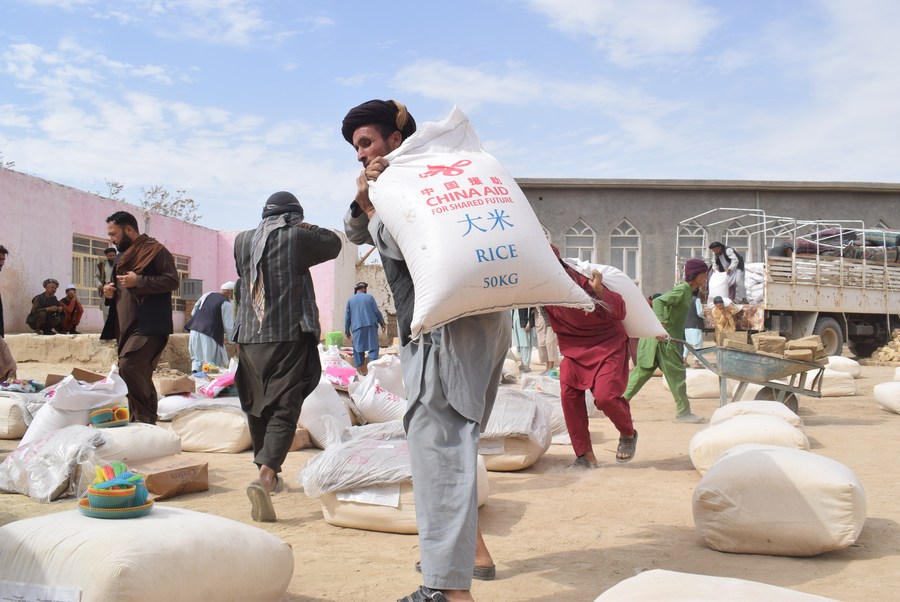
Chapter II spells out additional principles and values, including those associated with multilateralism, mutual respect and inclusiveness, and promoting solidarity with developing countries. Article 19 again returns to the importance of the UN, stating that China “upholds the international system with the United Nations at its core, the international order underpinned by international law, and the fundamental norms governing international relations based on the purposes and principles of the Charter of the United Nations.” Further, Article 20 notes China’s support for UN peacekeeping operations and?“[respect for] the territorial integrity and political independence of sovereign countries concerned.
Article 22 states that China “respects and protects human rights” and is “committed to the principle of universality of human rights and its observance in light of the realities of countries.” Article 23 “calls on all countries to rise above national, ethnic and cultural differences and uphold peace, development, equity, justice, democracy and freedom, which are common values of humanity.” Article 25 says that China “plays an active part in global environmental and climate governance and endeavors to strengthen international cooperation on green and low-carbon development; it is committed to jointly enhancing global ecological conservation and building a global system of environmental and climate governance that is fair, equitable, cooperative and beneficial to all.”
It’s with Chapter IV that the truly new provisions come into view, with the aim of deterring and responding defensively to attacks, including sanctions. Article 32 reads: “The State shall strengthen the implementation and application of its laws and regulations in foreign-related fields in conformity with the fundamental principles of international law and fundamental norms governing international relations. The State shall take law enforcement, judicial or other measures in accordance with the law to safeguard its sovereignty, national security and development interests and protect the lawful rights and interests of Chinese citizens and organizations.” Article 33 states, in part: “The People’s Republic of China has the right to take, as called for, measures to counter or take restrictive measures against acts that endanger its sovereignty, national security and development interests in violation of international law or fundamental norms governing international relations.” Article 35 returns again to the UN, noting?Chapter VII of the UN Charter, which empowers the UN Security Council to determine threats to peace and measure to be taken to oppose them, to note that China will only recognize sanctions approved by the Security Council.
The author is a professor of politics and international relations at East China Normal University in Shanghai and a senior research fellow with the Institute for the Development of Socialism with Chinese Characteristics at Southeast University and the Hainan CGE Peace Development Foundation.