Evergreen Exchange
 Facebook
 Twitter
 Linkedin
 Google +
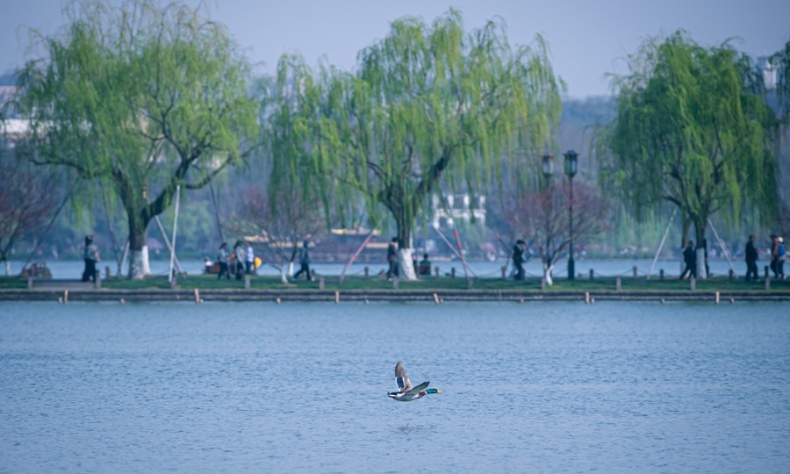
We, as humans, live in nature, from nature and therefore with nature.
For the past 45 years, Alfred Pitterle, a professor of silviculture at the University of Natural Resources and Life Sciences, Vienna, Austria, has engaged in China-EU programs with a focus on forest management. In 2008, he was awarded the Friendship Award, China’s highest award for professionals?from overseas who have made significant?contributions to the country’s development, in recognition of his commitment to promoting China-EU ties in ecological?protection. In an exclusive interview with Beijing Review reporter Peng Jiawei, Pitterle shared his views on how China and Europe can work together to build a global eco-civilization, in which humans and nature harmoniously coexist. Edited excerpts from their conversation follow:
Beijing Review: You have been working with China on afforestation for over 40 years. How did this decades-long process of collaboration first begin? What keeps you coming back to China?
Alfred Pitterle: It all began in 1978, a year in which China and my home country Austria initiated a seed exchange program. Seeds of local tree species from both countries were planted into each other’s soil. And this was the very beginning of my connections with China.
Diplomatic relations between China and Austria were officially established in 1971. And in 1978, the same year the seed exchange took place, China launched its reform and opening-up agenda. These events together triggered a decades-long process of scientific collaboration between the two countries.
Also in 1978, two national?ecological engineering programs started in China. One is the Three North Shelterbelt Program, a 72-year project of afforestation in the country’s northern regions. The second is a program aimed at protecting and restoring the ecosystems of the Yangtze River [the longest river in China]. These programs have set up a larger framework for the many China-EU conservation projects that followed.

I myself have participated in many of these projects. In 1992, the huge and long-term Sino-German forest rehabilitation program started. With massive funding from both countries, the program covers some 30 projects. And I have been involved since the first project in Shaanxi Province, northwest China, in 1992.
And now, we are trying to analyze the lessons learned through these 40 years of work: What has been implemented? What was successful and what failed?
Take poplar trees as an example. When the Three North campaign began, poplars were chosen for their capacity for rapid growth. But now, the wafting catkins from these trees, which can cause sore throats and asthma in spring, have become an unwelcome byproduct of that feat. It is not a mistake, as many people would think, but a stage in a development, a lesson to be learned.
If you split the Chinese word for crisis,?weiji, in half, you will get two characters. One is danger and the other is opportunity. The synthesis of these two characters suggests a simple truth about crisis, which is that the problems we are now facing also provide us with opportunities to learn from the past and set better standards for the future.
Beijing Review: How can China and the EU both benefit from continuous collaboration on ecological protection?
Alfred Pitterle: Europe is advanced in renewable energy, waste management and many other sectors related to ecological protection. Part of the reason is that our industrial development started much earlier than China’s and stretches over a longer time. Austria’s first forest law, issued by the former Austrian Empire, came into force in 1852. Therefore, we now have some 170 years of experience in sustainable forest?management.
What’s more, everything in Europe has been managed on a relatively small scale. The entire European area is more or less the same size as China. And when everything runs on a smaller scale, you can identify the effect of your activity at a very early stage and incorporate that into your next round of trial.
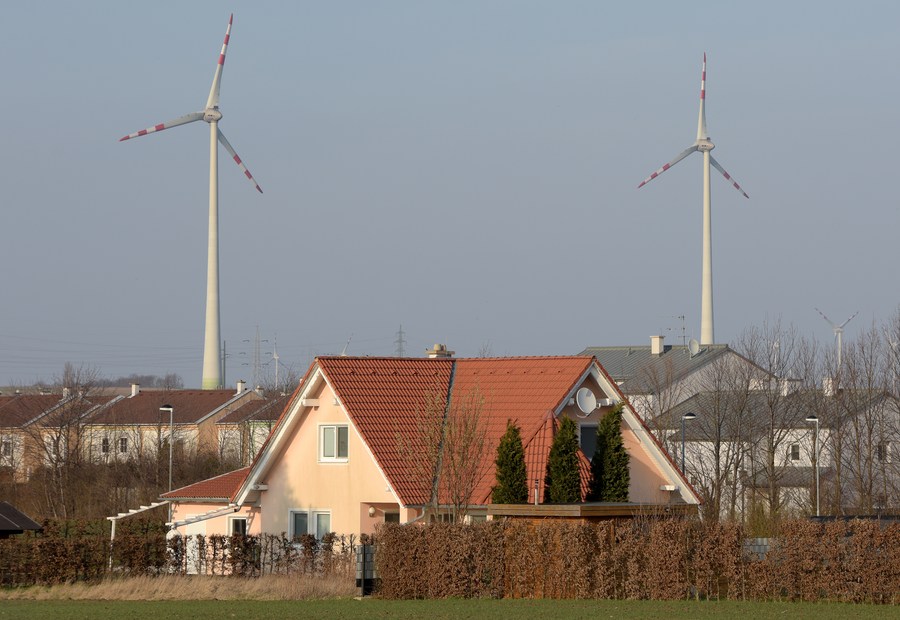
On the other hand, though China is a latecomer, it is very effective in meeting its goals. The ability to react fast and to build and scale things very quickly is something that we in Europe have to learn. Once a decision is made, it will be implemented very efficiently. And that’s a great complement to what we bring.
What China also possesses is an ancient wisdom that values harmony and balance. Yin and yang, the pillar concepts of Taoism, see the world not in black or white, but in black and white. This is the key to understanding the relationship between human civilization and nature. Like yin and yang, humans and nature are intricately linked and always working together toward a universal whole.
Beijing Review: How does this ancient Chinese philosophy that you just mentioned relate to China’s sustainable development?
Alfred Pitterle: China has put forward an eco-civilization model. The word eco-civilization is an excellent term that captures the essence of yin and yang, one that encapsulates the unity between human activities and ecosystems. We, as humans, live in nature, from nature and therefore with nature.
In general, China’s sustainable development is a dynamic process. It is a nonstop evolution and a permanent search for the balance between humans and their surrounding environment.
China has already taken many steps in this eco-civilization. If you delve into history, there has been, first of all, the planned economy system, which constrained human use of natural resources within certain boundaries. Then the market opened up. After some years, we began to shift toward a more human-centered approach to development, as we saw the human being behind all the money and material. Still, we are not at the end of this development because there is another big player we depend on. And that is nature. Therefore, we end up in an ecological and social-based market economy, a model that reflects the harmony between economic growth, personal wellbeing and sustainability.
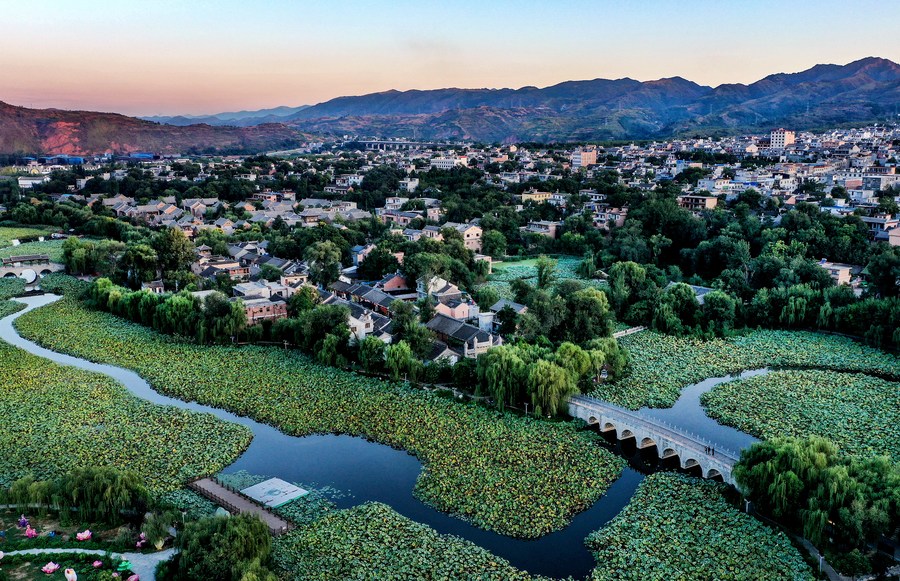
The term eco-civilization not only sums up the relationship between humans and nature, but also highlights the importance of peace among humans themselves. We are dealing with a global problem that cannot be solved by a single person or country. There is no escape for us as a global civilization.
And now is the time to wake up from our previously narrow-sighted life to a wider vision, which often reminds me of traditional Chinese medicine. Western medicine is very effective for treating specific diseases. Traditional Chinese medicine, on the other hand, deals with the whole body. We need to adopt this holistic approach toward repairing our damaged ecosystems and then everyone can contribute.
Beijing Review: China is committed to peaking its carbon emissions before 2030 and achieving carbon neutrality before 2060. What specific measures can China take to achieve these goals?
Alfred Pitterle: First of all, awaken public awareness. To do that, you have to have demonstration zones. An example is Dongying, a city in Shandong Province that is home to both one of the country’s largest oil fields and an extensive wetland ecosystem. According to an article in Global Times, in recent years, by deploying eco-friendly energy production and storage strategies, Dongying is transforming from a “city of oil” to a “city of wetlands.” The city’s transition suggests a new way forward for other petroleum resource-based cities.
What China also needs, is a balanced management system for cities and villages. This type of system is called circular management or cradle-to-cradle management. It is a strategy that mimics the regenerative cycle of nature itself, in which wastes are broken down to be used in a cyclical manner. That means all resources should be recycled carefully and used effectively.
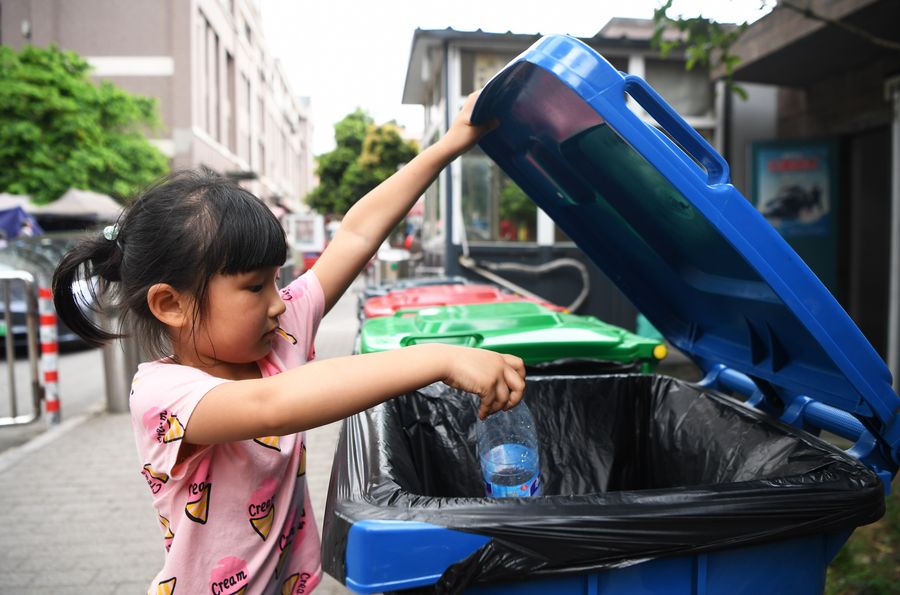
To make this happen, you have to set up measurable criteria and that is where certificates come into play. Everything, from manufacturing and tourism to getting a haircut, has to be certified for its ecological footprint, which is the total amount of greenhouse gases generated by our actions.
Last but not least, to change nature or to influence nature needs a long time. We cannot switch off natural laws. What we can do is to try to steer natural processes into a direction suitable for the sustainable development of human societies. This may take over 100 years. But we have to base our current policies and financing on what the future may look like.
We have to take care of the inter-relationships of forests, water bodies, the atmosphere and everything else. Therefore, we need to put all of these into mathematical algorithms. These algorithms will then show you exactly how ecosystems work.
The compilation of this massive network of data requires countries to act together with unity. The whole of Europe is open to building lasting collaboration with China. And I’m sure that our cooperation will be sound and smooth in the future.
Of course, progress will not be as fast as we expect it to be. This is also a Chinese philosophy—don’t jump; take small steps. All of the things we envision must come step by step.