From Codependency to Interdependency
 Facebook
 Twitter
 Linkedin
 Google +
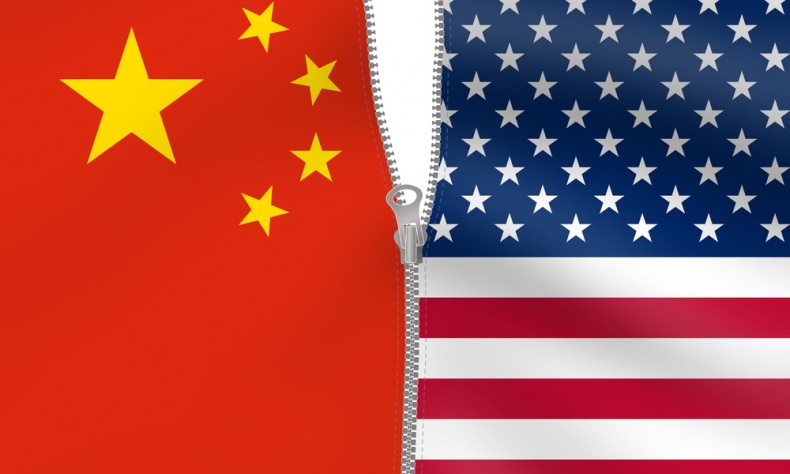
The Sino-American conflict is in the danger zone. We can, and must, do better—before it is too late.
Stephen Roach,?senior fellow at Yale Law School’s Paul Tsai China Center, and former Chairman of Morgan Stanley Asia and the firm’s chief economist, has been engaging in China-U.S. relationship observations for over 25 years. His new book Accidental Conflict: America, China, and the Clash of False Narratives, published last November, takes this increasingly contentious debate to a new level. Recently, in an exclusive interview with Beijing Review reporter Zhang Shasha, he shared his views on the current state of play between the two countries and outlined his solutions to address their “from-bad-to-worse” conflict.
Beijing Review: The past decades have seen China-U.S. relations grow and change. What are the key features of different stages of the bilateral relationship?
Stephen Roach:?I divide the timeline of the modern relationship into three distinct parts. The first part captures the 1970s and 1980s, and the early part of the 1990s. I call that “a marriage of convenience” where both countries turned to each other after their own periods of economic, political and social turmoil. They came together—sparked initially by the visit of President Richard Nixon to China in 1972 and then reinforced by Deng Xiaoping’s visit to the U.S. in 1979. They offered each other important answers to difficult growth problems, with U.S. demand for Chinese goods providing benefits both for U.S. consumers and Chinese producers.
Then the relationship deepened into the second stage, which I call “codependency,” where the U.S. and China drew important benefits from deepening U.S. demand for Chinese products, but also from Chinese demand for U.S. treasuries and Chinese demand for American-made exports. China emerged as the third largest and most rapidly growing export market for American manufacturers. That phase lasted from the late 1990s through the middle of the first decade of the 21st century.
The third phase is the one that we’re in right now—a “conflicted codependency,” where both nations still depend on each other, but frictions have emerged over economics, trade, technology and geostrategic security. Both nations are taking issue with one another’s behavior and posture around the world. That’s a very difficult period, one that has now turned into the early stages of a cold war. The conflict is going from bad to worse.

Your new book, Accidental Conflict, features “false narratives” held by China and the United States. How did these narratives affect the relationship?
I’ll give you one example for both the United States and China. On the U.S. side, we blame China for our trade deficit. Yes, we have a big trade deficit. But last year we had a trade deficit with 106 different countries. We have a multilateral trade deficit because our domestic savings rate is far too low. When we want to grow without saving, we import surplus savings from abroad and run a big balance of payments deficit that triggers a multilateral trade deficit. If we want to fix the trade deficit, we have to boost domestic savings. The false narrative is to blame China for a problem largely of our own making.
China, on the other hand, blames the United States for containing its development. The fact is that the U.S. is trying to contain China on many fronts, but that is not what is constraining its development as many Chinese people are led to believe. China needs to focus more on a consumer-led rebalancing of its economy rather than blaming its own economic setbacks on U.S. containment.
You are a sharp China observer and a world-renowned economist. How, in your view, should China proceed toward achieving a high-quality development?
China has been delivering on job creation and real wage increases, but has lacked the necessary reforms to boost the social safety net for retirement and healthcare that keeps households, in particular, predisposed toward fear-driven precautionary saving, which inhibits discretionary consumption. Moreover, total factor productivity (TFP, which compares total outputs relative to the total inputs used in production of the output) has been declining since 2011. That inhibits the efficiency dividends which could be recycled into improvements in the social safety net.
This is a big problem for China’s growth prospects going forward. The combination of falling TFP, together with a peaking of the working-age population that occurred in 2015 and will continue for the foreseeable future in China, is a very worrisome development. When economies experience declining working age population, and they want to maintain rapid growth, supported by domestic demand, they need to increase the growth rate of productivity. That is not happening in China today.

China certainly needs a lot of investment to support urbanization and to catch up from earlier underinvestment that was very much evident in the aftermath of the Cultural Revolution (1966-76). But it’s been too much of a good thing recently. And the excess investment that has led to declines in TFP has also been accompanied by an unusually weak share of consumption in the Chinese economy.
China is putting a high priority this year on TFP efficiency and domestic demand. But I am afraid that I need to stress that China has given high priority to these same issues for most of the last 15 years. Will that priority make a difference in the years ahead? The jury is out.
In your opinion, what does a healthy and sustainable China-U.S. relationship look like?
The last part of the book addresses the need to shift from codependency to interdependency. Codependency is a psychological term that refers to humans who depend too much on one another and lose sight of strengthening themselves from within. Both the United States and China need to do a better job of strengthening themselves from within. When they do that, they will be more secure in dealing with one another. Then they can enjoy a more constructive interdependency where they rely on one another to support their growth agendas rather than to create conflicts that compromise their growth agendas.
You’ve proposed several measures to restore trust and interdependence between the two countries. Could you please briefly introduce these measures and explain why?
This is a book about conflict. It’s a worrisome topic to say the least, but I end the book with three recommendations on how to resolve the conflict—a potential happy ending for an otherwise worrisome tale.
The first thing that must need to be done is to take steps to rebuild trust between our two countries. We’re not going to solve anything if we don’t begin to recapture trust. This won’t happen overnight. I am in favor of starting with small steps—reopen consulates that have been closed in both countries, relax visa requirements and restart very popular and successful foreign exchange programs.
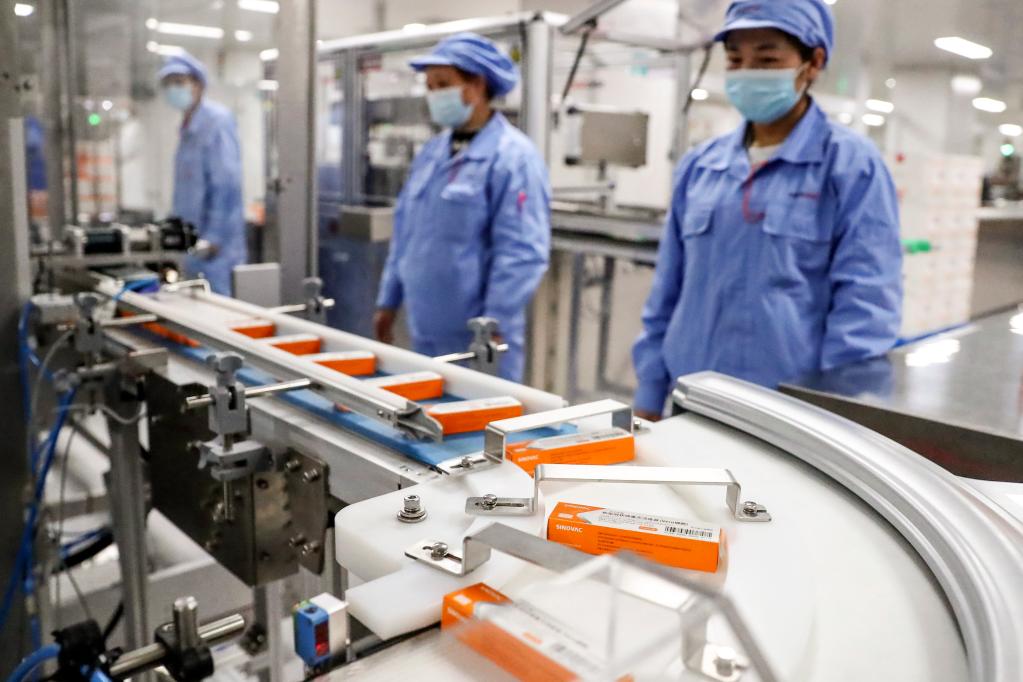
And then we have huge issues that are in our mutual interest to resolve—climate change, global health, especially COVID-19 and cybersecurity. These are big issues, much harder to resolve, but ultimately the greatest opportunity for trust building.
Second on my conflict resolution agenda addresses the need to lower investment barriers in both nations by adopting a bilateral investment treaty. We were close to concluding negotiations on that in 2016 before the election of President Donald Trump. We need to go back and finalize that deal. That is a pro-growth arrangement that opens up both markets to multinationals from both countries and generates jobs and good will.
Finally, I recommend establishing a new mechanism to provide a stronger architecture of engagement—a U.S.-China Secretariat. This should be a full time, permanent organization, staffed equally by Chinese and American professionals, located in a neutral country like Switzerland. The secretariat should work fulltime on all aspects of the relationship—from economics and trade to state-supported subsidies of industrial and services activity to dealing with difficult issues like health, climate, cyber and even human rights.
The secretariat would also have the ability to monitor existing and new agreements. When the inevitable disputes arise, there would be a dispute resolution mechanism built into the secretariat to help troubleshoot and resolve problems without escalating into worrisome conflict.
So that’s my plan—build trust, lower investment barriers and establish a new U.S.-China Secretariat. The Sino-American conflict is in the danger zone. We can, and must, do better—before it is too late.