BRI and GDI Underpin Sino-Arab Development
 Facebook
 Twitter
 Linkedin
 Google +
To thrive in a world that is undergoing changes not seen in a century, China and Arab states must enhance solidarity and collaboration, set a good example for South-South cooperation, and make more contributions to human progress and prosperity.
China and Arab states are all developing countries. Combined, they account for one-sixth of the world’s land mass, one-fourth of the world’s population, and one-eighth of the world economy. Therefore, they face the shared mission and responsibility of advancing global cooperation and development.
Arab states are standing at a historical crossroads. Internationally, long-time interference by Western countries in their regional affairs has deprived them of many development opportunities. Domestically, fragile economic structures and social turbulences have plunged the states into economic distress. The average GDP growth of economies in the Middle East was around 4.1 percent in 2021, below the global average for that year. Countries in the region face mounting pressure to recover their economies and ensure people’s livelihoods.
For China, it is confronted with serious external challenges and risks in its new journey of building a great modern socialist country in all respects. China’s economy faces great headwinds as the United States adopts a policy of strategic competition toward China, the world economy is fluctuating, and the COVID-19 continues wreaking havoc around the world.
During his visits to Kazakhstan and Indonesia in September and October 2013, Chinese President Xi Jinping put forward initiatives that later developed into the Belt and Road Initiative (BRI). When addressing the general debate of the 76th session of the United Nations General Assembly in September 2021, he proposed the Global Development Initiative (GDI). BRI and GDI are a continuity of his conception of building a community with a shared future for mankind, and offer possible solutions to the difficulties facing humanity.
Arab states have actively supported and participated in these initiatives proposed by China. By early 2022, 20 of them had signed agreements on cooperation with China under the BRI, aligning the initiative with their national development plans, such as vision 2030 plans of Egypt, Saudi Arabia, the United Arab Emirates, Qatar and Bahrain, Jordan 2025, Algeria’s Vision 2035, Morocco’s Mohammed VI Tangier Tech City Project, and Iraq’s reconstruction list of 157 projects. Marked progress has since been made in Sino-Arab cooperation in the fields of financial connectivity, nuclear energy, new energy, and aerospace, and in the development of a Health Silk Road.
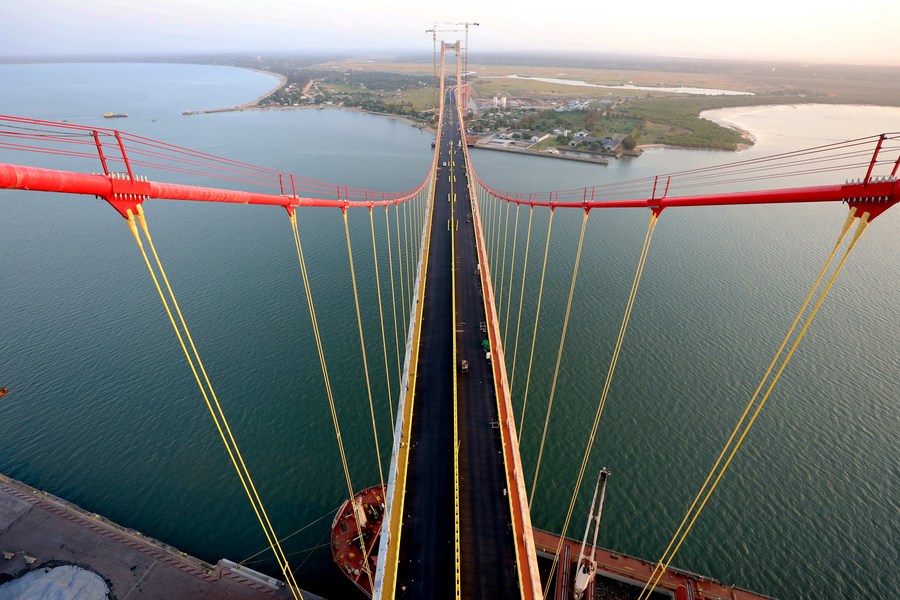
In support of the GDI, multiple Arab states have joined the Group of Friends of the GDI. On May 10, 2022, the China-Arab Friendship Organization Dialogue, co-hosted by the Chinese People’s Association for Friendship with Foreign Countries and the Federation of Arab-China Friendship Associations, adopted a declaration, calling for parties concerned to act on the GDI, safeguard world peace with practical actions, and uphold the common interests of the Chinese and Arab peoples.
China and Arab states have maintained a long tradition of supporting each other on development issues. Back in December 1963, the then Chinese Premier Zhou Enlai proposed the five principles underpinning China’s relations with African and Arab countries during a visit to the then United Arab Republic, a sovereign state in the Middle East from 1958 to 1971.
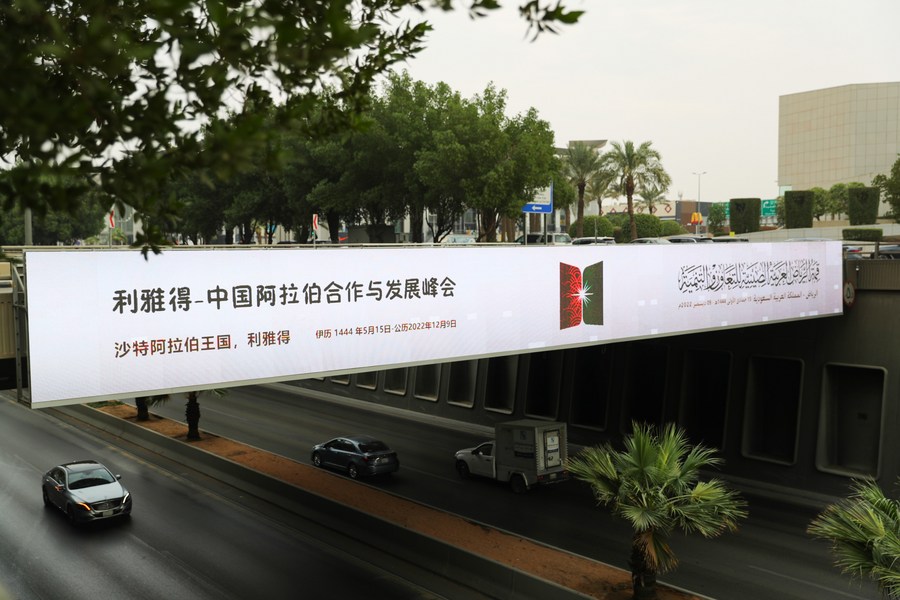
In the new era, the two sides should follow the guidance of the GDI to enhance cooperation, advance common development, and build a Sino-Arab community of a shared future.
Three areas should be prioritized.
The first is economic cooperation. China and Arab partners should implement the GDI in the Arab region and advance high-quality cooperation under the BRI.
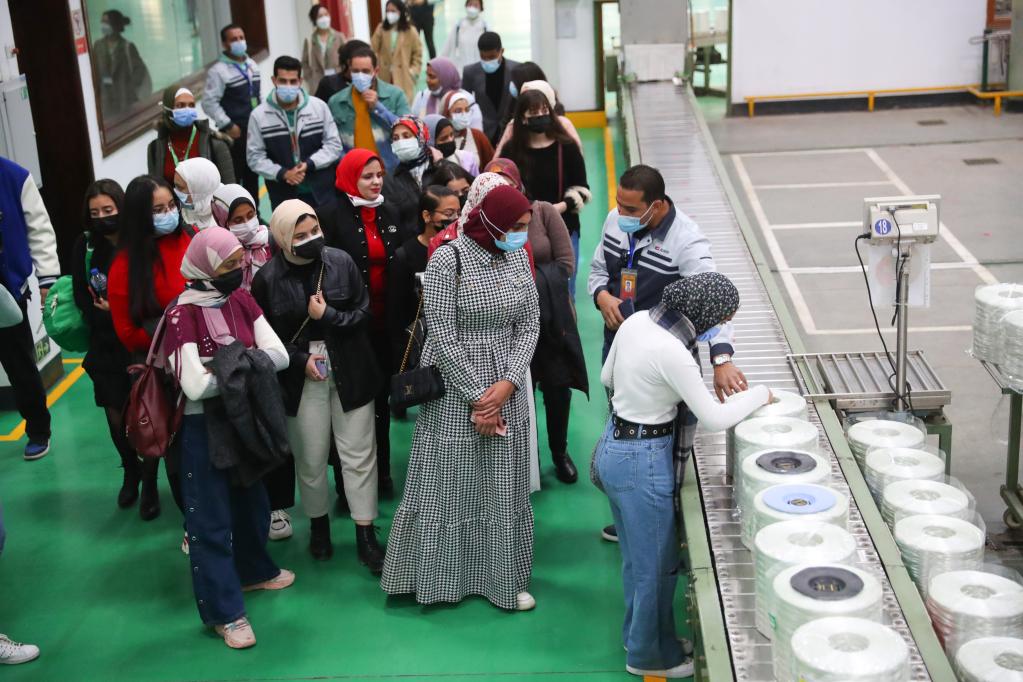
For cooperation on industrial capacity, China should increase greenfield investment to help promote industrialization in the Middle East and increase local employment. For example, China can combine its technological strength in the photovoltaic industry with that of Arab states in cost, and increase production in the region.
More efforts should be made to advance negotiations for free trade agreements with the Gulf Cooperation Council (GCC) and individual Arab states. The agreements, after being signed, will enhance trade facilitation between China and Arab states, particularly in non-energy sectors. Once established, the China-GCC Free Trade Zone will make RMB-denominated oil pricing a reality and advance the process of internationalization of the Chinese currency. With oil exports settled in RMB and foreign direct investment in China by overseas capitals in RMB, China and the GCC will be able to conduct cooperation across the petroleum industrial chain.
The second is sci-tech cooperation. China and Arab states should seize the opportunities brought by the new round of scientific and technological revolution and industrial transformation to narrow the technology gap. According to a report published by the U.S.-based Institute for Scientific Information, between 1980 and 2019, the Middle East’s share in Web of Science indexed articles rose from two percent to eight percent, with half coming from researchers of Saudi Arabia, Egypt, Tunisia, Algeria, and the United Arab Emirates. Meanwhile, China’s share soared from shy of one percent to 25 percent.
With such remarkable progress in science and technology on both sides, China and Arab states should step up technology transfer and innovation cooperation under the Belt and Road Science, Technology and Innovation Cooperation Action Plan and the Sino-Arab science and technology partnership program. These efforts can span the fields of information technology, modern agriculture, smart manufacturing, environmental protection, and especially digital economy.
The third is about exchanges of experience in state governance. China and Arab states should intensify exchanges of expertise and experience in national development. A key reason why developing countries have been lagging behind in development is their lack of independence in terms of institutions, education, and science and technology. Without a development path fit for local conditions, many countries have long been entangled in the vicious cycle of political unrest, social upheaval, and economic debacle.
In general, developing countries are weak in sci-tech innovation, and have to rely on foreign brains for progress. Exchanges among these countries are, therefore, of special importance for advancing South-South cooperation and accomplishing the UN 2030 Agenda for Sustainable Development.
When addressing the High-level Dialogue on Global Development on June 24, 2022, Chinese President Xi Jinping said that China would set up a platform for experience and knowledge sharing on international development, a global development promotion center, and a global knowledge network for development, for the purpose of exchanging experience in state governance.
China and Arab states have both garnered extensive development experience from their respective time-honored history. China is the world’s largest developing country. With its own development, China offers peer developing countries with an alternative path to modernization, and has attracted great attention from other members of the developing world, including those in Arab regions. China is ready to share its governance experience with all other developing countries. It also values the experience of Arab states. For example, China can learn from Dubai’s experience in running its free trade zone.
In summary, to thrive in a world that is undergoing changes not seen in a century, China and Arab states must enhance solidarity and collaboration, set a good example for South-South cooperation, and make more contributions to human progress and prosperity.
Wang Jian is director of the Institute of International Relations, Shanghai Academy of Social Sciences.