The Communist Party of China, the Belt and Road Initiative and African Development
 Facebook
 Twitter
 Linkedin
 Google +
The African dream of industrialization and development can be achieved especially with the contributions of China.
The Communist Party of China (CPC) albeit not the oldest party in the history of world politics and democratization waves as enunciated by Huntington, the party has emerged with the most felt impact in its magnitude and influence not only in China but all over the world. It is this significant influence that has allowed the party to assume prominence and increase in follower-ship to be one of the world’s political parties with the largest follower-ship. It has about 97 million members today.
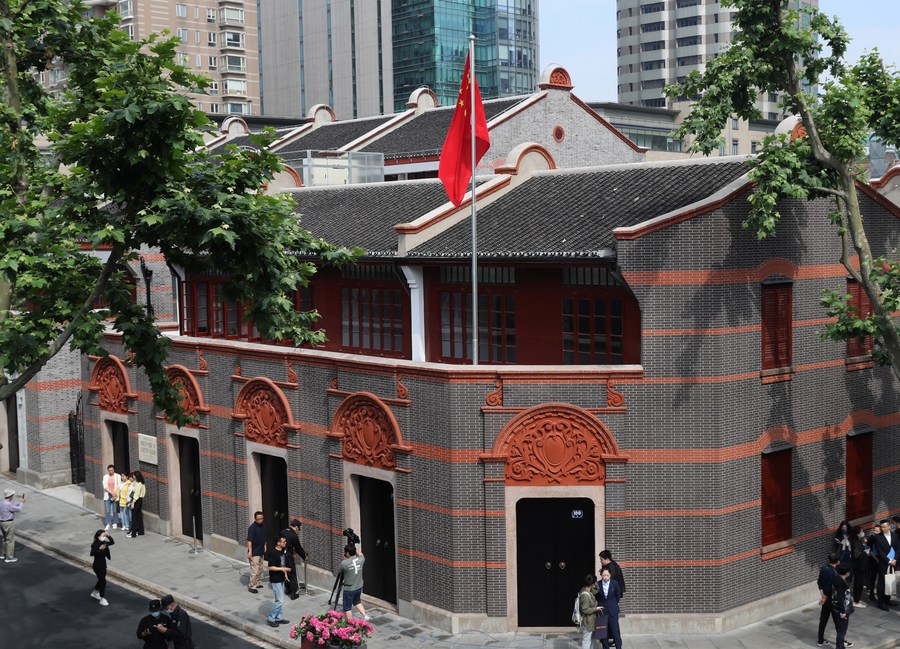
Just like the political bandwagon that produced the African National Congress (ANC) in January 1912 by John Langalibalele and Isaka Seme Sol Plaatje, the Communist Party of China, born in 1921, was founded by a group of Chinese revolutionaries including Li Dazhao, Chen Duxiu and Mao Zedong who fought against the imperialist subjugation and for the liberation of the Chinese people.
It is axiomatic and unequivocal that leadership and governance are pillars of political utility and democratic rule should serve the people. The birth of the Communist Party was directed towards serving the people and the establishment of the People’s Republic, People’s Liberation Army, People’s Bank and so many other things in China signifying everything belonging to the people.
The CPC leaders adopted the best development model, the most rapid, fast and efficient one in changing the Chinese socioeconomic conditions. This was not unconnected with the dynamics of Deng Xiaoping who adopted the policy of reform and opening up in 1978. With such reforms, China was able to quickly move from an agrarian society to an industrial society, allowing foreign investors to domicile portfolios in the mainland. Deng Xiaoping’s legacy was upheld and continued by Jiang Zemin who opened up another developmental process under the leadership of the Communist Party to drive the country to an enviable position within the world stage.
The political theory of Three Represents, formulated by Jiang Zemin, was ratified by the CPC in 2002 as a “guiding ideology” to encourage the Party to represent “the developmental demands of China’s advanced productive forces, the orientation for China’s advanced culture, and the fundamental interests of the greatest possible majority of the Chinese people.”
Hu Jintao, Jiang Zemin’s successor as general secretary, took office in 2002. Hu introduced two main ideological concepts: the Scientific Outlook on Development and?Harmonious Socialist Society.
Every societal purpose is development. As Dudley Seers believes that development takes place when a country experiences a reduction or elimination of poverty, inequality and unemployment. The CPC has been focusing on fighting unemployment, raising standards of living and workers’ wages. It is in line with the above that looking at the trajectories of unemployment statistics in 2021 in advanced societies, for example the United States having 6.2 percent, United Kingdom with 7.5 percent, France having 7.9 percent and only China with the least unemployment record despite its huge population just at 5.1 percent. This shows that the Communist Party of China should be given some accolades in its relentless efforts in dealing with unemployment in China, which shows that the country is progressing.
The development of a country is also considered from the level of income inequality among the citizenry. Considering the Gini Coefficients of income inequality, the United States has 41.4 percent records of inequality while China has 38.5 percent. This shows that there is perfect equality in China and perfect inequality in the U.S. based on the Gini Coefficients.
On poverty reduction, over the four decades, China has lifted more than 800 million people out of poverty, contributing more than 70 percent of global poverty reduction. By the end of 2020, nearly 100 million impoverished rural dwellers have escaped poverty since the 18th National Congress of the CPC in 2012, and all 832 national level poverty-stricken countries had shaken off poverty. Despite the COVID-19 impacts in 2020, China succeeded in removing the remaining 52 countries in southwestern and western regions from poverty list as scheduled.
Since Xi Jinping was elected general secretary of the CPC in 2012, many reforms have taken place and China has been promised prosperity. Xi upheld the principles of reform in his “Four-Pronged Comprehensive Strategy” (SI GE QUAN MAIN): making China a moderately prosperous society, deepening reform, strengthening party discipline and rule of law. These principles are foundations upon which all civilized societies should consider in building a prosperous society. With the 13th Five-Year Plan (2016-2020), China primarily realized the goal of building a moderately prosperous society in all respects, which is the first of the two centenary goals laid down to mark the centenary of the CPC.
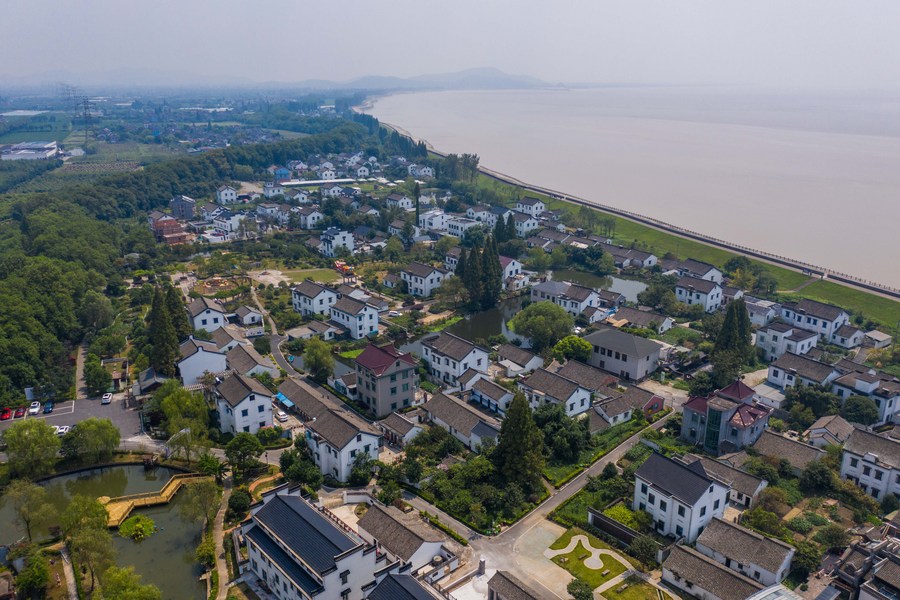
As the core of the Communist Party, President Xi Jinping has pioneered the modern Silk Road from which the Belt and Road Initiative (BRI) emerged. This has become a great effort of the Communist Party to ensure shared future for mankind through economic inclusiveness, massive investment in infrastructure and cooperation among nations. In the whole idea of the BRI, Africa stands the most desirable place for such huge investment in infrastructure due to its deficit on the continent. Africa needs to modernize, transform and develop to stand the test of time and this can be conduced by the Belt and Road.
It is pertinent to have an eagle view of the structures of the initiative in Africa and how they may pave a way for development as induced by the level of investment on the continent. It has been estimated that about 600 million people in sub-Saharan Africa have no access to electricity; a third of African people living in rural areas have no access to roads. African Development Bank has also estimated that Africa’s infrastructure needs $130-170 billion per year with financing gap within the range of $68-$108 billion. Consequently, about 52 out of the 55 African countries have signed memorandum of agreement on the BRI and in some of these countries, BRI projects have already contributed to physical-structural and human development. It is unequivocal that the Kuruma and Isimba hydropower stations and several industrial parks in Uganda and ultimately the Kampala-Entebe Expressway which connects the capital city with the country’s main airport have contributed to modern transportation system, power generation and generated employment opportunities to the people of Uganda.
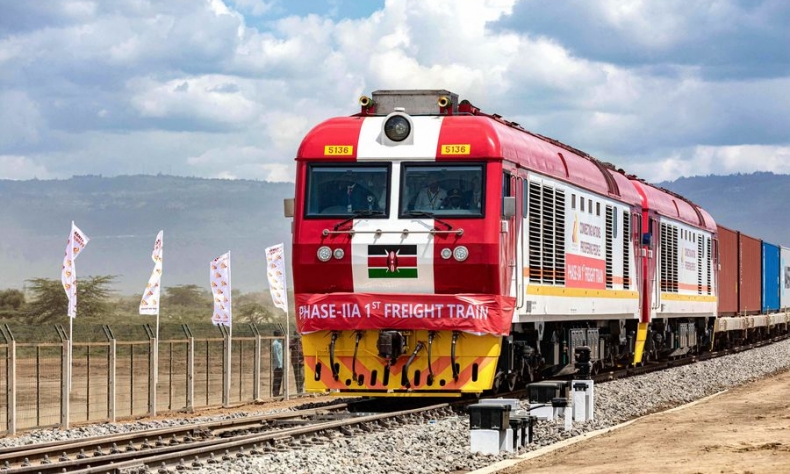
The promotion of international trade and economic relations as envisaged by BRI is an area of regional, continental and inter-regional economic development through regional linkages due to effective transportation system. The standard Gauge Railway linking the port of Mombasa through Nairobi to Uganda and extending to other regions of Africa is an epitome of regional economic integration that guarantees economic development. In addition to this, there is also a Trans-African Highway Network of more than 56,000 kilometers involved in this trend.
The benefits of the BRI to Africa cannot be quantified as it is wide-ranged and cuts across the continent. It covers Africa’s roads construction, railways, ports and power plants among others. Notable of such projects are 2,600 MW hydro-power scheme in Nigeria, $3 billion in Telecom equipment to Ethiopia, Sudan, Ghana and major railway projects in Nigeria, Gabon and Mauritania. A field survey conducted between November 2016 and March 2017 across eight African countries revealed that Chinese companies in Africa employed locals in very large numbers (89 percent of the total workforce) across different business sectors. For instance, employees in the manufacturing, and construction and real estate industries were composed of 95 percent and 85 percent Africans, respectively. Overall, according to the source, more than 10,000 Chinese businesses might have been operating in the whole African continent as of the same period, with manufacturing taking up 95 percent, construction and real estate 85 percent, services 85 percent, and trade 82 percent.
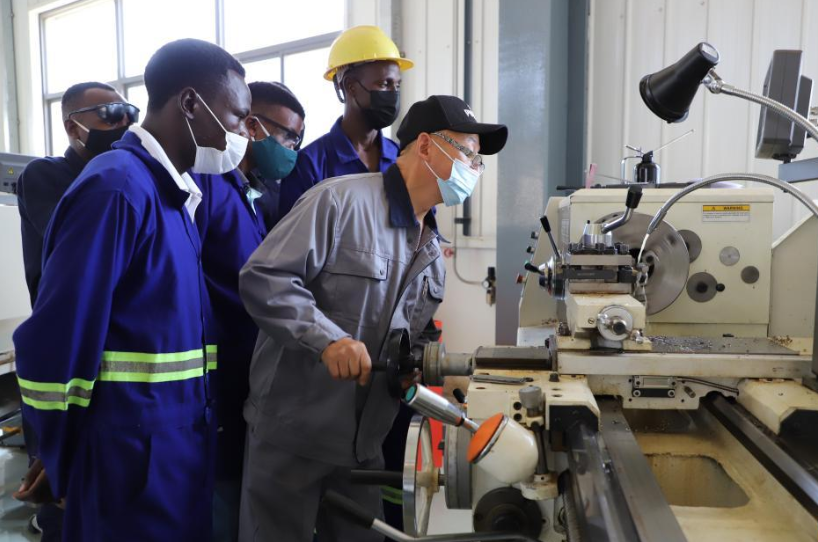
Development is achievable through international cooperation and the Chinese initiatives of peaceful diplomacy, respect to the sovereignty of states and noninterference in the domestic affairs of states has uniquely distinguished China in the history of international relations and has guaranteed the maintenance of soft power on the world stage. The African dream of industrialization and development can be achieved especially with the contributions of China. The partnership with China especially promotes to fully achieve the primary objectives of the Africa Continental Free Trade Agreement (AFCFTA). Africa is also happy with the first phase of this development starting with the BRI projects which essentially laid a titanic foundation for what can be termed infrastructure-driven development for Africa.
Each and every African country is naturally endowed with resources. To harness greatness there is the need to unconditionally establish industries that will aid in the exploration of such resources and get them channeled through secondary production that will enable Africa to export manufactured or industrial goods. What’s more, there will be massive market for Africa looking at the population level of the continent and the ability to sell to Europe, Asia, Latin America and the Caribbean. This is how important China is to Africa and the governments in Africa should grasp this opportunity and not to abuse it. It is based on this experience sharing and mutual learning that Africa can exit the clutches of poverty, underdevelopment and backwardness.
One major area of concern is that China should maintain such mutual interest with Africa as the world system is becoming fully uncertain with challenges of competition, geopolitical rivalry, security issues. China should have a way of dealing with conflicts, terrorism and insurgency in Africa either engendered due to push and pull syndrome or in the parlance internally or externally induced. This will bring back peace in Africa and allow more areas of engagement, inflows and outflows of foreign direct investment (FDI).
It is also pertinent to discern that the destabilization of Africa caused by locals or foreign mercenaries is a threat to Africa and China-Africa relations. China is also not devoid of international conspiracies due to its enviable global economic influence and progress it has recorded. The future is Africa, and the Communist Party of China is an engine for Africa’s development. A synergy between them is mutually beneficial with a shared future for mankind.
The author is a professor at Department of Political Science and International Relations, University of Abuja, Nigeria. The article reflects the author’s opinions, and not necessarily the views of China Focus.