National Rejuvenation Explained
 Facebook
 Twitter
 Linkedin
 Google +
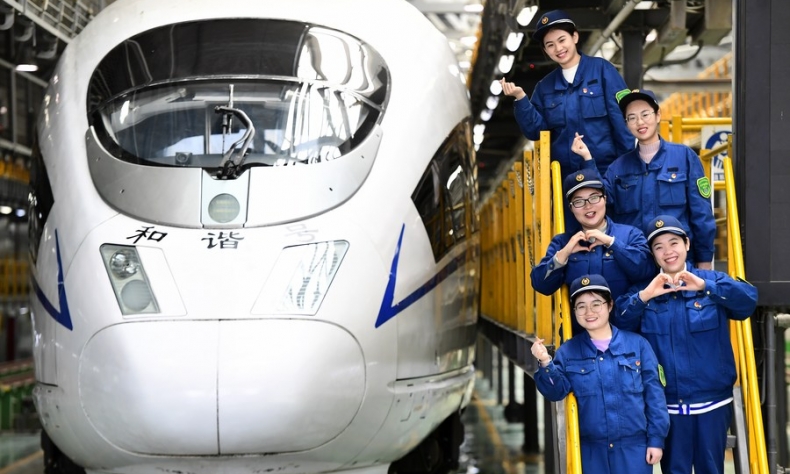
Rejuvenation conveys making young again, not merely reviving an old concept of China, which is to say, it’s forward-looking and not traditionalist.
Shortly after taking office as the top leader of the Communist Party of China (CPC), Xi Jinping elaborated on the Chinese dream. “Achieving the rejuvenation of the Chinese nation has been the greatest dream of the Chinese people since the advent of modern times,” Xi said during a visit to an exhibition on November 29, 2012.
The phrase, “the great rejuvenation of the Chinese nation,” was first expressed by then President Jiang Zemin in 2001, in a speech marking the 80th anniversary of the founding of the CPC. Since its introduction, it’s become a stock phrase used to describe the fundamental mission of the Party, state and people, as well as the context through which achievements are assessed.
Revive, restore, rejuvenate
Although Jiang was the first to express it this way, there were many historical antecedents. For example, Dr. Sun Yat-sen, regarded as the “father of modern China” by both the mainland and Taiwan, founded the Revive China Society in 1894, in the wake of mounting losses in the First Sino-Japanese War (1894-95). Sun’s objective was to expel the Manchu-led Qing Dynasty (1644-1911), revive Zhonghua, or China under Han Chinese rule, and establish a unified government. While the Qing effectively suppressed the Revive China Society with support from the British, it merged with the Tongmenghui, the Chinese United League, in 1905, consisting of several revolutionary groups, including the Guangfuhui, the Restoration Society. The goals of the Tongmenghui combined republican, nationalist and socialist objectives: expel the Qing, revive Zhonghua, establish a republic and distribute land equally among the people.
The Tongmenghui would go on to play a vital role in the Qing abdication following the Revolution of 1911 and the establishment of the Republic of China. However, these efforts proved insufficient in the face of poor leadership (the former Qing general Yuan Shikai had pushed Sun aside and fancied reestablishing a monarchy), a deeply fractured national polis of competing, incompatible elements, and increasing international headwinds. These reached a tipping point in 1919, when the Treaty of Versailles gave the former German concessions in Shandong Province to Japan, rather than returning sovereign authority to China as the Allies had promised during World War I.
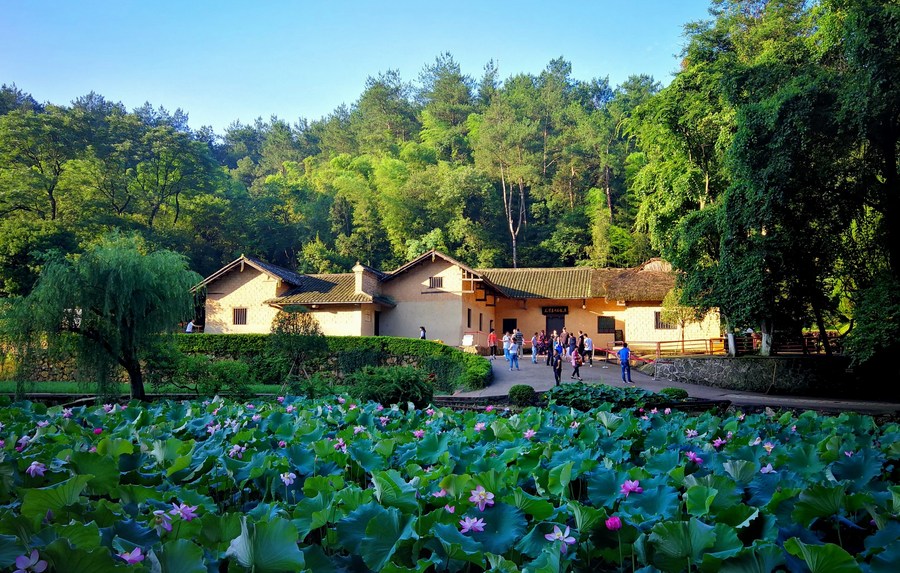
The May Fourth Movement of 1919 followed, becoming the cradle of renewed efforts to save a country still imperiled by foreign aggression. This was also the year the Tongmenghui would be reconceptualized as the Kuomintang (KMT), and when other efforts began to accelerate, including the spread of Marxism in China, especially due to the influence of Li Dazhao, who would cofound the CPC in 1921. Li also wrote and spoke influentially of the need to revive the nation. As both a leading intellectual and Mao Zedong’s one-time supervisor at the Peking University Library, Li believed this revival could only come from a positive political engagement with the country’s farming masses—a conclusion that proved extremely influential on Mao.
There are different words in Chinese for nation and, further, for China as a nation, but not all of them are limited to the typical modern conceptualization of the term. As many Chinese scholars have observed, the idea of the modern nation remained quite foreign in China throughout the 1800s, with some characterizing dynastic China as a civilization-state versus the nation-state that followed in 1912. The term Zhonghua should be historicized accordingly. Many believe it was originally coined by China’s first emperor, Qin Shihuang, who reunified and started reviving China after the Warring States Period, circa 221 B.C. This is to say that the term Zhonghua in some respects has always conveyed the idea of a unified state seeking or sustaining restoration, if not?rejuvenation.
When Sun used Zhonghua, it was largely consistent with Han nationalism, in large part because Sun’s objective was to expel the Qing, with the argument that China’s problems with foreign invasions had started with the Qing rulers. This would gradually evolve into a more multiethnic notion, especially with the CPC, including the officially recognized 56 ethnic groups living in China today. And while leaders like Jiang, and after him Hu Jintao and Xi certainly use the term to describe a modern, multiethnic nation-state, it’s also fair to say that its ancient civilization-state origin is not entirely foreclosed, insomuch as leaders today still speak of the past as a wellspring of the present and future. In fact, by using the term Zhonghua instead of Zhongguo, the more common modern term for China, Jiang intentionally expressed a common ground with his historical predecessors, one that his successors have also embraced and carried forward.
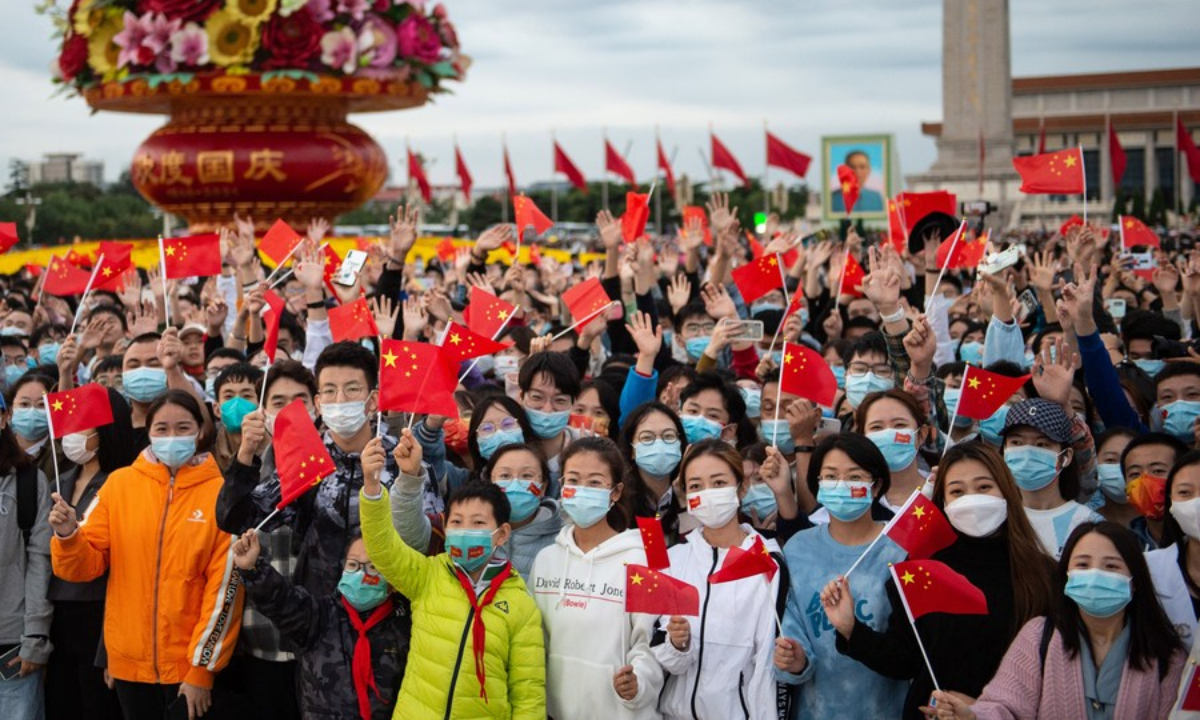
Contemporary concept,?future orientation
The rejuvenation of China, when properly understood, has a deep history, stretching back millennia, but today focuses on?modern concepts like sovereignty and development. The Qin Dynasty (221-206 B.C.) as well as the KMT sought to reunify and revive China, and the CPC today carries this responsibility, including the reunification of the mainland with Taiwan, separated after the KMT regime retreated to the island following its defeat in the Chinese civil war (1946-49).
Of course, China did not originate the modern, competitive nation-state system—that distinction is generally accorded to England, beginning in the 1500s. Nevertheless, China was compelled by the imperialism that followed, including the Opium Wars instigated by the British in the 1840s and the “century of humiliation” that ensued, to not only endure existential transgressions but also to reconceptualize what it meant to be Chinese in such a dangerous global environment.
The establishment of the People’s Republic of China (PRC) generally marks the end of the “century of humiliation” in 1949. National recuperation, above all continuing the process of reunification and ensuring secure sovereignty, has served as a historical as well as contemporary foundation of political legitimacy for the CPC over different periods, including the present—referred to as the new era.
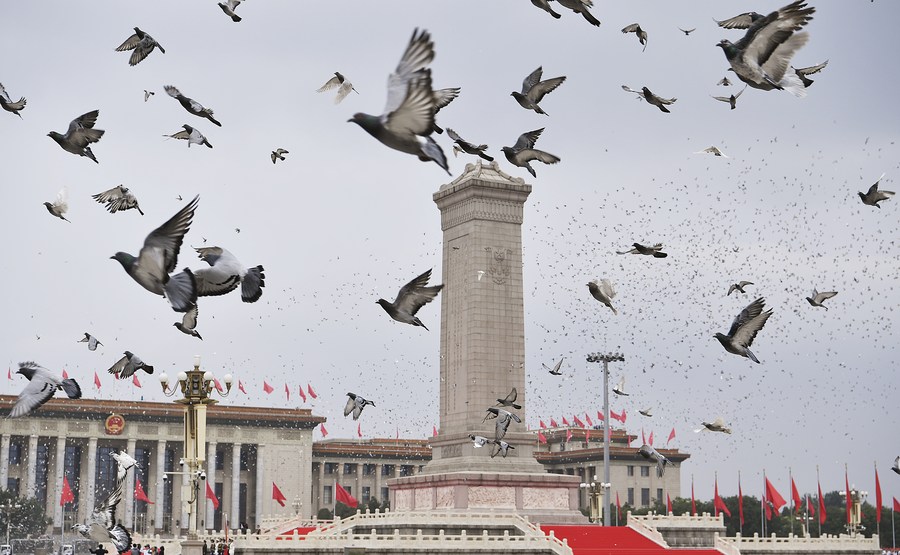
On the one hand, national rejuvenation in the new era under Xi’s leadership firstly concentrated on ensuring the achievement of the first centenary goal (i.e., to be achieved within a century of the Party’s founding), establishing a xiaokang society—a moderately prosperous society—proposed by Chinese leader Deng Xiaoping in 1979. But as this achievement became increasingly certain, especially following the elimination of extreme poverty, attention shifted toward the second centenary goal (i.e., to be achieved within a century of the PRC’s founding) of becoming a “great modern socialist country that is prosperous, strong, democratic, culturally advanced, harmonious and beautiful.”
Although the goals were first introduced by Jiang during the 15th CPC National Congress in 1997, they were more enthusiastically embraced and extended by Xi following the 18th CPC National Congress in 2012 and are now viewed—in tandem with national rejuvenation—as providing the fundamental teleology for both the Party and national development.
It should be noted that national rejuvenation is not conceptualized as narrow nationalism, given the emphasis on multiethnicity plus reunification strategies like One Country, Two Systems. Further, rejuvenation conveys making young again, not merely reviving an old concept of China, which is to say, it’s forward-looking and not traditionalist.
However, as noted above, rejuvenating China does not abandon many of its deeper, pre-modern civilizational values, as the use of Zhonghua conveys, nor does it completely succumb to the rubric of competitive nationalism that is still globally dominant today and, indeed, experiencing a resurgence. Rather, as Xi has made clear, China seeks national rejuvenation while also trying to emphasize multilateral, win-win cooperation, to build a global community with a shared future. In this way, we can understand national rejuvenation as consistent with maintaining reform and opening up and a new effort to promote non-hegemony-seeking internationalism.
The author is a professor of politics and international relations at East China Normal University and a senior research fellow with the Institute for the Development of Socialism with Chinese Characteristics at Southeast University.