One Country, Two Systems
 Facebook
 Twitter
 Linkedin
 Google +
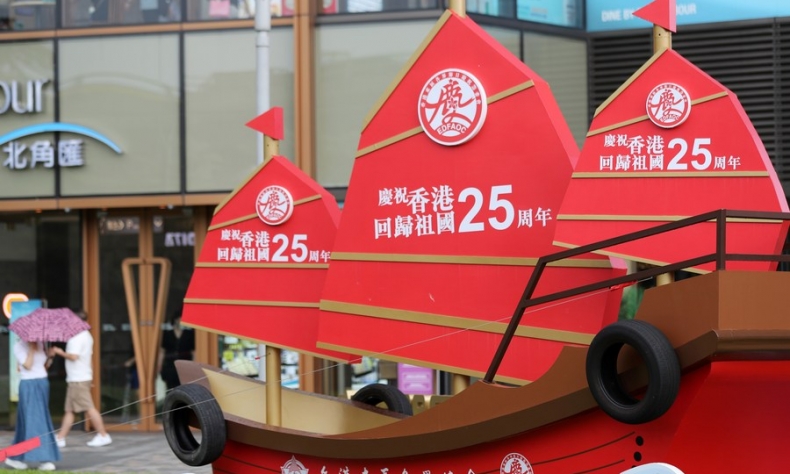
The implementation of the policy in Hong Kong and Macao provides valuable experience for it to be applied in Taiwan in the future.
When the People’s Republic of China was founded in 1949, the Kuomintang regime, defeated in the War of Liberation, retreated from the mainland to the island of Taiwan, creating the division between the two sides of the Taiwan Straits.
The Democratic Progressive Party, the current ruling party in Taiwan, refuses to recognize the 1992 Consensus reached by the mainland and Taiwan that both sides belong to one China, and even tries to deny it. Its separatist push for “Taiwan independence,” plus interference by foreign anti-China forces, has worsened relations across the Taiwan Straits.
The pursuit of “Taiwan independence” will lead to a dead end as the mainland will definitely not allow Taiwan to remain separated. Then in what way will the mainland achieve reunification with Taiwan?
The answer to this question was presented by Chinese leader Deng Xiaoping 40 years ago in the early 1980s: peaceful reunification and One Country, Two Systems.
In his remarks delivered at the meeting marking the 40th anniversary of the release of the Message to Compatriots in Taiwan on January 2, 2019, President Xi Jinping reiterated the vision of peaceful reunification and One Country, Two Systems is the best way to realize China’s reunification. “We do not renounce the use of force and reserve the option of taking all necessary measures. This is to guard against external interference and a tiny number of separatists and their activities for ‘Taiwan independence.’ In no way does it target our compatriots in Taiwan,” he added.
The Message to Compatriots in Taiwan was issued on New Year’s Day in 1979 by the Standing Committee of the National People’s Congress (NPC), China’s top legislature. It was a declaration of the mainland’s policy for peaceful reunification. The message emphasized the centrality of the one-China principle, called for a halt to military confrontations, and proposed cross-Straits visits, transportation, postal services, as well as economic and cultural?exchanges.
Since the 18th National Congress of the Communist Party of China (CPC) in 2012, Xi has made a series of important remarks on upholding One Country, Two Systems in light of new?developments.

Visionary policy
The concept of One Country, Two Systems is based on the premise of one China: There is only one China in the world, Taiwan is an inalienable part of China and the seat of China’s Central Government is in Beijing. This is a fact recognized by an overwhelming majority of the world’s nations as well as the premise for a peaceful settlement of the Taiwan question.
The Chinese Government is firmly against any words or deeds designed to split China’s sovereignty and territorial integrity. It opposes “two Chinas,” “one China, one Taiwan” or any attempt that could lead to “independence of Taiwan.” The Chinese people on both sides of the Straits all believe there is only one China and espouse national reunification. Taiwan’s status as an inalienable part of China has been determined and cannot be changed. “Self-determination” for Taiwan is out of the question.
Then comes the coexistence of two systems. On the premise of one China, socialism on the mainland and capitalism in Taiwan can coexist and develop side by side for a long time. This concept has largely taken account of the actual situation in Taiwan and practical interests of compatriots there. After reunification, Taiwan’s current socioeconomic system, its way of life as well as economic and cultural ties with foreign countries can remain unchanged. Private property, including houses and land, as well as business ownership, legal inheritance and overseas Chinese and foreign investments on the island will all be protected by law.
One Country, Two Systems guarantees Taiwan a high degree of autonomy. After reunification, Taiwan will become a special administrative region (SAR). It will have its own administrative and legislative powers, an independent judiciary and the right of adjudication on the island. It will run its own party, political, military, economic and financial affairs. It may conclude commercial and cultural agreements with foreign countries and enjoy certain rights in foreign affairs. It may keep its military forces and the mainland will not dispatch troops or administrative personnel to the island. On the other hand, representatives of the government of the special administrative region and those from different circles of Taiwan may be appointed to senior posts in the Central Government and participate in the running of national affairs.
Proved workable
The concept of One Country, Two Systems was put forward to settle the Taiwan question, but it was first applied in Hong Kong.
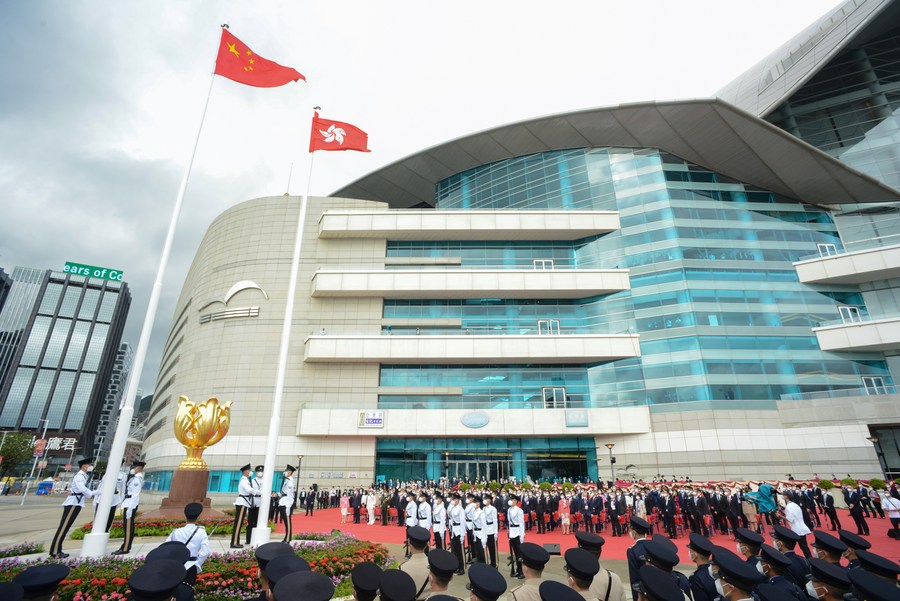
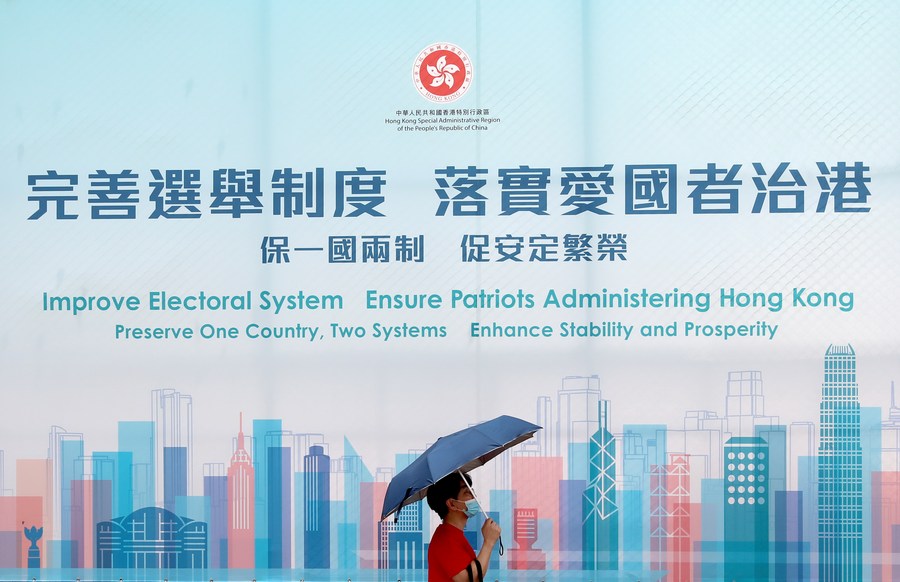
On July 1, 1997, the Chinese Government resumed the exercise of sovereignty over Hong Kong and Hong Kong SAR was established. Under the policy of One Country, Two Systems, the previous social and economic systems remain unchanged in Hong Kong. Nevertheless, different from the practice under the British colonial rule that a governor was appointed to administer Hong Kong without local people being consulted, now the head of the SAR is elected by the widely representative Election Committee and appointed by the Central Government. After its return to the motherland, Hong Kong has survived the 1997 Asian financial turmoil and 2008 global financial crisis and still remains prosperous, proving that the policy of One Country, Two Systems is workable.
Anti-China forces once tried to undermine the policy’s practice. They cultivated pro-independence elements and incited violence to destabilize Hong Kong. The unrest over proposed amendments to Hong Kong’s extradition law in 2019 seriously damaged the rule of law and order in Hong Kong. In response, the Central Government took powerful actions, promulgating the Law of the People’s Republic of China on Safeguarding National Security in Hong Kong SAR. The law took effect in June 2020, restoring the stability of the region.
The sharp contrast between the chaos caused by the agitators in Hong Kong and the external groups behind them and the restored order proves that in developing democracy in Hong Kong, we must abide by the principle of One Country, Two Systems and the Basic Law of Hong Kong SAR and act in an orderly manner, in line with local realities and in accordance with the law.
Only by continuing to implement the policy of One Country, Two Systems fully and faithfully and supporting Hong Kong in developing a democratic system that conforms to the region’s constitutional status and realities as a local administrative region under the direct jurisdiction of the Central Government, can we deliver?benefits to the Hong Kong people. Since the policy proves suitable and workable in Hong Kong, the Central Government will stay committed to it.
Focus on peace
Besides Hong Kong, Macao, where the One Country, Two Systems policy is also carried out, has also achieved unprecedented prosperity since it returned to the motherland in 1999.
The implementation of the policy in Hong Kong and Macao provides valuable experience for it to be applied in Taiwan in the future.
The Chinese Government?conceived a peaceful settlement of the Taiwan question as early as the 1950s. In May 1955, Premier Zhou Enlai said at an NPC Standing Committee meeting that two alternatives were open to the Chinese people for the solution of the Taiwan question—by resorting to war or by peaceful means. The Chinese people would strive for a peaceful solution wherever possible, he affirmed.
In April 1956 Chairman Mao Zedong put forward thoughts for Taiwan-related policymaking such as “peace is the best option,” “all patriots are of one family” and “it is never too late to join the ranks of patriots.”
When talking about the Taiwan question in his report delivered at the 19th CPC National Congress in October 2017, Xi underlined the importance of upholding One Country, Two Systems.
“Resolving the Taiwan question to realize China’s complete reunification is the shared aspiration of all Chinese people, and is in the fundamental interests of the Chinese nation. We must uphold the principles of peaceful reunification and One Country, Two Systems, work for the peaceful development of cross-Straits relations, and advance the process toward the peaceful reunification of China,” he said.