Fueling the Transition to a Low-carbon Future
 Facebook
 Twitter
 Linkedin
 Google +
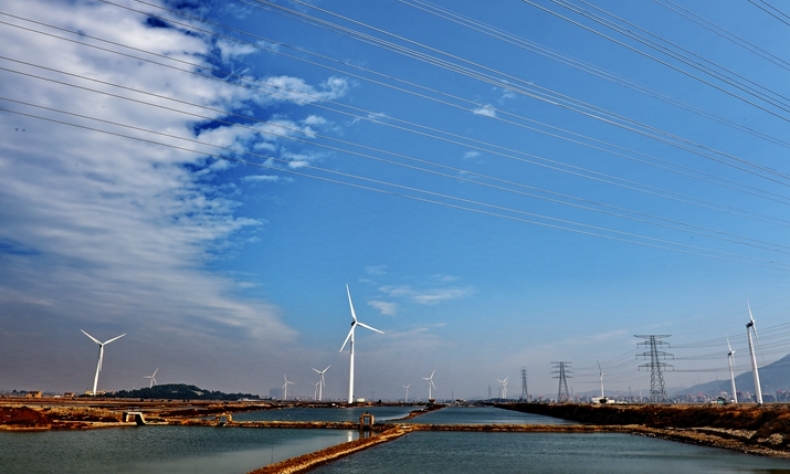
Energy efficiency and conservation measures o?er the largest, fastest and cheapest opportunities to cut energy use – as well as carbon, social and environmental impacts – and must be ramped up.
Editor’s note:?The government work report, delivered by Premier Li Keqiang on March 5, sets the goals and major tasks for 2022. Among these goals, continuing to improve the environment and promoting green and low-carbon development has drawn global attention as the world is facing severe challenges of climate change. Intended to achieve the carbon neutrality goal as scheduled, the country is increasing its installed capacity of renewable energy power generation and seeking low-carbon development with technological innovation while actively forging collaborative partnerships with other countries.
Periods of crisis are challenging and difficult but can become catalysts for positive transition and change. The past two years have certainly been a period of crisis on several fronts, nationally and globally. The COVID-19 pandemic, food and industrial supply chain constraints, rising energy prices, inflation and interest rates – and now war – have all been extremely challenging for both governments and individuals. On a longer wavelength, climate change and biodiversity loss are equally or even more threatening. And these challenges are interconnected. Climate change exacerbates biodiversity loss, which increases the risk of disease. Economic recovery, as we emerge from the COVID-19 pandemic, has stretched supply chains and increased the demand for energy, while war and a trend away from coal-based energy has reduced energy supply, pushing up energy prices and general inflation, with interest rates rising in response.
But before the world rushes back to business as usual there is an opportunity, perhaps an obligation, to pause, to reflect and to change – to build back not just better, but fairer and greener as well as safer and more secure. Many of these opportunities centre on the energy system which, because it is the cause of many critical problems, also offers many of the solutions.
And there are many, many opportunities and solutions to make the energy system greener, fairer, safer and more secure, not only in the future but right now. The price of multiple renewable generation technologies continues to fall, in both distributed and grid configurations – driven in part by innovation and manufacturing economies of scale in China.
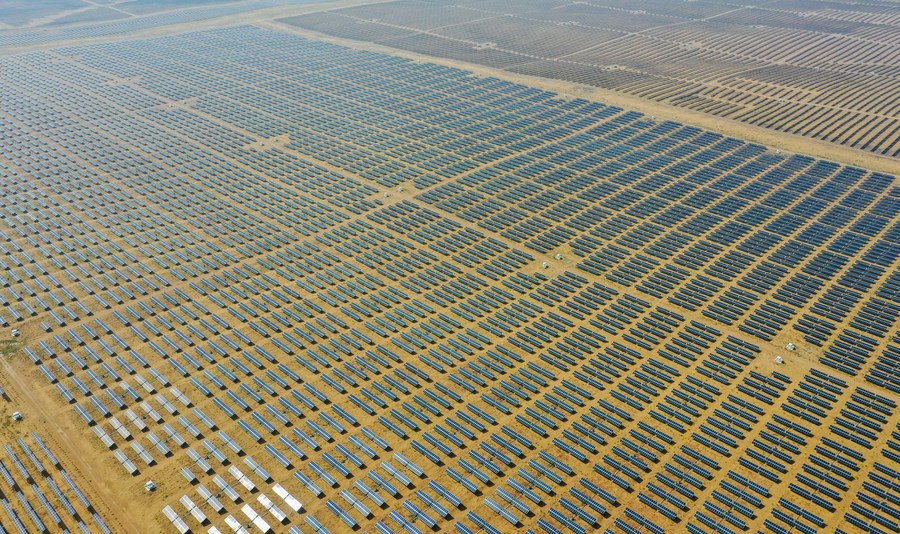
The costs of wind, solar and biofuels have all come down dramatically in the past few years, and tidal, wave, and other emerging renewables are beginning to follow suit, along with the costs of ancillary and balancing services for intermittent resources. All of these renewable technologies o?er climate, environmental and social benefits – and increase energy security. As well as reducing carbon emissions, direct environmental impacts, and the social and health problems of local air pollution, they can also increase energy independence, all good reasons why their rate of deployment must increase.
(Green) hydrogen, made from renewable sources, is another emerging large-scale opportunity over the slightly longer term, with wide application in hard-to-abate industrial sectors like steel, glass and aluminium, and in shipping, aviation and road transport.
But while rapid progress to a renewable energy economy is desirable and already occurring, and we must progress further towards it as fast as possible, we cannot afford to pretend that it will not take considerable time, money and effort before renewable technologies are deployed universally or even very widely. In the meantime, we have no choice but to rely on the energy system we have now and we are fortunate to have plenty of ways to improve its performance too – rapidly, dramatically, relatively inexpensively and at scale. And again, opportunities to improve the current energy system should not be ignored just because they are not perfect, or we will simply repeat or intensify the energy supply, demand, and security crises we face now. It is surely better to pursue these improvements than continue, expand or even return to the use of unabated coal, which is already beginning to happen in some places.
The perfect cannot be allowed to become the enemy of the good.
Energy efficiency and conservation measures o?er the largest, fastest and cheapest opportunities to cut energy use – as well as carbon, social and environmental impacts – and must be ramped up. They also cut energy bills, helping reduce fuel poverty. Electri?cation of the transport system is beginning to happen but needs to go further, faster.

Natural gas is a cleaner and less carbon-intensive alternative to coal for power and industry, and could make a huge positive impact globally, provided methane emissions from the gas industry are cut right back. Carbon capture use and storage (CCUS) for gas (and coal)-?red power and industry can and is being deployed on an increasingly large scale, but must be accelerated. (Blue) hydrogen produced from natural gas with CCUS is another emerging low carbon technology with long-term promise at scale. And CCUS can also be applied to bioenergy (BECCS) to actually remove carbon from the atmosphere. Nuclear is also an option, though it has challenges of its own. Finally, natural climate solutions (NCS), in which forests and other land uses are expanded and sustainably managed to enhance biodiversity, carbon storage and local livelihoods, are another large-scale, low-cost and relatively fast option to address climate change and biodiversity loss at the same time.
All of these solutions and opportunities – for renewables and for improvements to existing energy systems – share several key characteristics. Many of them require new infrastructure for either generation and conversion or for transmission and distribution, or both. This infrastructure ranges from electricity generation and hydrogen conversion or CCUS plant, to above and below ground wires, transformers and substations for electricity, including for EV charging, and pipelines, storage, transportation and compression facilities for natural gas, hydrogen and CO2. This kind of infrastructure is large-scale, capital intensive and costly and still relies on technology that, while proven, has not yet been widely deployed at scale. It also faces the challenge of securing investment in a context where the primary benefit – carbon reduction – is still not fully financially rewarded. All of these characteristics make the risk-reward profile of these opportunities challenging for private sector investors to justify without support.
At least three, and perhaps four main types of support will be needed.

First, policy support, to help redress the risk-reward balance for green investments. Post-COVID-19 government recovery packages could be made conditional on meeting various sustainability standards, including for carbon. Public finance could help underwrite the expansion of green infrastructure of many kinds, which would also create jobs. And market mechanisms could be introduced to reflect the external costs of energy provision, including carbon emissions – as long as measures are also taken to address regressive social impacts of higher prices.
Second, there will be a need for large-scale finance, innovative financing mechanisms and sophisticated financial services. These are likely to be more readily available in a policy-improved investment environment.
Third, and perhaps most importantly, there is a need for collaboration, at many levels – between the public and private sectors, between countries and regions, and between communities. This is because the scale of the infrastructure is large and the scale of the costs and benefits from developing it is global. To enable the first three types of support will also require political will.
No two countries, or regions, have greater potential to provide these types of support than China and the U.K., or the EU, working together. This is because their skills and resources are complementary and in combination can provide everything necessary to make the energy transition happen – manufacturing scale, technology know-how, finance and financial services and political leadership.
And along with China-U.K. support for the energy transition, there is no better geographical focus for collaboration in supporting it internationally than in Africa. This is because Africa’s existing energy infrastructure is still relatively undeveloped in many places – offering a clean slate – but the continent’s demand for energy is likely to grow exponentially in the coming century. For environmental, social and security reasons there is a huge opportunity for the U.K./EU and China to work together to help ensure that 21st century energy in Africa, and elsewhere, is sustainable.
Dr. Paul Je?eriss is Program Leader for Climate Change & Sustainability at UK National Committee on China (UKNCC). He has over 30 years’ experience on energy and climate change in government, the private sector, NGOs and academia.