Confrontation Will Backfire
 Facebook
 Twitter
 Linkedin
 Google +

Washington must change its ways and drop the mindset if Americans are to have a future worth looking forward to. Its present path of hegemony and confrontation will inevitably lead to bleak prospects as the trajectories of past empires have demonstrated all too clearly.
Washington’s Cold War mindset and obsession with militarism both lead to a dead end. The international situation is changing and a new constellation of forces emerges. Yet the U.S. clings to obsolete geopolitical theories and strategies.
Sticking to past strategies and obsolete alliances limits Washington’s flexibility and options amid historic global changes. Can the U.S. have a sustainable future with prosperity if it does not adjust correctly within an international system transitioning to multipolarity, polycentrism and pluralism?
Fixations and allegations
The militarization of post-World War II (WWII) U.S. foreign policy began in 1950, with a top-secret study by the National Security Council called U.S. Objectives and Programs for National Security. Known as NSC-68, the study was controversial at the time for its fixation on military power.
In early 1950, President Harry Truman directed the State Department and the Department of Defense to undertake the project, with Wall Street financier Paul Nitze put in charge. Nitze had served in the federal government in various economic capacities during the war but somehow reinvented himself as a foreign policy and strategy expert.
He was a hardline anti-communist who advocated the global “rollback” of communism primarily by military means. Rollback meant confrontation and pushing the then Soviet Union out of the territories it had obtained following the end of WWII.
Some experienced professional American diplomats, however, advocated a different policy known as containment. It emphasized diplomacy, economics and other instruments including a measured military posture. These career diplomats, ambassadors George Kennan, Llewellyn Thompson and Charles Bohlen, were Soviet experts and, unsurprisingly so, objected to the unnecessary militarization of foreign policy and Nitze’s aggressive rollback doctrine.
The Nitze plan called for massive military spending and buildup. His basic premise was that the Soviet Union sought to conquer Europe, Africa, and Asia—if not the world itself. He was joined by Secretary of State Dean Acheson, another fervent Washington hawk. They persuaded Truman to accept the recommendations of NSC-68, thereby launching the Cold War from the U.S. side. The Korean War was exploited by Nitze and Acheson by alleging it was the first move in Soviet leader Joseph Stalin’s plans for world domination.
Such massive military spending was welcomed by Nitze’s friends on Wall Street and the sector President Dwight Eisenhower later referred to as the military-industrial complex. Eisenhower, as Supreme Allied Commander in Europe in WWII, defeated the German military-industrial complex and well knew what he was talking about.
Critics of the domestic economic consequences of Washington’s NSC-68 policy often refer to it as military Keynesianism. Proponents, however, argued that huge Cold War military expenditures benefited the U.S. economy. They said any resulting budget deficits were fine because they stimulated the economy.
Does the mindset ring a bell?
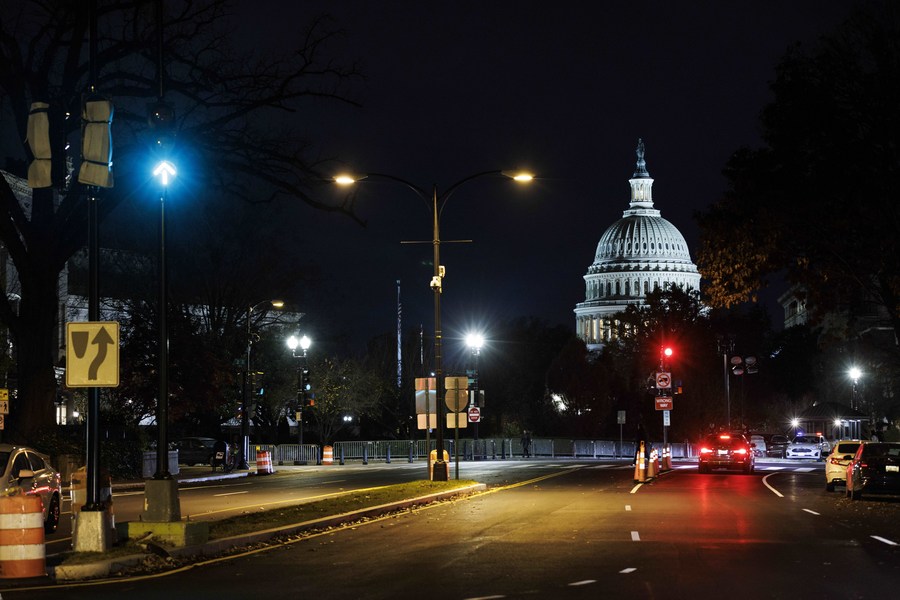
Of course it does. Look at the massive new U.S. defense budget. Congress and D.C. today tremble at the sight of China and Russia entering the world stage. Little “fiends” like Iran, too, interrupt the American political agenda. There appears to be mounting hysteria about an imagined world in which China and Russia might dominate Europe, Africa and Asia; altogether ending the global American hegemony.
Breathless politicians, media pundits, assorted military and the usual think tanks hype up these emerging threats. Geopolitical theories from the 19th and early 20th centuries are resurrected and debated, one current favorite calling for a strategy of denial to contain China, block its access to the Pacific and deny its presence in the island province of Taiwan.
To be fair, there are a few voices opposing the delusion. Some academics, former government officials, and retired diplomats and military officers do speak out, but are mere marginalized voices in the wild. They call for restraint and propose various realistic options. The White House and Congress are obliviously neglecting their pleas as the Cold War mindset runs very deep in Washington. And it pays well.
Hysteria in Washington over China and Russia, duly exploited by an army of lobbyists, explains the recent congressional vote authorizing $770 billion for defense spending. This obscenely bloated expenditure is not so different from Truman’s massive budget increase in a setting of fear and frenzy.
Is there a behavioral pattern here? Seems there is. Truman dragged Americans into the Korean War and had to go around Congress to do so because the latter would have rejected a formal declaration of war. So Truman called it a “police action,” thereby not requiring congressional consent. The Viet Nam War, too, was a “police action.” Will Joe Biden drag Americans into yet another undeclared war over Ukraine or China’s Taiwan? Or perhaps both?
Influences of militarism
In 19th century Europe, two opposed philosophies about the international system arose. On the one hand, “internationalism” was advanced by proponents of world peace and understanding. Internationalists called for a sense of human solidarity and recommended the use of diplomacy to reduce tensions and resolve issues. Invoking international law, they advocated arbitration and diplomatic mediation of disputes rather than the resort to force, coercion and war.
The trend of “militarism,” however, became more pronounced in the later 19th century as competition between various European empires sharpened. This, in turn, also influenced Japan, leaning more toward imperial invasion and expansion.
In Europe, the violent and amoral philosophy of Friedrich Nietzsche gained a following as did the similar thought of Charles Darwin and Herbert Spencer pointing to the “survival of the fittest’ in nature. This thinking entered into strategic doctrines, reinforced the growing European militarism, and deepened the clash between the continent’s imperial powers; World War I resulted.
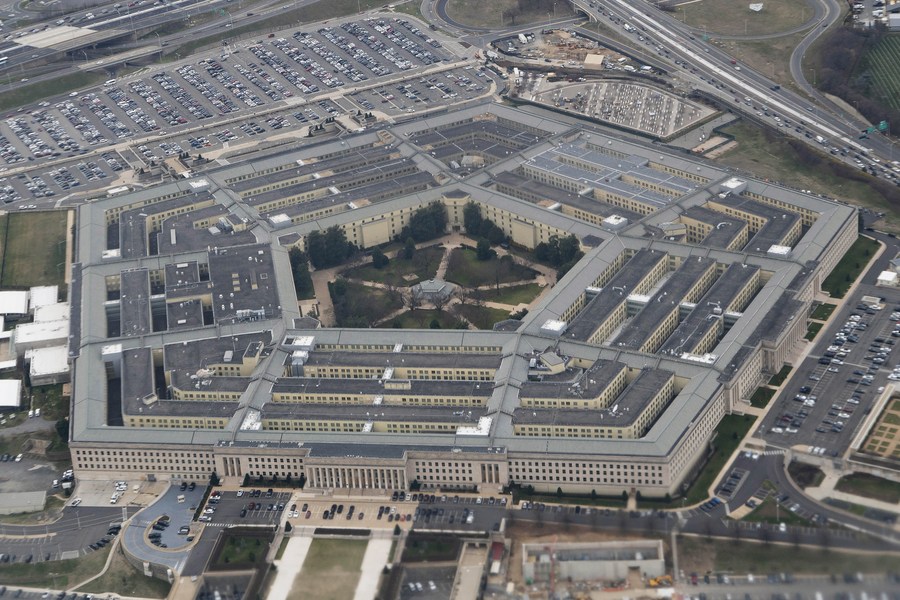
In the U.S., the militarization of foreign policy never really stopped since 1950. The legacy of NSC-68 continues today in the White House, in Congress, and in the military-industrial complex. Various quagmires entangled the U.S. in foreign adventures, from Viet Nam to Afghanistan. Looking at the track record of failed U.S. policies, any observer will conclude that Washington has learned nothing from folly and failure.
Washington’s bloated $770-billion defense bill, disturbing as it may be, makes plain the American Cold War mindset remains active, drenched in militarism.
Washington must change its ways and drop the mindset if Americans are to have a future worth looking forward to. Its present path of hegemony and confrontation will inevitably lead to bleak prospects as the trajectories of past empires have demonstrated all too clearly.