China and the United Nations Together for a Shared Future
 Facebook
 Twitter
 Linkedin
 Google +
The pandemic has reminded us how important it is for global solidarity and for countries to work together.
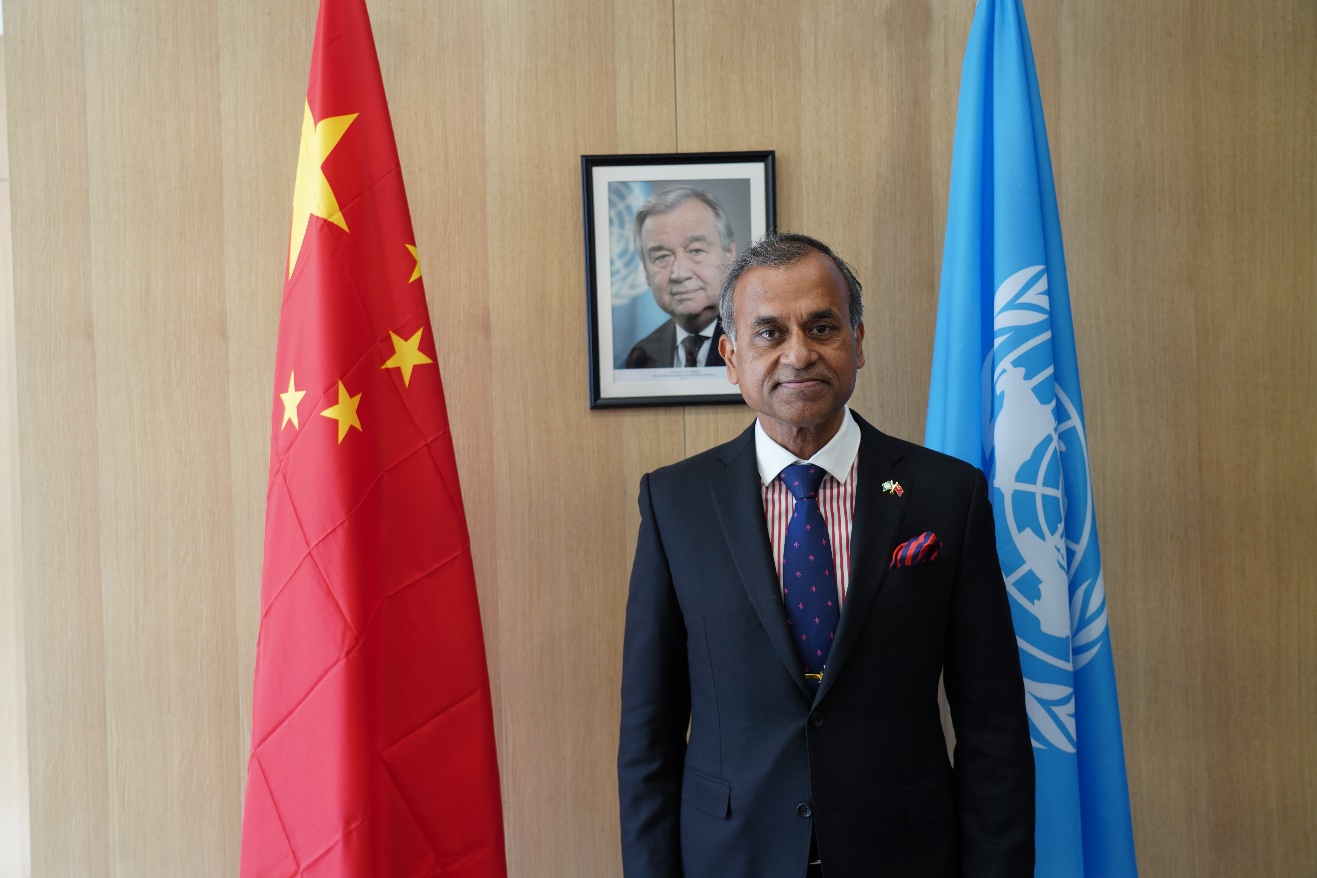
Editor’s Note: Since the restoration of the People’s Republic of China’s lawful seat in the United Nations (UN) in 1971, China has made great contributions to the world’s largest intergovernmental organization for global governance over the past 50 years. Siddharth Chatterjee, the UN Resident Coordinator in China, shared his insight of China’s participation in UN in an interview with Sun Chao, the author of “Global Leaders on the Belt and Road Initiative” and a scholar of public diplomacy and special reporter of China Focus. The excerpts of the interview are as follow:
Sun Chao: I would like to start with your Chinese name Chang Qide (常啟德)in which I am very interested. Because your Chinese name reminds us of masters of philosophy. What’s the story behind it?
Siddharth Chatterjee: Well, you know, when I was preparing to come to China, my assistant and all the colleagues in my office sat down together to figure out what would be an appropriate Chinese name for me. And they also discussed with scholars in the Peking University to get their views. Therefore, they came up with Chang, which is more associated with my last name Chatterjee of India. And they perceive me as bright, intellectual and cultural. Therefore, they put it all together. And I hope I live up to the expectation of that name.
Sun Chao: What is your impression of China, and what is the major difference between your real life in Beijing and that in your previous expectation??
Siddharth Chatterjee: You know, China was beyond expectations. This is my first time working in China ever. But actually, I grew up next to Chinatown. In my early years, I was growing up at a fair amount of interaction with Chinese people in the city called Kolkata in India. And now while I live in China, I am impressed by the remarkable progress that the country has made. Given the fact that just 41 or 42 years ago, it had a per capita GDP of mere $180, and today is crossing $12,000. So, the mythological rise making the sort of progress is striking. And I think it is an important lesson for the rest of the world.
Sun Chao: You have over 25-year working experience in United Nation’s agencies. Would you please share with us some unforgettable stories during your career?
Siddharth Chatterjee: You know, the striking one, which has called unforgettable experience was when I was in South Sudan, where, incidentally China has some brilliant peacekeepers who are doing outstanding work in maintaining not just peace in South Sudan, but also you know, building bridges and roads and infrastructure for the local community, which actually made quite a lot of differences. So let me start by commending China on what it does in South Sudan in changing lives and transforming life experiences. We started the first UN office in South Sudan in the year 2000. The most striking and most memorable experience was the demobilizing of 3,551 child soldiers from the Sudan people’s liberation army. And then the current president Salva Kiir was general leading the rebel forces. It was a secessionist war with Sudan. And there was an ongoing war when I opened the office there.
Salva Kiir, the current president of South Sudan agreed to release child soldiers from the military. He perhaps is the first African leader to let go of child soldiers in that context, in that period of war. And for me, personally, it was like a fulfillment of a spiritual vacuum in my life and you know to see children, who are as young as 7,8,9 who have been taken away from their parents and turned into soldiers and given a gun to fight. And bringing them back to become boys was perhaps the most memorable and unforgettable experience. And what is admirable was that president Salva Kiir stood up to that to that responsibility and made sure that he instructed his commanders to let go of the children.
Sun Chao: There are always different voices in the UN. But how to bring people together?
Siddharth Chatterjee: You know, that is why the United Nations is created. It is precisely to form a consensus. The UN is created after two major world wars. You know, and China was amongst or actually the first signatory to the charter of the United Nations back in 1945. The purpose of the United Nations is to bring global consensus, is to walk away from that period of conflicts and wars. The United Nations was not created to take humanity to heaven but to actually save humanity from hell. And I think the fact that since 1945 we did not have a major world war is significant of the fact that there is still a consensus going. We may have differences in opinions. There are different areas of geopolitics to challenge us, but ultimately it is the maturity and wisdom of nations.
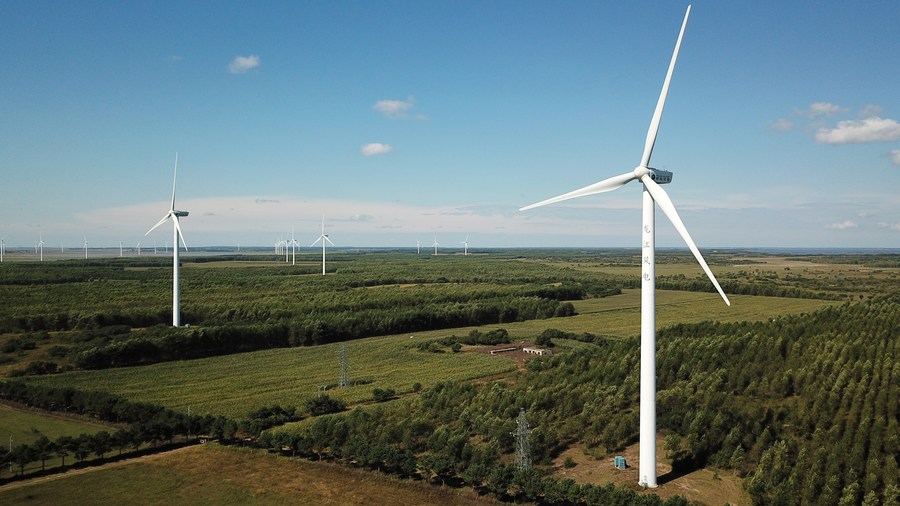
And countries like China, President Xi Jinping is a great and constant advocate on the principles of multilateralism about a united approach to dealing with the world’s problems. President Xi set an agenda where we need to achieve carbon peak by 2030, and carbon neutrality by 2060. It is about the preservation of our humanity. So I think China’s role in this is extremely important.
Sun Chao: In one of your articles, you said China’s measures in the fight against COVID-19 is the best recipe. How do you see China’s efforts?
Siddharth Chatterjee: I really congratulate China on the way it launched a public health response to flatten the curve of the COVID-19 pandemic. And I think that since 2020 to date, the fact that we have had such few cases is an example of exemplary leadership. So it really brings together very strong political will to make sure that the virus does not spread. The second is China has the right public policies in place to make sure that it does not spread, to keep the COVID-19 under control and ended. And last is partnerships, the partnership that the UN enjoys with the national health commission, with different partners in government, all aspects of government working together. China actually presents a textbook example of how to defeat a pandemic. And I think this is perhaps something that the rest of the world can absolutely learn from. And I say this without equivocation, China’s response to COVID-19 has been simply spectacular.
Sun Chao: You have a deep understanding of China’s poverty alleviation. In 2021 it is the first time for China to eliminate absolute poverty. No other country in the world can lift hundreds of millions of people out of poverty in such a short period of time. How do you evaluate China’s experience?
Siddharth Chatterjee: You know, poverty in all its form, is perhaps the biggest trap to our humanity and indignity. I’ve lived in Africa and I’ve lived in South Asia. I have seen the real facts of poverty. Poverty is multifaceted. It is not just income poverty. And the overall fact that it has been evolution of nation states is perhaps one of the biggest challenges. And the reason that we have SDGs about ending poverty is because of making sure that we end something that has been persisting with us as a human species. So, what China did in the last 41 or 42 years is quite remarkable.
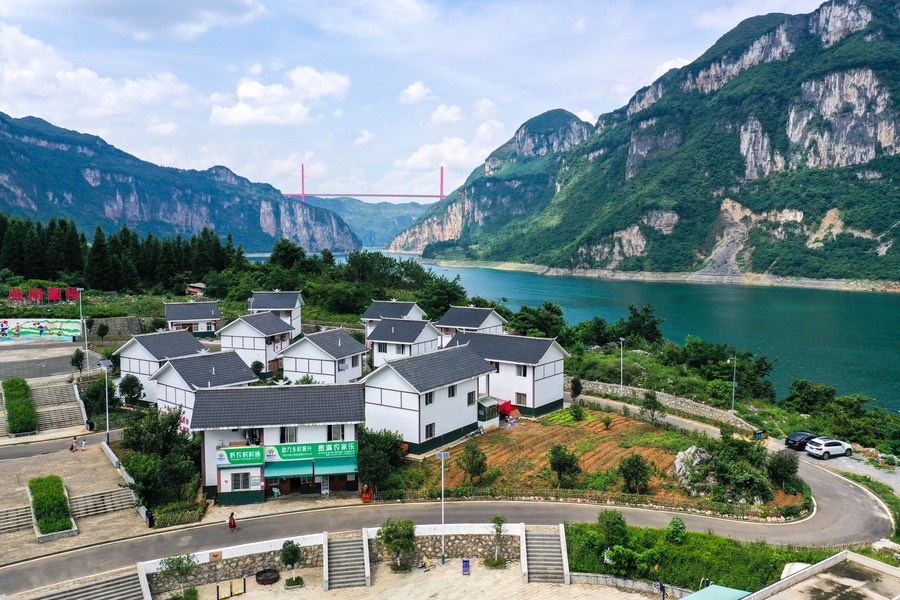
In a matter of about 40 years, not only did it lift nearly 800 million people out of poverty, but in the last seven years, nearly a hundred million people out of absolute poverty. When you lift people out of poverty, you give them dignity, hope, and opportunity. It includes better access to education, to better health, and to better skills. Now all these contribute towards the nation. Then you have the technology, the science, the engineers, the doctors, the artists, all of them come together to make the social fabric and wave.
And I have been on this journey with China. I am really working with China to eradicate poverty. Today we have to use opportunities that we could not only just learn from China but use the current technology such as in the space of renewable energy, the space of green technology and so on. Because that is how the world will be better. The new resources that would now generate, will not be the fossilized resources, but green technology that will bring together from nature and bring together to advance nature. Because there is a lot of confronting of existing stress. That is why I mention China’s agenda of peaking carbon emissions by 2030 and carbon neutrality by 2060. Because as a human race, we are confronted by the existence of strength. And poverty, further damage that is expected. Because people are still relying on coal and other fossilized outputs in order to advance their lives.
So, the best way to deal with it is to allow science and technology and innovation to govern it. To do that, we have to learn what China did, even in the rural revitalization program, which is very much part of the 14th Five-Year-Plan, and very much about the UN’s plans to support China. We need to make sure that they also keep the gains that they have made. And people don’t slip back into poverty because of an external shock Today we are seeing whether it is floods, heat waves or other natural disasters. How do we build societies to be much more resilient to these external shocks?
Three things I would like to share. First of all, I congratulate China for having managed to get so many people out of poverty. Second, we have to maintain it strategically of making sure that people not just fall back into poverty but to safeguard environment to be able to advance humanity development. And thirdly, how to share China’s best practices with other parts of the developing world and particularly Africa, where I have spent a lot of my career, so that Africa can leapfrog and learn from China’s experience in order to achieve the SDGs, particularly making sure that people have good access to quality education, and gender equality.

Sun Chao: As UN Resident Coordinator in China, what would be your priorities and goals in China?
Siddharth Chatterjee: I think it’s very important because I, as the UN Resident Coordinator of 27th UN agencies, funds and programs in China, intend to keep the journey going. The last 42 years since we’ve been here with China. Things have changed. China has eradicated poverty and has progressed tremendously. But there are new issues that we confront. So the first priority is to make sure that we implement the UN-China sustainable development cooperation framework which just started in January 2021.
It has three overarching strategic targets. First, it is peace and prosperity, which aligns with the 14th Five-Year Plan, aligns with the vision that China has over the years to make China and keep China prosperous and keep moving it up that trajectory of progress. And the second is the planet. And this is a response, precisely to China’s call on dealing with climate emergency. The whole UN family is united in supporting China’s efforts, not just in China of safeguarding the environment, but with China to safeguard the environment everywhere else. China and the US are two major countries that are critical in safeguarding our planet. They have the technology, resources, brainpower, capability, industry, and agency to make the change. I hope we will see much more collaboration on climate emergency. And we’ve already seen so many discussions taking place between China and the US on safeguarding our planet.
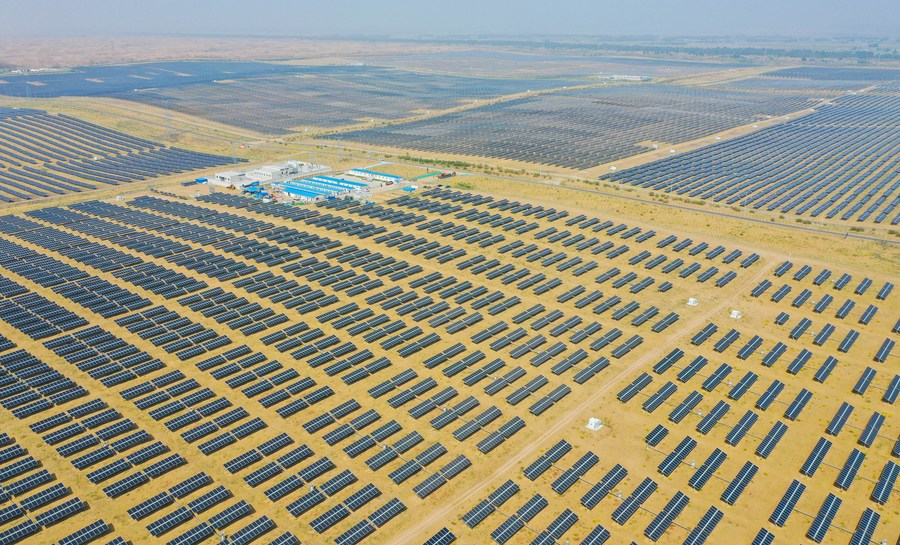
The third is about partnerships. Today, we need much more partnerships. It’s not just partnerships between governments and the UN but governments, state-owned enterprises, private sectors, civil societies, all coming together for the sustainable development goals. It is a united effort to advance development and humanity. It is a united effort to achieve the sustainable development goals, which is just a few years away by 2030. We should be able to look back proudly to say not only did we achieve all the SDGs in China, but how did we work together to achieve the SDGs in the rest of the world.
Sun Chao: Global governance faces challenges. China’s answer is to build?a?community with a shared future?for?mankind and achieve common development. In your opinion, how to better deal with those global challenges?
Siddharth Chatterjee: I think we have to constantly look at the renewal of multilateralism. This is what the UN tends to emphasize. The pandemic has reminded us how important it is for global solidarity and for countries to work together. Because the virus, invisible, gets into people’s bodies and can actually decimate lives. Therefore, the importance of global consensus, multilateralism, and solidarities are absolutely critical. Now more than ever is the moment of inflection point where again, common challenges, like public health challenges, like the environmental issues for us to come work closer together. We need to build a planet prosperous, safe, and our grandchildren and great-grandchildren can happily live there.