Team Play Will Save the Day
 Facebook
 Twitter
 Linkedin
 Google +
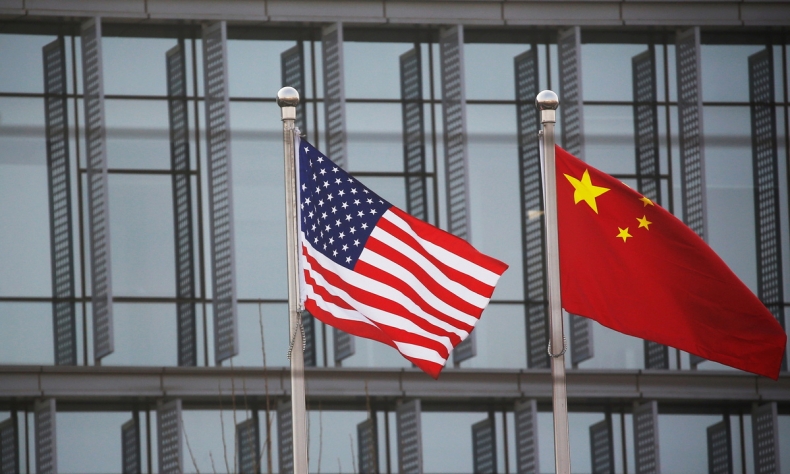
When China and the U.S. cooperate, the two countries and the world will benefit; when they are in the throes of confrontation, the two countries and the world will suffer severely.
The rise of emerging economies like Russia, Brazil and South Africa challenged the post-Cold War unipolar world order. As China’s capacity and influence grow, many promising areas for cooperation are opening up, from trade to infrastructure, environment and development aid.
The development of China creates opportunities for partnerships in delivering public goods and sharing the burden of maintaining the global economic and security order. This in turn poses challenges to the traditional U.S. supremacy and leadership, especially if in the U.S. calculation such leadership cannot be shared.
The polarization of public opinion over U.S. rhetoric and policies, animosity between the White House and the mass media, executive-legislative bickering, and infighting even within the Democratic Party itself are intensifying. These domestic political challenges make it difficult for a distracted U.S. government to come up with a national development strategy, let alone comprehensive policies for key regions and flashpoints.
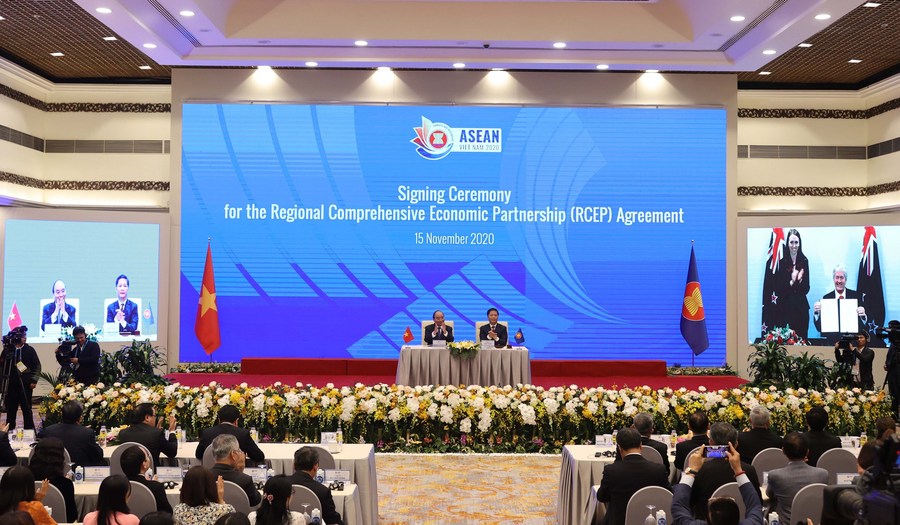
In the world arena, as the U.S. withdrew from the Trans-Pacific Partnership it championed under former President Barack Obama (2009-17), China-led and backed multilateral arrangements such as the Regional Comprehensive Economic Partnership and the Belt and Road Initiative are gaining momentum. Hence, reservation and suspicion between both sides persist and are unlikely to fade anytime soon.
The U.S. worries China may take its place. How could the U.S., which absolutely does not want to be in second place, accept a rising China? Driven by an outdated zero-sum mentality, certain factions in the U.S. believe in major-power rivalry in terms of ideology and politics, and stick to Cold War thinking. They perceive China as a major strategic competitor. Any action that will increase China’s clout and influence relative to the U.S. will create discomfort and apprehension on the latter side, as well as increase tensions between the two countries.
Unilateral damaging actions
To a large extent, the anti-Chinese discourse in the U.S., which considers China a real enemy, is one of the most important obstacles in developing a bilateral relationship. The U.S. administration has chosen unilaterally to be provocative. It has undermined China’s interests, putting the relationship in the most complex and grave of situations since the establishment of diplomatic ties in 1979.
Some U.S. politicians have insisted on making false statements and groundless accusations against China. They have attacked the Communist Party of China (CPC) and China’s political system, deliberately distorted the history of China-U.S. relations for the past 50 years since Dr. Henry A. Kissinger’s secret visit to China, challenged China’s core interests, and interfered in China’s internal affairs. They seemingly seek to disrupt China-U.S. exchanges in all areas and stall any cooperation momentum by restricting Chinese media outlets, shutting down Confucius Institutes and suppressing Chinese companies, stitching up stories to blind the American people and manipulate international public opinion.
In the meantime, there are forces in the U.S. trying hard to push for “decoupling” and coerce other countries to take sides, to “encircle” or “counter” China in an attempt to create two “parallel worlds” with two separate systems.
In 2020, the world was caught off-guard by the sudden outbreak of COVID-19. In the era of globalization, the interests of countries are so intertwined that solidarity and enhanced coordination and cooperation are the only way to effectively tackle global challenges. Yet the U.S. has been intent on politicizing the virus and scapegoating China, instead of contributing to an enabling environment for cooperation against the pandemic.
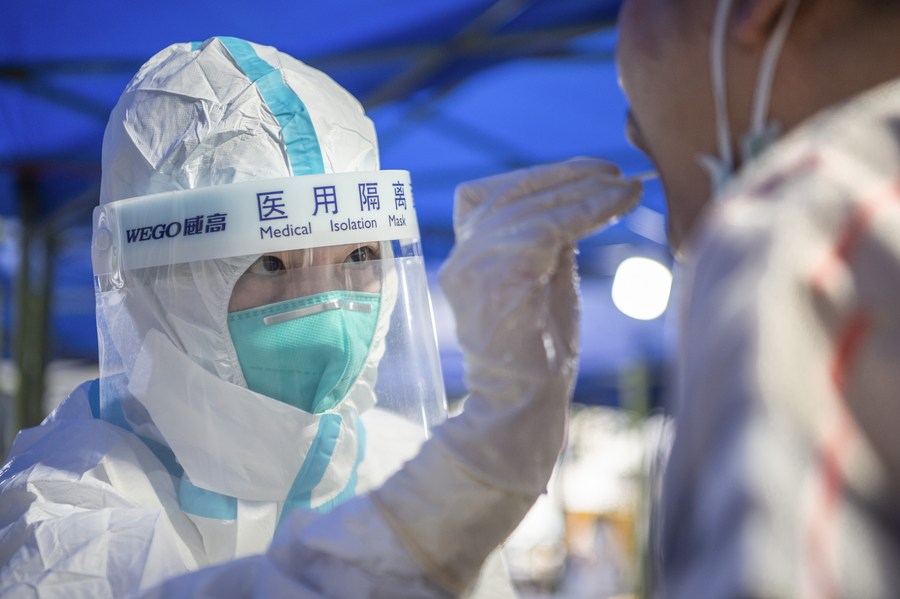
The hostile rhetoric toward China on the part of the U.S. administration has made many of the American people consider China as an “imaginary enemy” and believe that by containing its development, the internal and external problems facing their own nation can be easily resolved. The younger generation of Americans adopts a tough stance on China and tends to be less sympathetic to their Chinese peers. Consequently, the U.S. today witnesses waves of violence and hate speech targeting Asian Americans; some attribute this aggressiveness to the deterioration of U.S.-China relations.
In fact, President Joe Biden’s political discourse and his administration’s policy toward China do not, in essence, differ from those of his predecessors.
The continuation of the antagonist attitude was further confirmed by U.S. Secretary of State Antony Blinken, who classified China as the greatest threat to the U.S. and announced the latter would strengthen efforts to seek out an alliance against it. As U.S. State Department spokesman Ned Price put it, the U.S. planned to engage Beijing “from a position of strength,” which would involve Washington calling on all U.S. allies in the Indo-Pacific to re-engage with multilateral institutions and put a fresh emphasis on U.S. values.
Connections run deep
Although the China hawks in Washington could roll out bellicose policies to attack China, they could, in no way, cut off the bilateral connection and cooperation between the world’s two largest economies, which are closely interdependent across many areas.
At a meeting in Zürich, Switzerland, on October 6, senior diplomat Yang Jiechi and U.S. National Security Advisor Jake Sullivan agreed to take action, following the spirit of the phone call between Chinese and U.S. heads of state on September 10, and work together to bring China-U.S. relations back on the right track of sound and steady development.
During the phone call, both presidents agreed to maintain frequent contact via multiple means and instruct officials at the working level to intensify the work, conduct extensive dialogue and create conditions for the further development of China-U.S. relations.
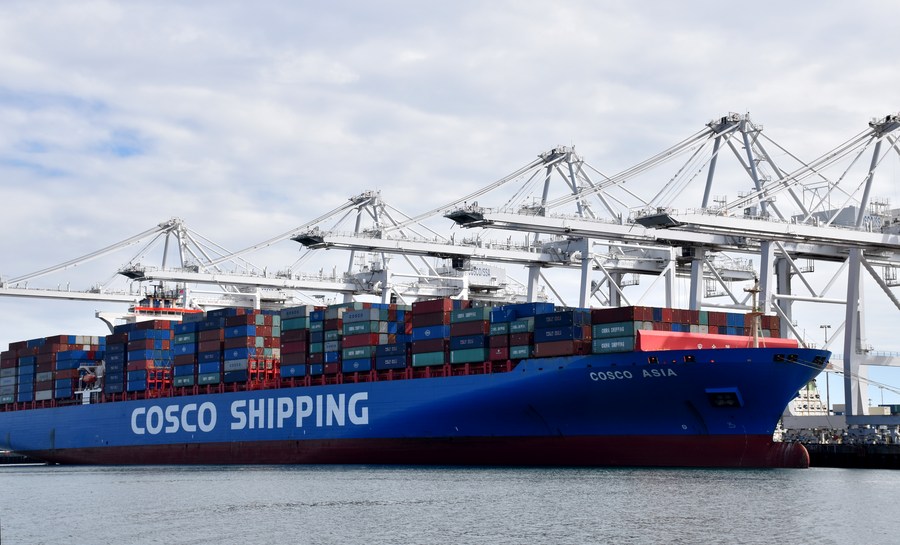
Since the establishment of diplomatic ties on January 1, 1979, China-U.S. trade has kept growing on a steady basis. The volume has increased more than 200 times since the early days of diplomatic ties, and two-way investment has taken off from scratch to over $500 billion in 2019. Back in 2017, China-U.S. trade supported roughly 2.6 million U.S. jobs, covering a range of industries. Made-in-China goods, nice and inexpensive, are best buys for American consumers.
China’s vast market and sound business environment offer a source of tremendous profits for U.S. firms. Despite the COVID-19 pandemic, bilateral trade in goods grew 8.3 percent last year to exceed $580 billion. Over 72,500 U.S. companies have invested in China. American businesses have a total of over $700 billion of assets in China, and rake in some $700 billion in their annual sales. No fewer than 197 U.S. companies attended the Third China International Import Expo in 2020, priding themselves on having the largest number of exhibition items in the largest exhibition areas among participating countries.
During a video call on October 9, Chinese Vice Premier Liu He and U.S. Trade Representative Katherine Tai agreed to continue to communicate on the basis of equality and mutual respect as to create favorable conditions for the healthy development of bilateral economic and trade relations and the recovery of the world economy.
The exchange of visits between the Chinese and Americans jumped from several thousands to over 5 million per year before the pandemic. Currently, more than 400,000 Chinese students are studying in the U.S., with 50 pairs of sister provinces/states and 232 pairs of sister cities forged between the two sides. In the face of natural disasters, from hurricane Katrina in the U.S. in 2005 to the Wenchuan earthquake in China in 2008, the two populates felt for each other and lent each other a helping hand. Even during the pandemic, Chinese and Americans from all walks of life rushed to each other’s assistance. Chinese provinces, cities, enterprises and institutions have donated masks, protective suits and other medical supplies to affected populations, communities, cities and states in the U.S.

In 2001, following the September 11 terrorist attacks, the Chinese Government and people immediately expressed their sympathies to the American Government and people, and the two countries strengthened coordination and cooperation on counter-terrorism and non-proliferation.
Furthermore, the two countries have worked with the relevant nations to advance the political settlement of these issues. China and the U.S. have productively collaborated in the fields of narcotics control, disease prevention and containment, poverty alleviation, peacekeeping, and the battle against human trafficking. The joint efforts of China, the U.S. and other countries have led to the signing of the Paris Agreement, providing a strong impetus for a global cooperation on climate change. The two countries have also carried out cooperation on food security in Timor-Leste and helped Africa to fight Ebola, setting a prime example of their teamwork to facilitate capacity-building in a third country.
In the words of Yang, a member of the Political Bureau of the CPC Central Committee and Director of the Office of the Central Commission for Foreign Affairs, when China and the U.S. cooperate, the two countries and the world will benefit; when they are in the throes of confrontation, the two countries and the world will suffer severely.
The U.S. side needs to have a deep understanding of the mutually beneficial nature of China-U.S. relations; adopt a rational and pragmatic China policy; together with China, respect each other’s core interests and major concerns; and follow a path of mutual respect, peaceful coexistence and win-win cooperation, Yang said during his recent meeting with Sullivan.
The author is an op-ed contributor to Beijing Review and an expert on international studies.