The Communist Party of China and the Ancien Régime
 Facebook
 Twitter
 Linkedin
 Google +
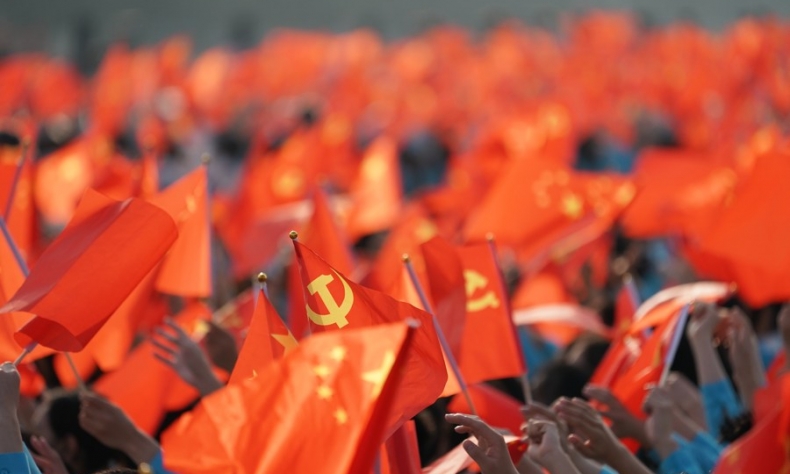
The CPC has perceived with ever greater clarity that the ‘other bank of the river’ (bi an) is an ethically-guided political economy in which the force of the ‘invisible hand’ of market competition is combined with an ethically-driven ‘visible hand’ of state regulation, with the CPC at its core.
Editor’s note: Peter Nolan is the Chong Hua Chair in Chinese Development and Director of the University’s Centre of Development Studies, University of Cambridge and a Fellow of Jesus College, Cambridge. In his speech at the International Academic Conference on the Communist Party of China Governing the Country: Experience and Enlightenment in Shanghai on July 20, Nolan compared the socialism system in China and the Soviet Union and analyzed how the Communist Party of China combines its search for ‘the other bank of the river’ with its history of the meritocratic Chinese bureaucracy to serve the people. His speech is as follows.
This speech addresses the following question: Why did the Communist Party of the Soviet Union (CPSU) collapse while the Communist Party of China (CPC) was able to survive and prosper? The dramatic difference in the political trajectory in two large communist countries will be of incalculable consequence for global political economy in the twenty-first century and perhaps even further into the future.
The communist systems in the Soviet Union and China had a common point of departure in terms of the basic structure of the communist party and economic system established in Russia in 1917-21. The fundamental features of the communist system, with a monopoly of political control in the hands of the Party, state ownership of the means of production and state control over finance and trade, were devised during the extreme violence and struggle for survival of the communist regime during Russia’s civil war of 1917-21. When it was founded in 1921 the Communist Party of China adopted fundamentally the same political structure and the same approach to the ideology of economic organization.
The common features of the communist systems of political economy disguised profound differences in the nature of the respective pre-revolutionary Ancien Régime (jiu zhidu). The difference between them is central to understanding the radically different trajectory that reform has taken in the two communist giants. It is essential in order to understand why the CPSU collapsed while the CPC is stronger today than it has ever been. The leadership of the CPSU lost confidence as its faith in communism evaporated. Its pre-revolutionary history meant that it had no conception of the ‘other bank of the river’ (bi an) other than as an idealized vision of Western politics and free market economics. The CPC’s self-confidence stems from the clarity with which it can perceive its tasks and goals in relation to China’s long history as a united country and unified culture. Its vision of the ‘other bank of the river’ is based on its long history of simultaneously stimulating and regulating the market in the common interest of the mass of the population under the leadership of a meritocratic government bureaucracy that is bound to a duty to ‘serve the people’ in a selfless fashion.
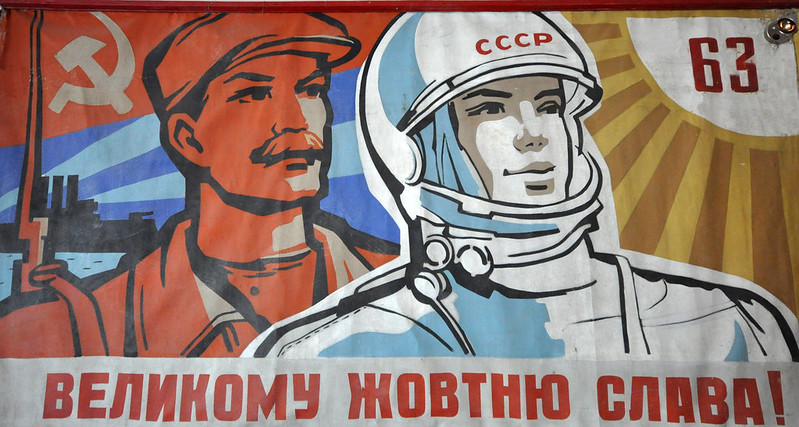
The Ancien Régime for the CPSU was the Russian state that was established post-1600 by the tiny land-locked principality of Moscow through a series of military conquests. This aggressive, expansionist state was ruled by a centralized, authoritarian government, with a huge army at its core, which was necessary to hold together a vast, sparsely-populated territory with strong inbuilt fissiparous tendencies. The huge army was essential also for the succession of wars with its European neighbours. The central task of the bureaucracy was administering the vast and ethnically diverse Empire. The landholding class provided the main body of the upper reaches of both the army and the bureaucracy. Up until the eighteenth century most of the ruling landholding class, as well as most of the clergy, was illiterate. Russia had a negligible written tradition, with a minimal role, if any at all, for ethical thinking in relation to the role of the ruling class. The landholders depended on the sovereign to allocate and protect their landholdings.
By the eighteenth century the peasant masses had become virtual slaves and remained a subservient class even after Emancipation in 1861. The peasant masses were the main body of soldiers in the army. The Tsarist state kept the merchant class under tight control and took great trouble to prevent substantial commercial cities from developing. From Peter the Great onwards Russia’s rulers were pre-occupied with absorbing the technologies and culture of Western Europe, including adoption of the French language by the landholding upper classes, and deep inter-action with Western European culture by the intelligentsia. The pre-revolutionary ruling class of landlords and military officers was preoccupied with exercising control over the vast territory and the peasant masses. It had little understanding of the market economy and a deep sense of inferiority in relation to Western European culture. Its bureaucracy was relatively small and had no tradition of serving the interests of the mass of the population.
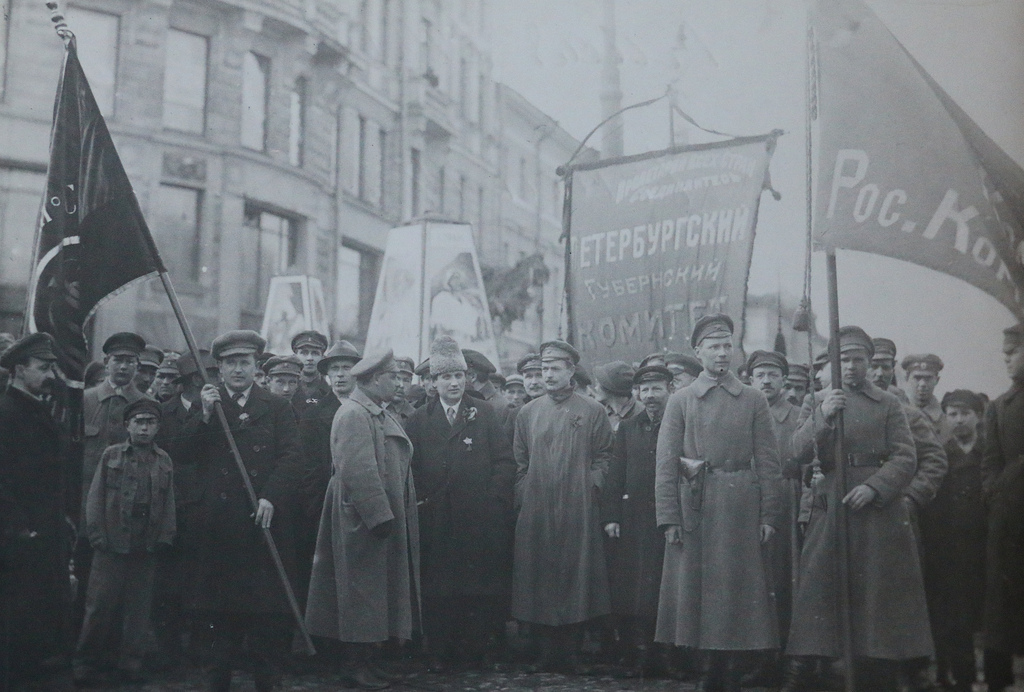
Communist China’s political institutions superficially had their origin in the early years of communist party rule after the Bolshevik Revolution in the Soviet Union. In fact, the CPC has its roots deep in the history of the meritocratic Chinese bureaucracy, under which scholar officials have a duty to ‘serve the people’ selflessly in the interests of the mass of the population. All Chinese bureaucrats throughout the ages have been familiar with Mencius’ requirement placed upon those people who ‘first attain understanding’ and ‘those who are the first to awake’. Mencius asked the rhetorical question: ‘I am among the first of Heaven’s people to awaken. I shall awaken this people by means of the Way. If I do not awaken them, who will do so?’ (Mencius, 1979: v.a.7). Yang Changji was Mao Zedong’s teacher in Changsha between 1913 and 1919. Yang believed fervently that scholars had a special duty to put the fate of the country and the common people above their individual desire for happiness. The philosophy of Fan Zhongyan (980-1052 AD) influenced him deeply: ‘Bear the hardship and bitterness before others, enjoy comfort and happiness after others’ (xian tian xia zhi you er you, hou tian xia zhi le er le). This philosophy is deeply embedded in the ideology of the traditional bureaucracy. It is deeply embedded also in the ideology of the CPC. In his speech in September 1944 Mao Zedong said that the core philosophy of the communist party was to ‘serve the people’ (wei renmin fuwu) (Mao Zedong, 1944). It has remained the core of the CPC’s philosophy as the ‘fundamental purpose and outcome of all the work of the Party’ (Xi Jinping, 2014).
The concept of a non-market economy with common ownership of property was central to the ideology of the communist party in the Soviet Union. When it was established in 1921 the CPC established the same approach towards common property as the CPSU. In fact, the concept of a non-market economy based on common ownership of the means of production has ancient origins in China in the radical interpretation of the words attributed to Confucius in the Book of Rites (Li Ji): ‘da dao zhi xing ye, tian xia wei gong’. According to Feng Youlan these words should be interpreted as follows: ‘When the Great Tao was in practice, the world was common to all’ (Fung Yu-lan, 1948: 202). According to Kang Youwei’s book Da Tong Shu (Book of Great Harmony) (1958)?in the world of Da Tong ‘all industry will be publicly controlled’ and ‘all commerce will revert to the control of the ministry of commerce of the government’. In the countryside ‘all land will be publicly owned and operated’, while ‘planning will extend to every detail’. The key features of Kang Youwei’s ‘World of Great Harmony’ are similar to those put into effect in China in the mid-1950s. However, over the long-term of Chinese history this stream of thought never occupied the mainstream of policy-making. It was not until 1956-76 that it was put into effect as national policy. This is a short period in China’s long history.
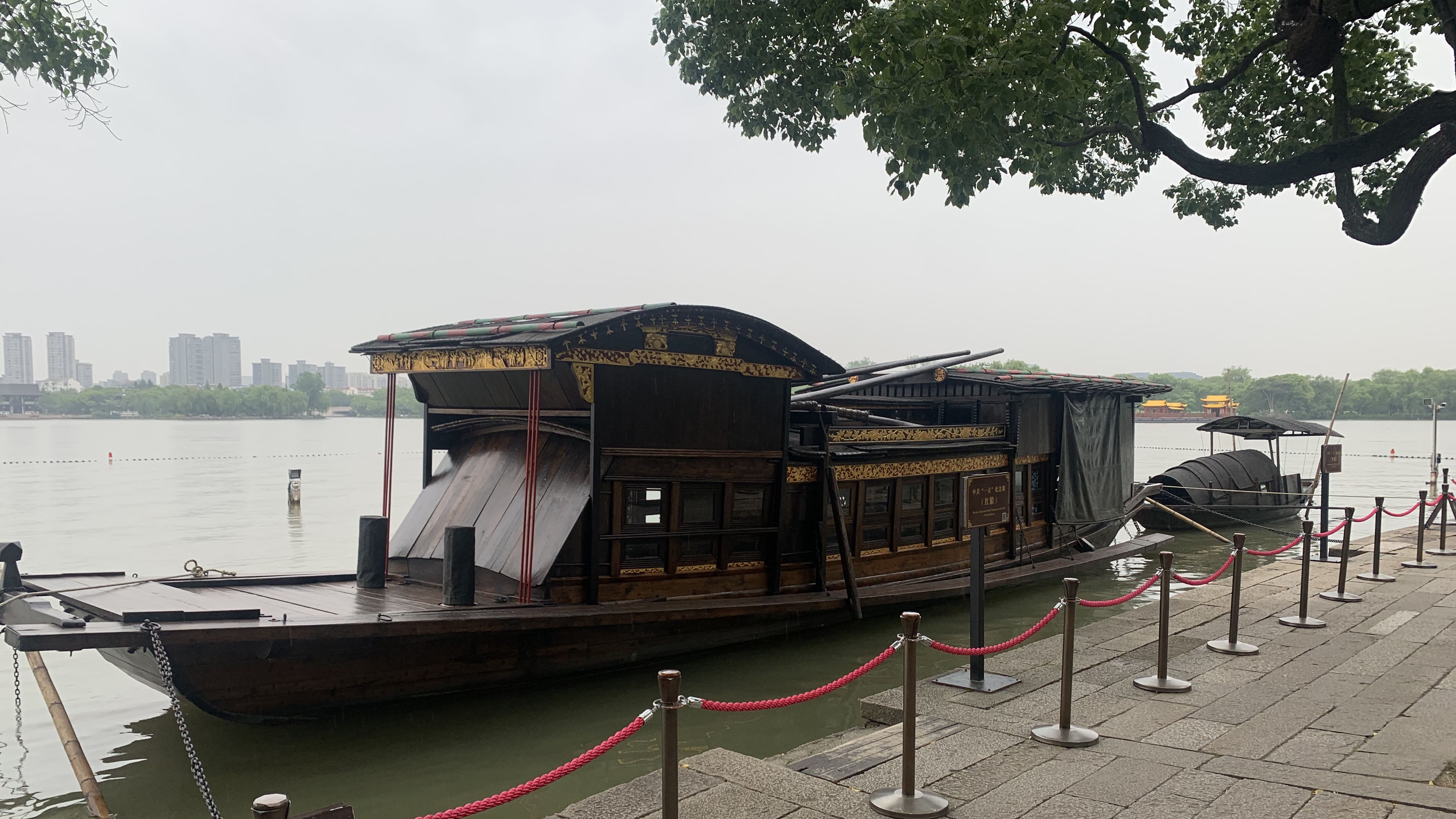
When it was founded in 1921 ‘the Communist Party of China made realizing Communism its highest ideal and its ultimate goal’ (Xi Jinping, 2017). From the mid-1950s until the late 1970s most property in China was held in common ownership, either by the state or by collectives. In 1978 the decision was taken to leave behind the world of the command economy, which took common ownership of property as the foundation. However, the nature of the ‘other bank of the river’ (bi an) was not clear. The search for the other bank was complicated by the fact that since 1921 the word ‘communism’ has been translated into Chinese as ‘common property-ism’ (gongchan zhuyi). In fact, the nature of the ‘other bank of the river’ has become increasingly clear. From the beginning of the process of Reform and Opening-up Deng Xiaoping declared that henceforth China should ‘seek the truth from the facts’ (shishi qiushi) and follow a pragmatic and experimental path towards the respective roles of the state and the market.
China’s search for the ‘other bank’ of the river has involved the re-integration of Chinese political and ideological thought with its history as a unified state stretching back to the Qin Dynasty, and its even longer philosophical history stretching back to the Zhou Dynasty. Finding the correct way in which to regulate the market in order to serve the common good has involved an endless non-ideological search for balance and symbiotic interaction between the yin of the ethically-guided state and the yang of the competitive force of market competition. According to Wu Guozheng (1933) the Chinese characters tian xia wei gong should be interpreted as: ‘When the great principle prevails, the whole world is bent upon the common good’. The Guanzi argued that ‘with the market brought into full play, everyone can benefit’, but ‘the market alone should not be allowed to decide the abundance or deficiency of commodities. There is a right way to realize this (wei zhi you dao). This is called ‘handling the market’ (wu shi shi) (Guang Zhong, 1985: Sheng Ma).

In China’s long history before the Industrial Revolution in the West, the Chinese bureaucracy nurtured and supported the market economy through pragmatic and intelligent regulation, while undertaking key functions that the market was unable to deliver. However, the market was never permitted to dominate the economy and society. It was always subject to regulation by the ethically-guided bureaucratic state. The state organized a huge array of public works, including water conservancy and transport infrastructure. It attempted to stabilize the prices of key commodities necessary for mass well-being; developed a comprehensive famine prevention and famine-alleviation system; administered a system of law that facilitated China’s massive pre-modern trade system with vibrant commercial cities; and supported the spread of knowledge through encyclopedias and other written texts. Under this system China led the world in market-driven innovation for two millennia and China’s innovations played a central role in technical progress in Europe after the Renaissance.
During the era of Reform and Opening-up China’s leaders have turned not only to their own history but also to Western philosophy and political economy. Adam Smith is the foundation of western political economy. In the Wealth of Nations, he analyzed the contribution of the ‘invisible hand’ of competition to economic and social progress in the West (Smith, 1976). However, in both the Wealth of Nations and, especially, in the Theory of Moral Sentiments (Smith, 1982) he argued that left to itself the market produces deeply problematic outcomes in terms of inequality, the nature of work, the achievement of happiness and the ethical foundations of society. He argued that the ‘visible hand’ of ethically-guided state action is essential in order to regulate the ‘invisible hand’ of market competition and achieve the common good.
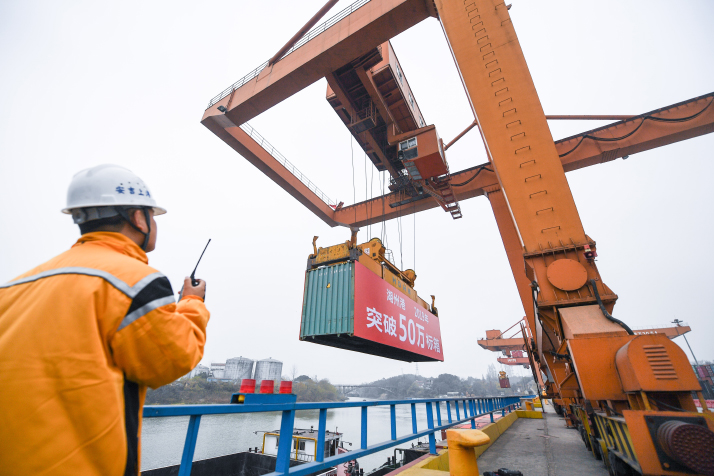
Under the pragmatic approach of ‘groping for stones to cross the river’ China has moved towards an understanding of communism that embraces the concept ‘da tong zhu yi’, which has been embedded deeply in China’s people’s consciousness since Confucius. Under the policy of ‘Reform and Opening-up’ China progressively moved away from the command economy envisioned by the radical participants in the Discourse on Salt and Iron (Yan Tie Lun) or Kang Youwei’s Da Tong Shu. It has turned instead towards the flexible, pragmatic approach to regulating the market in the interests of the mass of the population, which served China well for over 2,000 years. During the era of ‘reform and opening up’ since 1978 under the leadership of the CPC China has successfully integrated the ‘visible hand’ of government regulation with the ‘invisible hand’ of market competition. This has been a long journey of rediscovery of the core ideology at the heart of China’s Ancien Régime, in which the meritocratic bureaucracy regulates the economic system in a non-ideological fashion, which is in the interests of the whole population.
The radically different nature of the Ancien Régime in China and the USSR is the central reason for the survival and prosperity of the CPC and the disintegration of the CPSU. This difference became increasingly evident as China moved away from the command economy and the Soviet Union collapsed. The Ancien Régime for the CPC was the long history of the Chinese bureaucracy, based on a rich written tradition, with its foundation in the examination system based on the practical application of profound ethical principles. The core task for the bureaucracy was simultaneously nurturing and regulating the market in order to achieve mass well-being in a prosperous economy. Only a small stream of thought within Chinese history departed from this central philosophical core. The Ancien Regime for the CPSU was a state that only came into existence after the sixteenth century. It was based on military conquest of a vast, sparsely inhabited territory to the east, and near-continuous military struggle with its European neighbours to the west. Its economic foundation was the ‘Second Serfdom’, in which the mass of the population was owned as virtual slaves by their masters. There was only shallow development of trade and commercial centres. Its bureaucracy was small and weak, overshadowed by the vast military. The ruling class had a deep sense of cultural inferiority in relation to Western Europe.

The CPC has perceived with ever greater clarity that the ‘other bank of the river’ (bi an) is an ethically-guided political economy in which the force of the ‘invisible hand’ of market competition is combined with an ethically-driven ‘visible hand’ of state regulation, with the CPC at its core. The other bank of the river is, indeed, ‘communism’, but not the ‘communism’ of ‘common property-ism’. Rather, it is a system of political economy in which pragmatic, non-ideological state regulation, guided by the CPC, ensures that the market serves the human needs of self-fulfillment of the whole population.
Irrespective of whether property is owned privately, owned in ‘common’ by the state or cooperatives, and under mixed ownership or foreign ownership, and whether it is in finance or the real economy, it has become increasingly clear that it will be subject to regulation by the Party and the government in the common interest of the whole society. This is the real meaning of the world of Great Harmony (Da Tong).
China still has far to go in order to reach the ‘other bank of the river’, with huge internal and external challenges. However, China’s leaders and the Chinese people can now see clearly the broad outlines of the ‘other bank of the river’, which delivers confidence to the whole society in their collective search for a ‘Way’ in the midst of a turbulent world. This philosophy can make a fundamental contribution towards intelligent, pragmatic and non-ideological regulation of the whole global economic system in the common interest in the decades and even centuries ahead.
Related Stories:
A Hundred Years of the Communist Party of China: Remembering the War of Resistance