A US-China Green Deal?
 Facebook
 Twitter
 Linkedin
 Google +

Mutual distrust has been the problem. China and the new Biden Administration could usefully develop some confidence-building measures in tech governance before trust evaporates completely.
The year 2020 was a turning point in so many ways. A pandemic tested our capacity for international cooperation. Our impact on the changing environment became more urgent. That was demonstrated in alarming evidence of worsening global warming and, for the first time, human-made materials outweighed all life on earth. And the two major powers in the world, the United States and China, appeared to be locked in geopolitical confrontation, with commentators fearing they are destined for war, or at least a decoupling of their massive economies.
Could it be that 2020 marked the end of the long period of global cooperation that delivered Globalization 1.0, and that we are in a rocky transition to an undefined Globalization 2.0? How China and the new Biden Administration in the US decide to work together, or not, will set the scene for whether we address our environmental, security and economic challenges, or whether we make them so much worse.
The biggest challenge by far is the changing climate, and its likely worsening impact on food supplies, natural disasters and rising oceans. Without cooperation between China and the US, the two biggest contributors to the problem, there will be no solution. China has recently committed to achieving zero net emissions before 2060 and the incoming Biden Administration in the US has signalled a return to the Paris Agreement, so it is possible we may see greater cooperation in green rule-setting at the global level. But it will only be through practical measures taken together that the challenge will be met successfully.
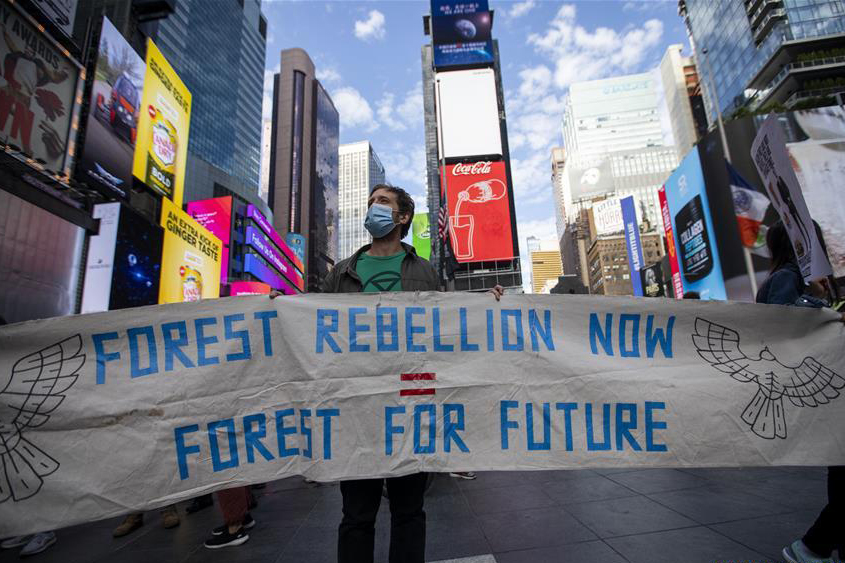
Instead of weaponizing technology against each other, the US and China need to weaponize technology against climate change. We need a new economic model, a “green deal”, that supports people’s reasonable aspirations for development and, at the same time, protects the earth for future generations. The new technologies of the fourth industrial revolution must provide us with the opportunity to embed sustainability into new industries as we design them, new supply chains as they evolve, into urban planning and transport, energy, agriculture and fisheries of the future. This provides many areas in which the US and China might collaborate, as well as compete.
If we listen only to geopolitical observers, we might easily become convinced the US and China are locked in a “Thucydides Trap” and destined for war, as one power rises and the other resists. In fact, the US-China relationship is far more complex than a simple binary battle for influence. The world is changing, though. Indeed, both China and US might give more thought to designing the new world order together, rather than separately, including other nations in the discussion. After all, the world is much more interdependent than the usually one-dimensional, zero-sum security debate suggests. Asia alone has multiple powers and so it will only be in a new multipolar balance that peace can be secured; it’s not simply a two-way contest across the Pacific.
To be sure, the US and some others in the West are disillusioned that China has not westernized as it modernized. The so-called “clash of civilizations” is superficially attractive as an explanation for why nations misunderstand each other. But we have demonstrated before, and can again, our ability to adjust our expectations. There is no reason why China would westernize. Neither is there any chance the West will abandon its political model, despite its recent travails. A return to pragmatism is in order if we are to live together. The change of government in the US creates an opportunity for a “new deal” to bolster peace, nevertheless requiring compromises all around for the greater good.
We became economically interdependent during Globalization 1.0, with ever-increasing flows of trade, investment and finance in global value chains. China, and other economies of the Asia Pacific, prospered by becoming integrated into these global value chains. Regional trade deals such as the Regional Comprehensive Economic Partnership demonstrate Asia remains committed to the gains from globalization, while China’s Belt and Road Initiative offers to build new value chains and diversified trade across much of the developing world.
The US, on the other hand, despite the global reach of its powerful tech, entertainment and other businesses, believed itself to be losing out from globalization, in particular because of its debt-fuelled goods deficit with China. It was easier to blame than to find a solution, and the trade war, laced with geopolitical competition, appeared to bring an end to the first phase of globalization.
Globalization 2.0 is coming. It will not just be about trade, investment and finance, but it will be driven by data and innovation. In the coming decades we will see dramatic industry transformation from artificial intelligence (AI), big data, robotics and quantum computing. The question is whether, like Globalization 1.0, we can share the benefits of this new economy, supported by regional and global institutions and rules, or whether we will become hostage to techno-nationalism, decoupling into two rival systems.
To date, the US and China have been unable to agree on rules, norms and standards to regulate the unprecedented power of giant tech firms, to protect personal privacy, to govern the ethics of AI or to ensure cyber-security. Mutual distrust has been the problem. China and the new Biden Administration could usefully develop some confidence-building measures in tech governance before trust evaporates completely. While total decoupling is probably unrealistic, we will need a “new tech deal” if we are to ensure the tech revolution to come brings more opportunities than risks.
In recent years, hawkish nationalism has been rising in many parts of the world, feeding on fear and pessimism. The Covid-19 pandemic amplified these trends. But the record of the last few decades of constructive engagement demonstrates there is no inevitability that the pessimists are correct. As we discovered during the Trump years, the quality of leadership makes all the difference. US leadership in global institutions went missing for a while. Now, a new US leadership brings a new opportunity to find a way forward.
A new pragmatic approach on both sides could yet find areas of common ground between the US and China, to address our shared global challenges of environment, security and technology. While some of this work needs to be done through leadership dialogue and bilateral “deals”, ultimately the responsibility of these two great nations is to strengthen – rather than weaken – global rules and norms. A renewed commitment to the United Nations and its Sustainable Development Goals from both countries, demonstrated with practical actions, should contribute to a new narrative of optimism. After all, only global cooperation can address our global problems. We cannot afford anything less.
The article reflects the author’s opinions, and not necessarily the views of China Focus.