Many Changes Will Occur After the Global Battle Against the Novel Coronavirus
 Facebook
 Twitter
 Linkedin
 Google +
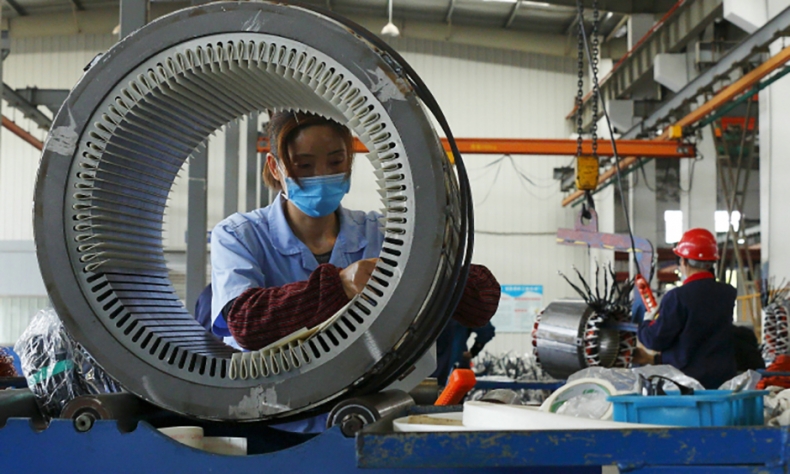
There is a possibility that the disease may continue to exist for a long time to come. The post-pandemic world will therefore not be the same as it was before.
The novel coronavirus disease (COVID-19) outbreak is a major public health crisis unseen in about 100 years. There is also a possibility that the disease may continue to exist for a long time to come. One of the most effective approaches to tackling the spread of the virus is to adopt widespread lockdowns, but this measure tends to interrupt consumption, investment, trade, logistics, the business flow, as well as industrial and supply chains. The post-pandemic world will therefore not be the same as it was before.
Reshaping world order
The world has been undergoing profound changes with increasing uncertainties. The Eastward shift of the world’s economic center of gravity, the decline of the West and the rise of the developing world have triggered anxiety in some.
Vicious competition across scientific and industrial landscapes among major economies will weaken impetus for world economic growth. Structural and strategic decoupling is becoming a major threat.
The systemic risks of globalization are on the rise. Deglobalization and reglobalization will become two coexisting trends.
The downward trend in global productivity growth remains unchanged, and it will take time for new technologies and outcomes of the ongoing industrial revolution to become growth drivers.
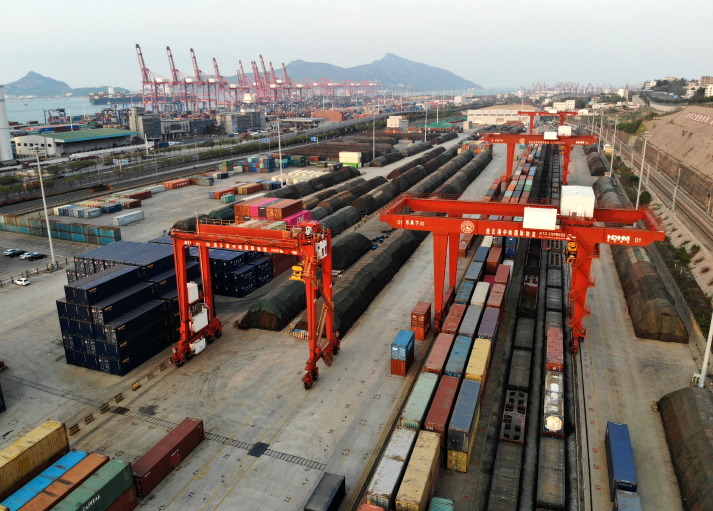
The global supply chains are facing challenges. Globalization means that product components are manufactured in different parts of the world, thus zero inventory and just-in-time delivery represent efficiency. When emergencies such as the COVID-19 pandemic take a toll on any segment of this process, the supply chains are disrupted.
Excessive security concerns have increasingly hindered key links in the global industrial and supply chains, which may force countries to resort to regionalization, localization and diversification of production in the future.
Geopolitics will become more complex and volatile, while oil, financial and food security may become central points of contention among major powers.
The COVID-19 pandemic has not only intensified the existing conflicts, but also fueled competition between political systems. China contained the spread of the virus with effective measures in the first quarter of the year. Its economic and social life is returning to normal, and the country is striving to maintain positive growth for 2020.
In contrast, countries in Europe and the U.S. may continue to struggle under the impact of the pandemic in the second and third quarters. In this context, the U.S. has raised doubts over the transparency of China’s COVID-19 data and questioned the legitimacy of the response measures the country has taken.
On April 3, 93 U.S. bipartisan, former high-ranking government officials and experts released a joint statement, stressing that no effort against the coronavirus will be successful without cooperation between the U.S. and China. The underpinning foundation for their call, however, is in a sense similar to what united the U.S. and the Soviet Union in the fight against fascism—their World War II victory only preluded the Cold War. If the U.S. takes collaboration with China to contain the virus as an act of expediency, it is a sign that political and economic wrangling among major powers will intensify in the post-pandemic period.
Changing supply chains
UN Secretary General António Guterres said the pandemic could be the worst global crisis since World War II. It took a direct hit on the three major production networks in the world, namely, East Asia, Europe and North America. The sharp drop and interruption of output have had a huge and unpredictable impact on the world economy from both the demand and supply sides.
Moreover, since the pandemic has severely shaken producer and consumer confidence, isolationism, unilateralism and trade protectionism are more rampant than before. International economic and trade frictions may escalate again, thus accelerating the retreat of globalization. More countries may implement strategies to ensure the security of their supply chains as a preemptive response to major systemic risks.
During the pandemic, sectors that are deeply involved in the industrial division, with higher technical and industrial complexity, longer supply chains and greater dependence on the global integrated logistics network, have borne the brunt of the impact.
Therefore, it is expected that localizing production of core segments will become a new trend after the pandemic ends. Sci-tech deglobalization is also likely to expand to more sectors. On one hand, the pandemic has boosted international cooperation and competition in vaccine and drug research and development. On the other hand, some countries’ shirking of responsibility and shifting blame to others may aggravate confrontation among countries.
The traditional value chains will accelerate their adjustment. In the past, the U.S. and Europe provided markets and technologies to the world, but the pandemic has caused a sharp decline in their purchasing power. The supply of key parts and components, materials and equipment was disrupted, which may lead to the relocation of supply chains and the promotion of reindustrialization, a policy of stimulating economic growth, especially through government aid, to revitalize and modernize aging industries and encourage growth of new ones in an attempt to boost the real economy.
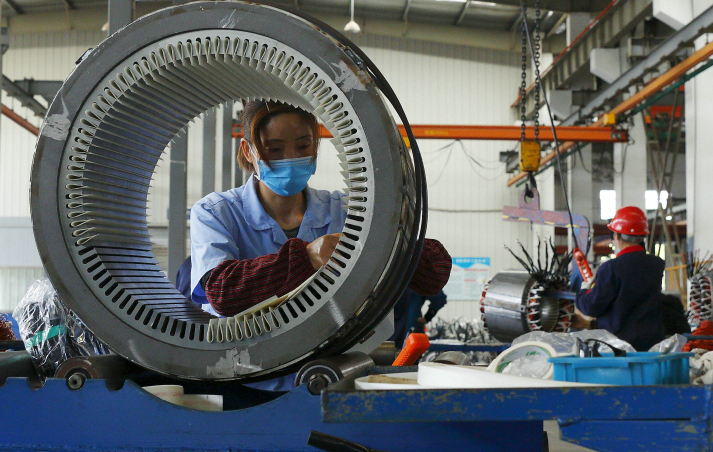
East Asia has been providing the world with manufacturing capacity and labor forces. The pandemic has underscored the importance for China, Japan, the Republic of Korea and Southeast Asian countries to strengthen cooperation, expand regional demand in a coordinated manner, and work together to stabilize regional supply chains, restore industrial chains and upgrade value chains.
The Middle East and other developing countries, major suppliers of energy and other resources, are also expected to boost the localization of supply and industrial chains in the future.
East Asia appears poised to be the first region to contain the spread of the virus, with companies in the region resuming work earlier than those in the U.S. and European countries. This can speed up the Eastward shift of high-end manufacturing, high-end industrial and consumer services, and high-quality factors of production such as technologies, data and capital. The ensuing changes in the modes of production will make East Asia an important engine of global growth.
After the pandemic, multinationals may further redistribute their global operations to prevent risks caused by longer supply chains, excessive globalization of value chains and clustering of industrial chains.
Moreover, the regionalization of supply chains is likely to gain prominence. Major regional free trade agreements, such as the Regional Comprehensive Economic Partnership (RCEP), the Comprehensive Progressive Trans-Pacific Partnership and the EU-Japan Economic Partnership Agreement, will reshape global supply and industrial chains. Among them, the RCEP, which consists of 15 Asia-Pacific economies, is the most inclusive, open and diverse one and can potentially attract more international capital and multinationals to participate in its implementation.
The Belt and Road Initiative will become a new driver for growth. China has cooperated with other participating countries to battle the virus, resume production and improve people’s livelihood. In addition, the initiative can be aligned with public health, ecological and environmental protection, poverty reduction and sustainable development programs in participating countries. It can also play a bigger role in promoting trade and investment, expanding collaboration in supply and industrial chains, and creating more local jobs.
China should be more open to cooperation in science and technology and actively align itself with established international rules and standards. This will help Chinese industries develop more reliable and closer cooperation with upstream and downstream businesses.
China needs to speed up the building of an open economy of higher standards. It should carry out international cooperation not only in areas ranging from public health to counterterrorism, but also in the promotion of global trade and investment liberalization and facilitation, the expansion of imports and outbound investment, and the improvement of the business environment.
The author is a senior researcher with the China Center for International Economic Exchanges